
 Multifocal chronic pain
- Multifocal chronic pain is a condition in which pain persists in multiple parts of the body for more than 3 months.This can lead to secondary symptoms such as sleep disturbances, loss of appetite, and depression.
- T-type mutation in DNA region rs1443914 on chromosome 13A study of 380,000 people found that people with this condition tend to be at higher risk due to abnormalities in neurotransmitters.
- The T mutation (TT+TC) prevalence among Japanese people is71.0%The onset mechanism is sensitization of pain due to suppression of serotonin and noradrenaline.
Overview Are you suffering from pain in your shoulders, hips, joints, etc.? This is a condition called "chronic pain." A condition in which chronic pain is present in a wide area of the body, such as the arms, legs, back, hips, and neck, is called multifocal chronic pain. Unlike pain caused by a single injury or inflammation, it is characterized by the fact that in many cases a clear cause cannot be identified. In some cases, the pain can last for more than 3 months (Reference link 1). This condition can also cause sleep problems, loss of appetite, and depression. Chronic pain can be caused by a variety of things, including bone fractures, surgery, arthritis, and stress. Additionally, continued anxiety can make the brain hypersensitive, and the pain may not go away even after the injury has healed. Surprisingly, genetic factors are said to be involved in the susceptibility to chronic pain (reference link 2). If you are suffering from chronic body pain, why not take a genetic test to find out your constitution? 2. Rationale A gene called ``AL450423.1'' located on chromosome 13 was discovered as one of the genes responsible for chronic pain caused by nerve transmission, and one of the various gene types that belong to this gene is a DNA region called ``rs1443914'' (reference link 2). This region was discovered in an analysis of genetic variations in 380,000 British people as a DNA region with mutations associated with chronic pain (Reference link 2). "AL450423.1" is a gene that does not have the function of becoming a protein itself, but it has the function of regulating the expression of genes related to neurotransmission. It has been found that mutations in the rs1443914 region of this gene impair the expression of genes involved in nerve transmission, making it more likely to cause chronic pain. "rs1443914" has three genotypes: "TT type", "TC type", and "CC type". The percentages of Japanese people by type are 23.1%, 49.9%, and 27.0% (Reference link 3). Variants containing T suppress genes involved in nerve transmission and are more likely to cause chronic pain, and the TT type may be at greater risk than other types. There are also reports that people with type TT are more prone to depression, neurological disorders such as PTSD, immune system disorders, and cancer (reference link 4). 3. Mechanism of action Chronic pain is a condition in which gene expression is impaired in sensory nerves, making normal nerve transmission impossible. In particular, neurotransmitters that play a role in relieving pain decrease or stop working properly, making it easier to experience pain excessively. When there is a mutation in the DNA region rs1443914, the gene AL450423.1 suppresses the expression of genes related to nerve transmission, suppressing the effects of serotonin and noradrenaline, and making it easier to feel pain. Additionally, as ``chronic pain'' progresses, it is thought that people are more likely to develop neurological disorders such as depression. This is because serotonin has the function of relieving anxiety and norepinephrine has the function of increasing motivation, so when these cease to work, anxiety and lethargy occur (Reference link 5). Since many of the causes of chronic pain are psychological factors, receiving appropriate treatment at a medical institution is an effective means. Additionally, people with mutations in this gene have a higher risk of developing other mental illnesses, so it is important to discuss and resolve concerns rather than bottling them up.
What is multifocal chronic pain?
Multifocal chronic pain is a condition in which chronic pain persists for more than three months in a wide area of the body, including the arms, legs, back, hips, and neck.Unlike pain caused by a single injury or inflammation, it is characterized by the fact that in many cases a clear cause cannot be identified.
Difference between chronic pain and acute pain
There are two types of pain: "acute pain" and "chronic pain", each with different characteristics.
| Comparison items | acute pain | chronic pain |
|---|---|---|
| duration | days to weeks | 3 months or more |
| cause | Clear trauma, surgery, inflammation, etc. | There are many cases where the cause is unknown. |
| range of pain | Limited to the damaged area | May spread to multiple areas |
| treatment response | Improvement by removing the cause | Treatment tends to be longer |
Impact of multifocal chronic pain
Multifocal chronic pain not only affects physical pain, but also affects life in general.
- Sleep disorders:Pain makes it difficult to fall asleep and wakes up in the middle of the day, reducing the quality of sleep.
- Loss of appetite:Loss of appetite due to stress caused by persistent pain
- Depressive symptoms:Long-term pain places a mental burden on people, increasing the risk of depression.
- Daily life restrictions:Movements and activities are restricted, and QOL (quality of life) is significantly reduced.
Main causes of multifocal chronic pain
The causes of chronic pain are diverse, and the following factors are involved in a complex manner:
- Physical factors:Fractures, after-effects after surgery, arthritis, herniated discs, etc.
- Psychological factors:Accumulation of anxiety and stress causes the brain to become hypersensitive, resulting in pain that persists even after the injury has healed.
- Genetic factors:Mutations in the DNA region rs1443914 are involved in the risk of developing chronic pain
Relationship between genes and multifocal chronic pain
Relationship between DNA region rs1443914 and chronic pain
A large-scale genome analysis of 380,000 British people revealed that the DNA region rs1443914, which belongs to the gene "AL450423.1" on chromosome 13, is strongly associated with the risk of multiple chronic pain (Reference link 2).
- rs1443914 hasTT type, TC type, CC typeThere are three genotypes of
- Genotype with T-type mutation(TT type/TC type) people tend to have a higher risk of chronic pain
- especiallyTT typehas the highest risk compared to other types
Comparison of genotype distribution in Japanese and the world (rs1443914)
| Genotype | Percentage of Japanese people | percentage of the world |
|---|---|---|
| TT type(high risk) | 21.3% | 21.4% |
| TC type(medium risk) | 49.7% | 49.7% |
| CC type(low risk) | 28.9% | 28.8% |
The T mutation prevalence rate (TT+TC) in Japanese people is71.0%The distribution is almost the same as the world average of 71.1%. Approximately 70% of Japanese people have genetic risk factors for chronic pain.
Why genetic mutations cause chronic pain
Although the gene "AL450423.1" is a non-coding RNA that does not have the function of becoming a protein, it has an important function of regulating the expression of genes related to neurotransmission.
When there is a mutation in the DNA region rs1443914, chronic pain occurs through the following mechanism.
- Step 1:Mutation of rs1443914 affects the function of gene "AL450423.1"
- Step 2:Expression of neurotransmission-related genes is suppressed
- Step 3:Decreased secretion of serotonin (a neurotransmitter that relieves pain)
- Step 4:The effect of noradrenaline (a neurotransmitter that increases motivation) decreases
- Step 5:Pain inhibition function declines, making it easier to experience pain excessively
Additional risks associated with type TT
Research has shown that people with TT type have an increased risk of the following diseases in addition to chronic pain (reference link 4).
- Neurological diseases:Depression, PTSD (post-traumatic stress disorder)
- Immune system diseases:Increased risk of autoimmune diseases
- Cancer:Increased risk of developing some cancers
Prevention and countermeasures for multifocal chronic pain
Recommended measures if there is a genetic risk
Since psychological factors are involved in many of the causes of chronic pain, the following measures are effective.
- Early consultation:If the pain persists for more than 3 months, consult a medical institution immediately.
- Stress management:Create a habit of not holding up your anxiety and solving it by consulting with those around you.
- Moderate exercise:Promote blood flow and reduce pain by walking and stretching
- Improved sleep quality:Maintain a regular sleep rhythm and break the vicious cycle of pain
- Genetic testing:Understand your constitution and take preventive measures according to risks
Rationale for testing
Superficial DNA region: multifocal chronic pain
The gene region that most strongly influences multifocal chronic pain is rs1443914. The distribution of isomorphic genotypes in Japan is as follows.
- TT
21.3 % - TC
49.7 % - CC
28.9 %
Basis for inspection
A gene called ``AL450423.1'' located on chromosome 13 was discovered as one of the causative genes of chronic pain caused by nerve transmission, and genome analysis of 380,000 people revealed that the DNA region ``rs1443914'' belonging to this gene is associated with chronic pain. People with the T mutation have suppressed expression of genes involved in nerve transmission, which increases their risk of chronic pain.
The DNA region investigated this time
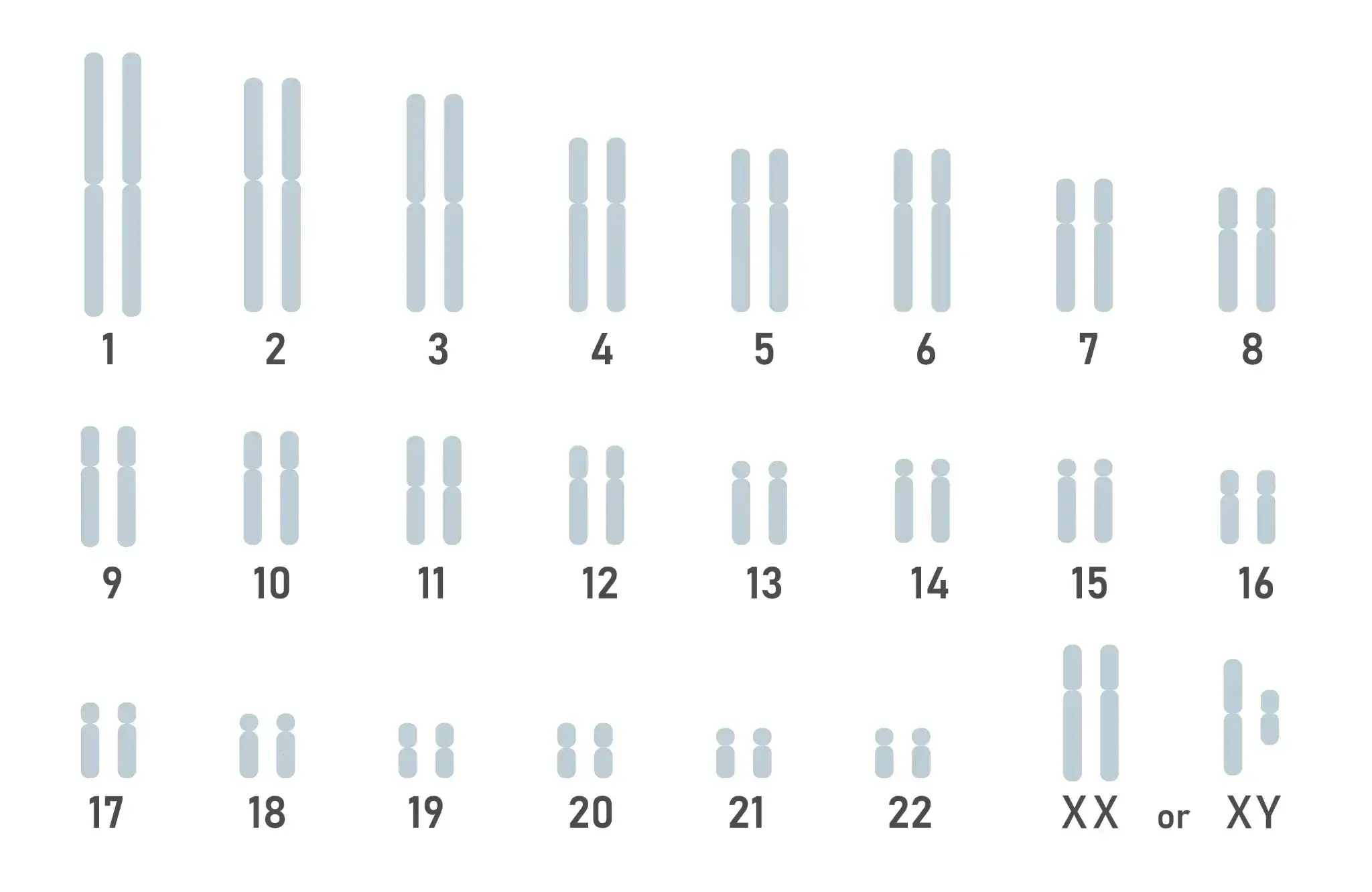
Schematic diagram of DNA map present in cells
- ■
- ■
- ■
- ■
- ■
- ■
- ■
- ■
- ■
Related genes
| Related genes | RN7SL618P |
|---|
Frequently asked questions (FAQ)
Q1. What is multifocal chronic pain?
Multifocal chronic pain is a condition in which chronic pain persists for more than three months in a wide area of the body, including the arms, legs, back, hips, and neck.Unlike a single injury or inflammation, in many cases a clear cause cannot be identified, and secondary symptoms such as sleep disturbances, loss of appetite, and depression may occur. The causes of chronic pain are diverse, including bone fractures, surgery, arthritis, and stress.
Q2. Is multifocal chronic pain related to genes?
Yes.A large-scale genome analysis of 380,000 British people revealed that the DNA region rs1443914 on chromosome 13 is associated with the risk of multifocal chronic pain.When there is a T-type mutation in the rs1443914 region of the gene "AL450423.1", the expression of genes involved in nerve transmission is suppressed, increasing the risk of chronic pain.
Q3. What is the onset mechanism of multifocal chronic pain?
The rs1443914 mutation suppresses the effects of serotonin, which relieves pain, and norepinephrine, which increases motivation.This reduces the pain inhibitory function and makes it easier to experience pain excessively. As the disease progresses, the risk of neurological disorders such as depression increases.
Q4. What is the distribution of the multifocal chronic pain genotype (rs1443914) in Japanese people?
The genotype distribution of rs1443914 in Japanese people isTT type 21.3%, TC type 49.7%, CC type 28.9%is. Worldwide, 21.4% are TT type, 49.7% are TC type, and 28.8% are CC type, and the Japanese and global averages show almost the same distribution. Approximately 71% of Japanese people carry the T mutation.
References
- Reference link 1: Chronic pain treatment guidelines Japan Organization for Healthcare Excellence (Minds Guideline Library)
- Reference link 2: 2019 Jun., Keira J A Johnston, PLoS genetics.
- Reference link 3: DNA Information on region “rs1443914” NIH
- Reference link 4: 2022 Feb., Fuquan Zhang, The Journal of clinical investigation.
- Reference link 5: 2022 Jan., Zhang, Fuquan, Bone & joint research.
- Reference link 6: 2019 Jun., Keira J A Johnston, PLoS Genet