
 Multiple sclerosis (MS)
- Multiple sclerosis (MS) is an autoimmune disease in which the immune system attacks the myelin sheath of the central nervous system.This causes various symptoms such as muscle weakness, visual impairment, and cognitive decline.
- T-type mutation in DNA region rs34383631University of Miami IMSGC study finds that people with MS tend to have a higher risk of developing MS
- The prevalence of type T mutation (CT+TT) in Japanese people is46.5%This is a low percentage compared to the global average of 62.6%.
Overview Multiple sclerosis (MS) is an autoimmune disease that attacks the central nervous system, including the brain, spinal cord, and optic nerves. The immune system mistakenly attacks the myelin sheath, the protective covering of the nerves, causing inflammation and hardening. This damage disrupts the electrical signals in the nerves, resulting in a variety of neurological symptoms that vary from person to person. Symptoms of MS vary, but physically they may include muscle weakness, problems with coordination and balance, difficulty walking, numbness or tingling in the extremities, and fatigue. There may also be visual problems such as blurred vision or double vision. Cognitively, symptoms include problems with memory and concentration, mood swings, and sometimes depression. As MS progresses, mobility limitations may also increase. MS symptoms are unpredictable and highly variable. Sometimes it stabilizes temporarily, sometimes it gradually worsens, and there are also repeated recurrences and remissions (no symptoms). A study by IMSGC and colleagues at the University of Miami revealed that the risk of developing multiple sclerosis (MS) is associated with a DNA region called rs34383631. There are three genotypes in this DNA region: CC, CT, and TT, and it was found that people with the T genotype tend to have a higher risk of multiple sclerosis.
What is multiple sclerosis (MS)?
Multiple sclerosis (MS) is an autoimmune disease that attacks the central nervous system, including the brain, spinal cord, and optic nerves.The immune system mistakenly attacks the myelin sheath, the protective covering of the nerves, causing inflammation and hardening (scarring). This damage disrupts the nerve's electrical signal transmission, resulting in a variety of neurological symptoms that vary from person to person.
Main symptoms of multiple sclerosis (MS)
MS symptoms are categorized into three areas: physical, visual, and cognitive.
- Physical symptoms:Muscle weakness, problems with coordination and balance, difficulty walking, numbness or tingling in the extremities, and chronic fatigue.
- Visual symptoms:Blurred vision, double vision (seeing things twice)
- Cognitive symptoms:Decreased memory/concentration, mood swings, depression
Course pattern of multiple sclerosis (MS)
MS symptoms are difficult to predict and highly variable, with the following patterns occurring:
| progression pattern | Features |
|---|---|
| relapsing-remitting type | Repeated recurrence and remission (disappearance of symptoms) of symptoms. most common type |
| primary progressive | Symptoms continue to gradually worsen from the onset of symptoms |
| Secondary progressive type | Transition from relapsing-remitting type to progressive deterioration |
Risk factors for multiple sclerosis (MS)
Genetic and environmental factors are complexly involved in the onset of MS.
- Genetic factors:DNA regions such as rs34383631 and rs9808753 are related
- Environmental factors:Vitamin D deficiency, certain viral infections (such as EB virus), and smoking
- Demographic factors:Women are about 2 to 3 times more likely to develop the disease than men.
The connection between genes and multiple sclerosis (MS)
Relationship between DNA region rs34383631 and MS
A study by IMSGC and colleagues at the University of Miami revealed that the risk of developing multiple sclerosis (MS) is associated with the DNA region rs34383631.
- There are three genotypes of rs34383631: CC, CT, and TT.
- Genotype with T-type mutation(CT type/TT type) people tend to have a higher risk of MS
Comparison of genotype distribution in Japanese and the world (rs34383631)
| Genotype | Percentage of Japanese people | percentage of the world |
|---|---|---|
| CC type | 53.4% | 37.3% |
| CT type | 39.3% | 47.5% |
| TT type | 7.2% | 15.1% |
The T mutation prevalence rate (CT+TT) in Japanese people is46.5%, which is lower than the global average of 62.6%. This suggests that there are somewhat fewer genetic risk factors associated with MS in the Japanese population.
Relationship between DNA region rs9808753 and MS
In addition to rs34383631,rs9808753has also been reported as a genetic region involved in MS.
Comparison of genotype distribution in Japanese and the world (rs9808753)
| Genotype | Percentage of Japanese people | percentage of the world |
|---|---|---|
| AA type | 23.5% | 72.9% |
| AG type | 49.9% | 24.9% |
| GG type | 26.4% | 2.1% |
The G mutation prevalence rate (AG+GG) in Japanese people is76.3%, which is significantly higher than the world average of 27.0%.
Rationale for testing
External DNA region: multiple sclerosis (MS)
The gene region most strongly associated with multiple sclerosis (MS) is rs34383631. The distribution of isomorphic genotypes in Japan is as follows.
- CC
53.4 % - CT
39.3 % - TT
7.2 %
Another gene region involved in multiple sclerosis (MS) is rs9808753. The distribution of isomorphic genotypes in Japan is as follows
- AA
23.5 % - AG
49.9 % - GG
26.4 %
Basis for inspection
Research by IMSGC and colleagues at the University of Miami has revealed that the risk of developing multiple sclerosis (MS) is linked to genes. There is a region called rs34383631 in the human genome, and the gene in that region has two types of mutations, C and T. It was found that people with the T-type mutation tend to have a higher risk of multiple sclerosis.
The DNA region investigated this time
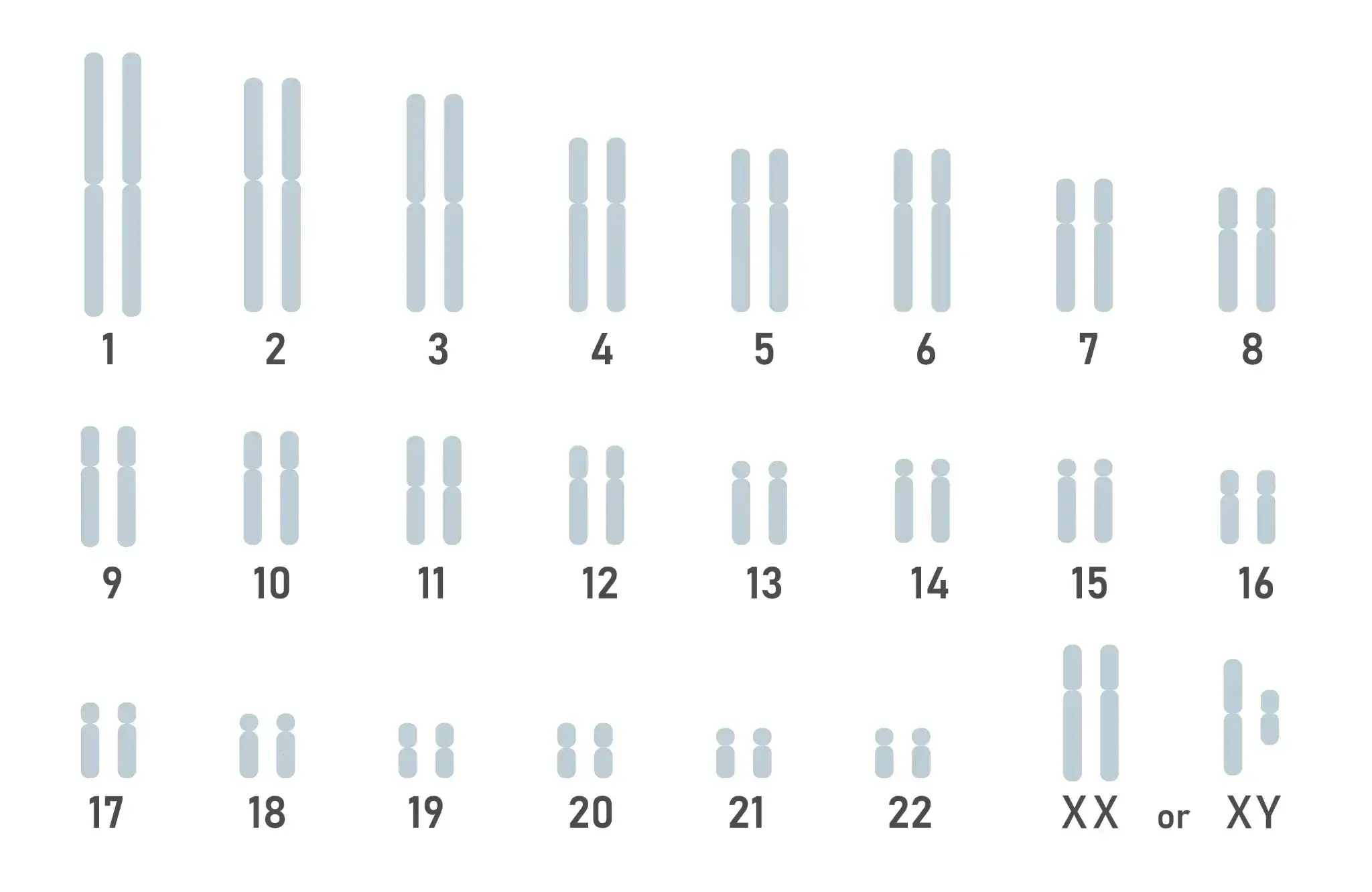
Schematic diagram of DNA map present in cells
- ■
- ■
- ■
- ■
- ■
- ■
- ■
- ■
- ■
Related genes
| Related genes | CD6 |
|---|---|
| Related genes | IFNGR2 |
Frequently asked questions (FAQ)
Q1. What is multiple sclerosis (MS)?
Multiple sclerosis (MS) is an autoimmune disease in which the immune system mistakenly attacks the myelin sheath of the central nervous system.Inflammation and hardening occur in the brain, spinal cord, and optic nerves, disrupting the transmission of nerve signals. A variety of symptoms appear, including muscle weakness, visual impairment, and cognitive decline, and it is characterized by a course of repeated relapses and remissions.
Q2. Is multiple sclerosis (MS) related to genes?
Yes.A study by IMSGC and colleagues at the University of Miami found that the DNA region rs34383631 is associated with the risk of developing MS.There are three genotypes of rs34383631: CC, CT, and TT, and people with the T-type mutation tend to have a higher risk of MS.
Q3. What are the main symptoms of multiple sclerosis (MS)?
The symptoms of MS arePhysical (muscle weakness, difficulty walking, numbness, fatigue), visual (blurred vision, double vision), cognitive (decreased memory, mood swings)It is classified into three areas. Symptoms are difficult to predict and can worsen and improve over time.
Q4. What is the distribution of the genotype (rs34383631) associated with multiple sclerosis in Japanese people?
The genotype distribution of rs34383631 in Japanese people isCC type 53.4%, CT type 39.3%, TT type 7.2%It is. Globally, 37.3% are CC type, 47.5% are CT type, and 15.1% are TT type, and Japanese people have a lower prevalence of T type mutation than the world average.
Q5. What is the cause of multiple sclerosis (MS)?
Although the exact cause of MS is unknown,Genetic factors (DNA regions such as rs34383631 and rs9808753) and environmental factors (vitamin D deficiency, EB virus infection, smoking)The combined effects of the following are considered. It has also been reported that women are approximately 2 to 3 times more likely to develop the disease than men.