
 motion sickness

- Motion sickness is an autonomic nervous symptom that occurs when the brain becomes confused due to a misalignment of information between the inner ear and vision.Approximately 1 in 3 people are likely to experience this
- C-type mutation in DNA region rs10514168Research finds that people with 2018 tend to have a higher risk of motion sickness
- appropriatePreventive measures (looking ahead, ventilation, taking motion sickness medicine)Symptoms can be alleviated by
Overview It is estimated that approximately one in three people is susceptible to motion sickness. Many people use trains, cars, buses, etc. on a daily basis, but for those who are prone to motion sickness, it can be a difficult time. Motion sickness is said to occur when the brain receives contradictory information. When you ride a vehicle, the inner ear, which controls your sense of balance, sends a signal to your brain that you are moving, and your eyes, which control vision, send a signal to your brain that you are at rest. This misalignment causes motion sickness. Recent research has revealed that a certain region near the gene "TSHZ1" influences the susceptibility to motion sickness. The causes of motion sickness vary depending on various factors, including the eyes, ears, and brain. If genetic testing can predict the cause of motion sickness, it may make traveling more comfortable. 2. Rationale The main causes of motion sickness are mainly caused by the environment and lifestyle habits, but genetic type is also thought to have an effect. Research at the University of Oxford has revealed that many people are more susceptible to motion sickness depending on a specific type of gene around the TSHZ1 gene. This region is called "rs10514168" and there are three genotypes: "CC type," "CA type," and "AA type." In Japanese, "CC type" is the most common genotype at 99.0%, "CA type" is the most common at 1.0%, and "AA type" is the least common at 0.00003%. Globally, the most common genotype is the CC type at 73.4%, the CA type at 24.5%, and the AA type the least common at 2.1%. There are genes other than rs10514168 that are associated with motion sickness, and it is thought that people who have many of them are more likely to experience motion sickness. 3. Mechanism of action The gene "TSHZ1" involved in motion sickness is located on chromosome 18 of the 24 chromosomes common to humans. This gene is abundant in the middle ear and inner ear, which are the organs of the ear, and has the role of controlling the normal formation of the ear, and has the role of reading and transmitting genetic information for forming the "semicircular canals" in the inner ear. This semicircular canal is the part that controls the sense of balance, and is thought to be deeply related to motion sickness. As mentioned above, the DNA region "rs10514168" is one of the SNVs that is attracting attention because it is deeply related to the susceptibility to motion sickness. 4.References
What is motion sickness?
Motion sickness (motion sickness) is an autonomic nervous symptom that occurs when the brain becomes confused when there is a discrepancy between the acceleration information sensed by the inner ear (vestibular organ) and the visual information received from the eyes during movement in a car, train, boat, airplane, etc.It is said that about 1 in 3 people are susceptible to this.
Causes and mechanisms of motion sickness
The main cause of motion sickness is conflicting information reaching the brain.
- Inner ear signals:The semicircular canals, which control the sense of balance, detect when the body is moving
- Visual signals:The eyes recognize that the surroundings are not moving (the inside of the car is stationary)
- Brain confusion:Unable to process two contradictory signals, autonomic nervous system becomes disordered
This discrepancy in information can cause symptoms such as dizziness, nausea, cold sweats, and facial pallor.
Main symptoms of motion sickness
The symptoms areIndividual differences from mild to severeThere is.
- Dizziness/light-headedness
- Nausea/vomiting
- Cold sweats and pale face
- increased saliva
- Fatigue/headache
Types and comparison of motion sickness
| Comparison items | car sickness | seasickness | Drunk |
|---|---|---|---|
| Frequency of occurrence | expensive | very high | relatively low |
| Main cause | Acceleration/deceleration/curve | shaking due to waves | Turbulence/pressure changes |
| Persistence of symptoms | Recover after getting off | Persistent even after disembarkation | Recover after landing |
| Ease of prevention | relatively easy | difficulty | relatively easy |
How to prevent and deal with motion sickness
Symptoms can be prevented or alleviated by the following methods.
- Forward gaze:View distant scenery in the direction of travel
- Ventilation:open the window and let in fresh air
- Meal management:Avoid being hungry or full and eat light meals
- Refrain from reading or using your smartphone:Prevent visual fixation
- Sickness medicine:Take an antihistamine 30 minutes before boarding
- Habituation (desensitization):The semicircular canals adapt through repeated riding.
The relationship between genes and motion sickness
Relationship between DNA region rs10514168 and onset risk
A study by 23andMe's Hromatka et al. found that the DNA region rs10514168 is associated with the risk of motion sickness.
- There are three genotypes of rs10514168: CC, CA, and AA.
- Genotype with type C mutationpeople tend to be at higher risk of motion sickness
Mechanism of action of gene TSHZ1
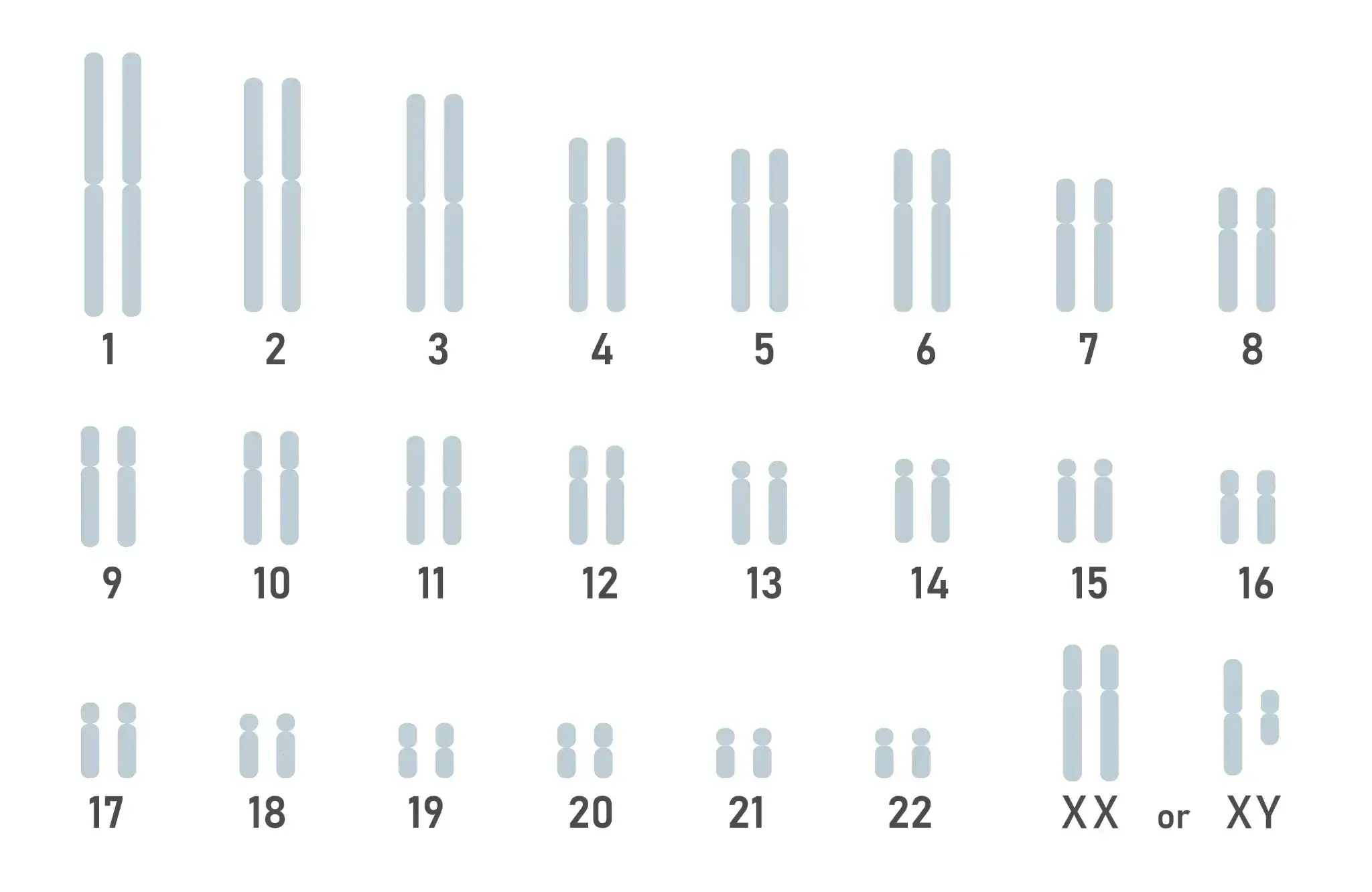
related to motion sicknessgene TSHZ1Of the 24 chromosomes common to humans,chromosome 18It is located in
- Expressed mostly in the middle ear and inner ear and controls the normal formation of the ear
- in the inner earsemicircular canalRead and transmit genetic information to form
- The semicircular canals are responsible for the sense of balance and are deeply involved in motion sickness.
Genotype distribution in Japanese (rs10514168)
| Genotype | Percentage of Japanese people | percentage of the world |
|---|---|---|
| CC type | 99.0% | 73.4% |
| CA type | 0.9% | 24.4% |
| AA type | 0.1%以下 | 2.0% |
Rationale for testing
Surface DNA region: motion sickness
The gene region that most strongly affects motion sickness is rs10514168. The distribution of isomorphic genotypes in Japan is as follows.
- CC
99.0 % - CA
0.9 % - AA
0.1%以下
Basis for inspection
A study by 23andMe's Hromatka et al. revealed that the risk of motion sickness is linked to genes. There is a region called rs10514168 in the human genome, and there are two types of mutations, C and A, in the gene in this region. It was found that people with the type C mutation tend to have a higher risk of motion sickness.
The DNA region investigated this time
Schematic diagram of DNA map present in cells
- ■
- ■
- ■
- ■
- ■
- ■
- ■
- ■
- ■
Related genes
| Related genes | TSHZ1 |
|---|
Frequently asked questions (FAQ)
Q1. What is motion sickness?
Motion sickness (motion sickness) is an autonomic nervous symptom that occurs when the brain becomes confused due to a discrepancy between the acceleration information sensed by the inner ear and the visual information from the eyes during movement in a car, train, boat, etc.It is estimated that about one in three people are likely to experience it.
Q2. What causes motion sickness?
The main cause isDiscrepancies between the motion detected by the vestibular organs in the inner ear and the visual information captured by the eyesIt is. As a genetic factor, carriers of type C mutation in the DNA region rs10514168 tend to be at higher risk.
Q3. Can genetic testing determine the risk of motion sickness?
By examining the genotype of the DNA region rs10514168,Understanding trends in the risk of developing motion sicknessYou can. A study by 23andMe found that people with the C mutation tend to be at higher risk.
Q4. Is there any way to prevent motion sickness?
Looking ahead, ventilation, dietary management, and taking motion sickness medicine in advanceis valid. In some cases, repeated riding allows the semicircular canals to adapt and reduce symptoms.
Q5. What is the gene TSHZ1 involved in motion sickness?
TSHZ1 isA gene located on chromosome 18 that controls the normal formation of the middle ear and inner ear.It is. It is involved in the formation of the semicircular canals, and DNA mutations near this gene affect the susceptibility to motion sickness.
References
- Reference link 1: 2006 Oct., Covanis, Athanasios, Pediatrics.
- Reference link 2: 2015 Jan., Bethann S. Hromatka, Human molecular genetics.
- Reference link 3: Information on DNA region “rs10514168” NIH
- Reference link 4: 2007 Aug., Nathalie Coré, Dev Biol.
- Reference link 5: 2015 May., Bethann S Hromatka, Hum Mol Genet