
 Tendency to be a morning person
- The tendency to be a morning person is a sleep type that naturally gets sleepy at night and wakes up early in the morning.is determined by the gene MYCBP2, which controls the body clock through the suprachiasmatic nucleus of the brain.
- TT type mutation in DNA region rs9573999A University of Exeter study found that people with ADHD tend to sleep 25 minutes less on average and be more active earlier in life.
- The prevalence of type TT among Japanese people is3.1%, which is a high percentage compared to the world average of 0.1%以下.
Overview Are you a “morning person” or a “night owl”? Some people naturally become sleepy at night and wake up early in the morning, while others are unable to sleep at night and feel sleepy in the morning. However, work and school schedules don't change, so even night owls often have to wake up early in the morning. Sleep types can be broadly divided into three types: morning types, intermediate types, and night types. Everyone is born as a morning person or intermediate type, but as we get older, the ratio changes, and by the age of 15, about 20% of people become night types. Recent research has shown that sleep type is influenced to some extent by genes. Sleep types are attracting attention in the scientific community, and efforts are being made to elucidate the mechanisms. 2. Rationale Research conducted at the UK Biobank project revealed that a specific region of the gene ``MYCBP2'' influences sleep type. This DNA region is called ``rs9573999,'' and there are three genotypes: ``CC type,'' ``CT type,'' and ``TT type.'' Among these, ``TT type'' was found to be more likely to be a morning person. It is known that the most common genotype in Japanese people is the CC type at 76.8%, the CT type at 10.8%, and the TT type the least common at 1.5%. Among the genotypes worldwide, it has been revealed that "CC type" is the most common at 87.3%, "CT type" is the most common at 12.3%, and "TT type" is the least common at 0.4%. However, it has been revealed that people with the TT type (rs9573999) sleep an average of 25 minutes less and are more active earlier. By knowing your own genetic type through genetic testing, you can predict the optimal amount of sleep and the most productive (efficient) time of day. These tips will help you improve the quality of your life and work, and help you live a better life every day. 3. Mechanism of action Among the 24 chromosomes common to humans, the gene "MYCBP2" is located on chromosome 13. This gene is present in large numbers in an organ called the suprachiasmatic nucleus of the brain, and has the role of encoding and forming genes that control the body's internal clock and controlling its functions. The suprachiasmatic nucleus, which is involved in sleep type, is the only organ with a biological clock function, and the gene ``MYCBP2'' is involved in its formation and regulation. Therefore, this gene is known to influence a person's sleep type. As mentioned above, the DNA region "rs9573999" is one of the SNPs that is attracting attention because it is deeply related to sleep types such as morningness.
What makes someone a morning person?
The tendency to be a morning person is a person who has a sleeping pattern in which they naturally become sleepy at night and wake up early in the morning.The latest research has revealed that sleep types are broadly classified into three types: morning type, intermediate type, and night type, and that they are determined to some extent by genes.
What is sleep type classification?
Human sleep types are classified into the following three types. All people are born as morning types or intermediate types, but this changes as they grow older.Approximately 20% of people become night owls by the age of 15.I will.
- Morning type:I naturally fall asleep at night and wake up early in the morning. High productivity in the morning
- Intermediate type:Shows a sleep pattern intermediate between morning and night owls
- Night owl (evening type):Can be active late at night and has difficulty waking up in the morning. High productivity in the afternoon and evening
Difference between morning people and night owls
| Comparison items | morning person | night owl |
|---|---|---|
| Awakening time | Natural awakening from 5am to 7am | Waking up after 8am |
| peak productivity | Morning (8:00-12:00) | Afternoon to night (14:00 to 22:00) |
| bedtime | Falling asleep naturally between 9pm and 11pm | Falling asleep after midnight |
| sleep time | TT type is 25 minutes shorter on average | relatively long trend |
| genetic involvement | Associated with TT type of MYCBP2 gene | Related to CC type and CT type |
The link between genes and the tendency to become morning people
What is the relationship between DNA region rs9573999 and sleep type?
A study by Jones et al., University of Exeter Medical School (2019, Nature Communications) revealed that the tendency to be a morning person is associated with the DNA region rs9573999.
- There are three genotypes of rs9573999: CC, CT, and TT.
- People with type TTOn average, people sleep 25 minutes less and are more active earlier.
- This gene region is related to the MYCBP2 gene
Comparison of genotype distribution in Japanese and the world (rs9573999)
| Genotype | Percentage of Japanese people | percentage of the world |
|---|---|---|
| CC type | 67.5% | 95.4% |
| CT type | 29.2% | 4.4% |
| TT type | 3.1% | 0.1%以下 |
The CT type prevalence among Japanese people is29.2%This is approximately 6.6 times higher than the global average of 4.4%. The TT type is also Japanese.3.1%is higher than the world average of 0.1%以下, reflecting the genetic diversity of sleep types in the Japanese population.
What is the mechanism of the gene MYCBP2 that controls the body clock?
MYCBP2 is a gene located on human chromosome 13, and controls the body clock through the suprachiasmatic nucleus of the brain.
- suprachiasmatic nucleusis the only organ in the brain that functions as a biological clock.
- The MYCBP2 gene is present in large numbers in the suprachiasmatic nucleus, and encodes, forms and controls genes that control the body clock.
- Mutations in the DNA region rs9573999 affect MYCBP2 gene expression and determine sleep type
By learning your own genetic type through genetic testing, you can predict the optimal amount of sleep and when you are most productive. This information can provide hints for improving the quality of your life and work.
Rationale for testing
External DNA region: Tendency to be a morning person
The gene region that most strongly influences the tendency to be a morning person is rs9573999. The distribution of isomorphic genotypes in Japan is as follows.
- CC
67.5 % - CT
29.2 % - TT
3.1 %
Another gene region associated with the tendency to become a morning person is rs7060620. The distribution of isomorphic genotypes in Japan is as follows
- AA
98.6 % - AT
1.3 % - TT
0.1%以下
Another gene region associated with the tendency to become a morning person is rs7299922. The distribution of isomorphic genotypes in Japan is as follows
- AA
39.6 % - AG
46.6 % - GG
13.7 %
Another gene region associated with the tendency to become a morning person is rs2053457. The distribution of isomorphic genotypes in Japan is as follows
- CC
32.1 % - CT
49.0 % - TT
18.7 %
Another gene region associated with the tendency to become a morning person is rs989885. The distribution of isomorphic genotypes in Japan is as follows
- AA
66.7 % - AG
29.8 % - GG
3.3 %
Basis for inspection
A study by Jones and colleagues at the University of Exeter Medical School revealed that the tendency to be a morning person is linked to genes. There is a region called rs9573999 in the human genome, and the gene in that region has two types of mutations, C and T. It was found that people with the type C mutation were more likely to be morning people.
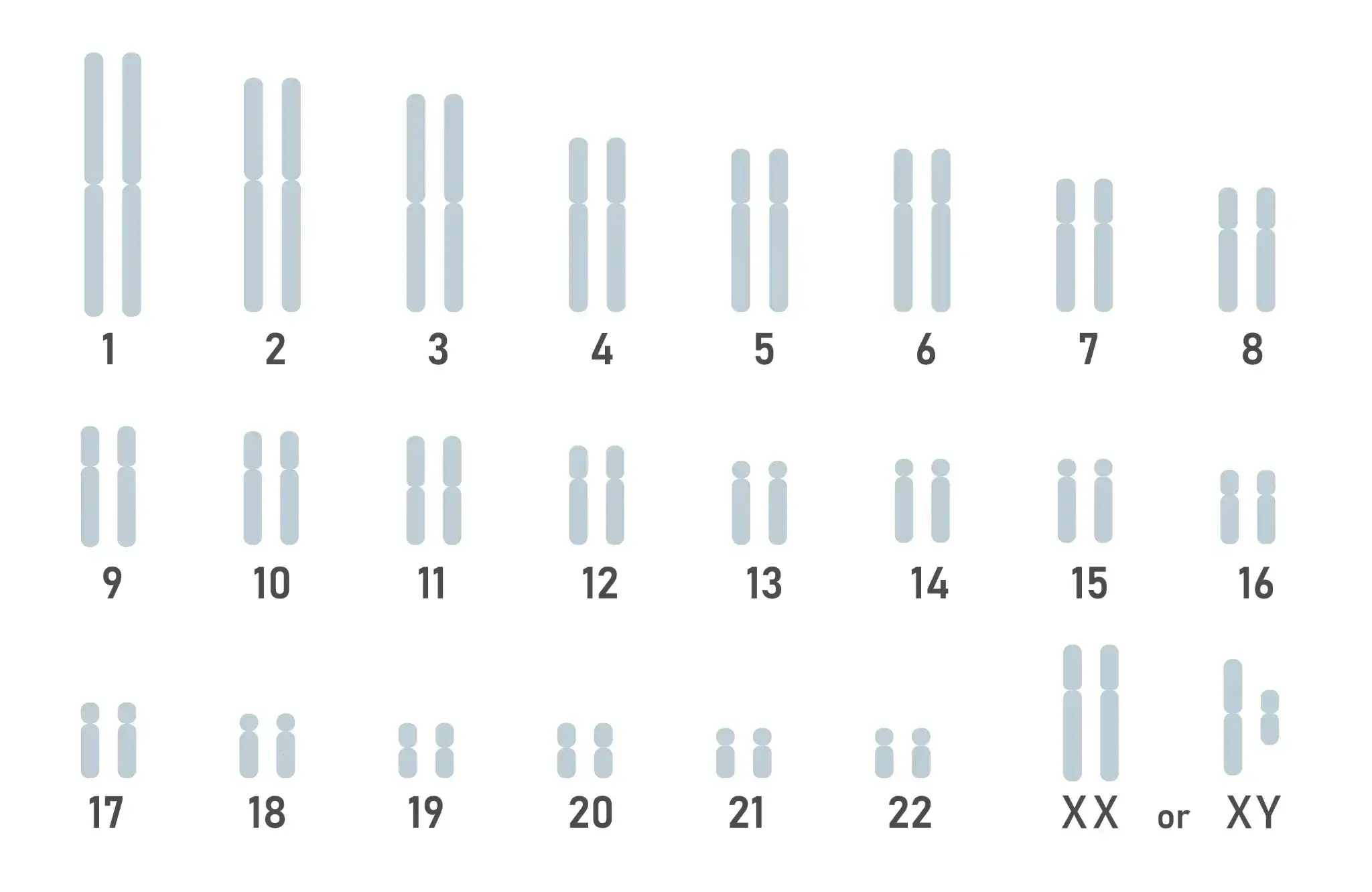
The DNA region investigated this time
Schematic diagram of DNA map present in cells
- ■
- ■
- ■
- ■
- ■
- ■
- ■
- ■
- ■
Related genes
| Related genes | MYCBP2-AS1 |
|---|---|
| Related genes | RNU6-587P |
| Related genes | COPZ1 |
| Related genes | PREPL |
| Related genes | RPL17P45 |
Frequently asked questions (FAQ)
Q1. What is the tendency to become a morning person?
The tendency to be a morning person refers to a person's sleep pattern of naturally falling asleep at night and waking up early in the morning.Sleep types are classified into three types: morning types, intermediate types, and night types, and all people are born as morning types or intermediate types. By the age of 15, about 20% of people become night owls. New research shows that your genes influence your sleep type.
Q2. Is the tendency to be a morning person related to genes?
Yes.A study by Jones et al., University of Exeter Medical School (2019, Nature Communications) found that the DNA region rs9573999 is associated with a tendency to be a morning person.There are three genotypes of rs9573999: CC, CT, and TT, and people with the TT type sleep an average of 25 minutes less and tend to be active earlier.
Q3. What is the difference between morning people and night owls?
Morning peopleYou will naturally fall asleep at night, wake up early in the morning, and be more productive in the morning.will demonstrate. Night owls can be active late into the night and tend to perform better in the afternoon and evening. This difference is controlled by the circadian clock gene MYCBP2, located in the suprachiasmatic nucleus of the brain.
Q4. What is the gene MYCBP2 that controls the body clock?
MYCBP2 is a gene located on human chromosome 13It is found mostly in the suprachiasmatic nucleus of the brain. The suprachiasmatic nucleus has the role of encoding, forming, and controlling the genes that control the circadian clock, and is the only organ with the function of the circadian clock. Mutations in MYCBP2 directly affect sleep type.
Q5. What are the benefits of knowing your sleep type through genetic testing?
By knowing your genetic type through genetic testing,Predict your optimal sleep time and most productive timesYou can. This can be used to optimize life rhythms, such as people with morning person genes emphasizing early morning activities, and people with night owl genes placing important tasks in the afternoon.
References
- Reference link 1: 2017 Apr., Christoph Randler, Scientific Reports.
- Reference link 2: DNA Information on region “rs9573999” NIH
- Reference link 3: 2019 Jan., Samuel E. Jones, Nature Communications
- Reference link 4: 2019 Mar., Philip R Jansen, Nat Genet