
 monocytosis

- Monocytosis is a hematological condition in which the number of monocytes in the blood increases to more than 8% of the total white blood cells.It occurs in chronic infections, inflammation, autoimmune diseases, and some leukemias.
- G-type mutation in DNA region rs16994583Cambridge University research finds that people with the disease tend to have a higher risk of monocytosis
- The prevalence of type GG among Japanese people is99.9%, which is higher than the world average of 84.3%.
Overview Monocytosis refers to a specific hematological condition in which the percentage of monocytes in the blood is increased. Monocytes are essential cells for immune defenses such as removing infections and dead cells, and monocytosis usually indicates an increase in the number of monocytes in the body in response to a condition. This increase is seen in a variety of settings, including chronic infections and inflammation, autoimmune diseases, and some types of leukemia. Typically, in adult blood tests, monocytes make up about 2-8% of the total white blood cells. However, this rate increases significantly in monocytosis, which can indicate disease progression, recovery, or, rarely, a possible blood disorder. An increase in the number of monocytes is an important diagnostic clue that indicates a strengthened immune response and may also be tested to assess treatment response and disease progression. A study by Vuckovic et al. from the University of Cambridge revealed that the risk of developing monocytosis is associated with a DNA region called rs16994583. There are three genotypes in this DNA region: GG, GA, and AA, and it was found that people with the G genotype tend to have a higher risk of monocytosis.
What is monocytosis?
Monocytosis is a specific hematological condition in which the percentage of monocytes in the blood increases to more than 8% of total white blood cells.Monocytes are a type of white blood cell that are essential for immune defense, and are responsible for defending against infection and removing dead cells.
Standards for normal and abnormal monocyte values
The standard values for monocytes in blood tests for adults are as follows.
| indicators | normal range | Criteria for monocytosis |
|---|---|---|
| white blood cell ratio | 2〜8% | More than 8% |
| absolute number | 200-800 pieces/μL | More than 800 pieces/μL |
If the number of monocytes continues to increase beyond this standard, it is an important diagnostic indicator that indicates some kind of disease or an active immune response.
Main causes of monocytosis
Monocytosis occurs when the body increases the production of monocytes in response to various diseases and conditions. The main causes are classified into the following four categories.
- Chronic infections:Tuberculosis, infective endocarditis, fungal infections, etc.
- Autoimmune diseases:Systemic lupus erythematosus (SLE), rheumatoid arthritis, etc.
- Inflammatory diseases:Sarcoidosis, inflammatory bowel disease (Crohn's disease, ulcerative colitis), etc.
- Blood diseases:Chronic myelomonocytic leukemia (CMML), myelodysplastic syndrome, etc.
Clinical significance of monocytosis
The increase in the number of monocytes isImportant diagnostic clues indicating enhanced immune responseIt is. Monocytosis has the following clinical implications:
- Assessment of disease progression:Disease activity can be determined by changes in monocyte counts
- Monitoring treatment response:The therapeutic effect is evaluated by changes in monocyte count.
- Recovery stage indicators:A temporary increase in monocytes is seen during the recovery period from infection.
- Blood disease screening:Persistent monocytosis suggests a possible blood disorder
Relationship between genes and monocytosis
Relationship between DNA region rs16994583 and monocytosis
A study by Vuckovic et al. from the University of Cambridge revealed that the risk of monocytosis is associated with the DNA region rs16994583.
- There are three genotypes of rs16994583: GG, GA, and AA.
- Genotype with type G mutation(GG type/GA type) people tend to have a higher risk of monocytosis
Involvement of DNA region rs374039502
Furthermore,rs374039502has also been identified as a genetic region associated with monocytosis.
- There are three genotypes of rs374039502: TT, TA, and AA.
- Mutations in this region also influence monocytosis risk
Comparison of genotype distribution in Japanese and the world (rs16994583)
| Genotype | Percentage of Japanese people | percentage of the world |
|---|---|---|
| GG type | 99.9% | 84.3% |
| GA type | 0.1%以下 | 15.0% |
| AA type | 0.1%以下 | 0.6% |
Comparison of genotype distribution in Japanese and the world (rs374039502)
| Genotype | Percentage of Japanese people | percentage of the world |
|---|---|---|
| TT type | 99.9% | 95.9% |
| TA type | 0.1%以下 | 4.0% |
| AA type | 0.1%以下 | 0.1%以下 |
Japanese people have the GG type at rs16994583.99.9%, which is higher than the global average of 84.3%. On the other hand, rs374039502 also shows a nearly uniform distribution of TT type at 99.9%, indicating that genetic diversity in the Japanese population is limited compared to the world average.
Rationale for testing
Superficial DNA region: monocytosis
The gene region that most strongly influences monocytosis is rs16994583. The distribution of isomorphic genotypes in Japan is as follows.
- GG
99.9 % - GA
0.1%以下 - AA
0.1%以下
Another gene region involved in monocytosis is rs374039502. The distribution of isomorphic genotypes in Japan is as follows
- TT
99.9 % - TA
0.1%以下 - AA
0.1%以下
Basis for inspection
Research by Vuckovic et al. at the University of Cambridge revealed that the risk of developing monocytosis is linked to genes. There is a region called rs16994583 in the human genome, and there are two types of mutations, G and A, in the gene in that region. It was found that people with type G mutations tend to have a higher risk of monocytosis.
The DNA region investigated this time
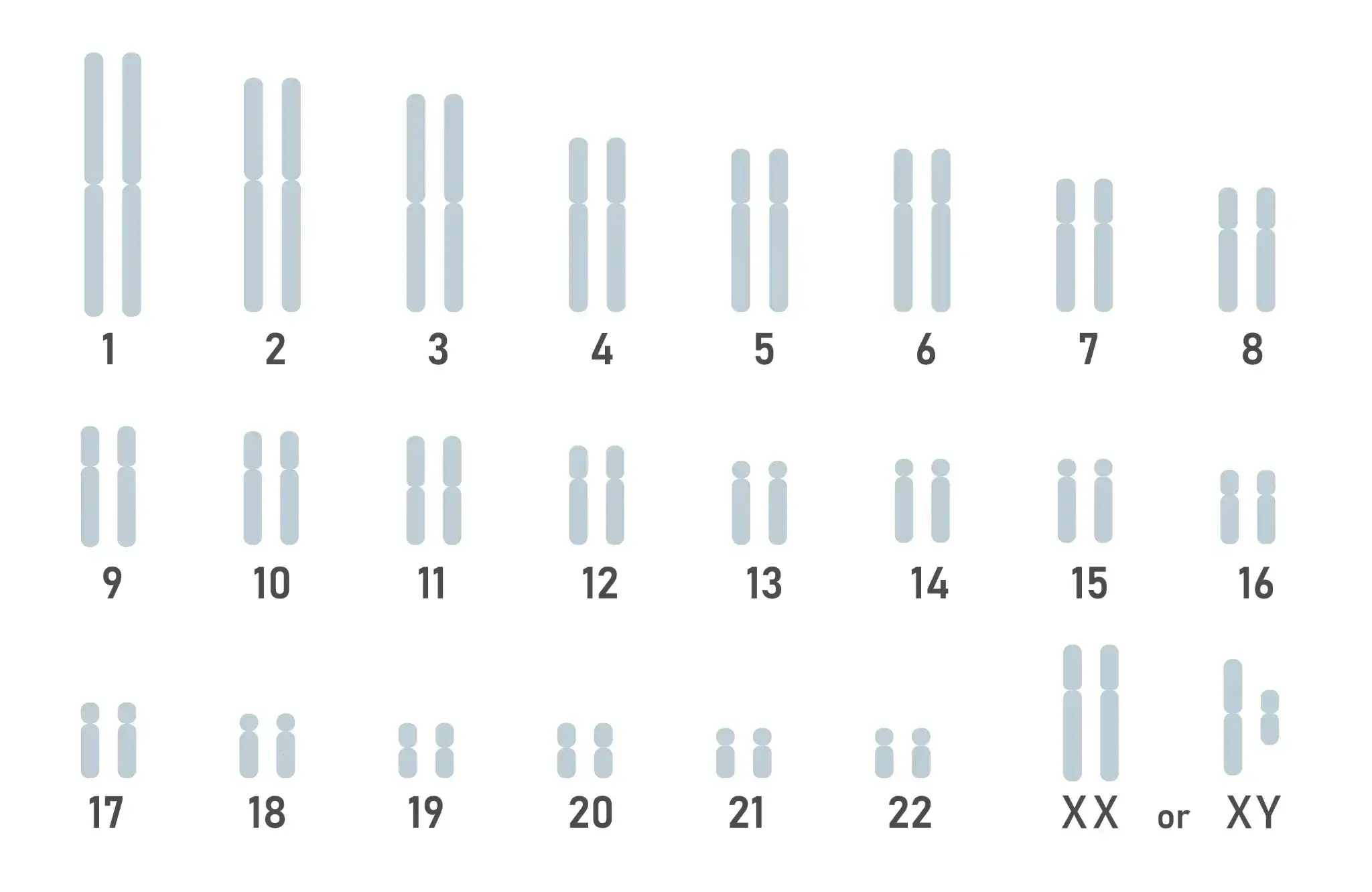
Schematic diagram of DNA map present in cells
- ■
- ■
- ■
- ■
- ■
- ■
- ■
- ■
- ■
Related genes
| Related genes | RPL7L1P11 |
|---|---|
| Related genes | TNFSF13B |
Frequently asked questions (FAQ)
Q1. What is monocytosis?
Monocytosis is a hematological condition in which the percentage of monocytes in the blood increases to more than 8% of total white blood cells.Monocytes are immune cells responsible for defending against infection and removing dead cells, and their numbers increase in chronic infections, inflammatory diseases, autoimmune diseases, and some leukemias. Normal values for adults are 2-8% of total white blood cells.
Q2. Is monocytosis related to genes?
Yes.A study by Vuckovic et al. from the University of Cambridge found that the DNA region rs16994583 is associated with the risk of developing monocytosis.There are three genotypes of rs16994583: GG, GA, and AA, and people with the G-type mutation tend to be at higher risk.
Q3. What is the cause of monocytosis?
What causes monocytosis?4 categoriesIt is classified as Chronic infectious diseases (tuberculosis, endocarditis), autoimmune diseases (SLE, rheumatoid arthritis), inflammatory diseases (sarcoidosis, inflammatory bowel disease), and blood diseases (chronic myelomonocytic leukemia, myelodysplastic syndrome).
Q4. What is the normal value for monocytes?
In adult blood tests, monocytes are2-8% of total white blood cellsis within the normal range. In terms of absolute numbers, the standard value is 200 to 800 cells/μL. Monocytosis is diagnosed when the number of cells continuously increases beyond this range.
Q5. What is the distribution of monocytosis genotype (rs16994583) in Japanese people?
The genotype distribution of rs16994583 in Japanese people isGG type 99.9%, GA type 0.1%以下, AA type 0.1%以下It is. Worldwide, 84.3% are type GG, 15.0% are type GA, and 0.6% are type AA, and almost all Japanese people are type GG.
References
- Reference link 1: 2020 Sep., Dragana Vuckovic, Cell