
 monocytopenia

- Monocytopenia is a condition in which the number of monocytes in the blood decreases abnormally.The main causes are bone marrow abnormalities, infections, drugs, autoimmune diseases, and nutritional deficiencies.
- T-type mutation in DNA region rs10876469A University of Cambridge study finds that people with this condition tend to be at higher risk of monocytopenia.
- The prevalence of type GG among Japanese people is54.8%, which is higher than the world average of 10.1%, and the TT type6.7%and lower than the world average of 46.4%.
Overview Monocytopenia is a condition in which the number of monocytes in the blood is abnormally low, and causes include bone marrow abnormalities, infections, drugs, autoimmune diseases, and nutritional deficiencies. Monocytes are a type of white blood cell that are the body's defense mechanism against infections and have the role of removing dead cells and foreign substances. Monocytes are produced in the bone marrow, circulate in the blood, and eventually differentiate into macrophages and dendritic cells. Although monocytopenia itself does not cause any specific symptoms, the decreased number of monocytes increases the risk of infection. Signs of infection include fever, body aches, fatigue, and frequent or prolonged infections. These symptoms indicate that your body's ability to fight infections is reduced. Diagnosis of monocytopenia is made by blood tests. A complete blood count (CBC) measures the number of monocytes, and additional tests may be done to further determine the cause. Treatment depends on the cause. For example, if the cause is a bone marrow abnormality, a bone marrow transplant or certain drugs may be used. If infection is the cause, antibiotics and antiviral drugs are used. If a drug is the cause, the drug may be stopped or changed; if a nutritional deficiency is the cause, nutritional supplements or dietary therapy may be given. A study by Vuckovic et al. at the University of Cambridge revealed that the risk of developing monocytopenia is associated with a DNA region called rs10876469. There are three genotypes in this DNA region: TT, TG, and GG, and it was found that people with the G genotype tend to have a higher risk of monocytopenia.
What is monocytopenia?
Monocytopenia is a hematological disease in which the number of monocytes in the blood is abnormally low.Monocytes are a type of white blood cell that play an important role in the body's defense mechanism against infections, removing dead cells and foreign substances. Monocytes are produced in the bone marrow, circulate in the blood, and eventually differentiate into macrophages and dendritic cells.
5 causes of monocytopenia
The causes of monocytopenia can be broadly classified into the following five types.
| Cause classification | Specific example | Main treatment methods |
|---|---|---|
| bone marrow abnormalities | Bone marrow failure, aplastic anemia | Bone marrow transplant, certain drugs |
| infectious disease | Severe infection, sepsis | antibiotics, antivirals |
| drug | Chemotherapy drugs, immunosuppressants | Discontinuation/change of drug |
| autoimmune disease | systemic lupus erythematosus etc. | immunomodulatory therapy |
| malnutrition | Vitamin B12 deficiency, folic acid deficiency | nutritional supplements, diet therapy |
Symptoms and diagnosis method of monocytopenia
Monocytopenia itselfDoes not directly cause specific symptomsHowever, a decrease in monocyte counts increases the risk of infection. The following symptoms may be seen as signs of infection:
- Fever:Persistent fever of 38℃ or higher
- Fatigue:Feeling of malaise and fatigue throughout the body
- Body pain:muscle pain or joint pain
- Frequent infections:get repeated infections
- Prolonged infection:Recovery takes longer than usual
The diagnosis isComplete blood count (CBC)This is done with a blood test to measure the number of monocytes. Additional tests may be performed to determine the cause.
Relationship between genes and monocytopenia
Relationship between DNA region rs10876469 and monocytopenia
A study by Vuckovic et al. from the University of Cambridge revealed that the risk of monocytopenia is associated with the DNA region rs10876469.
- There are three genotypes of rs10876469: TT, TG, and GG.
- Genotype with T-type mutation(TT type/TG type) people tend to have a higher risk of monocytopenia
Other related DNA regions
In addition to rs10876469, the following six DNA regions are also associated with monocytopenia.
- rs148665432:CC type prevalence among Japanese people: 99.9% (world average: 95.3%)
- rs374039502:TT type prevalence among Japanese people: 99.9% (world average: 95.9%)
- rs434216:TT type prevalence among Japanese people: 37.8% (world average: 41.1%)
- rs55771168:TT type prevalence among Japanese people: 34.4% (world average: 49.6%)
- rs6686197:CC type prevalence among Japanese people: 99.9% (world average: 77.0%)
- rs76080105:TT type prevalence among Japanese people: 95.2% (world average: 99.9%)
Comparison of genotype distribution in Japanese and the world (rs10876469)
| Genotype | Percentage of Japanese people | percentage of the world |
|---|---|---|
| TT type | 6.7% | 46.4% |
| TG type | 38.4% | 43.3% |
| GG type | 54.8% | 10.1% |
Comparison of genotype distribution between Japanese and the world (rs434216)
| Genotype | Percentage of Japanese people | percentage of the world |
|---|---|---|
| TT type | 37.8% | 41.1% |
| TC type | 47.3% | 46.0% |
| CC type | 14.7% | 12.8% |
Comparison of genotype distribution in Japanese and the world (rs55771168)
| Genotype | Percentage of Japanese people | percentage of the world |
|---|---|---|
| TT type | 34.4% | 49.6% |
| TC type | 48.5% | 41.6% |
| CC type | 17.0% | 8.7% |
Japanese people have the GG type at rs10876469.54.8%, which is significantly higher than the global average of 10.1%. On the other hand, TT type, which is at high risk,6.7%This is a lower level than the world average of 46.4%, indicating that the Japanese population tends to have a genetically lower risk of monocytopenia.
Rationale for testing
Superficial DNA region: monocytopenia
The gene region that most strongly influences monocytopenia is rs10876469. The distribution of isomorphic genotypes in Japan is as follows.
- TT
6.7 % - TG
38.4 % - GG
54.8 %
Another gene region involved in monocytopenia is rs148665432. The distribution of isomorphic genotypes in Japan is as follows
- CC
99.9 % - CT
0.1%以下 - TT
0.1%以下
Another gene region involved in monocytopenia is rs374039502. The distribution of isomorphic genotypes in Japan is as follows
- TT
99.9 % - TA
0.1%以下 - AA
0.1%以下
Another gene region involved in monocytopenia is rs434216. The distribution of isomorphic genotypes in Japan is as follows
- TT
37.8 % - TC
47.3 % - CC
14.7 %
Another gene region involved in monocytopenia is rs55771168. The distribution of isomorphic genotypes in Japan is as follows
- TT
34.4 % - TC
48.5 % - CC
17.0 %
Another gene region involved in monocytopenia is rs6686197. The distribution of isomorphic genotypes in Japan is as follows
- GG
0.1%以下 - GC
0.1%以下 - CC
99.9 %
Another gene region involved in monocytopenia is rs76080105. The distribution of isomorphic genotypes in Japan is as follows
- TT
95.2 % - TC
4.6 % - CC
0.1%以下
Basis for inspection
A study by Vuckovic et al. at the University of Cambridge revealed that the risk of developing monocytopenia is linked to genes. There is a region called rs10876469 in the human genome, and there are two types of mutations, T and G, in the gene in this region. It was found that people with T-type mutations tend to have a higher risk of monocytopenia.
The DNA region investigated this time
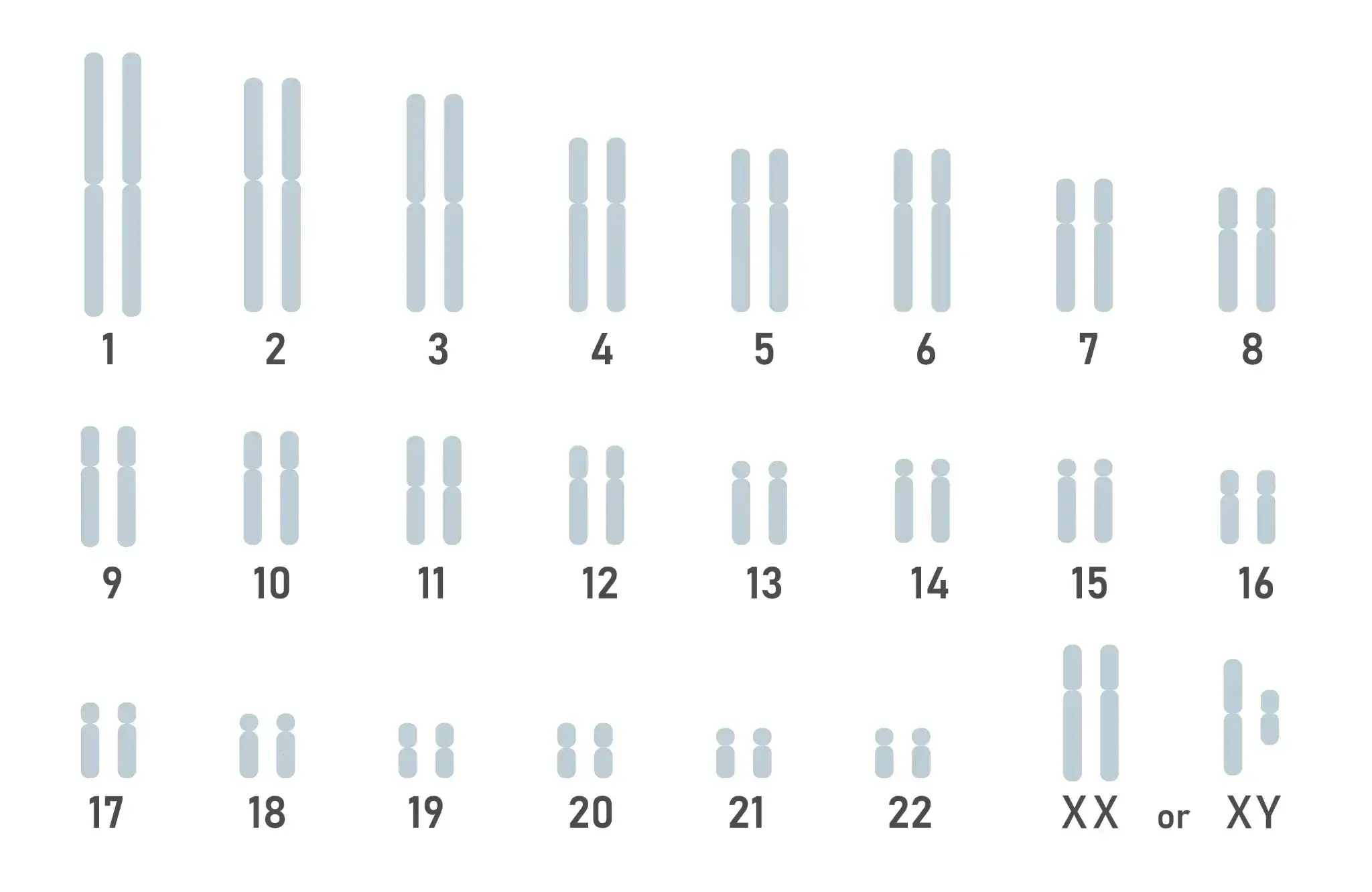
Schematic diagram of DNA map present in cells
- ■
- ■
- ■
- ■
- ■
- ■
- ■
- ■
- ■
Related genes
| Related genes | ATF7 |
|---|---|
| Related genes | AFF2 |
| Related genes | TNFSF13B |
| Related genes | COX4I1 |
| Related genes | CCDC153 |
| Related genes | UBE2Q1 |
| Related genes | FLT3 |
Frequently asked questions (FAQ)
Q1. What is monocytopenia?
Monocytopenia is a hematological disease in which the number of monocytes in the blood is abnormally low.Monocytes are a type of white blood cell that have the role of removing dead cells and foreign substances as a defense mechanism against infections. Monocytes are produced in the bone marrow, circulate in the blood, and then differentiate into macrophages and dendritic cells. A decrease in monocyte counts increases the risk of infection.
Q2. What is the cause of monocytopenia?
What causes monocytopenia?5 categoriesIt is roughly divided into These include bone marrow abnormalities (bone marrow failure and aplastic anemia), infections (severe infections and sepsis), drugs (chemotherapy drugs and immunosuppressants), autoimmune diseases (systemic lupus erythematosus), and nutritional deficiencies (vitamin B12 deficiency and folic acid deficiency). Treatment depends on the cause.
Q3. Is monocytopenia related to genes?
Yes.A study by Vuckovic et al. from the University of Cambridge found that the DNA region rs10876469 is associated with the risk of developing monocytopenia.There are three genotypes of rs10876469: TT, TG, and GG, and people with the T mutation genotype tend to be at higher risk. Six other DNA regions have also been confirmed to be related.
Q4. What is the distribution of monocytopenia genotype (rs10876469) in Japanese people?
The genotype distribution of rs10876469 in Japanese people isTT type 6.7%, TG type 38.4%, GG type 54.8%It is. Worldwide, 46.4% are TT type, 43.3% are TG type, and 10.1% are GG type, and the proportion of Japanese people with GG type tends to be significantly higher than the world average.
Q5. What are the symptoms of monocytopenia?
Although monocytopenia itself does not cause specific symptoms,Increased risk of infectious diseasesis the problem. Signs of infection include fever, body aches, fatigue, and frequent or prolonged infections. Diagnosis is made by a complete blood count (CBC) blood test.
References
- Reference link 1: 2020 Sep., Dragana Vuckovic, Cell
- Reference link 2: 2020 Sep., Ming-Huei Chen, Cell
- Reference link 3: 2016 Nov., William J Astle, Cell
- Reference link 4: 2021 Jun., Yao Hu, BMC Genomics