
 microcephaly

- Microcephaly is a disease in which the head circumference is below the normal range for the same age.The main causes are genetic factors, maternal infections, alcohol consumption during pregnancy, and malnutrition.
- T-type mutation in DNA region rs12534093A Soochow University study finds that people with this condition tend to have a higher risk of developing microcephaly.
- The prevalence of type TT among Japanese people is99.9%This is an extremely high percentage compared to the world average of 61.3%.
Overview Microcephaly is a condition in which the head is smaller than normal due to delayed head development at birth or during childhood. There are many causes of microcephaly, including genetic disorders such as Down syndrome and Edwards syndrome, maternal infections (rubella, toxoplasmosis, and Zika virus infection), alcohol use during pregnancy, and severe malnutrition. In addition to a small head size, microcephaly causes symptoms such as developmental delays, intellectual disabilities, language and motor impairments, epilepsy, and vision and hearing impairments. The severity of symptoms varies from person to person; mild cases do not significantly interfere with daily life, but severe cases have a significant impact on daily life. Diagnosis of microcephaly is made by ultrasound during pregnancy and physical measurements after birth. When diagnosed during pregnancy, the baby's head is found to be smaller than normal. If diagnosed after birth, microcephaly is determined when the head circumference is below the normal range for one's age. A study by Yang et al. at Soochow University revealed that the risk of developing microcephaly is associated with a DNA region called rs12534093. There are three genotypes in this DNA region: TT, AT, and AA, and it was found that people with the T genotype tend to have a higher risk of microcephaly.
What is microcephaly?
Microcephaly is a condition in which the development of the head is delayed at birth or during childhood, resulting in a head circumference that is two standard deviations or more below the average for the same age.It is closely associated with brain underdevelopment and may be accompanied by developmental delays.
What causes microcephaly?
There are multiple causes of microcephaly, which can be broadly categorized into the following four types:
- Genetic diseases:Chromosomal abnormalities such as Down syndrome (trisomy chromosome 21) and Edwards syndrome (trisomy chromosome 18)
- Maternal infections:In utero infections such as rubella virus, toxoplasma gondii, and Zika virus
- Toxic substance exposure during pregnancy:Drinking (fetal alcohol syndrome), drugs, radiation
- Malnutrition:Effects of severe nutritional deficiencies during pregnancy on fetal development
Main symptoms of microcephaly
In addition to a reduction in head circumference, microcephaly may include the following symptoms: The severity varies greatly from person to person and ranges from mild to severe.
- Developmental delay:Delay in reaching milestones in motor and cognitive development
- Intellectual disability:Impact on learning and problem-solving abilities
- Language/motor dysfunction:Speech delay, fine and gross motor limitations
- Epilepsy:Seizure risk associated with structural brain abnormalities
- Visual/hearing impairment:Effects on sensory organs due to underdevelopment of cranial nerves
Differences in impact depending on the severity of microcephaly
| Comparison items | mild microcephaly | severe microcephaly |
|---|---|---|
| head circumference | Less than 2-3 standard deviations from the mean | More than 3 standard deviations below the mean |
| intellectual development | Mild delay or within normal range | Moderate to severe intellectual disability |
| daily life | Independent living is often possible | Need comprehensive support |
| epileptic seizure | The risk of occurrence is low | high risk of occurrence |
How to diagnose microcephaly
Microcephaly is diagnosed in two periods:
- Prenatal diagnosis:Determined by measuring fetal head circumference during ultrasound examination during pregnancy
- Postnatal diagnosis:Confirmed when the newborn's physical measurement shows that the head circumference is below the normal range for the age standard.
Association between genes and microcephaly risk
Relationship between DNA region rs12534093 and microcephaly
A study by Yang et al. from Soochow University revealed that the risk of developing microcephaly is associated with the DNA region rs12534093.
- There are three genotypes of rs12534093: TT, TA, and AA.
- Genotype with T-type mutation(TT type/TA type) people tend to have a higher risk of microcephaly
- Related genes:IGF2BP3(Insulin-like growth factor 2 binding protein 3)
Comparison of genotype distribution in Japanese and the world (rs12534093)
| Genotype | Percentage of Japanese people | percentage of the world |
|---|---|---|
| TT type | 99.9% | 61.3% |
| TA type | 0.1%以下 | 33.9% |
| AA type | 0.1%以下 | 4.7% |
The prevalence of type TT among Japanese people is99.9%This is approximately 1.6 times higher than the global average of 61.3%. There are almost no type A mutations in the Japanese population, which is characterized by limited genetic diversity.
Rationale for testing
Superficial DNA region: microcephaly
The gene region most strongly associated with microcephaly is rs12534093. The distribution of isomorphic genotypes in Japan is as follows.
- TT
99.9 % - TA
0.1%以下 - AA
0.1%以下
Basis for inspection
A study by Yang et al. from Soochow University revealed that the risk of developing microcephaly is related to genes. There is a region called rs12534093 in the human genome, and there are two types of mutations, T and A, in the gene in this region. It was found that people with the T-type mutation tend to have a higher risk of microcephaly.
The DNA region investigated this time
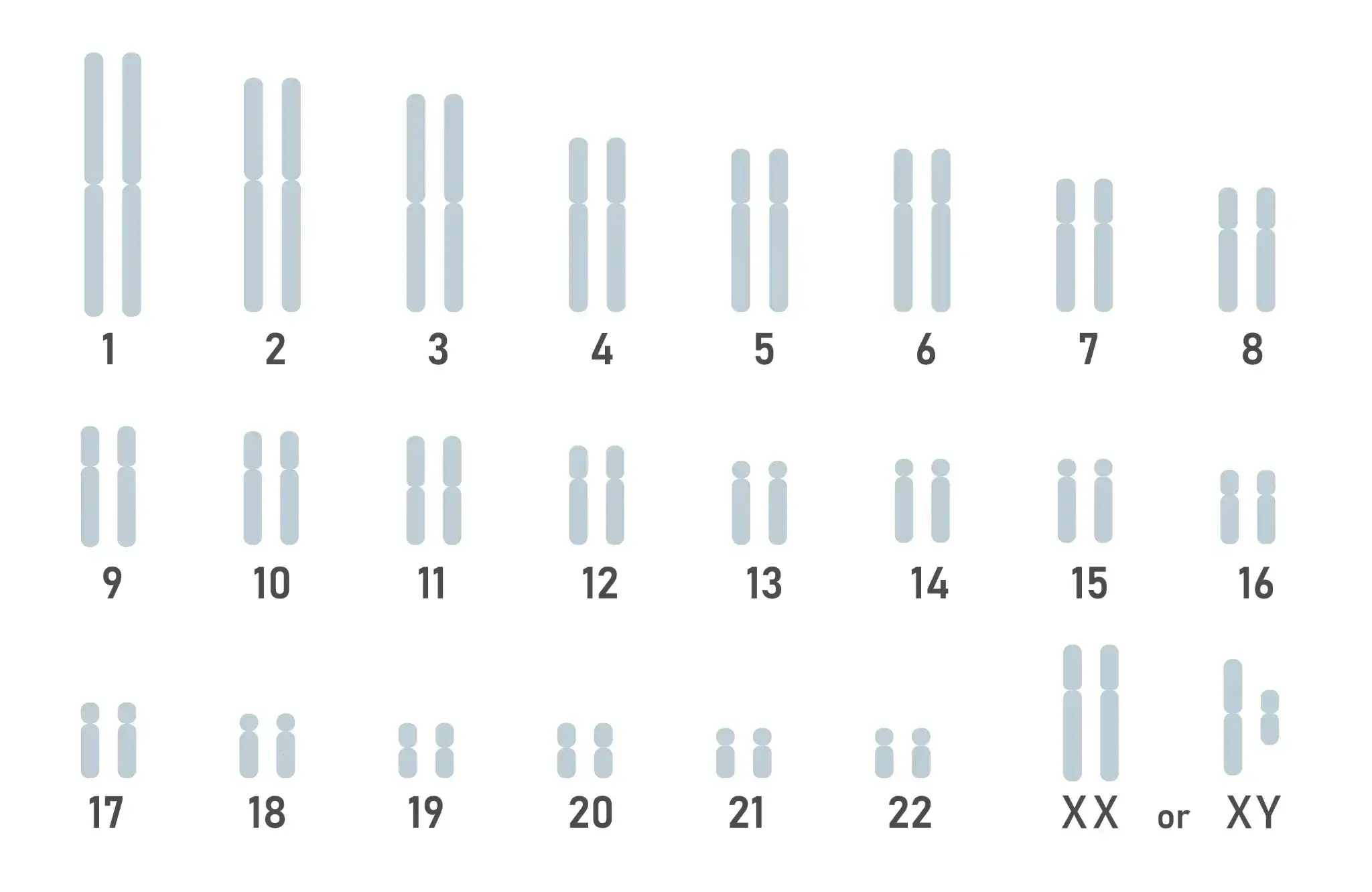
Schematic diagram of DNA map present in cells
- ■
- ■
- ■
- ■
- ■
- ■
- ■
- ■
- ■
Related genes
| Related genes | IGF2BP3 |
|---|
Frequently asked questions (FAQ)
Q1. What is microcephaly?
Microcephaly is a condition in which the head circumference at birth or during childhood is below the normal range for the same age (2 standard deviations or more from the mean).It is associated with brain underdevelopment and may be accompanied by developmental delays, intellectual disabilities, epilepsy, and visual and hearing impairments. Causes can be broadly divided into four categories: genetic diseases, maternal infections, alcohol consumption during pregnancy, and malnutrition.
Q2. What is the cause of microcephaly?
The causes of microcephaly are classified into four categories.① Genetic disease(Down syndrome, Edwards syndrome, etc.)②Maternal infection(Rubella, toxoplasmosis, Zika virus),③ Exposure to harmful substances during pregnancy(drinking/drugs),④Severe malnutritionIt is. The T-type mutation in the DNA region rs12534093 has also been reported in a study at Soochow University as a risk factor.
Q3. Is microcephaly related to genes?
Yes.A study by Yang et al. from Soochow University found that the DNA region rs12534093 is associated with the risk of microcephaly.There are three genotypes of rs12534093: TT, TA, and AA, and people with the T mutation genotype tend to have a higher risk of microcephaly.
Q4. What is the distribution of the microcephaly genotype (rs12534093) in Japanese people?
The genotype distribution of rs12534093 in Japanese people isTT type 99.9%, TA type 0.1%以下, AA type 0.1%以下It is. Worldwide, 61.3% are TT type, 33.9% are TA type, and 4.7% are AA type, and almost all Japanese people are TT type.
Q5. What are the symptoms of microcephaly?
The main symptoms of microcephaly areDevelopmental delay, intellectual disability, language/motor dysfunction, epilepsy, visual/hearing impairmentThere are five. The severity varies from person to person; if it is mild, it is possible to live an independent daily life, but if it is severe, comprehensive medical and rehabilitation support is required.
References
- Reference link 1: 2019 Oct., Xiao-Lin Yang, Front Genet