
 meningioma
- Meningioma is a tumor that develops from the meninges that surround the brain and spinal cord.They account for approximately 36% of all brain tumors, and approximately 90% are benign (WHO Grade I).
- G-type mutation in DNA region rs1801394Meta-analysis study finds that people with cancer tend to have a higher risk of developing meningioma
- In JapaneseAA type 48.5%, AG type 42.2%, GG type 9.1%distribution, and the G type prevalence is low compared to the world average.
Overview Meningiomas are brain tumors that develop from the meninges that surround the brain and spinal cord. It is usually slow growing, benign, does not contain cancer cells, and does not spread to surrounding tissues or other parts of the body. However, depending on the location and size of the disease, it may have a negative impact on the body and may be difficult to treat. Symptoms of meningiomas include headaches, blurred vision, seizures, and paralysis of the limbs. As the disease progresses, it can also cause memory loss. The growth rate and size of meningiomas vary depending on the individual, and diagnostic imaging such as MRI or CT scan is used for diagnosis. When the tumor is small and there are no symptoms, regular follow-up is performed, and when the tumor is large and symptoms are observed, treatment such as surgery or radiation therapy is performed. A study by Han et al. at Cangzhou Central Hospital revealed that the risk of developing meningioma is associated with a DNA region called rs1801394. There are three genotypes in this DNA region: AA, AG, and GG, and it was found that people with the G genotype tend to have a higher risk of meningioma.
What is a meningioma?
Meningioma is a brain tumor that develops from the meninges (arachnoid cells) that surround the brain and spinal cord, and is the most common primary brain tumor, accounting for approximately 36% of all brain tumors.The incidence is approximately 8.3 per 100,000 people, with women being approximately twice as likely as men.
Approximately 90% of cases are classified as benign (WHO Grade I), which progresses slowly, does not contain cancer cells, and rarely metastasizes to surrounding tissues or other organs. However, depending on its location and size, it can put pressure on the brain and spinal cord, causing serious neurological symptoms.
Meningioma causes and risk factors
Although the exact cause of meningioma is not completely understood, the following risk factors have been identified:
- Genetic predisposition:G-type mutation in DNA region rs1801394 near gene MTRR increases risk
- Gender:The incidence rate in women is approximately twice that of men (suggests that hormones are involved)
- Radiation exposure:History of radiation to the head increases risk
- Neurofibromatosis type 2 (NF2):Patients with NF2 gene mutations have a higher incidence of meningioma
- Age:It often occurs between the ages of 40 and 70, and the risk increases with age.
Main symptoms of meningioma
Symptoms of tumorOccurrence site and sizeDepending on the condition, small tumors may be asymptomatic.
- Headache (persistent or worsening)
- Visual impairment (blurred vision, tunnel vision, double vision)
- seizures
- Paralysis/weakness of limbs
- Hearing loss/tinnitus
- Memory impairment/decline in cognitive function
- loss of sense of smell
When the tumor grows, it puts pressure on the brain,increased intracranial pressureThere is a risk of causing vomiting or loss of consciousness.
Differences between meningioma and other brain tumors
| Comparison items | meningioma | Glioma |
|---|---|---|
| Occurrence site | meninges (outer membranes of the brain) | Brain parenchyma (glial cells) |
| Benign rate | Approximately 90% benign | Often malignant |
| Progress speed | Slow (several years to decades) | Fast (months to years) |
| Age of onset | 40s to 70s | all ages |
| Complete surgical resection rate | expensive | Low (indistinct border) |
| 5 year survival rate | Approximately 95% or higher (Grade I) | Approximately 5-35% (depending on malignancy) |
How to diagnose meningioma
Diagnosis is made by the following imaging tests.
- MRI (Magnetic Resonance Imaging):First-line test to evaluate tumor location, size, and relationship with surrounding tissues
- CT (computed tomography):Useful for evaluating bone invasion and calcification
- Cerebral angiography:Evaluate blood supply to tumor (used for surgical planning)
Meningioma treatment
The treatment policy is determined by the size and location of the tumor, and the presence or absence of symptoms.
- Progress observation (watchful waiting):If the tumor is small and asymptomatic, regular MRI scans every 3 to 6 months
- Surgical resection:First choice if you have symptoms. Recurrence rate is approximately 10-20% with complete resection
- Stereotactic radiotherapy:Non-invasive treatment with Gamma Knife/Cyber Knife (applicable to tumors smaller than 3 cm)
- Fractionated radiotherapy:Applicable to cases where complete resection cannot be performed by surgery or cases of recurrence
Relationship between genes and meningioma
Relationship between DNA region rs1801394 and disease risk
A study by Han et al. (2017, meta-analysis) at Cangzhou Central Hospital found that the DNA region rs1801394 near the gene MTRR was associated with the risk of meningioma.
- There are three genotypes of rs1801394: AA, AG, and GG.
- AG type/GG type with G type mutationare more likely to develop meningiomas
- Type AA is relatively low risk.
However, people with type AG or type GG do not necessarily develop meningioma.The risk of developing the disease increases due to a combination of environmental factors such as radiation exposure, hormones, and age.
Genotype distribution in Japanese (rs1801394)
| Genotype | Percentage of Japanese people | percentage of the world |
|---|---|---|
| AA type | 48.5% | 23.5% |
| AG type | 42.2% | 49.9% |
| GG type | 9.1% | 26.5% |
The percentage of Japanese people with type AA (low-risk type) is 48.5%, which is significantly higher than the world average (23.5%), and the rate of type GG (high-risk type) is 9.1%, which is about one-third of the world average (26.5%).
Mechanism of action: Relationship between gene MTRR and folate metabolism
Gene MTRR isMethionine synthase reductaseIt encodes and is involved in folate metabolism and DNA methylation.
- G-type mutation in DNA region rs1801394 → decrease in MTRR enzyme activity
- Abnormalities in folate metabolism → disorders in DNA synthesis and repair
- Changes in DNA methylation patterns → inactivation of tumor suppressor genes
- Abnormal proliferation of arachnoid cells → development of meningioma
This mechanism is thought to increase the risk of developing meningioma in people with the MTRR gene G mutation.
Rationale for testing
Superficial DNA region: meningioma
The gene region that most strongly affects meningioma is rs1801394. The distribution of isomorphic genotypes in Japan is as follows.
- AA
48.5 % - AG
42.2 % - GG
9.1 %
Basis for inspection
A study by Han et al. (2017) at Cangzhou Central Hospital revealed that the risk of developing meningioma is related to genes. There is a region called rs1801394 in the human genome, and there are two types of mutations, A and G, in the gene in this region.People with the G mutation (AG type/GG type) tend to have a higher risk of meningioma.I understand that. Among Japanese people, 48.5% are type AA, 42.2% are type AG, and 9.1% are type GG, and they are characterized by a lower prevalence of type G than the world average.
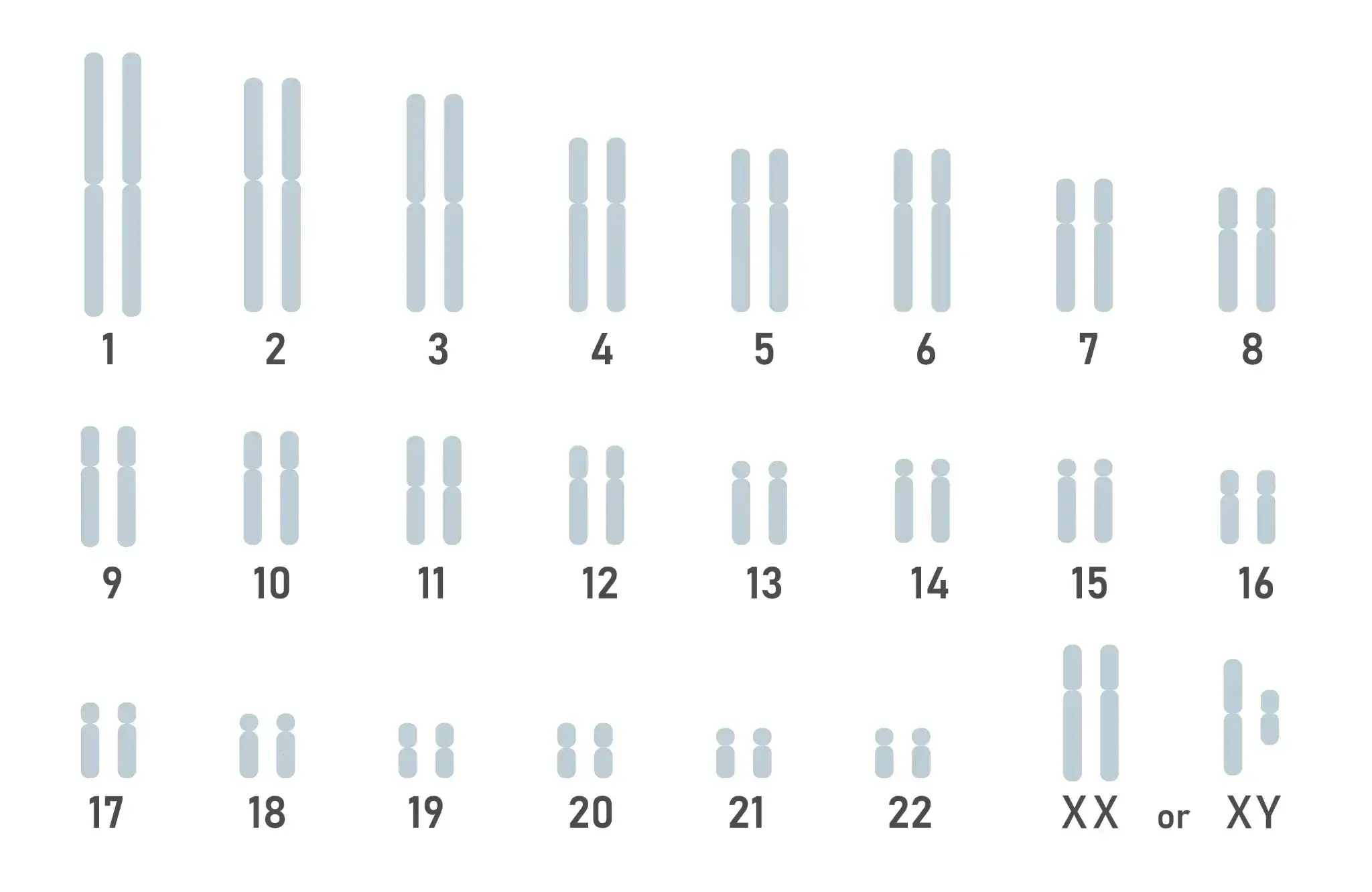
The DNA region investigated this time
Schematic diagram of DNA map present in cells
- ■
- ■
- ■
- ■
- ■
- ■
- ■
- ■
- ■
Related genes
| Related genes | MTRR |
|---|
Frequently asked questions (FAQ)
Q1. What is meningioma?
Meningioma is a tumor that develops from the meninges (arachnoid cells) that surround the brain and spinal cord, and is the most common primary brain tumor, accounting for approximately 36% of all brain tumors.Approximately 90% of cases are benign (WHO Grade I) and progress slowly, with an incidence of approximately 8.3 per 100,000 people. Women are approximately twice as likely to develop the disease as men.
Q2. What is the cause of meningioma?
The exact cause of meningioma is not completely understood, butGenetic predisposition, radiation exposure, hormones, agingStudies have shown that the G-type mutation in the rs1801394 DNA region near the gene MTRR increases the risk of developing the disease.
Q3. What is the difference between meningioma and other brain tumors?
Meningioma isOriginates from the outer membranes (meninges) of the brainHowever, approximately 90% of these tumors are benign and have a high rate of complete surgical resection. On the other hand, gliomaOriginates from brain parenchymaHowever, it tends to be highly malignant and difficult to completely remove by surgery.
Q4. Can genetic testing determine the risk of meningioma?
By examining the genotype of the DNA region rs1801394,Understand the risk trend of meningiomaYou can. Meta-analysis studies have shown that people with type G mutations (AG and GG) tend to be at higher risk.
Q5. What treatments are available for meningioma?
If the tumor is small and asymptomaticRegular MRI follow-upwill do. If you have symptomssurgical excisionis the first choice. For cases where surgery is difficult or cases of recurrenceStereotactic radiotherapy (Gamma Knife/Cyber Knife)applies.
References
- Reference link 1: 2017 Mar., Xiao-Yong Han, Onco Targets Ther