
 memory

- Memory is the ability to retain information in the brain and retrieve it when needed.approximately 55% influenced by genetic factors and approximately 45% influenced by environmental factors.
- rs9528384 region near PCDH20 geneis related to declarative memory, and GG type people tend to have a hard time retaining their memories.
- Japanese95.3% are type AAin favor of declarative memory, with a rate about 1.7 times higher compared to the global average of 55.4%.
Overview Memory is the ability to remember information that enters the brain, and declarative memory makes up the majority of memories used in daily life. This is a type of memory that allows you to store knowledge gained from textbooks and events you have experienced in your brain's memory over a long period of time, and then output it as needed. Memory is influenced by both genetics and environment. According to Professor Ando, Director of the Gemini Behavioral Development Research Center, memory is said to be influenced by approximately 55% genetic factors and 45% by environmental factors. (Reference link 1) In recent years, multiple genes related to memory have been discovered. Among these, a region near the gene PCDH20, which has been associated with declarative memory, is attracting attention. Rationale A study by the Boston University School of Medicine in the United States revealed that certain types of the PCDH20 gene tend to make declarative memory less likely to persist. This site is called "rs9528384" and there are three genotypes: AA, AG, and GG. It is known that GG type people have difficulty retaining declarative memory, and AG type people also have a tendency to have difficulty retaining declarative memory. (Reference link 2) Regarding the genotypes of Japanese people, the AA type is the most common at 95.3%, the AG type at 4.6%, and the GG type at the least at 0.1%. (Reference link 3) Therefore, more than 90% of Japanese people have a genetic type that is less likely to affect declarative memory, but genetic type is not necessarily related to memory ability. Memory is said to be greatly influenced by education and environment. Just because a child's parents are good at memorizing doesn't mean that their child is naturally good at remembering; it is a talent that can be improved depending on one's own efforts and environment. Repeated review is one way to make your memory stick.According to neuroscientist Yuji Ikeya, memory is connected to a part of the brain called the hippocampus, and when the same information is sent repeatedly, the hippocampus judges it to be important for survival and fixes it as long-term memory. It is also believed that memories are consolidated while you sleep, and lack of sleep has been shown to shrink the hippocampus and reduce memory. There are two states of sleep: REM sleep (light sleep) and NREM sleep (deep sleep). During REM sleep, we consolidate what we have learned during the day, and during NREM sleep, we make connections with past memories. The sleep cycle consists of 90 minute periods of REM sleep and NREM sleep, so it is recommended to sleep for 6 or 7.5 hours, with 4 to 5 sleep cycles. From these facts, regardless of the genetic level of memory ability, it is possible to turn it into talent through ingenuity and effort. Determining your genotype through genetic testing may help you develop your talent and take early steps. Mechanism of action The PCDH20 gene is located on chromosome 13 in humans, and is highly expressed in the brain and lungs. In particular, it has been found to be expressed in the septal nucleus, which is closely related to the hippocampus, which is involved in memory. (Reference link 4) However, the function of PCDH20 and the mechanism related to memory have not yet been elucidated. On the other hand, rs9528384, which is located near PCDH20, is known to be deeply related to declarative memory. This is inferred because PCDH20 is involved in neural connections and neural circuits via the hippocampus. These findings suggest that the PCDH20 gene and the rs9528384 region are closely related to declarative memory. Future research is expected to focus on these areas.
What is memory?
Memory is the ability to retain information that enters the brain and retrieve it when needed.Most of the memories we use in our daily lives are called "declarative memory," which refers to the ability to store and output knowledge gained from textbooks and experienced events as long-term memory.
How much do genes influence memory?
Memory is influenced by approximately 55% genetic factors and 45% by environmental factors.According to the research of Professor Ando, director of the Gemini Behavioral Development Research Center, memory ability is determined by both the genetic tendency inherited from parents and the individual's environment and effort. (Reference link 1)
Genetic and environmental influence ratio
| factor | degree of influence | Specific example |
|---|---|---|
| genetic factors | Approximately 55% | PCDH20 gene, rs9528384 region, etc. |
| environmental factors | Approximately 45% | Review habits, sleep, and educational environment |
Role of PCDH20 gene and rs9528384 in declarative memory
Research at Boston University School of Medicine revealed that the rs9528384 region near the PCDH20 gene influences declarative memory.(Reference link 2)
- rs9528384 hasAA・AG・GGThere are three genotypes of
- GG typePeople tend to have difficulty retaining declarative memory.
- AG typeSome people also tend to have a hard time retaining their jobs.
- AA typePeople with less genetic influence on memory retention
How to improve memory
Regardless of genetic predisposition, memory can be improved through repeated review and proper sleep.
1. Memorization through repeated review
- Function of the hippocampus:According to neuroscientist Yuji Ikeya, when the same information is repeatedly sent to the hippocampus, the hippocampus recognizes it as ``important information for survival'' and fixes it in long-term memory.
- Effect of review:Repetitive learning is effective for establishing declarative memory
2. Organizing and consolidating memories through sleep
- REM sleep (light sleep):Consolidate what you memorized during the day
- Non-REM sleep (deep sleep):make connections with past memories
- Recommended sleep time:REM/NREM sleep occurs in 90-minute cycles, repeated 4 to 5 times.6 hoursor7 and a half hoursis desirable
Relationship between sleep cycle and memory consolidation
| type of sleep | Features | role in memory |
|---|---|---|
| REM sleep | light sleep | Consolidation of information obtained during the day |
| NREM sleep | deep sleep | Integration and connection with past memories |
It has been scientifically confirmed that sleep deprivation shrinks the hippocampus and impairs memory. Understanding your own genotype through genetic testing may help you take early measures and help develop your talents.
The relationship between genes and memory
Relationship between DNA region rs9528384 and memory ability
A study by Debette et al. from Boston University School of Medicine (published in Biol Psychiatry in 2016) revealed that rs9528384 is associated with declarative memory.(Reference link 2)
- There are three genotypes of rs9528384: AA, AG, and GG.
- AA typePeople tend to have a strong declarative memory
- The prevalence of type AA in Japanese people is95.3%Approximately 1.7 times the world average of 55.4%
Comparison of genotype distribution in Japanese and the world (rs9528384)
| Genotype | Percentage of Japanese people | percentage of the world | Effect on memory |
|---|---|---|---|
| AA type | 95.3% | 55.4% | hard to influence |
| AG type | 4.6% | 38.0% | Slightly difficult to establish |
| GG type | 0.1% | 6.5% | Difficult to establish |
Relationship between DNA region rs3785181 and memory ability
A study by Lahti et al. from the University of Helsinki (published in Mol Psychiatry in 2022) found that rs3785181 is also associated with memory.(Reference link 6)
- There are three genotypes of rs3785181: CC, CT, and TT.
- Type C mutationPeople with this tend to have better memory.
Comparison of genotype distribution in Japanese and the world (rs3785181)
| Genotype | Percentage of Japanese people | percentage of the world |
|---|---|---|
| CC type | 11.0% | 81.5% |
| CT type | 44.3% | 17.5% |
| TT type | 44.6% | 0.9% |
The prevalence of type C mutation (CC+CT) in Japanese people is55.3%, which is low compared to the global average of 99.0%. On the other hand, for rs9528384, 95.3% of Japanese people have the AA type, so the genetic influence on overall memory needs to be evaluated in multiple ways.
Rationale for testing
Surface DNA region: memory
The gene region that most strongly influences memory is rs9528384. The distribution of isomorphic genotypes in Japan is as follows.
- AA
95.2 % - AG
4.6 % - GG
0.1%以下
Another gene region involved in memory is rs3785181. The distribution of isomorphic genotypes in Japan is as follows
- CC
11.0 % - CT
44.3 % - TT
44.6 %
Basis for inspection
A study by Lahti et al. at the University of Helsinki revealed that differences in memory are related to genes. There is a region called rs3785181 in the human genome, and the gene in that region has two types of mutations, C and T. It was found that people with type C mutations tend to have better memory.
Mechanism of action of PCDH20 gene
What is the relationship between PCDH20 gene and rs9528384?
The PCDH20 gene is located on human chromosome 13 and is expressed in the brain and lungs.Expression has also been confirmed in the septal nucleus, which is closely related to the hippocampus, which is involved in memory. (Reference link 4)
- Position:human chromosome 13
- Main expression site:brain, lungs, septal nucleus
- Function:Involved in neural connections and neural circuits via the hippocampus
Although the detailed mechanism between PCDH20 function and memory is still being elucidated, the nearby rs9528384 is deeply related to declarative memory, suggesting that the PCDH20 gene and rs9528384 region are closely related to declarative memory.
The DNA region investigated this time
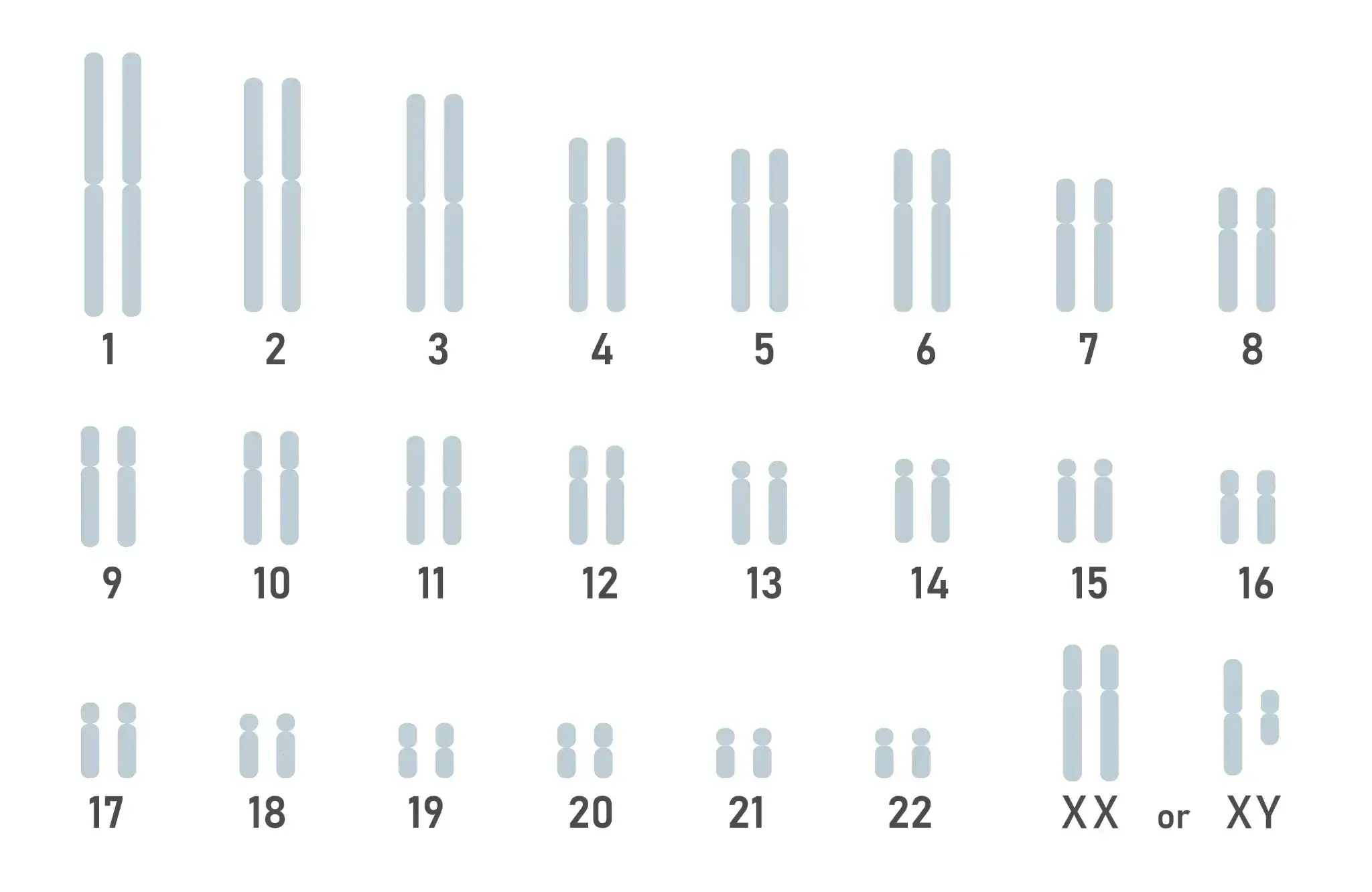
Schematic diagram of DNA map present in cells
- ■
- ■
- ■
- ■
- ■
- ■
- ■
- ■
- ■
Related genes
| Related genes | LINC02339 |
|---|---|
| Related genes | GAS8 |
Frequently asked questions (FAQ)
Q1. What is memory?
Memory is the ability to retain information that enters the brain and retrieve it when needed.Most of the memory we use in daily life is declarative memory, which refers to the ability to store and output knowledge gained from textbooks and experienced events as long-term memory. Approximately 55% of this is due to genetic factors and 45% is due to environmental factors.
Q2. How much influence do genes have on memory?
According to research by Professor Ando, director of the Gemini Behavioral Development Research Center,Memory is influenced by approximately 55% genetic factors and 45% by environmental factors.The rs9528384 region near the PCDH20 gene is associated with declarative memory, and people with type GG blood type tend to have a hard time retaining their memories. 95.3% of Japanese people are type AA, which favors declarative memory compared to the world average of 55.4%.
Q3. What is the distribution of the memory-related genotype (rs9528384) in Japanese people?
The genotype distribution of rs9528384 in Japanese people isAA type 95.3%, AG type 4.6%, GG type 0.1%It is. Worldwide, 55.4% are type AA, 38.0% are type AG, and 6.5% are type GG, and the proportion of Japanese people with type AA is approximately 1.7 times higher than the world average.
Q4. Is there any way to improve memory?
Repeated review and proper sleep are the keys to improving memory.According to neuroscientist Yuji Iketani, when the same information is repeatedly sent to the hippocampus, it becomes fixed in long-term memory. During sleep, new memories are consolidated during REM sleep, and connections with past memories are made during NREM sleep. Six or seven and a half hours of sleep is recommended.
Q5. What is the relationship between PCDH20 gene and rs9528384?
The PCDH20 gene is located on human chromosome 13 and is expressed in the brain, lungs, and septal nucleus.The nearby rs9528384 region is deeply related to declarative memory, and PCDH20 is involved in neural connections and neural circuits via the hippocampus, suggesting a deep relationship with declarative memory.
References
- Reference link 1: Information on “The relationship between talent and genetics” AERA DIGITAL
- Reference link 2: 2016 Apr., Stéphanie Debette, Biol Psychiatry.
- Reference link 3: Information on DNA region “rs9528384” NIH
- Reference link 4: 2010 Sep., S.Y. Kim, Neuroscience
- Reference link 5: 2015 Apr., Stéphanie Debette, Biol Psychiatry
- Reference link 6: 2022 Nov., Jari Lahti, Mol Psychiatry