
 math ability

- Mathematics ability has a heritability of 87%It has been reported that the DNA region rs62098997 near the MIR924HG gene is associated with educational background in mathematics.
- AA type genotypePeople with the AG type tend to have a high academic background in mathematics, and people with the AG type tend to have a slightly higher academic background.
- The prevalence of type A mutation (GA+AA) in Japanese people is10.2%This is approximately 3.6 times higher than the world average of 2.8%.
Overview Mathematics is a field of study that uses numbers and figures to learn theory, and is an essential foundation for living in society. However, it is also a subject in which people who like and dislike mathematics are clearly divided. While many people like it, there are also many people who are not good at it, so the logical thinking and inspiration that can be gained by learning mathematics is a great benefit, especially for those who are not good at mathematics. These skills will not only be useful in the future as an ability to convey information at work or in presentations, but will also provide the ability to lead to solutions should any problems arise. Mathematics talent is reported to be influenced by genetics and the environment, and according to Professor Ando, director of the Gemini Behavioral Development Research Center, 87% of this is due to genetic factors and 13% to environmental factors. (Reference link 1) In recent years, multiple genes related to mathematical talent have been discovered. This time, we will explain the region near the gene MIR924HG, which is said to be associated with educational background in mathematics. Rationale A study at the Department of Psychology at the University of Minnesota in the United States revealed that people with a specific type near the MIR924HG gene tend to have a high academic background in mathematics. This region is called "rs62098997" and has three genotypes: AA, AG, and GG. It has been found that people with the AA type genotype tend to have a high educational background in mathematics, and people with the AG type tend to have a slightly higher level of educational attainment. (Reference link 2) Regarding Japanese genetic types, the GG type is the most common at 88.0%, the AG type at 11.6%, and the AA type at the least at 0.4%. (Reference link 3) However, it is not limited to genetic type and is not related to academic background in mathematics. Regardless of your genetic type, mathematical talent can blossom depending on your effort, and for example, like Roger Penrose, you can demonstrate your talent through opportunity and effort. Determining your genotype through genetic testing may help develop your talent and take early steps. Mechanism of action The MIR924 host gene (MIR924HG) is located on chromosome 18 of the 24 chromosomes common to humans. MIR924HG is highly expressed in various cancer cells, testis, and skin, but in the brain, it is known to be most expressed in the temporal lobe cortex. (Reference links 4 and 5) The mechanism regarding the function and mathematical ability of MIR924HG has not yet been elucidated. However, since MIR924HG is associated with learning disabilities and damage to the temporal lobe is associated with an impairment in converting verbal information into numbers, it can be speculated that rs62098997, which exists near MIR924HG, is related to educational background in mathematics. (Reference link 6) As mentioned above, "rs62098997" is one of the DNA regions that is closely related to academic background in mathematics and is attracting attention as a mathematical ability.
What is mathematical ability?
Mathematics ability is the ability to think logically and solve problems using numbers and shapes.It is an indispensable ability as the foundation for living a social life, and it is the foundation of logical thinking, inspiration, and information transmission ability.
Why math skills are important
The abilities gained by learning mathematics are used not only in academics but also in real life. Specifically, the following skills will be developed.
- Logical thinking ability:Ability to think about things logically and make decisions based on evidence
- Inspiration:Ability to view complex problems from different perspectives and find creative solutions
- Information transmission ability:Ability to convey information accurately and clearly in work and presentations
- Problem solving ability:Analytical and judgmental skills to lead to solutions when unexpected problems occur
Genetic and environmental proportions in mathematics ability
According to research by Professor Ando, director of the Gemini Behavioral Development Research Center,87% due to genetic factors, 13% due to environmental factorsIt is. (Reference link 1)
| factor | percentage | Specific example |
|---|---|---|
| genetic factors | 87% | Multiple genes are involved, including DNA mutations near the MIR924HG gene |
| environmental factors | 13% | Educational environment, study habits, motivation, quality of instructors |
However, regardless of your genetic type, your mathematical talent will blossom with effort.Mr. Roger PenroseThere are also reports of cases where mathematical talent was greatly demonstrated due to opportunity and effort.
The relationship between genes and mathematical ability
Relationship between DNA region rs62098997 and academic background in mathematics
A study by Lee et al. of the Department of Psychology at the University of Minnesota in the United States revealed that the DNA region rs62098997 near the MIR924HG gene is associated with educational background in mathematics.(Reference link 2)
- There are three genotypes of rs62098997: AA, AG, and GG.
- AA typePeople with this genotype tend to have higher educational background in mathematics.
- AG typePeople with a slightly higher tendency to
Comparison of genotype distribution in Japanese and the world (rs62098997)
| Genotype | Percentage of Japanese people | percentage of the world |
|---|---|---|
| GG type | 89.7% | 97.1% |
| GA type | 10.0% | 2.8% |
| AA type | 0.2% | 0.1%以下 |
The prevalence of type A mutation in Japanese people (GA+AA) is10.2%This is approximately 3.6 times higher than the global average of 2.8%. This suggests that genetic predispositions associated with mathematics ability are more widely distributed in the Japanese population. (Reference link 3)
Relationship between DNA region rs4650204 and mathematical ability
In addition to rs62098997,DNA region rs4650204 near LINC02791 geneis associated with mathematical ability.
Comparison of genotype distribution in Japanese and the world (rs4650204)
| Genotype | Percentage of Japanese people | percentage of the world |
|---|---|---|
| GG type | 48.5% | 41.9% |
| GT type | 42.2% | 45.6% |
| TT type | 9.1% | 12.3% |
What is the mechanism of action of the MIR924HG gene?
MIR924HG gene location and expression
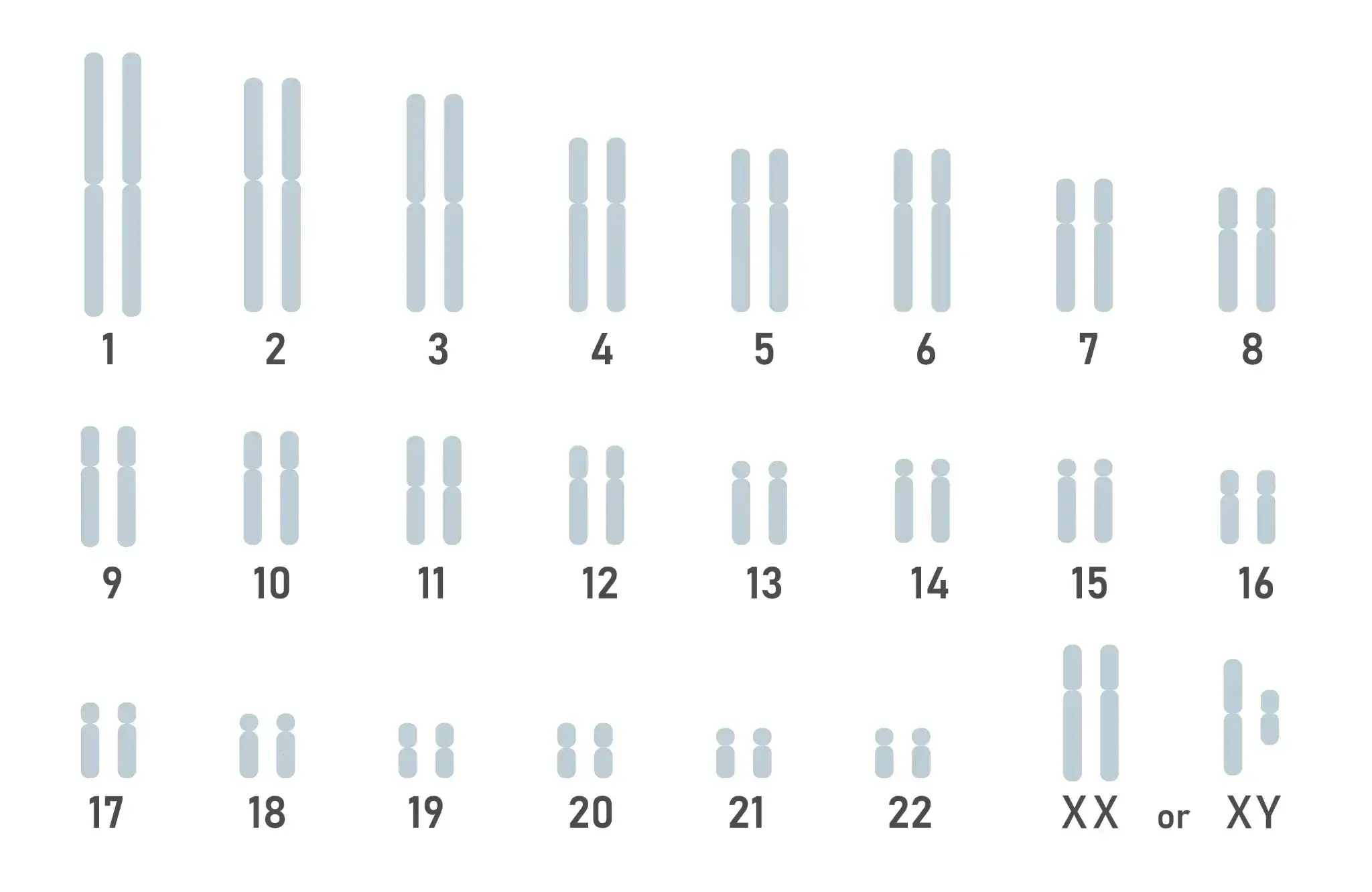
The MIR924 host gene (MIR924HG) is located on chromosome 18 of the 24 human chromosomes.MIR924HG is expressed in various cancer cells, testis, and skin, but in the braintemporal lobe cortexIt has been confirmed that it is most commonly expressed in (Reference links 4 and 5)
Mechanisms associated with mathematics ability
The detailed mechanism regarding the function and mathematical ability of MIR924HG is unknown. However, a relationship is inferred from the following two findings.
- Association between MIR924HG and learning disabilities:It has been reported that MIR924HG is associated with learning disabilities (Reference link 6)
- Relationship between temporal lobe and number processing:Damage to the temporal lobe has been linked to impairments in converting verbal information into numbers.
From these findings,rs62098997, which exists near MIR924HG, is one of the DNA regions that is closely related to academic background in mathematics and is attracting attention as a mathematical ability.
Rationale for testing
External DNA domain: Mathematics ability
The gene region that most strongly influences math ability is rs62098997. The distribution of isomorphic genotypes in Japan is as follows.
- GG
89.7 % - GA
10.0 % - AA
0.2 %
Another gene region associated with math ability is rs4650204. The distribution of isomorphic genotypes in Japan is as follows
- GG
48.5 % - GT
42.2 % - TT
9.1 %
Basis for inspection
A study by Lee et al. at the University of Minnesota, Twin Cities, revealed that math ability is linked to genes. There is a region called rs62098997 in the human genome, and there are two types of mutations, G and A, in the gene in this region. It was found that people with the G-type mutation tended to have higher math abilities.
The DNA region investigated this time
Schematic diagram of DNA map present in cells
- ■
- ■
- ■
- ■
- ■
- ■
- ■
- ■
- ■
Related genes
| Related genes | MIR924HG |
|---|---|
| Related genes | LINC02791 |
Frequently asked questions (FAQ)
Q1. What is mathematical ability?
Mathematics ability is the ability to think logically and solve problems using numbers and figures.It is said that 87% of genetic factors and 13% of environmental factors are involved, and it is the basis of logical thinking, inspiration, and information transmission ability. This is an ability that is directly useful in conveying information at work, in presentations, and in problem solving.
Q2. What genes are associated with mathematical ability?
The DNA region rs62098997 near the MIR924HG gene is associated with educational background in mathematics.A study by Lee et al. at the University of Minnesota revealed that people with the AA type genotype tend to have a higher educational background in mathematics, and those with the AG type tend to have a slightly higher educational background.
Q3. What is the distribution of genotypes related to mathematics ability in Japanese people?
The genotype distribution of rs62098997 in Japanese people isGG type 89.7%, GA type 10.0%, AA type 0.2%It is. Worldwide, 97.1% are GG type, 2.8% are GA type, and 0.1%以下 are AA type, and Japanese people have a characteristic that the prevalence of type A mutation is approximately 3.6 times higher than the world average.
Q4. Is mathematical ability determined solely by genetics?
No.Heritability is high at 87%, but environment and effort also play a role by 13%.There are examples, like Roger Penrose, who developed mathematical talent through motivation and effort, and it is possible to develop your abilities regardless of your genetic type. Determining your genotype through genetic testing may help develop your talent and take early steps.
Q5. What is the mechanism of action of the MIR924HG gene?
The MIR924HG gene is located on chromosome 18 and is most expressed in the temporal cortex of the brain.MIR924HG has been reported to be associated with learning disabilities, and as the temporal lobe is involved in converting verbal information into numbers, it has been speculated that there is a relationship between rs62098997 and mathematical ability.
References
- Reference link 1: Information on “The relationship between talent and genetics” AERA DIGITAL
- Reference link 2: 2018 Jul., James J. Lee, Nature Genetics.
- Reference link 3: DNA Information on region “rs62098997” NIH
- Reference link 4: Information on the gene “MIR924HG” NIH
- Reference link 5: Information on the gene “MIR924HG” Harmonizome
- Reference link 6: 2019 Feb., Alessandro Gialluisi, Translational Psychiatry.
- Reference link 7: 2018 Jul., James J Lee, Nat Genet