
 lung cancer
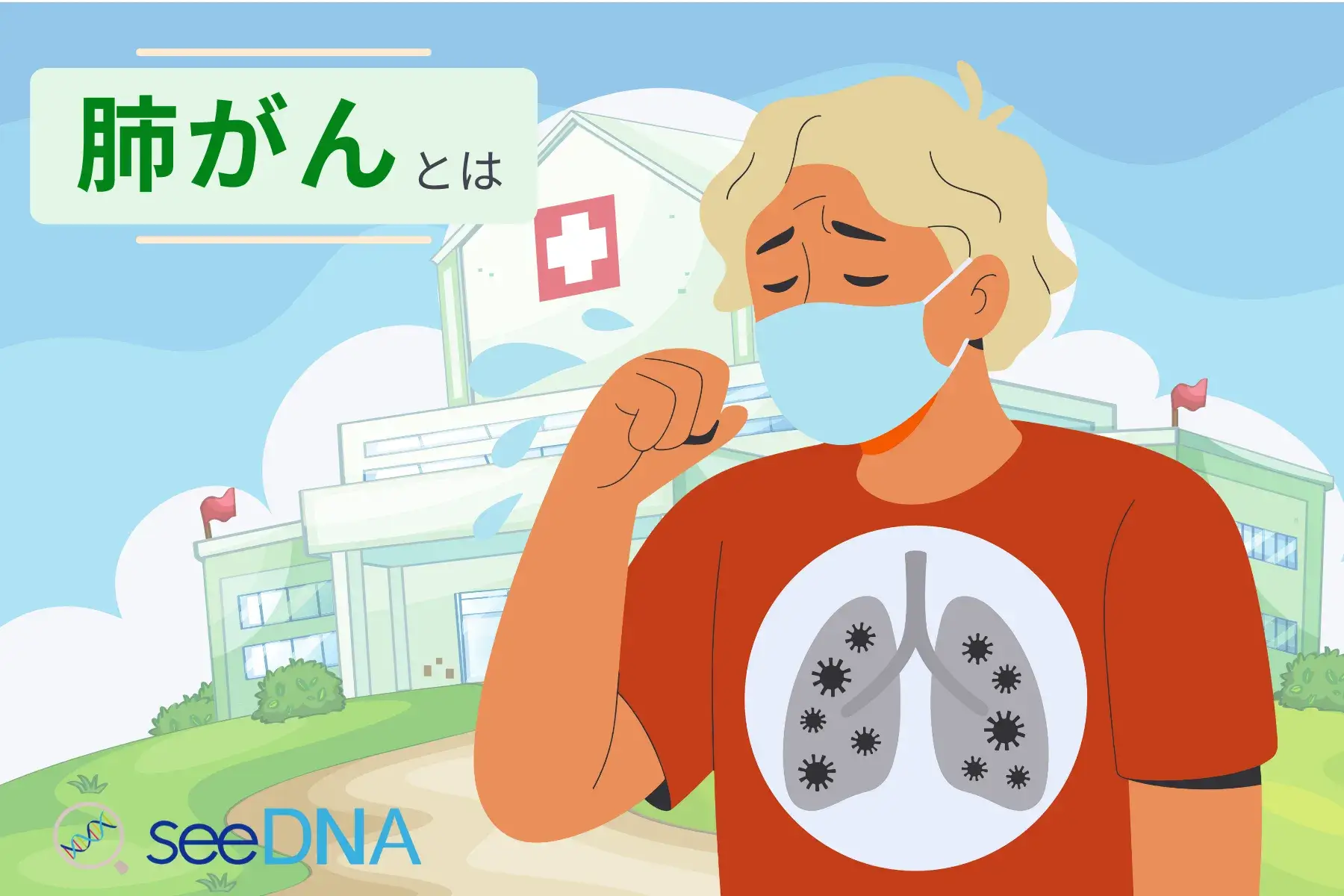
- Lung cancer is the number one cause of death for Japanese peopleIn 2020, 75,585 people died. Smoking is the biggest risk factor; cigarette smoke contains about 70 different carcinogens.
- G-type mutation in DNA region rs753955 (TNFRSF19 gene)Study finds that people with the same symptoms tend to have a higher risk of developing lung cancer
- Smoking cessation, regular checkups, genetic testingThis makes it possible to understand risks and take preventive measures from an early stage.
Overview The lungs are bag-shaped and made up of bronchi and alveoli. The bronchi serve as air passages within the lungs, and the alveoli, which are numerous like clusters of grapes at the end of the branching bronchi, are the places where oxygen and carbon dioxide are exchanged. Lung cancer is caused by genetic damage to epithelial cells. In particular, cigarette smoke contains about 70 types of carcinogens that damage genes and is the main cause of lung cancer. In addition to smoking, air pollution and family history are also considered risk factors for developing lung cancer. Recent studies have reported that polymorphisms in the gene ``TNFRSF19'' affect the risk of developing lung cancer to some extent. 2. Rationale Research conducted at Nanjing Medical University in China and elsewhere has revealed that the incidence of lung cancer is more likely to occur depending on the genotype of a specific region near the gene ``TNFRSF19.'' (Reference link 1) This region is called the DNA region "rs753955", and there are three genotypes: "AA type," "AG type," and "GG type." ``GG type'', which has the risk allele ``G'', often develops lung cancer, and ``AG type'' is slightly more common. The genetic type of Japanese people is 48.8% of the people are type AG, 33.3% are type AA, and 17.9% are type GG. (Reference link 2) Lung cancer is the number one cause of death for Japanese people, and by gender, it is the number one cause of death for men and the second number for women. (Reference link 3) According to statistics from the National Cancer Center, 75,585 people died from lung cancer in 2020. Symptoms of lung cancer often do not appear until it is advanced, and even if they do occur, it is difficult to distinguish them from symptoms associated with the common cold or smoking (cough and phlegm), so detection tends to be delayed. Therefore, by understanding genetic predisposition to lung cancer in advance through genetic testing, it becomes possible to take measures such as regular lung cancer checkups and smoking cessation from an early stage. 3. Mechanism of action The gene ``TNFRSF19'' is located on chromosome 13 of the 24 human chromosomes, and may have a role in inducing cell death (apoptosis) through a pathway called the ``cJun N-terminal kinase (JNK) signal transduction pathway.'' Cells with damaged DNA will become cancerous if they are not actively killed. In fact, it is known that patients with decreased expression of the gene ``TNFRSF19'' have a worse prognosis. (Reference link 4) In addition, it has been reported that the DNA region rs753955 plays a role in regulating the expression of nearby genes (enhancer), decreases the expression of the gene TNFRSF19, and decreases the DNA repair efficiency and cell death response of bronchial epithelial cells. (Reference link 5) Based on the above, the DNA region "rs753955" is attracting attention as one of the single nucleotide polymorphisms involved in the risk of developing lung cancer.
What is lung cancer?
Lung cancer is a malignant tumor that occurs when genetic mutations accumulate in the epithelial cells of the bronchi and alveoli of the lungs.It is the number one cause of death for Japanese people, and is the number one cause of death for men and the second cause of death for women (Reference link 3). In 2020, 75,585 people died from lung cancer in Japan.
Causes and risk factors of lung cancer
The biggest cause of lung cancer issmokingIt is. Tobacco smoke contains approximately 70 types of carcinogens, which damage DNA and promote cancer.
- Smoking:The biggest risk factor for developing lung cancer. The risk for smokers is about 15 to 30 times that of non-smokers.
- Air pollution:Long-term exposure to fine particulate matter such as PM2.5
- Family history:If you have a family history of lung cancer, your risk of developing it increases.
- Genetic predisposition:Polymorphisms in the TNFRSF19 gene (rs753955) and CHRNA3 gene (rs1051730) are associated with risk
- Occupational exposure:Exposure to carcinogens such as asbestos and radon
Types and characteristics of lung cancer
| classification | Main types | Features |
|---|---|---|
| non-small cell lung cancer | Adenocarcinoma, squamous cell carcinoma, large cell carcinoma | Approximately 85% of all lung cancers. relatively slow progress |
| small cell lung cancer | small cell cancer | Approximately 15% of all lung cancers. Progresses quickly and easily metastasizes |
Early symptoms of lung cancer
lung cancer isIt is difficult to notice symptoms until the disease progressesIt's a disease. Even if symptoms appear, they tend to be detected late because they are difficult to distinguish from symptoms associated with a cold or smoking.
- Prolonged cough (more than 2 weeks)
- Bloody sputum (blood in the sputum)
- Chest pain/shortness of breath
- Weight loss/loss of appetite
- Hoarseness (hoarseness of voice)
How to prevent lung cancer
The following measures are recommended to reduce your risk of lung cancer:
- No smoking:The most effective method of prevention. 10 years after quitting smoking, risk decreases by about half
- Regular check-up:Chest X-ray examination once a year, low-dose CT examination for high-risk individuals
- Genetic testing:Confirm polymorphisms in TNFRSF19 and CHRNA3 genes and understand risk trends
- Environmental measures:Minimize exposure to air pollution
Relationship between genes and lung cancer
Relationship between DNA region rs753955 (TNFRSF19 gene) and onset risk
Research conducted by Nanjing Medical University in China (reference link 1) revealed that the DNA region rs753955 is associated with the risk of developing lung cancer.
- rs753955 hasAA・AG・GGThere are three genotypes of
- Risk AlleleGG type with G typeare more likely to develop lung cancer
- AG typeTendency to have a high risk of developing haze
Genotype distribution in Japanese (rs753955)
| Genotype | Percentage of Japanese people | percentage of the world |
|---|---|---|
| AA type | 39.6% | 14.9% |
| AG type | 46.6% | 47.4% |
| GG type | 13.7% | 37.6% |
Mechanism of action of TNFRSF19 gene
TNFRSF19 gene is located on chromosome 13and plays a role in inducing cell death (apoptosis) through the JNK (cJun N-terminal kinase) signaling pathway.
- Cells with damaged DNA are at risk of becoming cancerous unless they actively undergo cell death.
- Patients with decreased expression of TNFRSF19prognosis worsensIt has been confirmed that (Reference link 4)
- rs753955 functions as an enhancer that regulates the expression of nearby genes and reduces the expression of TNFRSF19
- As a result, bronchial epithelial cellsReduced DNA repair efficiency and cell death response(Reference link 5)
Involvement of DNA region rs1051730 (CHRNA3 gene)
rs1051730 is located in the CHRNA3 gene and encodes a subunit of the nicotinic receptor. This genetic polymorphismnicotine dependenceandRisk of developing lung cancer(Reference link 6).
Genotype distribution in Japanese (rs1051730)
| Genotype | Percentage of Japanese people | percentage of the world |
|---|---|---|
| GG type | 96.1% | 45.6% |
| GA type | 3.7% | 43.8% |
| AA type | 0.1%以下 | 10.5% |
Rationale for testing
Surface DNA region: lung cancer
The gene region that most strongly affects lung cancer is rs753955. The distribution of isomorphic genotypes in Japan is as follows.
- AA
39.6 % - AG
46.6 % - GG
13.7 %
Another gene region involved in lung cancer is rs1051730. The distribution of isomorphic genotypes in Japan is as follows
- GG
96.1 % - GA
3.7 % - AA
0.1%以下
Basis for inspection
Research conducted by Nanjing Medical University in China (reference link 1) revealed that the risk of developing lung cancer differs depending on the genotype of the DNA region rs753955, which is located near the gene TNFRSF19. Type GG, which has the risk allele "G," often develops lung cancer, and type AG also tends to have a slightly higher risk of developing lung cancer. The genotypes of Japanese people are 48.8% AG type, 33.3% AA type, and 17.9% GG type (Reference link 2).
The DNA region investigated this time
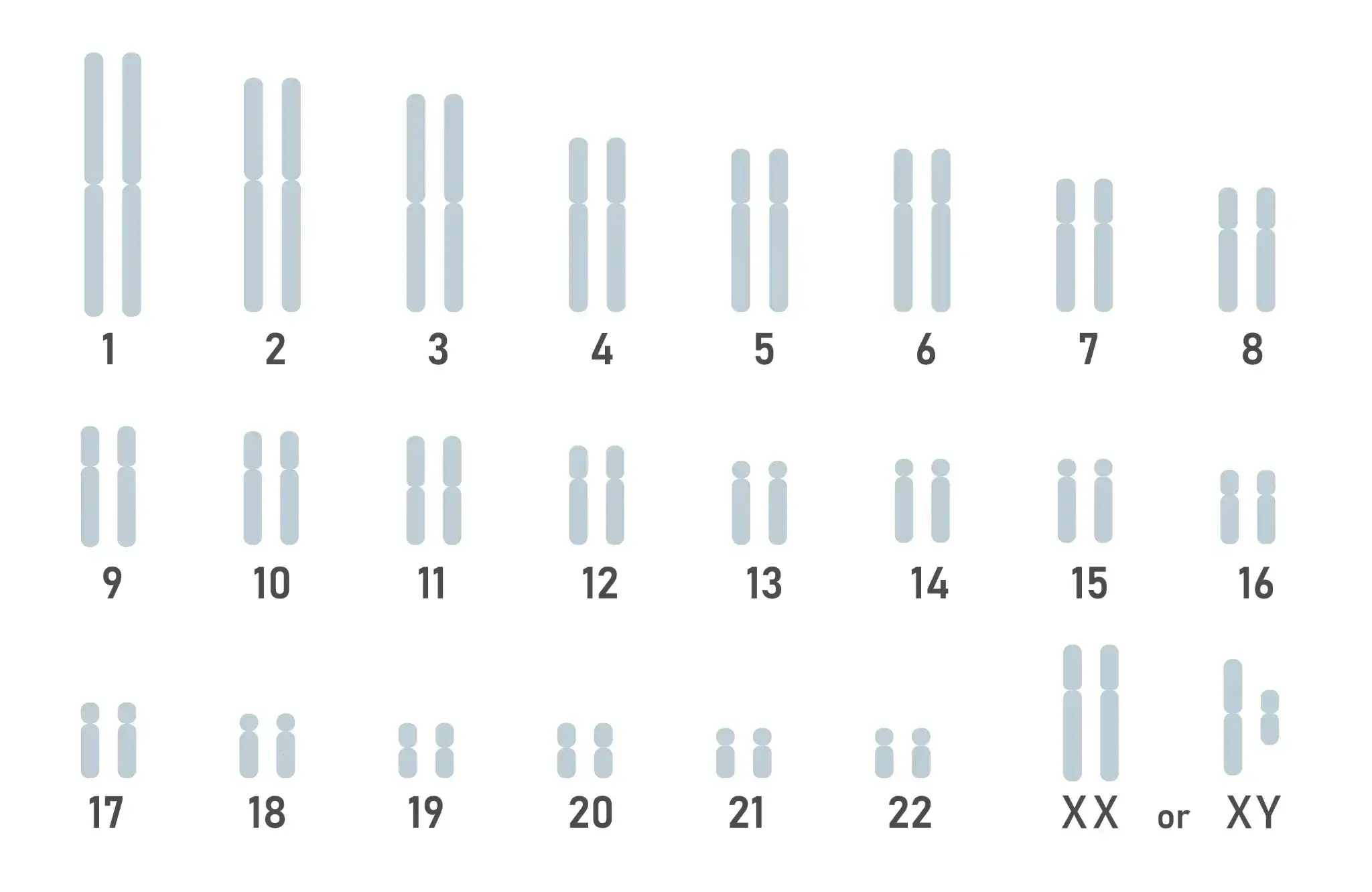
Schematic diagram of DNA map present in cells
- ■
- ■
- ■
- ■
- ■
- ■
- ■
- ■
- ■
Related genes
| Related genes | TNFRSF19 |
|---|---|
| Related genes | CHRNA3 |
Frequently asked questions (FAQ)
Q1. What is lung cancer?
Lung cancer is a malignant tumor that occurs when genetic mutations accumulate in the epithelial cells of the bronchi and alveoli of the lungs.It is the number one cause of death in Japan, with 75,585 people dying from lung cancer in 2020 (Reference link 3).
Q2. What is the main cause of lung cancer?
The biggest cause issmokingIt is. Tobacco smoke contains about 70 types of carcinogens. Besides smokingAir pollution, family history, and genetic predisposition(such as the rs753955 polymorphism of the TNFRSF19 gene) have been reported as risk factors (reference link 1).
Q3. Can genetic testing determine the risk of lung cancer?
By examining the genotype of DNA regions rs753955 (TNFRSF19 gene) and rs1051730 (CHRNA3 gene),Understanding trends in the risk of developing lung cancerYou can. Studies have shown that people with the rs753955 G mutation tend to be at higher risk (reference link 1).
Q4. What are the early symptoms of lung cancer?
lung cancer isIt is difficult to notice symptoms until the disease progressesIt's a disease. Initial symptoms include a persistent cough, bloody sputum, chest pain, shortness of breath, and weight loss, but it is difficult to distinguish them from symptoms caused by a cold or smoking, so regular checkups are important.
Q5. What is the prevention method for lung cancer?
The most effective prevention method isNo smokingIt is. The risk decreases by about half within 10 years after quitting smoking. In addition, once a yearlung cancer screeningIt is recommended that high-risk individuals undergo a low-dose CT scan (low-dose CT scan) and that genetic testing be used to determine risk trends.
References
- Reference link 1: 2011 Jul., Zhibin Hu, nature genetics.
- Reference link 2: DNA region “rs753955 information” TogoVar
- Reference link 3: Information on “Lung Cancer” Cancer Information Service
- Reference link 4: Information on the gene “TNFRSF19” Human Protein Atlas
- Reference link 5: 2019 May., Lipei Shao, BMC
- Reference link 6: 2008 Dec., James D McKay, Nat Genet