
 growth hormone levels

- Growth hormone level is a hormonal state determined by the blood concentration of IGF1 (insulin-like growth factor 1).and plays an essential role in the growth of bones, muscles, and tissues.
- Type C mutation in DNA region rs2048672A study at Stanford University found that people with 20% of the brain tend to secrete higher levels of growth hormone.
- The prevalence of type C mutation (CC+CA) in Japanese people is81.6%This is a slightly lower percentage than the world average of 89.6%.
Overview Insulin-like growth factor 1 (IGF1) is a hormone that responds to growth hormone (GH), which is primarily produced in the liver. It is essential for normal bone and tissue growth and development. Low levels of IGF1 may indicate a disruption of the growth hormone axis and suggest insufficient secretion of growth hormone. This condition can manifest in different ways, depending on the age of the individual, when hormone levels become insufficient. In children, decreased IGF1 due to decreased growth hormone can lead to growth failure. They are characterized by a slow growth rate and short stature compared to their peers of the same age and sex. It may also be accompanied by delayed onset of puberty, decreased peak bone mass, and sometimes increased fat mass relative to lean body mass. In adults, the effects of decreased IGF1 due to decreased growth hormone secretion are minor, but may have psychological effects such as decreased muscle mass and strength, decreased bone density that promotes osteoporosis, changes in lipid metabolism that increases the risk of cardiovascular disease, and decreased energy levels and quality of life. Diagnosis and treatment include evaluation of growth hormone levels, IGF1 levels, and other tests, and if necessary, growth hormone therapy. This treatment aims to normalize IGF1 levels and thereby reduce the effects of growth hormone deficiency. Research by Sinnott-Armstrong et al. at Stanford University revealed that growth hormone secretion is associated with a DNA region called rs2048672. There are three genotypes in this DNA region: CC, CA, and AA, and it was found that people with the C genotype tend to secrete higher levels of growth hormone.
What are growth hormone levels?
Growth hormone level is a hormone status determined by the blood concentration of insulin-like growth factor 1 (IGF1), which is mainly produced in the liver.IGF1, secreted in response to growth hormone (GH), plays an essential role in normal bone and tissue growth and development.
What does the decline in IGF1 mean?
Low levels of IGF1 areDysfunction of the growth hormone axisThis indicates insufficient secretion of growth hormone. This condition causes different symptoms depending on the age at which the hormone levels become insufficient.
Different effects of growth hormone decline in children and adults
| Comparison items | for children | For adults |
|---|---|---|
| growth | Decreased growth rate/short stature | Decline in muscle mass/strength |
| bone | Maximal bone loss | Reduced bone density (increased risk of osteoporosis) |
| body composition | Increase in fat mass (relative to lean body mass) | Changes in lipid metabolism (increased risk of cardiovascular disease) |
| Development/Psychology | Delayed onset of puberty | Decreased energy level/decreased quality of life |
Diagnosis and treatment of growth hormone deficiency
For diagnosis,Growth hormone levels, IGF1 levels, and other testsIncludes evaluation. Growth hormone therapy is administered if necessary, with the aim of normalizing IGF1 levels and reducing the effects of growth hormone deficiency.
- Blood test:Evaluation by IGF1 concentration/GH stimulation test
- Treatment:Normalization of secretion by growth hormone replacement therapy (GH therapy)
- Treatment effect:Improved bone density, increased muscle mass, and improved lipid profile
Relationship between genes and growth hormone levels
Relationship between DNA region rs2048672 and growth hormone
A study by Sinnott-Armstrong et al. at Stanford University revealed that growth hormone secretion is associated with the DNA region rs2048672.
- There are three genotypes of rs2048672: CC, CA, and AA.
- Genotype with type C mutation(CC type/CA type) people tend to have high secretion of growth hormone.
Comparison of genotype distribution in Japanese and the world (rs2048672)
| Genotype | Percentage of Japanese people | percentage of the world |
|---|---|---|
| CC type | 32.7% | 46.2% |
| CA type | 48.9% | 43.4% |
| AA type | 18.3% | 10.2% |
The prevalence of type C mutation (CC+CA) in Japanese people is81.6%This is a slightly lower percentage than the global average of 89.6%. On the other hand, the proportion of type AA in Japanese people is 18.3%, approximately 1.8 times higher than the world average of 10.2%, and the type A mutation is more widely distributed in the Japanese population.
Rationale for testing
Superficial DNA region: growth hormone levels
The gene region that most strongly influences growth hormone levels is rs2048672. The distribution of isomorphic genotypes in Japan is as follows.
- CC
32.7 % - CA
48.9 % - AA
18.3 %
Basis for inspection
Research by Sinnott-Armstrong et al. at Stanford University revealed that growth hormone secretion is linked to genes. There is a region called rs2048672 in the human genome, and there are two types of mutations, C and A, in the gene in this region. It was found that people with the type C mutation tend to have higher levels of growth hormone secretion.
The DNA region investigated this time
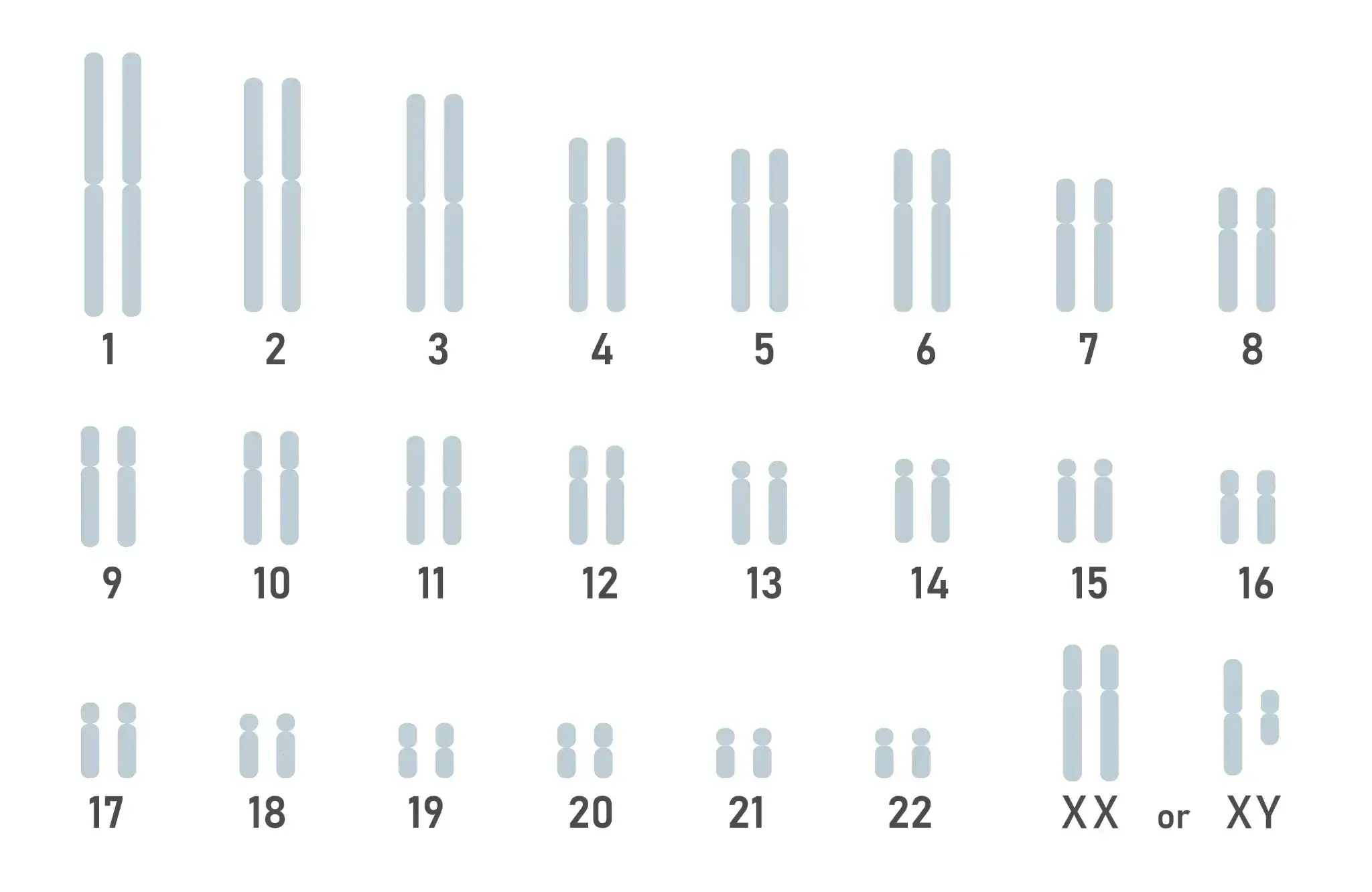
Schematic diagram of DNA map present in cells
- ■
- ■
- ■
- ■
- ■
- ■
- ■
- ■
- ■
Related genes
| Related genes | LINC-PINT |
|---|
Frequently asked questions (FAQ)
Q1. What is growth hormone level?
Growth hormone level is a hormone state determined by the blood concentration of insulin-like growth factor 1 (IGF1), which is mainly produced in the liver.It is secreted in response to growth hormone (GH) and plays an essential role in the normal growth and development of bones, muscles, and tissues. Decreased IGF1 suggests dysfunction of the growth hormone axis.
Q2. Are growth hormone levels related to genes?
Yes.Research by Sinnott-Armstrong et al. at Stanford University has revealed that the DNA region rs2048672 is associated with growth hormone secretion.There are three genotypes of rs2048672: CC, CA, and AA, and people with the genotype C mutation tend to have higher levels of growth hormone secretion.
Q3. What symptoms occur when growth hormone levels decrease?
In the case of childrenDecreased growth rate, short stature, delayed puberty, and decreased maximum bone masscan be seen. In adults, decreased muscle mass, decreased bone density (increased risk of osteoporosis), changes in lipid metabolism (increased risk of cardiovascular disease), and decreased energy levels have been reported.
Q4. What is the distribution of the growth hormone level genotype (rs2048672) in Japanese people?
The genotype distribution of rs2048672 in Japanese people isCC type 32.7%, CA type 48.9%, AA type 18.3%It is. Worldwide, 46.2% of people have type CC, 43.4% have type CA, and 10.2% have type AA, and the proportion of Japanese people with type AA is about 1.8 times higher than the world average.
References
- Reference link 1: 2021 Feb., Nasa Sinnott-Armstrong, Nat Genet