
 left ventricular failure

- Left ventricular failure is a disease in which the pumping function of the left ventricle of the heart decreases, resulting in insufficient blood flow to the whole body.This causes edema, difficulty breathing, and fatigue.
- T-type mutation in DNA region rs2801617Study finds that people with heart disease tend to have a higher risk of left ventricular failure
- The related genes areMIR5007The prevalence of type TT among Japanese people is 99.9%, which is 12.0 points higher than the world average of 87.9%.
Overview Left ventricular failure refers to a condition in which the left ventricle of the heart does not function properly. The left ventricle is the main pumping part of the heart and plays an important role in pumping blood throughout the body. If the left ventricle cannot pump enough blood, blood flow from the heart to the rest of the body becomes insufficient, leading to various symptoms and complications. Symptoms of left ventricular failure include edema (swelling), swelling of the legs and abdomen, fatigue, coughing at night, and difficulty breathing. As the disease progresses, the heart's ability to pump blood further decreases, leading to a life-threatening situation. Diagnosis involves tests such as an electrocardiogram, echocardiogram, chest X-ray, and blood tests. Treatment includes medication diuretics (ACE inhibitors, beta blockers, angiotensin II receptor antagonists, etc.), lifestyle changes (salt restriction, moderate exercise, weight control, smoking cessation), and in severe cases, surgery. A study by Tadros et al. at the University of Montreal revealed that the risk of developing left ventricular failure is associated with a DNA region called rs2801617. There are three genotypes in this DNA region: TT, TC, and CC, and it was found that people with the T genotype tend to have a higher risk of left ventricular failure.
What is left ventricular failure?
Left ventricular failure is a condition in which the pumping function of the left ventricle of the heart decreases, making it unable to pump enough blood throughout the body.The left ventricle is the main pumping part of the heart and plays an important role in pumping oxygenated blood throughout the body through the aorta (1).
Causes of left ventricular failure
Left ventricular failure is caused by the following diseases and factors:
- High blood pressure:Persistent high blood pressure causes the left ventricular muscle to enlarge and stiffen.
- Coronary artery disease:Blood supply to the heart muscle decreases due to narrowing or occlusion of coronary arteries
- Myocardial infarction:Necrosis of the myocardium reduces the contractile force of the left ventricle
- Cardiomyopathy:Structural abnormalities in the heart muscle impair pump function
- Genetic factors:T-type mutation in DNA region rs2801617 is associated with risk
Main symptoms of left ventricular failure
Symptoms progress in stages depending on the degree of left ventricular dysfunction.
- Edema (swelling):Swelling of the feet, ankles, and abdomen
- Difficulty breathing:Breathlessness during exertion and at rest
- Feeling of fatigue:Chronic fatigue due to lack of blood flow to the whole body
- Cough at night:Cough due to pulmonary congestion while lying down
- Weight gain:Rapid weight gain due to fluid retention
Differences in diagnosis and treatment methods for left ventricular failure
| Comparison items | Diagnostic method | treatment method |
|---|---|---|
| inspection | Electrocardiogram, cardiac ultrasound, chest X-ray, blood test | — |
| drug therapy | — | ACE inhibitors, beta blockers, diuretics, angiotensin II receptor antagonists |
| Lifestyle improvement | — | Salt restriction, moderate exercise, weight management, smoking cessation |
| surgical treatment | — | Cardiac resynchronization therapy (CRT), auxiliary artificial heart, heart transplantation (severe cases) |
Association between genes and left ventricular failure
Relationship between DNA region rs2801617 and onset risk
A study by Tadros et al. at the University of Montreal (1) found that the DNA region rs2801617 is associated with the risk of developing left ventricular failure.
- There are three genotypes of rs2801617: TT, TC, and CC.
- Genotype with T-type mutationtend to be at increased risk of left ventricular failure
- The related genes areMIR5007
Genotype distribution in Japanese (rs2801617)
There are differences in genotype distribution between Japanese and the rest of the world.
| Genotype | Percentage of Japanese people | percentage of the world | difference |
|---|---|---|---|
| TT type | 99.9% | 87.9% | +12.0 points |
| TC type | 0.1%以下 | 11.6% | −11.6 points |
| CC type | 0.1%以下 | 0.3% | −0.3 points |
Rationale for testing
Superficial DNA region: left ventricular failure
The gene region that most strongly affects left ventricular failure is rs2801617. The distribution of isomorphic genotypes in Japan is as follows.
- TT
99.9 % - TC
0.1%以下 - CC
0.1%以下
Basis for inspection
A study by Tadros et al. at the University of Montreal (1) revealed that the risk of developing left ventricular failure is associated with genes.There is a region called rs2801617 in the human genome, and there are two types of mutations, T and C, in the gene in this region. It was found that people with the T mutation tend to have a higher risk of left ventricular failure.
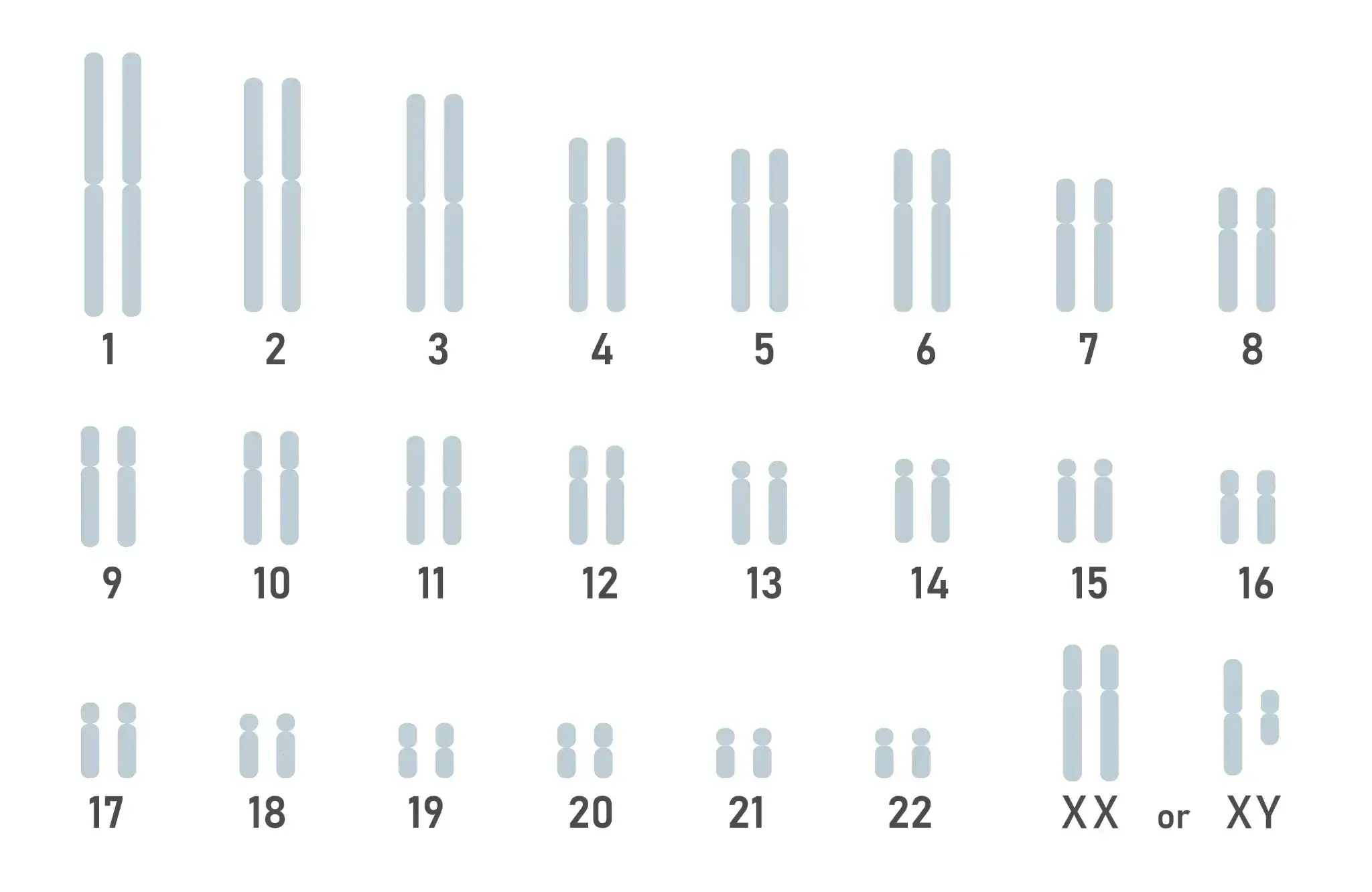
The DNA region investigated this time
Schematic diagram of DNA map present in cells
- ■
- ■
- ■
- ■
- ■
- ■
- ■
- ■
- ■
Related genes
| Related genes | MIR5007 |
|---|
Frequently asked questions (FAQ)
Q1. What is left ventricular failure?
Left ventricular failure is a condition in which the pumping function of the left ventricle of the heart decreases, making it unable to pump enough blood throughout the body.It is a serious disease that causes symptoms such as edema, difficulty breathing, fatigue, and nighttime cough, and can be life-threatening if it progresses (1).
Q2. What is the cause of left ventricular failure?
The main cause isHypertension, coronary artery disease, myocardial infarction, cardiomyopathyIt is. These diseases damage and enlarge the left ventricular muscle, reducing its pumping function. The T-type mutation in the DNA region rs2801617 is also involved as a genetic factor (1).
Q3. What genes are associated with left ventricular failure?
According to research by Tadros et al. at the University of Montreal,DNA region rs2801617 is associated with risk of left ventricular failureIt turns out that it is. People with the T mutation tend to be at increased risk, and the associated gene is MIR5007 (1).
Q4. What is the treatment for left ventricular failure?
Drug therapy (ACE inhibitors, beta blockers, diuretics), lifestyle changes (salt restriction, moderate exercise, weight control, smoking cessation), and in severe cases, cardiac resynchronization therapy (CRT) and heart transplantation.
Q5. What are the characteristics of the genotype distribution associated with left ventricular failure in Japanese people?
The Japanese rs2801617 genotype distribution isTT type 99.9%, TC type 0.1%以下, CC type 0.1%以下It is. It is characterized by the fact that the proportion of TT type is 12.0 points higher than the world average (TT type 87.9%), and TC type and CC type are almost non-existent (1).
References
- Reference link 1: 2021 Feb., Rafik Tadros, Nat Genet