
 late-onset alzheimer's disease

- Late-onset Alzheimer's disease is a dementia that often occurs in people over 60 years old.A neurodegenerative disease in which memory and thinking ability gradually decline.
- G-type mutation in DNA region rs16961023People with this condition tend to have a higher risk of developing the disease due to increased blood cholesterol levels.
- The total number of Japanese people with type CG and type GG is approximately 15.6%.High percentage compared to world average (less than 1%)show
Overview In Japan, the birthrate is declining and the population is aging, and issues related to caring for parents are attracting attention. Although many people want to avoid bothering their children as much as possible, providing care can become a burden. Caregiving fatigue can be divided into two types: "physical fatigue" and "mental fatigue." "Mental fatigue" in particular is a dangerous type of fatigue that can cause "caregiving depression." Some people become mentally exhausted due to communicating with dementia patients. Dementia patients may become forgetful or have hallucinations, which can place a heavy mental burden on caregivers. According to the Cabinet Office, it is estimated that one in five elderly people will develop dementia by 2025. Alzheimer's disease is a type of dementia that is common in people over the age of 60, and is a disease in which memory and thinking ability slowly disappear. Recent research reports have revealed that a certain region near the gene "SLC102A" is likely to influence the risk of developing Alzheimer's disease. There is no effective treatment for Alzheimer's disease, so once it develops, it cannot be cured. Knowing your risk of developing Alzheimer's disease through genetic testing is expected to not only extend your own healthy lifespan, but also reduce the burden on your caregivers. 2. Rationale A study conducted at the National Institutes of Health in the United States revealed that some people are more likely to develop Alzheimer's disease depending on the specific type of the gene "SLC10A2". That part is a DNA region called "rs16961023." (Reference link 1) The DNA region "rs16961023" has three genotypes: "CC type," "CG type," and "GG type." Regarding the genotypes of Japanese people, "CC type" is the most common at 83.5%, "CG type" is next at 15.7%, and "GG type" is the least common at 0.8%. (Reference link 2) Blood cholesterol levels, which are related to the incidence of Alzheimer's disease, tend to rise, so it is known that ``GG type'' with the risk allele G tend to be more likely to develop Alzheimer's disease, and ``CG type'' are slightly more likely to develop Alzheimer's disease. The total percentage of people with type GG and type CG, who are more likely to develop Alzheimer's disease, is 16.5%, which may seem low at first glance, but worldwide, the proportion of type GG and type CG is less than 1%. In other words, when it comes to the DNA region "rs16961023," Japanese people can be said to be a race that is more likely to develop "Alzheimer's disease." However, in addition to genetic factors, environmental factors are also greatly involved in the onset of Alzheimer's disease, so it is possible to prevent the onset of Alzheimer's disease to some extent by adjusting the living environment. It is known that Alzheimer's disease begins to progress about 10 years before the onset of symptoms. Knowing your own risk of Alzheimer's disease early and taking appropriate measures will not only support your health, but may also allow you to continue communicating with your loved ones for a long time. 3. Mechanism of action The gene "SLC10A2" is located on chromosome 13 of the 24 human chromosomes. This gene contains the genetic information to create sodium taurocholate cotransport polypeptide (NTCP), which plays a role in transporting bile acids from human portal blood to hepatocytes. Bile acids are made from cholesterol, but if NTCP is not functioning properly, bile acids will not circulate in the body and new bile acids will not be synthesized, so cholesterol will not be consumed. (Reference link 3) As a result, blood cholesterol levels become high, which is thought to increase the risk of developing Alzheimer's disease. Therefore, the DNA region "rs16961023" is one of the single nucleotide polymorphisms that is attracting attention as it is associated with the onset of Alzheimer's disease.
What is late-onset Alzheimer's disease?
Late-onset Alzheimer's disease is a type of dementia that commonly occurs in people over the age of 60, and is a neurodegenerative disease that causes a gradual decline in memory and thinking ability.According to estimates by the Cabinet Office, one in five elderly people will develop dementia in 2025.
Why late-onset Alzheimer's disease is attracting attention
In Japan, the birthrate is declining and the population is aging, and the issue of caring for parents is becoming more serious. Caregiving fatigue is classified into "physical fatigue" and "mental fatigue," and mental fatigue in particular is a factor that causes "caregiver depression."
- Forgetfulness and hallucinations in dementia patientsDealing with this situation increases the mental burden on caregivers.
- In 2025Approximately 20% of elderly peopleis estimated to develop dementia (Cabinet Office)
- Alzheimer's disease isProgression begins approximately 10 years before onset of symptomsbegins
- at the momentNo effective treatment has been establishedand once it develops, it is difficult to cure.
Symptoms of late-onset Alzheimer's disease
The symptoms areProgressing slowlyIt has the following characteristics.
- Decreased memory (especially short-term memory impairment)
- Decline in thinking ability/judgment
- Appearance of hallucinations and delusions
- Difficulty with activities of daily living
- Decline in communication skills
Differences between late-onset Alzheimer's disease and other dementias
| Comparison items | late-onset alzheimer's disease | vascular dementia |
|---|---|---|
| cause | Neurodegeneration (amyloid β accumulation) | Cerebrovascular disorder (cerebral infarction, etc.) |
| Age of onset | Common in people over 60 years old | Most common after age 50 |
| Progress speed | Progresses slowly (over several years) | progress in steps |
| genetic factors | Strong association (SLC10A2 gene) | Limited relevance |
| Main symptoms | Significant memory impairment | Decreased motivation/gait disorder |
Mechanism of action of late-onset Alzheimer's disease
Gene SLC10A2 is located on chromosome 13and carries the genetic information to produce sodium taurocholate symporter polypeptide (NTCP).
- NTCP isTransport of bile acids from human portal blood to hepatocytestake on the role of
- Due to NTCP malfunctionStagnation of bile acid circulationand new synthesis is suppressed.
- As a result,Cholesterol is not consumed and blood concentration increasesdo
- Increase in blood cholesterol concentrationIncreases risk of developing Alzheimer's diseaselet
The DNA region rs16961023 is a single nucleotide polymorphism (SNP) of interest that is associated with the development of Alzheimer's disease through this mechanism.
Why early risk identification is important for prevention
Alzheimer's disease isProgresses in the brain approximately 10 years before onset of symptomsbegins. Early identification of risks through genetic testing is expected to have the following effects:
- Extending healthy life expectancyImproving lifestyle habits towards
- caregiver'sReducing mental and physical burden
- with someone importantExtension of communication period
The relationship between genes and late-onset Alzheimer's disease
Relationship between DNA region rs16961023 and onset risk
A study by Mez et al. from the National Institutes of Health (NIH) revealed that the DNA region rs16961023 near the gene SLC10A2 is associated with the risk of developing late-onset Alzheimer's disease.
- There are three genotypes of rs16961023: CC, CG, and GG.
- GG type with G which is Risk Alleleare more likely to develop Alzheimer's disease
- CG typetend to be more likely to develop
Genotype distribution in Japanese (rs16961023)
| Genotype | Percentage of Japanese people | percentage of the world |
|---|---|---|
| CC type | 84.3% | 99.0% |
| CG type | 15.0% | 0.9% |
| GG type | 0.6% | 0.1%以下 |
The total number of Japanese people with CG type and GG type isApproximately 15.6%and the world averageless than 1%This is a high percentage compared to Regarding DNA region rs16961023,Japanese people are more likely to develop Alzheimer's diseaseIt can be said that it is a race.
Rationale for testing
External DNA region: late-onset Alzheimer's disease
The gene region most strongly associated with late-onset Alzheimer's disease is rs16961023. The distribution of isomorphic genotypes in Japan is as follows.
- CC
84.3 % - CG
15.0 % - GG
0.6 %
Basis for inspection
A study by Mez et al. from the National Institutes of Health (NIH) revealed that the risk of developing late-onset Alzheimer's disease is linked to genes. There are two types of mutations in the rs16961023 region, C and G, and people with the risk allele type G mutation tend to have a higher risk of developing Alzheimer's disease. The mechanism by which elevated blood cholesterol levels are involved in the onset of the disease has been confirmed.
The DNA region investigated this time
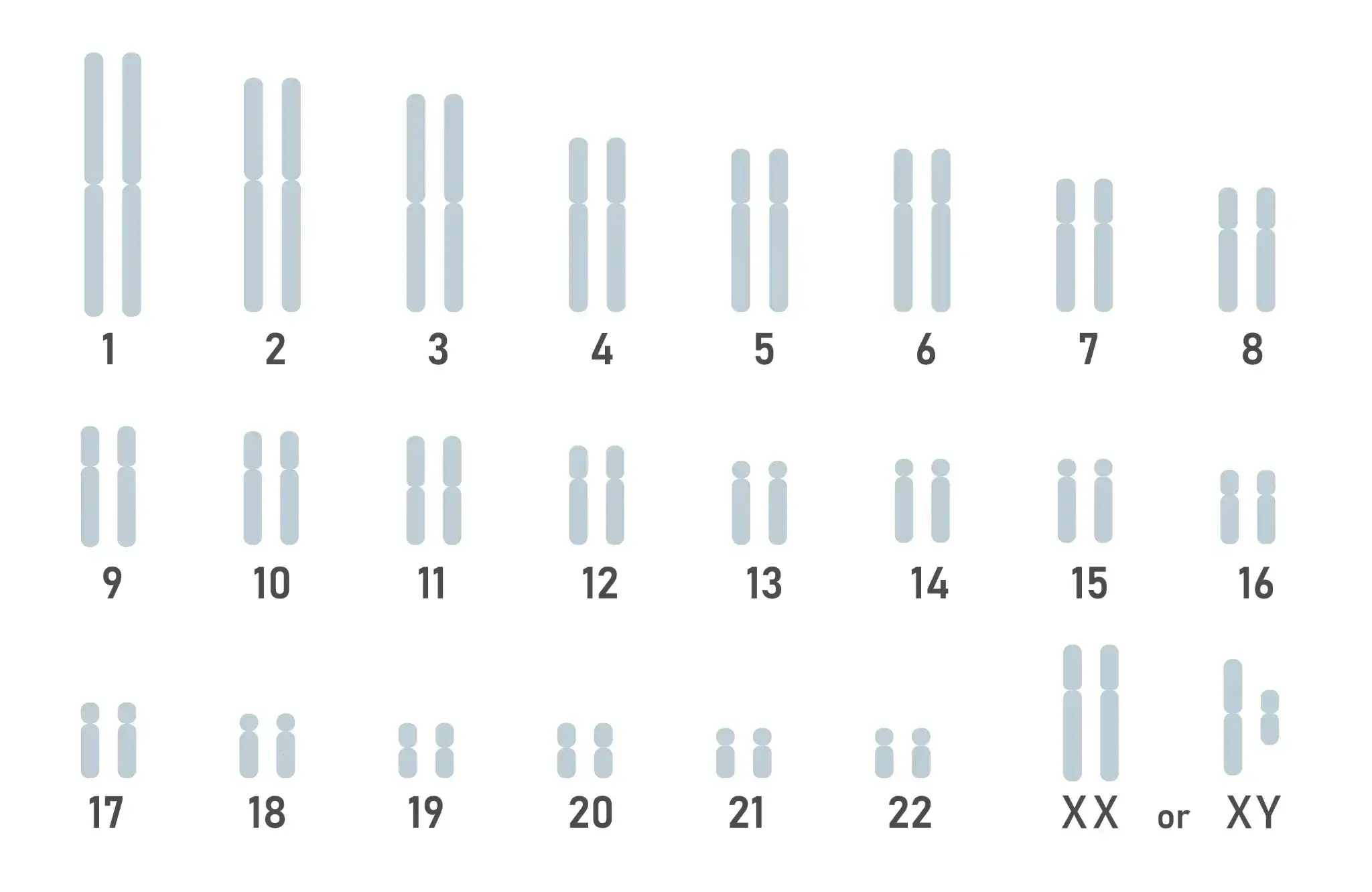
Schematic diagram of DNA map present in cells
- ■
- ■
- ■
- ■
- ■
- ■
- ■
- ■
- ■
Related genes
| Related genes | METTL21EP |
|---|
Frequently asked questions (FAQ)
Q1. What is late-onset Alzheimer's disease?
Late-onset Alzheimer's disease is a type of dementia that commonly occurs in people over the age of 60, and is a neurodegenerative disease that causes a gradual decline in memory and thinking ability.It is estimated that one in five elderly people will develop dementia by 2025, and the mental burden on caregivers has become a serious social issue.
Q2. What is the cause of late-onset Alzheimer's disease?
The main cause isMutation in DNA region rs16961023 near gene SLC10A2This is an increase in blood cholesterol concentration. In people with type G mutation, cholesterol metabolism is disrupted due to abnormal NTCP function, increasing the risk of developing the disease. Environmental factors also play a role in the onset.
Q3. Can genetic testing determine the risk of late-onset Alzheimer's disease?
By examining the genotype of DNA region rs16961023,Understanding trends in the risk of developing late-onset Alzheimer's diseaseYou can. In Japan, CG and GG types account for a total of approximately 15.6%, which is a high percentage compared to the world average of less than 1%.
Q4. Can late-onset Alzheimer's disease be prevented?
Although no effective treatment has been established at this time,Reduce the risk of developing symptoms by improving the living environmentIt may be possible. Because the disease begins to progress in the brain about 10 years before the onset of symptoms, early genetic testing is recommended to understand the risks and take countermeasures.
References
- Reference link 1: 2017 Feb., Mez, Jesse, Alzheimer's & Dementia.
- Reference link 2: Information on DNA region “rs16961023” NIH
- Reference link 3: 1991 Dec., Hagenbuch, Bruno, Proceedings of the National Academy of Sciences.