
 insomnia
- Insomnia is a sleep disorder characterized by difficulty falling asleep, waking up in the middle of the day, and waking up early in the morning.Approximately 10-15% of adults have chronic insomnia.
- T-type mutation in DNA region rs1815739Research shows that people with the disease tend to be at higher risk of developing
- Cognitive behavioral therapy (CBT-I) and lifestyle improvementis recommended as the most effective treatment
Overview Insomnia is a condition in which you feel tired or have difficulty concentrating during the day due to not getting enough sleep or having poor quality sleep. Symptoms include difficulty falling asleep, waking up repeatedly during the night, and waking up early in the morning. Causes of insomnia include psychological problems such as stress, anxiety, and depression, irregular lifestyle habits, and excessive intake of caffeine and alcohol. Physical problems (such as pain or respiratory problems) may also be a cause. There are three types of insomnia: short-term acute insomnia, long-term chronic insomnia, and primary insomnia for which the cause cannot be identified. Diagnosis is made through evaluation of the patient's sleep patterns and lifestyle, as well as sleep testing. Effective treatments include cognitive behavioral therapy (CBT) and lifestyle changes, depending on the cause. Medications are recommended for short-term use because of the risk of dependence. A study by Watanabe et al. from Vrije Universiteit Amsterdam revealed that the risk of developing insomnia is associated with a DNA region called rs1815739. There are three genotypes in this DNA region: TT, TC, and CC, and it was found that people with the T genotype tend to have a higher risk of insomnia.
What is insomnia?
Insomnia is a sleep disorder in which one of the following occurs: difficulty falling asleep, waking up in the middle of the night, or waking up early in the morning three or more times a week for three months or more, accompanied by daytime fatigue and loss of concentration.Approximately 10-15% of adults are said to suffer from chronic insomnia (1).
Causes and mechanisms of insomnia
Insomnia is caused by a combination of multiple factors. The main causes are as follows.
- Mental factors:Mental problems such as stress, anxiety, and depression can reduce the quality of your sleep.
- Lifestyle factors:Irregular bedtimes, excessive intake of caffeine and alcohol, and use of smartphones before bed
- Physical factors:Chronic pain, respiratory diseases (such as sleep apnea), restless leg syndrome
- Genetic factors:T-type mutation carriers in the DNA region rs1815739 tend to be at higher risk (1)
Main symptoms of insomnia
Symptoms of insomnianighttime sleep disordersanddaytime dysfunctionIt is divided into
- Unable to fall asleep even after 30 minutes have passed after going to bed (difficulty falling asleep)
- Waking up more than once during the night and taking a long time to go back to sleep (midnight awakening)
- Waking up 30 minutes or more earlier than the scheduled wake-up time (early morning awakening)
- Strong daytime fatigue, loss of concentration, and irritability
- Decreased performance at work or school
Differences between the three types of insomnia
| Comparison items | acute insomnia | chronic insomnia | primary insomnia |
|---|---|---|---|
| period | less than 3 months | 3 months or more | long lasting |
| cause | Stress/environmental changes | mental and physical illness | Difficult to identify cause |
| Patient percentage | Approximately 30-35% | Approximately 40% | Approximately 25-30% |
| Main treatment | Eliminating causes and improving life | CBT-I + drug therapy | CBT-I focus |
How to improve and treat insomnia
The following methods are recommended for treating insomnia, depending on the cause:
- Cognitive behavioral therapy (CBT-I):A treatment that corrects misperceptions about sleep and improves behavioral patterns. Confirmed to be more effective in the long term than drug therapy
- Improved sleep hygiene:Maintain regular bedtime and wake-up times, optimize the bedroom environment (temperature 16-20℃, ensure darkness)
- Caffeine/alcohol restrictions:Avoid caffeine intake within 6 hours before bedtime
- Moderate exercise:30 minutes of aerobic exercise at least 3 times a week is effective in improving sleep quality
- Drug therapy:Recommended for short-term use (long-term use is generally avoided due to the risk of dependence)
How to diagnose insomnia
Diagnosis is made through the following tests and evaluations.
- Sleep pattern evaluation using sleep diary
- Pittsburgh Sleep Questionnaire (PSQI)
- Epworth Sleepiness Scale (ESS)
- Overnight polysomnography (PSG)
- Actigraph test (recording of sleep/wake patterns using an activity meter)
The relationship between genes and insomnia
Relationship between DNA region rs1815739 and onset risk
A study by Watanabe et al. (1) from Vrije Universiteit Amsterdam revealed that the DNA region rs1815739 is associated with the risk of developing insomnia.
- There are three genotypes of rs1815739: TT, TC, and CC.
- Genotype with T-type mutationpeople tend to be at higher risk of insomnia
Genotype distribution in Japanese (rs1815739)
| Genotype | Percentage of Japanese people | percentage of the world |
|---|---|---|
| TT type | 23.5% | 18.5% |
| TC type | 49.9% | 49.0% |
| CC type | 26.4% | 32.3% |
Rationale for testing
Surface DNA region: insomnia
The gene region that most strongly affects insomnia is rs1815739. The distribution of isomorphic genotypes in Japan is as follows.
- TT
23.5 % - TC
49.9 % - CC
26.4 %
Another gene region associated with insomnia is rs2624838. The distribution of isomorphic genotypes in Japan is as follows
- CC
23.5 % - CG
49.9 % - GG
26.4 %
Another gene region associated with insomnia is rs9316619. The distribution of isomorphic genotypes in Japan is as follows
- TT
99.9 % - TC
0.1%以下 - CC
0.1%以下
Another gene region involved in insomnia is rs1443914. The distribution of isomorphic genotypes in Japan is as follows
- TT
21.3 % - TC
49.7 % - CC
28.9 %
Another gene region involved in insomnia is rs1378559. The distribution of isomorphic genotypes in Japan is as follows
- TT
44.1 % - TC
44.5 % - CC
11.2 %
Basis for inspection
A study by Watanabe et al. from Vrije Universiteit Amsterdam revealed that the risk of developing insomnia is linked to genes. There is a region called rs1815739 in the human genome, and there are two types of mutations, T and C, in the gene in this region. It has been found that people with the T-type mutation tend to have an increased risk of insomnia (1).
The DNA region investigated this time
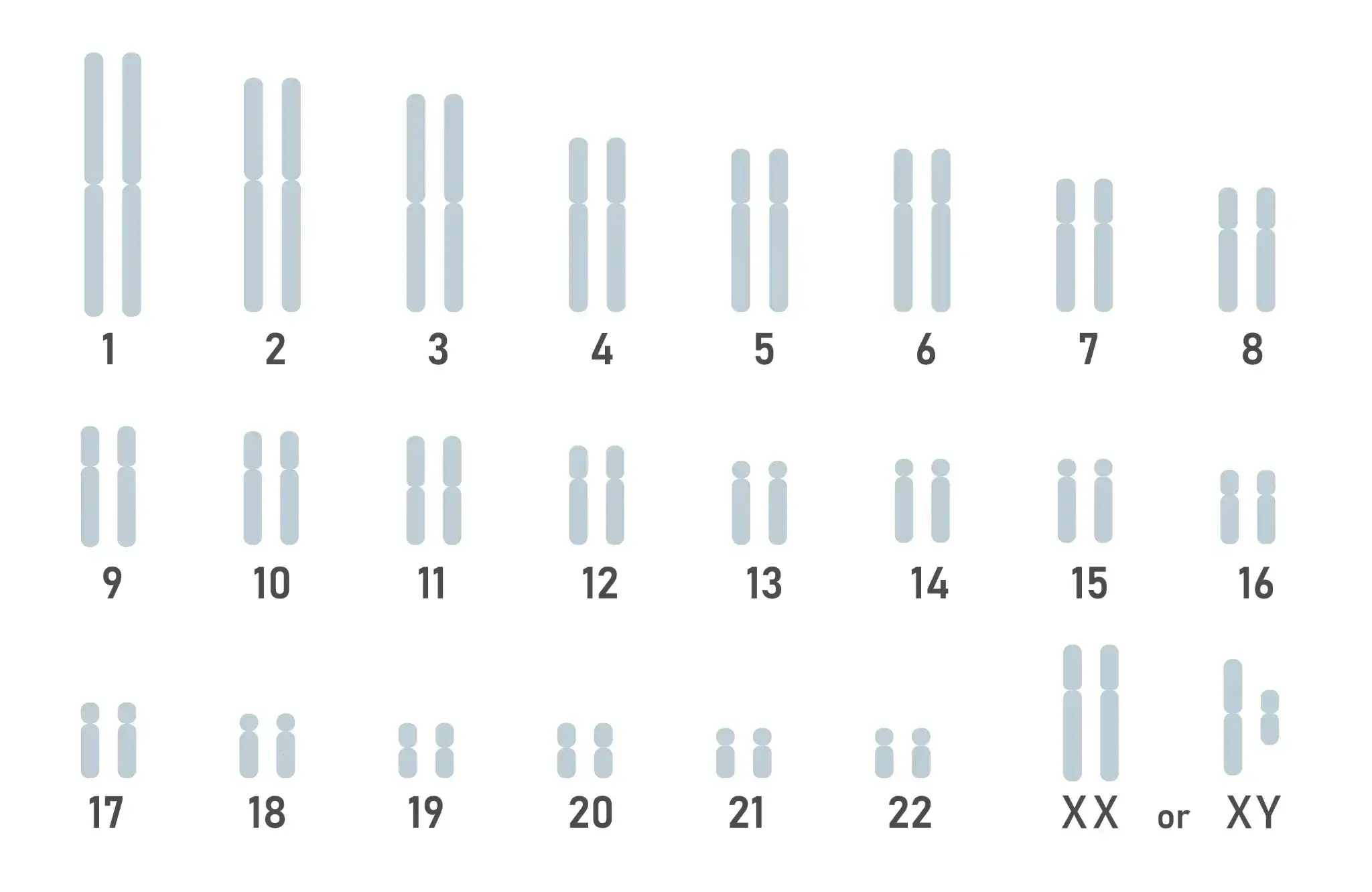
Schematic diagram of DNA map present in cells
- ■
- ■
- ■
- ■
- ■
- ■
- ■
- ■
- ■
Related genes
| Related genes | ACTN3 |
|---|---|
| Related genes | SEMA3F |
| Related genes | RN7SL618P |
| Related genes | RN7SL618P |
| Related genes | RNU6-133P |
Frequently asked questions (FAQ)
Q1. What is insomnia?
Insomnia is a sleep disorder in which one of the following occurs: difficulty falling asleep, waking up in the middle of the night, or waking up early in the morning three or more times a week for three months or more, accompanied by daytime fatigue and loss of concentration.Approximately 10-15% of adults are said to suffer from chronic insomnia (1).
Q2. What is the cause of insomnia?
The main cause isPsychological factors such as stress, anxiety, and depressionThis is due to irregular lifestyle rhythms and excessive intake of caffeine and alcohol. Furthermore, physical factors and genetic predisposition (T mutation in the DNA region rs1815739) are also involved (1).
Q3. What is the relationship between insomnia and genes?
According to research by Watanabe et al. of Vrije Universiteit Amsterdam,People with the T mutation in the DNA region rs1815739 tend to have a higher risk of insomnia.It turned out that there is. It is possible to understand risk trends through genetic testing (1).
Q4. How can I improve insomnia?
The most effective treatment isCognitive behavioral therapy (CBT-I)It has been confirmed that it has a longer-term improvement effect than drug therapy. As lifestyle changes, maintaining regular bedtime and wake-up times, limiting caffeine, and moderate exercise are recommended.
Q5. What are the three types of insomnia?
Insomnia is①Acute insomnia(short term less than 3 months),②Chronic insomnia(lasts for more than 3 months),③Primary insomniaIt is classified into three types: (not caused by another disease). Chronic insomnia accounts for approximately 40% of all cases.
References
- Reference link 1: 2022 Aug., Kyoko Watanabe, Nat Genet
- Reference link 2: 2019 Mar., Philip R Jansen, Nat Genet