
 inguinal hernia

- Inguinal hernia is a disease in which the contents of the abdomen protrude through a weak part of the fascia in the inguinal region.The incidence rate in men is approximately 8 to 10 times that in women.
- C-type mutation in DNA region rs3791675Study finds that people with this condition tend to have a higher risk of inguinal hernia.
- The prevalence of type CC among Japanese people is 7.5%, compared to the world average of 54.8%.significantly lowerIt is characterized by
Overview An inguinal hernia is a condition in which the contents of the abdomen protrude through a weak spot in the groin (the area at the bottom of the abdomen near the groin). This condition manifests as a bulge, especially on the sides of the pubic bone. It is more common in men because their inguinal canal is weaker. The bulge becomes more noticeable when you stand up, cough, or make physical exertion, and may disappear when you lie down. It feels like a soft lump to the touch and may be painful. Discomfort, heaviness, and a dragging sensation in the groin are often felt, especially at the end of the day and after prolonged standing or strenuous exercise. Pain can range from mild to severe and may increase with activities such as lifting heavy objects. In some cases, there is a risk of intestinal obstruction and reduced blood flow to the intestinal tract, and emergency medical attention is required if the intestine becomes incarcerated or strangled. Considering the symptoms of inguinal hernia and the risk of complications, early diagnosis and appropriate care are important. Treatment often includes surgery to repair the hernia. A study by J Wei and colleagues at North Shore University Health System revealed that the risk of inguinal hernia is associated with a DNA region called rs3791675. This DNA region has three genotypes: CC, CT, and TT, and it was found that people with the C genotype tend to have a higher risk of inguinal hernia.
What is an inguinal hernia?
An inguinal hernia is a condition in which abdominal contents, such as intestines or fatty tissue, protrude through a weak part of the fascia in the groin (the area in the lower abdomen near the groin).It is also commonly called ``prolapse of the intestine'' and is one of the most common surgical conditions.
Approximately 20 million inguinal hernia repair surgeries are performed annually worldwide. Men's lifetime risk of developing the diseaseApproximately 27%, women areApproximately 3%It has been reported that the male to female ratio is approximately 8 to 10:1, making it a disease that is overwhelmingly more likely to occur in men.
Causes and risk factors for inguinal hernia
Inguinal hernias develop due to congenital or acquired weaknesses in the fascia and connective tissue in the inguinal region. Below are the risk factors.
- Being male:The male inguinal canal has a weak fascia because the spermatic cord passes through it.
- Aging:Incidence increases in people over 50 years of age due to decreased elasticity of connective tissue
- Chronic increased abdominal pressure:Chronic cough, constipation, heavy lifting
- Obesity:Increased risk of developing symptoms due to increased intra-abdominal pressure
- Genetic predisposition:Type C mutation in DNA region rs3791675 identified as a risk factor
Main symptoms of inguinal hernia
The symptoms areBulge and discomfort in the groin areaIt is characterized by
- Bulges that appear on both sides of the pubic bone (more noticeable when standing, coughing, or straining)
- The bulge disappears when you lie down
- Heaviness/dragging sensation in the groin area
- Mild to severe pain (worsened by lifting heavy objects)
- Feels like a soft lump when touched
incarceration (kanton)YastrangulationWhen this occurs, intestinal obstruction and decreased blood flow to the intestinal tract occur,emergency surgery requiredIt becomes.
Classification of inguinal hernia
| classification | external inguinal hernia | internal inguinal hernia |
|---|---|---|
| Occurrence site | Protruding from the internal inguinal ring | Protruding from Hesselbach's triangle |
| frequency | Approximately 75% of the total | Approximately 25% of the total |
| Age of onset | Children to young people | middle aged man |
| cause | Congenital patent peritoneal sheath | Weakening of fascia due to aging |
| Incarceration risk | relatively high | relatively low |
Treatment for inguinal hernia
inguinal herniaDiseases that do not heal naturallyThe basic treatment is surgery.
- Open surgery (mesh method):Reinforce weak areas of the fascia with artificial mesh. Can be performed with local anesthesia
- Laparoscopic surgery (TAPP method/TEP method):Performed through a small incision. Less pain and faster recovery after surgery
- Emergency surgery:Immediately perform incarceration/strangulation to prevent intestinal necrosis
The recurrence rate of surgery isApproximately 1-5%The use of mesh has significantly reduced the recurrence rate.
Diagnostic method
It is diagnosed by the following tests.
- Physical examination (inspection/palpation in standing position)
- Ultrasound examination (echo)
- CT examination (if incarceration or strangulation is suspected)
- MRI examination (if differential diagnosis is required)
Relationship between genes and inguinal hernia
Relationship between DNA region rs3791675 and onset risk
A study by J Wei and colleagues at North Shore University Health System found that the DNA region rs3791675 is associated with the risk of inguinal hernia.
- There are three genotypes of rs3791675: CC, CT, and TT.
- CC type with type C mutationare at highest risk of inguinal hernia
- CT typeis a medium risk
- TT type has a relatively low risk
However, people with type CC or CT type do not necessarily develop inguinal hernias.The risk of developing the disease increases due to a combination of environmental factors such as aging and increased intra-abdominal pressure.
Genotype distribution in Japanese (rs3791675)
| Genotype | Percentage of Japanese people | percentage of the world |
|---|---|---|
| CC type | 7.5% | 54.8% |
| CT type | 39.7% | 38.4% |
| TT type | 52.7% | 6.7% |
The majority of Japanese people have type TT (52.7%), and they are characterized by a lower prevalence of type C than the world average (6.7%).
Genotype distribution in Japanese (rs1346786)
| Genotype | Percentage of Japanese people | percentage of the world |
|---|---|---|
| CC type | 4.0% | 46.0% |
| CT type | 32.2% | 43.6% |
| TT type | 63.6% | 10.3% |
Role of related genes EFEMP1 and SRPX
Genes related to inguinal hernia includeEFEMP1andSRPXhas been identified.
- EFEMP1 (EGF-containing fibrin-like extracellular matrix protein 1):Involved in maintaining the structure of connective tissue; mutations increase the fragility of fascia
- SRPX (cis-rich secreted protein):Involved in extracellular matrix remodeling, affecting tissue repair and strength
Rationale for testing
Superficial DNA region: inguinal hernia
The gene region that most strongly affects inguinal hernia is rs3791675. The distribution of isomorphic genotypes in Japan is as follows.
- CC
7.5 % - CT
39.7 % - TT
52.7 %
Another gene region related to inguinal hernia is rs1346786. The distribution of isomorphic genotypes in Japan is as follows
- CC
4.0 % - CT
32.2 % - TT
63.6 %
Another gene region related to inguinal hernia is rs35318931. The distribution of isomorphic genotypes in Japan is as follows
- GG
99.9 % - GA
0.1%以下 - AA
0.1%以下
Basis for inspection
J of North Shore University Health System A study by Wei et al. revealed that the risk of inguinal hernia is associated with genes. There are two types of mutations in the rs3791675 region, C and T, and people with type C mutations tend to have a higher risk of inguinal hernia. Among Japanese people, 7.5% have type CC, 39.7% have type CT, and 52.7% have type TT, which is characterized by a lower prevalence of type C compared to the world average.
The DNA region investigated this time
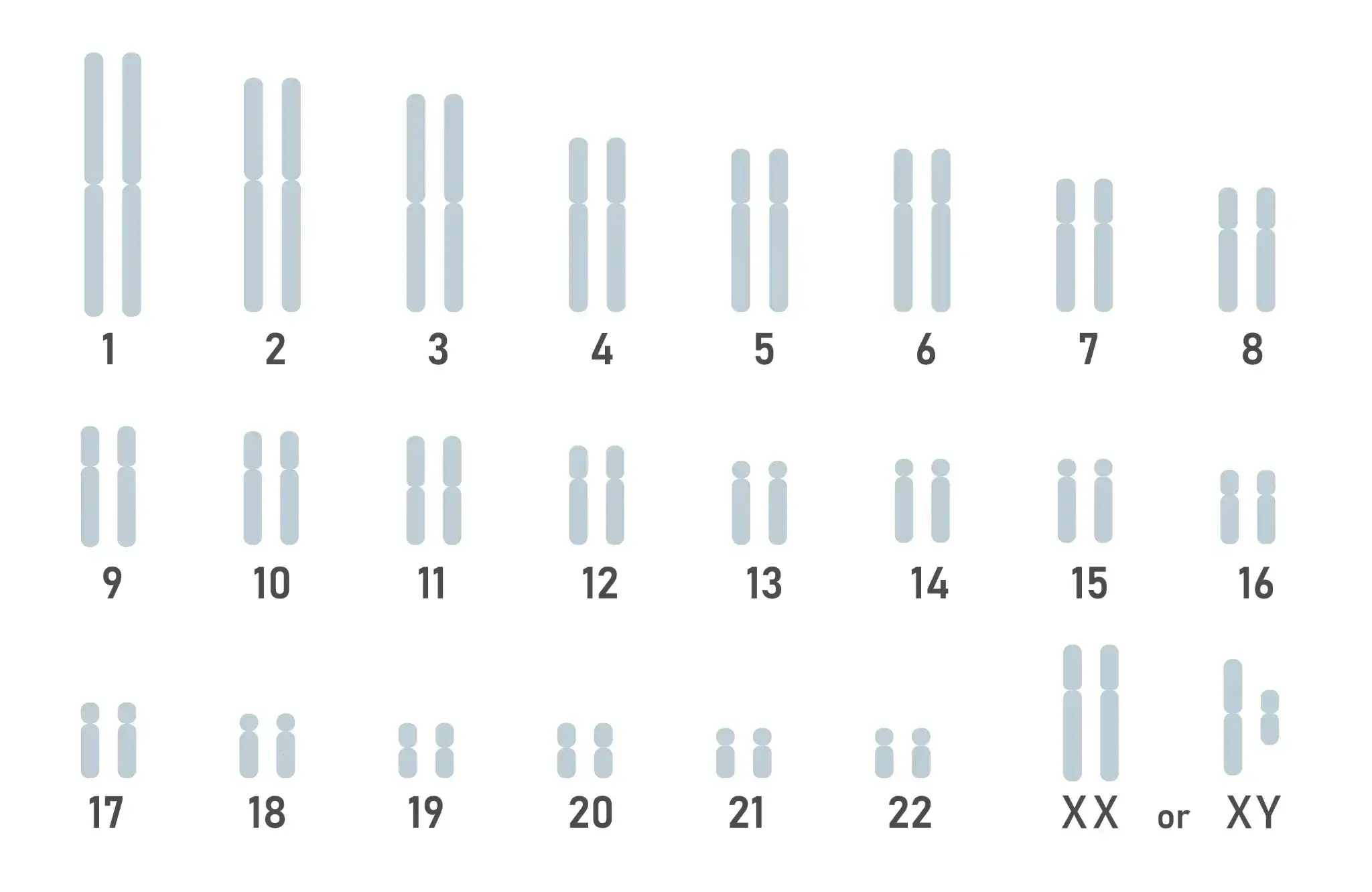
Schematic diagram of DNA map present in cells
- ■
- ■
- ■
- ■
- ■
- ■
- ■
- ■
- ■
Related genes
| Related genes | EFEMP1 |
|---|---|
| Related genes | EFEMP1 |
| Related genes | SRPX |
Frequently asked questions (FAQ)
Q1. What is an inguinal hernia?
An inguinal hernia is a disease in which the intestine or fatty tissue protrudes from a weak part of the fascia in the groin (lower abdomen, near the groin).It is also commonly called "prolapse." The lifetime risk for men is approximately 27%, which is 8 to 10 times higher than for women (approximately 3%).
Q2. What is the cause of inguinal hernia?
The main cause isCongenital and acquired weaknesses in the fascia and connective tissue of the inguinal regionIt is. Risk factors include increasing abdominal pressure due to aging, chronic coughing, heavy lifting, obesity, and constipation. A type C mutation in the DNA region rs3791675 has been identified as a genetic risk factor.
Q3. Can the risk be determined by genetic testing for inguinal hernia?
By examining the genotype of the DNA region rs3791675,Understanding trends in the risk of developing inguinal herniaYou can. CC type (7.5% of Japanese people) has the highest risk, CT type (39.7%) has intermediate risk, and TT type (52.7%) has a relatively low risk.
Q4. What treatments are available for inguinal hernia?
The main treatment method issurgeryIt is. There are open surgery (mesh method) and laparoscopic surgery (TAPP method/TEP method), and the recurrence rate is approximately 1-5%. Inguinal hernias do not heal naturally and require emergency surgery if incarceration occurs.
Q5. What are the early symptoms of inguinal hernia?
The initial symptoms areBulge in the groin (groin)It is. The swelling becomes noticeable when standing, coughing, or straining, and disappears when lying down. The pain can range from mild to severe and is accompanied by a feeling of heaviness or dragging in the groin.
References
- Reference link 1: 2022 Feb., J Wei, Hernia
- Reference link 2: 2021 Oct., Saori Sakaue, Nat Genet
- Reference link 3: 2022 Jul., Hélène Choquet, Hum Mol Genet