
 inflammatory bowel disease

- Inflammatory bowel disease (IBD) is a chronic intestinal inflammatory disease that includes ulcerative colitis and Crohn's disease.Approximately 290,000 patients have been reported in Japan.
- Type A mutation in DNA region rs7240004 near gene SMAD7Research shows that people with the disease tend to be at higher risk of developing
- Low-fat diet, intake of fermented foods, and smoking cessationcan be expected to reduce the risk of developing symptoms and improve the intestinal environment.
Overview "Inflammatory bowel disease" is a disease that causes chronic inflammation of the intestinal mucosa, and includes "ulcerative colitis" and "Crohn's disease." This disease is designated as an intractable disease in Japan, and the number of patients is increasing. Regarding the number of patients, an epidemiological survey by the Ministry of Health, Labor and Welfare reported that as of 2014, there were approximately 220,000 patients with ulcerative colitis and approximately 70,000 patients with Crohn's disease. (Reference link 1) The onset mechanism is not clear, but it is thought to develop in people who have genetic factors combined with abnormalities in their diet, intestinal bacteria, and immune system. In Europe and the United States, it has been reported that approximately 20% of patients with inflammatory bowel disease have a close relative also suffering from inflammatory bowel disease, and genetic factors are strongly linked. (Reference link 2) According to a recent research report, it has been revealed that a certain region near the gene "SMAD7" is likely to influence the risk of developing "inflammatory bowel disease." However, the cause of this disease is still unknown and there is no fundamental treatment. Therefore, it is necessary to work on long-term treatment and prevention. Investigating one's own genetic type through genetic testing and knowing the risk of developing inflammatory bowel disease is expected to be useful in preventing the onset of the disease and taking early measures. 2. Rationale A study conducted by a British genetic research institute found that certain genotypes of the DNA region rs7240004 near the SMAD7 gene are more likely to develop inflammatory bowel disease. (Reference link 3) There are three genotypes in this DNA region: ``AA type'', ``AG type'', and ``GG type'', and it is known that among Japanese people, ``AG type'' is the most common genotype at 49.6%, followed by ``GG type'' at 29.7%, and ``AA type'' is the lowest at 20.7%. (Reference link 4) It has been found that people with the ``AA type'' genotype, which has the risk allele A, tend to be more likely to develop ``inflammatory bowel disease,'' and the ``AG type'' are slightly more likely to develop it. However, people with ``AA type'' and ``AG type'' do not necessarily suffer from ``inflammatory bowel disease,'' and the possibility of developing the disease increases due to a combination of environmental factors. For example, fatty foods and dietary habits that disrupt intestinal bacteria are known to be risk factors for inflammatory bowel disease, and smoking is known to be a risk factor for developing Crohn's disease. Therefore, in order to prevent inflammatory bowel disease, it is important to refrain from eating fatty foods, eat low-fat meals such as Japanese food that are good for the intestinal environment, and eat plenty of fermented foods, and avoid smoking. It is recommended to understand one's own risk of developing inflammatory bowel disease at an early stage and manage the risk in terms of lifestyle and environment. 3. Mechanism of action The gene SMAD7, which affects the onset of inflammatory bowel disease, is located on chromosome 18 of the 24 human chromosomes. This gene contains genetic information that inhibits the function of a transmitter called TGFβ, which suppresses inflammation. It has been reported that the gene SMAD7 is overexpressed in the gastrointestinal mucosa of patients suffering from inflammatory bowel disease. If the gene "SMAD7" is overexpressed in the gastrointestinal tract depending on the genotype of the DNA region "rs7240004," "TGFβ," which has anti-inflammatory effects, will not function properly. Therefore, inflammation is thought to occur actively in areas of the gastrointestinal tract where it is overexpressed. Based on the above, if the gene "SMAD7" is overexpressed in the large intestine, it may lead to "ulcerative colitis," and if it is overexpressed in "other gastrointestinal tracts," including the large intestine, it may lead to "Crohn's disease." (Reference link 5) As described above, the DNA region "rs7240004" is attracting attention as one of the single nucleotide polymorphisms that are significantly involved in the onset of inflammatory bowel disease.
What is inflammatory bowel disease (IBD)?
Inflammatory Bowel Disease (IBD) is a general term for diseases that cause chronic inflammation in the intestinal mucosa, and refers to two diseases: ulcerative colitis and Crohn's disease.It is designated as an incurable disease in Japan, and the number of patients is on the rise.
According to an epidemiological survey by the Ministry of Health, Labor and Welfare, as of 2014, approximately 220,000 people had ulcerative colitis and 70,000 people had Crohn's disease, for a total of 290,000 patients (Reference link 1).
What are the causes and risk factors of inflammatory bowel disease?
Although the onset mechanism has not been completely elucidated, the following factors are thought to be involved in a complex manner.
- Genetic factors:In Europe and America, approximately 20% of patients have close relatives who also suffer from IBD, strongly suggesting that genetic involvement is involved (Reference link 2)
- Disordered eating habits:Fatty foods disrupt intestinal bacteria and become a risk factor
- Immune system abnormalities:Inflammation persists as the immune system attacks the own intestinal mucosa
- Smoking:Smoking has been confirmed as a risk factor for developing Crohn's disease in particular.
Difference between ulcerative colitis and Crohn's disease
| Comparison items | ulcerative colitis | crohn's disease |
|---|---|---|
| Inflammation site | Limited to the mucosa of the large intestine | Entire digestive tract from oral cavity to anus |
| Number of patients (2014) | Approximately 220,000 people | Approximately 70,000 people |
| depth of inflammation | mucosal surface layer | Covers the entire thickness of the intestinal wall |
| Effects of smoking | Trends that reduce the risk of developing symptoms | Risk factors for development |
| Designated as an intractable disease | Specified | Specified |
How to prevent inflammatory bowel disease
Although no fundamental treatment has been established, the following lifestyle changes can be expected to reduce the risk of developing the disease.
- Eating a low-fat diet:Focus on low-fat foods such as Japanese food
- Active intake of fermented foods:Incorporate miso, natto, yogurt, etc. on a daily basis to improve the intestinal environment
- No smoking:Smoking cessation is especially essential for preventing Crohn's disease.
- Early risk understanding:Check your risk with genetic testing and take preventive measures
The relationship between genes and inflammatory bowel disease
Relationship between DNA region rs7240004 and onset risk
Research by the British Genetic Research Institute has revealed that the genotype of the DNA region ``rs7240004'' near the gene ``SMAD7'' is associated with the risk of developing inflammatory bowel disease (Reference link 3).
- rs7240004 hasAA type/AG type/GG typeThere are three genotypes of
- Japanese genotype distribution: 49.6% AG type, 29.7% GG type, 20.7% AA type (Reference link 4)
- AA type with Risk Allele Apeople are more likely to develop inflammatory bowel disease
- AG typeIt has been confirmed that there is a tendency to be slightly more likely to develop the disease.
Genotype distribution in Japanese (rs7240004)
| Genotype | Percentage of Japanese people | percentage of the world |
|---|---|---|
| AA type | 18.7% | 37.4% |
| AG type | 49.0% | 47.4% |
| GG type | 32.1% | 15.0% |
What is the mechanism of action of the SMAD7 gene?
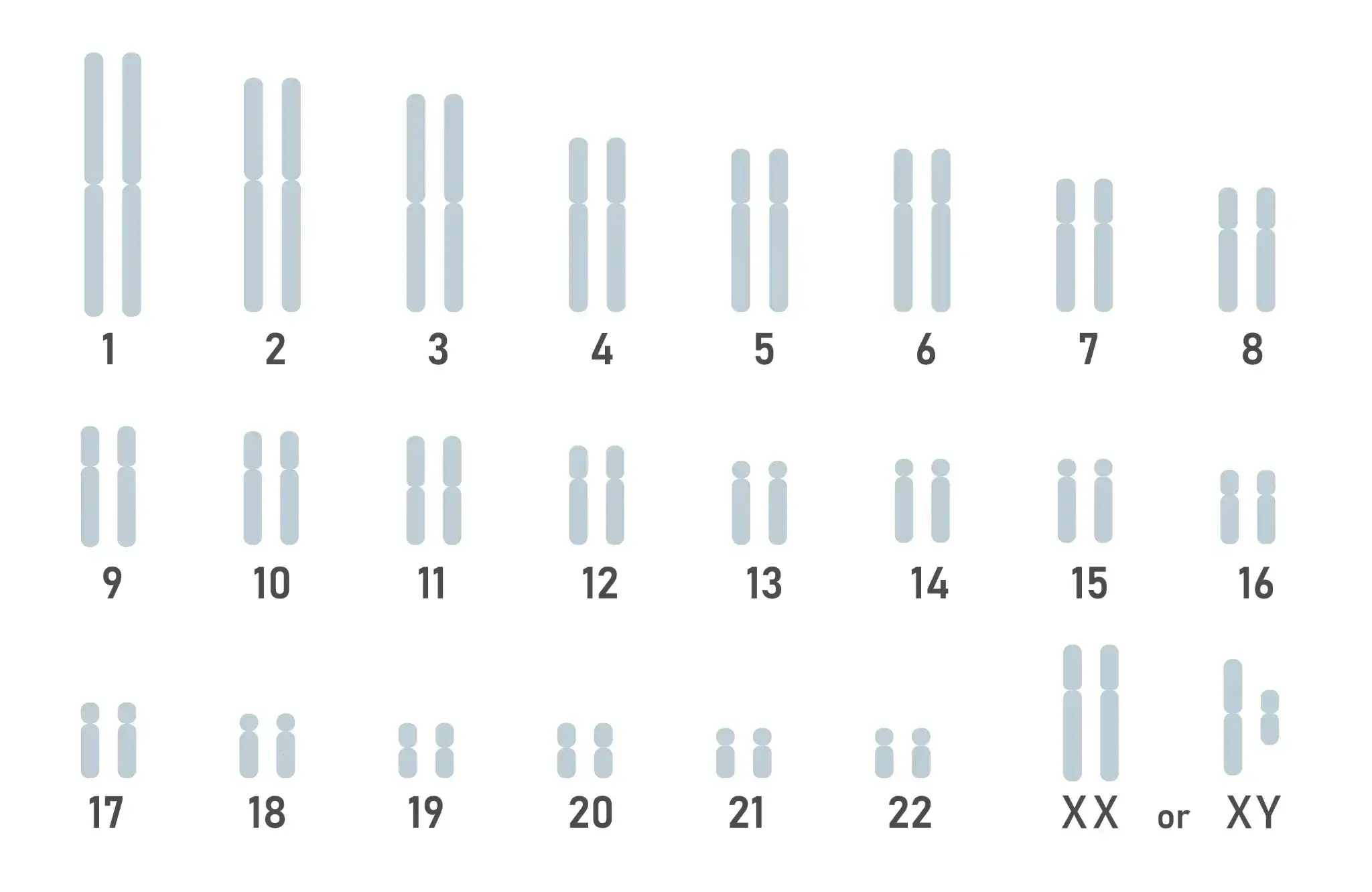
The gene "SMAD7" is located on chromosome 18 and has genetic information that inhibits the function of the transmitter "TGFβ" that suppresses inflammation.
- In the gastrointestinal mucosa of IBD patients, SMAD7 isoverexpressedIt has been reported that (Reference link 5)
- Overexpression of SMAD7 prevents the anti-inflammatory TGFβ from functioning properly
- As a result, the overexpressed gastrointestinal siteactive inflammationoccurs
SMAD7Overexpressed in the large intestine→Ulcerative colitis,Overexpressed in other gastrointestinal tracts, including the large intestine→You may develop Crohn's disease. The DNA region rs7240004 is attracting attention as an important single nucleotide polymorphism (SNP) involved in the development of inflammatory bowel disease.
Rationale for testing
Superficial DNA region: Inflammatory bowel disease
The gene region most strongly associated with inflammatory bowel disease is rs7240004. The distribution of isomorphic genotypes in Japan is as follows.
- AA
18.7 % - AG
49.0 % - GG
32.1 %
Another gene region involved in inflammatory bowel disease is rs2823286. The distribution of isomorphic genotypes in Japan is as follows
- GG
74.8 % - GA
23.2 % - AA
1.8 %
Another gene region involved in inflammatory bowel disease is rs2287921. The distribution of isomorphic genotypes in Japan is as follows
- TT
90.6 % - TC
9.1 % - CC
0.2 %
Another gene region involved in inflammatory bowel disease is rs1260326. The distribution of isomorphic genotypes in Japan is as follows
- TT
33.8 % - TC
48.6 % - CC
17.4 %
Basis for inspection
Research by the UK Genetic Research Institute has revealed that the risk of developing inflammatory bowel disease is linked to genes. There are two types of mutations in the rs7240004 region, A and G, and people with the risk allele type A mutation tend to have a higher risk of inflammatory bowel disease (reference link 3).
The DNA region investigated this time
Schematic diagram of DNA map present in cells
- ■
- ■
- ■
- ■
- ■
- ■
- ■
- ■
- ■
Related genes
| Related genes | CTIF |
|---|---|
| Related genes | LINC02920 |
| Related genes | RASIP1 |
| Related genes | GCKR |
Frequently asked questions (FAQ)
Q1. What is inflammatory bowel disease (IBD)?
Inflammatory bowel disease (IBD) is a general term for diseases that cause chronic inflammation in the intestinal mucosa.refers to two diseases: ulcerative colitis and Crohn's disease. It is designated as an intractable disease in Japan, and as of 2014, a total of approximately 290,000 patients have been reported (Reference link 1).
Q2. What is the cause of inflammatory bowel disease?
Although the onset mechanism is not completely elucidated,Genetic factors include disordered eating habits, abnormalities in intestinal bacteria, and abnormalities in the immune system.It is thought that the disease is caused by the addition of In Europe and America, approximately 20% of patients have close relatives who also suffer from IBD, strongly suggesting a genetic involvement (Reference link 2).
Q3. What is the difference between ulcerative colitis and Crohn's disease?
ulcerative colitis isInflammation limited to the mucosa of the large intestineoccurs, whereas Crohn's diseaseAll parts of the digestive tract from the oral cavity to the anusinflammation occurs. Approximately 220,000 patients have ulcerative colitis and approximately 70,000 patients have Crohn's disease.
Q4. Can genetic testing determine the risk of inflammatory bowel disease?
By examining the genotype of the DNA region rs7240004,Understanding trends in the risk of developing inflammatory bowel diseaseYou can. Research has shown that people with type AA and AG types who have risk allele type A tend to develop the disease (reference link 3).
Q5. How can I prevent inflammatory bowel disease?
Avoid foods with high fat content and actively consume low-fat meals such as Japanese food and fermented foods.It is important to do so. Smoking is a risk factor for developing Crohn's disease, so quitting smoking is also effective in preventing it. It is recommended to understand the risk through genetic testing at an early stage and improve lifestyle habits.
References
- Reference link 1: Information on “Inflammatory Bowel Disease” IBD-INFO
- Reference link 2: Information on “Ulcerative Colitis” Intractable Disease Information Center
- Reference link 3: 2012 Nov., Luke Jostins, Nature.
- Reference link 4: Information on DNA region “rs7240004” NIH
- Reference link 5: 2001 Aug., Monteleone, Giovanni, The Journal of clinical investigation.
- Reference link 6: 2012 Nov., Luke Jostins, Nature
- Reference link 7: 2015 Sep., Jimmy Z Liu, Nat Genet
- Reference link 8: 2014 Feb., Rico Rueedi, PLoS Genet