
 height in childhood
- Height in childhood is associated with T-type mutation in DNA region rs12534093It is influenced by four factors: genetics, nutrition, health status, and amount of exercise.
- The prevalence of type TT among Japanese people is 99.9%., which is 38.6 points higher than the world average of 61.3%.
- The related genes areIGF2BP3At 1 year old, children grow approximately 1.5 times as much as at birth, and at 2 to 5 years old, they grow approximately 6 to 8 cm each year.
Overview An infant's height is a very important indicator in assessing growth and development. Infancy refers to the period from birth to around 6 years of age, and this period is a period of rapid physical development. Children's height is influenced by a variety of factors, including genetics, nutrition, health status, and amount of exercise. Infants' height increases rapidly during the first few years. For example, at the age of 1 year old, it is common for a child to have grown to about 1.5 times the height at birth. Thereafter, from the age of 2 to 5, children continue to grow at an average rate of about 6 to 8 centimeters each year. This rate of growth gradually slows down as you get older. A child's height is assessed based on a developmental chart called a growth curve. This chart shows typical height ranges for different genders and ages, which doctors use to determine whether a child's growth is within normal limits. If height is within the normal range of the growth curve, normal growth is generally observed, but if height is extremely short (growth retardation) or extremely high (abnormal growth), additional evaluation or medical intervention may be needed. A study by van der Valk et al. of the Generation R Research Group revealed that height in early childhood is associated with a DNA region called rs12534093. There are three genotypes in this DNA region: TT, TA, and AA, and it was found that people with the T type mutation tend to be taller in childhood.
What is height in childhood?
Childhood height is an index that indicates the vertical growth of a child's body from birth to around 6 years of age.During this period, the body is rapidly developing, and genes are deeply involved in growth patterns.
4 factors that affect height in childhood
An infant's height is determined by four factors:
- Genetic factors:Genes inherited from parents are the main factor determining the upper limit of height
- Nutritional status:Intake of protein, calcium, and vitamin D directly affects bone growth
- Health status:Chronic diseases and hormonal abnormalities can inhibit growth
- Momentum:Moderate exercise promotes the secretion of growth hormone and supports bone development.
How fast does height grow in childhood?
Infants' height increases rapidly during the first few years.At one year of age, the child grows approximately 1.5 times the size of birth, and then continues to grow at an average pace of approximately 6 to 8 cm every year from age 2 to 5.
| age | Growth characteristics | Estimated annual growth amount |
|---|---|---|
| 0-1 years old | Rapidly grows to approximately 1.5 times the time at birth | Approximately 25cm |
| 1-2 years old | Growth rate slows down slightly | Approximately 10-12cm |
| 2-5 years old | Stable growth continues | Approximately 6-8cm |
| 5-6 years old | Growth rate gradually slows down | Approximately 5-6cm |
Evaluation method using growth curve
An infant's height is evaluated based on a growth chart (developmental chart).This graph shows the standard height range according to gender and age, and doctors use this to determine whether the growth is within the normal range.
- Within standard range:Normal growth confirmed
- If extremely low (growth retardation):Additional evaluation, nutritional guidance, and hormone testing required
- If it is extremely high (abnormal growth):Medical evaluation and follow-up recommended
Relationship between genes and childhood height
Relationship between DNA region rs12534093 and childhood height
A study by van der Valk et al. (1) of the Generation R Research Group found that the DNA region rs12534093 is associated with height in childhood.
- There are three genotypes of rs12534093: TT, TA, and AA.
- Genotype with T-type mutationpeople tend to be taller in childhood
- The related genes areIGF2BP3(Insulin Like Growth Factor 2 mRNA Binding Protein 3)
Genotype distribution in Japanese (rs12534093)
There are differences in genotype distribution between Japanese and the rest of the world.
| Genotype | Percentage of Japanese people | percentage of the world | difference |
|---|---|---|---|
| TT type | 99.9% | 61.3% | +38.6 points |
| TA type | 0.1%以下 | 33.9% | -33.9 points |
| AA type | 0.1%以下 | 4.7% | -4.7 points |
Rationale for testing
Physical DNA region: height in childhood
The gene region that most strongly influences height in childhood is rs12534093. The distribution of isomorphic genotypes in Japan is as follows.
- TT
99.9 % - TA
0.1%以下 - AA
0.1%以下
Basis for inspection
A study by van der Valk et al. (1) of the Generation R Research Group revealed that height in childhood is related to genes.There is a region called rs12534093 in the human genome, and there are two types of mutations, T and A, in the gene in this region. It was found that people with the T-type mutation tended to be taller in childhood.
The DNA region investigated this time
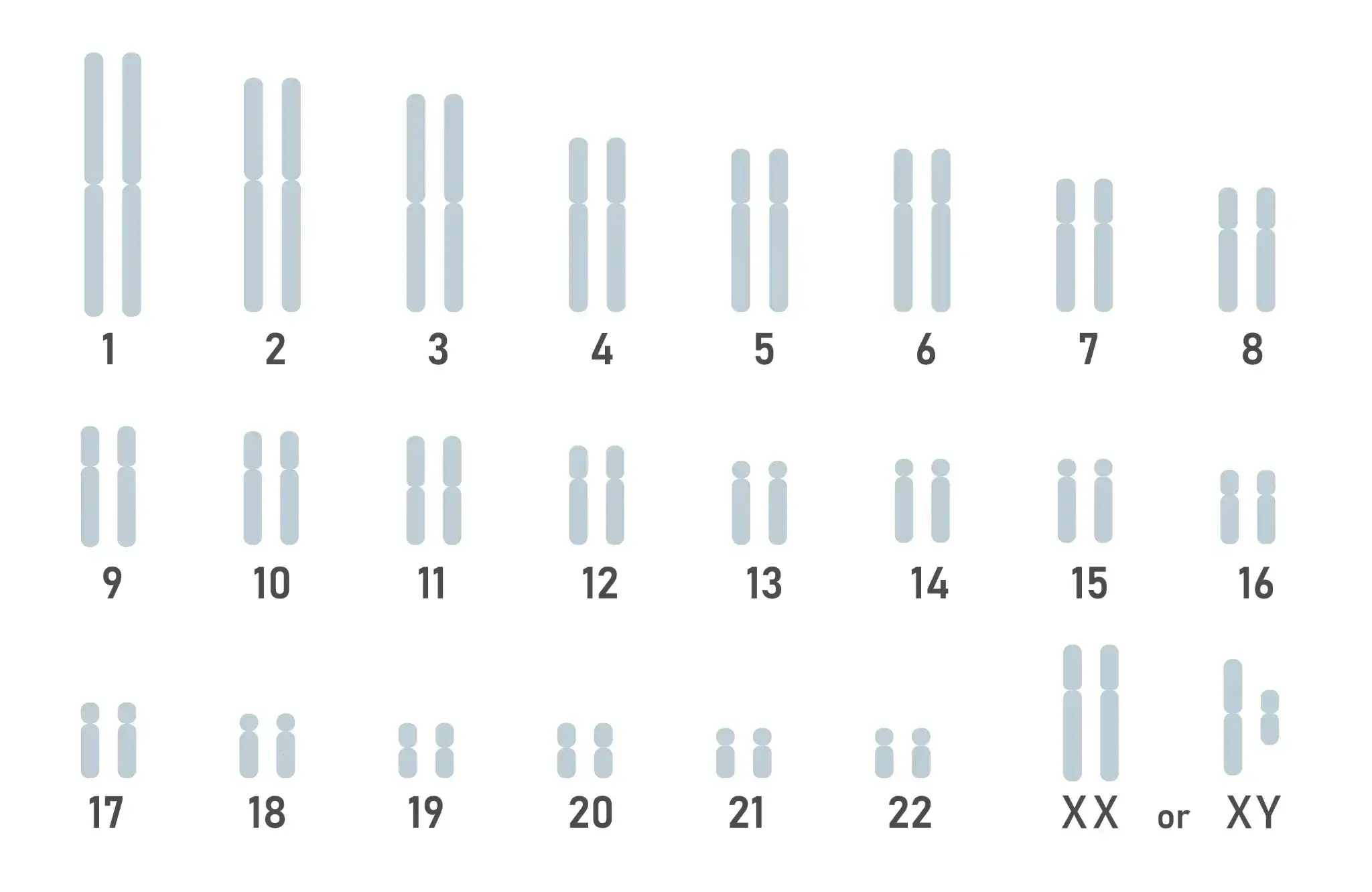
Schematic diagram of DNA map present in cells
- ■
- ■
- ■
- ■
- ■
- ■
- ■
- ■
- ■
Related genes
| Related genes | IGF2BP3 |
|---|
Frequently asked questions (FAQ)
Q1. What is childhood height?
Childhood height is an index that indicates the vertical growth of a child's body from birth to around 6 years of age.The four factors of genetics, nutrition, health status, and amount of exercise have a complex effect and are evaluated based on a growth curve (1).
Q2. What genes are associated with height in childhood?
According to research by van der Valk et al. of the Generation R Research Group,DNA region rs12534093 is associated with height in childhoodIt turns out that it is. People with the T mutation tend to be taller, and the gene involved is IGF2BP3 (1).
Q3. How fast does a child grow in height during childhood?
At 1 year of age, the child grows to about 1.5 times the size of birth.From ages 2 to 5, children continue to grow at an average rate of 6 to 8 cm each year, and the rate of growth gradually slows down with age.
Q4. Can genetic testing determine trends in height during infancy?
By examining the genotype of DNA region rs12534093,Understand trends in height during childhoodYou can. 99.9% of Japanese people carry the TT type, and people with the T mutation tend to be taller (1).
Q5. What should I do if my child's height as a child is outside the standard range?
If your height is outside the normal growth curve,Growth retardation or abnormal growthThere is a possibility that Additional evaluation by a pediatrician is recommended, and medical interventions such as nutritional guidance and hormone testing are recommended if necessary.
References
- Reference link 1: 2015 Feb., Ralf J P van der Valk, Hum Mol Genet