
 head size in childhood

- Head size in infancy is associated with T-type mutation in DNA region rs12534093However, the average head circumference at birth is approximately 34 to 35 cm and increases by approximately 12 cm by the age of 1 year.
- The prevalence of type TT among Japanese people is 99.9%., which is 38.6 points higher than the world average of 61.3%.
- The related genes areIGF2BP3, and the state of brain development can be evaluated early from the growth pattern of head circumference.
Overview Infant head circumference is an important indicator because measuring the circumference of a baby's head allows you to check the state of growth and development. Your baby's head grows rapidly, especially during the first few months of life, and by measuring your baby's head circumference regularly during this period, you can check on their brain development and overall health. An infant's head circumference averages about 34 to 35 centimeters at birth and increases by about 12 centimeters after a year. This growth pattern is used to determine whether your baby is developing normally. We use a developmental graph called a growth curve to check the normal range of head circumference according to age and gender. If the head circumference is too large (macrocephaly) or too small (microcephaly), additional tests may be needed. Normal head circumference growth indicates healthy brain development. Conversely, slow growth or small head circumference indicates problems with brain development. It is important to detect these problems early to provide appropriate treatment and reduce the risk of future developmental and learning disabilities. A study by Yang et al. at Soochow University revealed that head size during infancy is associated with a DNA region called rs12534093. There are three genotypes in this DNA region: TT, TA, and AA, and it was found that people with the T type mutation tend to have larger heads.
What is head size in childhood?
Head size in infancy (infant head circumference) is an important indicator that measures the circumference of a baby's head and evaluates the state of brain development and growth.During the first few months of life, the baby's head grows rapidly, and regular head circumference measurements can be used to check the health of the baby's brain.
Normal growth pattern of infant head circumference
Infant head circumference grows in a regular pattern. Deviations from normal ranges indicate the need for medical attention.
| growth stage | Estimated head circumference | Remarks |
|---|---|---|
| at birth | Approximately 34-35cm | There is only a small difference between men and women |
| 6 months old | Approximately 43cm | rapid growth period |
| At 1 year old | Approximately 46-47cm | Approximately 12cm increase since birth |
Signs of abnormality detected by head circumference measurement
Evaluation of head circumference using growth curves is a means of early detection of abnormalities in brain development.
- Macrocephaly (when the head circumference is too large):Possible hydrocephalus/genetic disease
- Microcephaly (when the head circumference is too small):Increased risk of brain development disorders and learning disabilities
Early detection allows appropriate treatment to be initiated and reduces the risk of future developmental and learning disabilities.
Factors influencing head size
- Genetic factors:The size of the head circumference varies from person to person depending on genetics.
- Nutritional status:Nutrition during pregnancy and after birth directly affects brain growth
- Gestation period:Premature babies tend to have smaller head circumferences
- Gender:The head circumference of boys is on average 0.5-1 cm larger than that of girls.
Relationship between genes and head size in infancy
Relationship between DNA region rs12534093 and head circumference
A study by Yang et al. at Soochow University (1) revealed that the DNA region rs12534093 is associated with head size in infancy.
- There are three genotypes of rs12534093: TT, TA, and AA.
- Genotype with T-type mutationpeople tend to have larger head circumferences
- The related genes areIGF2BP3(Insulin-like Growth Factor 2 mRNA-Binding Protein 3)
Genotype distribution in Japanese (rs12534093)
There are significant differences between the Japanese and global genotype distributions.
| Genotype | Percentage of Japanese people | percentage of the world | difference |
|---|---|---|---|
| TT type | 99.9% | 61.3% | +38.6 points |
| TA type | 0.1%以下 | 33.9% | -33.9 points |
| AA type | 0.1%以下 | 4.7% | -4.7 points |
Rationale for testing
Superficial DNA region: head size in infancy
The gene region that most strongly influences head size in infancy is rs12534093. The distribution of isomorphic genotypes in Japan is as follows.
- TT
99.9 % - TA
0.1%以下 - AA
0.1%以下
Basis for inspection
A study by Yang et al. at Soochow University (1) revealed that head size during infancy is related to genes.There is a region called rs12534093 in the human genome, and there are two types of mutations, T and A, in the gene in this region. It was found that people with the T mutation tend to have larger head circumferences.
The DNA region investigated this time
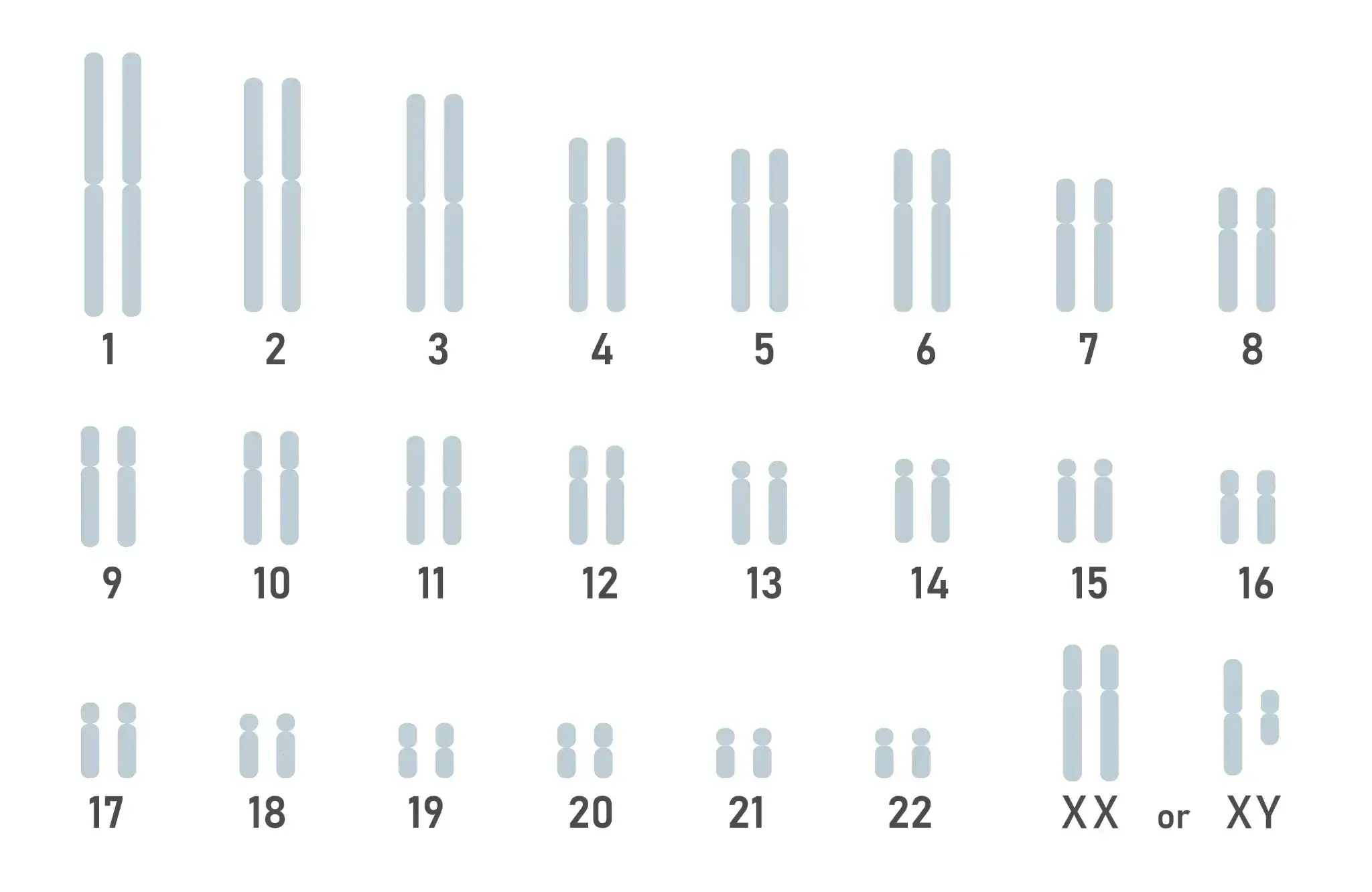
Schematic diagram of DNA map present in cells
- ■
- ■
- ■
- ■
- ■
- ■
- ■
- ■
- ■
Related genes
| Related genes | IGF2BP3 |
|---|
Frequently asked questions (FAQ)
Q1. What is the head size in early childhood?
Head size in infancy is an index that measures an infant's head circumference (the circumference of the head) and evaluates the state of brain development and growth.The average head circumference at birth is about 34-35 cm and increases by about 12 cm by the age of 1 year. It is used for early detection of macrocephaly and microcephaly by comparing it with growth curves (1).
Q2. What genes are associated with head size in infancy?
According to research by Yang et al. of Soochow University,DNA region rs12534093 is associated with head size in infancyIt turns out that it is. People with the T mutation tend to have larger head circumference, and the gene involved is IGF2BP3 (1).
Q3. What can be learned by measuring head circumference?
Head circumference measurement is a non-invasive method for evaluating brain development.Deviations from the normal range (macrocephaly/microcephaly) can be detected early, leading to early diagnosis and initiation of treatment for diseases such as hydrocephalus and early craniosynostosis.
Q4. Can a genetic test determine an infant's head circumference tendency?
By examining the genotype of DNA region rs12534093,Understanding trends in head size in early childhoodYou can. Research has shown that people with type TT (99.9% of Japanese people) tend to have a large head circumference (1).
Q5. What are the characteristics of the genotype distribution of infant head size in Japanese children?
The Japanese rs12534093 genotype distribution isTT type 99.9%, TA type 0.1%以下, AA type 0.1%以下It is. The proportion of TT type is 38.6 points higher than the world average (TT type 61.3%), and TA type and AA type are almost non-existent (1).
References
- Reference link 1: 2019 Oct., Xiao-Lin Yang, Front Genet