
 hypothyroidism
- Hypothyroidism is an endocrine disease in which systemic metabolism decreases due to a lack of T4 hormone.Symptoms such as fatigue, weight gain, and sensitivity to cold appear.
- G-type mutation in DNA region rs1991517A study by Vignan University found that people with
- appropriateHormone replacement therapy (levothyroxine administration)It is possible to improve symptoms and normalize T4 levels.
Overview Hypothyroidism, caused by a lack of thyroid hormones, especially thyroxine (T4), is an important sign of an underactive thyroid gland. T4 plays a role in regulating metabolism, energy production, and overall metabolic rate in the body. A lack of this hormone causes a variety of physical and mental changes. In hypothyroidism, the metabolic rate decreases due to a lack of T4, which can lead to severe fatigue and fatigue. You may also experience weight gain and are unable to burn calories effectively, even if your diet and exercise levels remain unchanged. Dry skin, thinning hair, and decreased metabolism affect the entire body. They may also be more sensitive to cold due to a slower heart rate and problems regulating their body temperature. There are also psychological effects, which can include forgetfulness, depression, and slowed cognitive processes. Growth and development, especially in children, may be affected, and puberty may be delayed or growth problems may occur. Diagnosis of hypothyroidism involves testing T4 and thyroid-stimulating hormone (TSH) levels in the blood. These tests provide important clues to understanding thyroid function and the causes of its imbalance. Treatment usually includes hormone replacement therapy to restore normal T4 levels and relieve associated symptoms. < A study by Kollati et al. of Vignan University revealed that the risk of developing hypothyroidism is associated with the DNA region rs1991517. There are three genotypes in this DNA region: GG, GC, and CC, and it has been found that people with the G genotype tend to have a higher risk of hypothyroidism.
What is hypothyroidism?
Hypothyroidism is an endocrine disease in which the secretion of thyroid hormones (especially thyroxine = T4) is insufficient, resulting in a decrease in the metabolic rate of the whole body.T4 is an important hormone responsible for metabolism, energy production, and temperature regulation in the body, and a deficiency affects the entire body.
Causes and mechanisms of hypothyroidism
Hypothyroidism occurs when the thyroid's ability to produce T4 decreases. The main causes are as follows.
- Hashimoto's disease (autoimmune thyroiditis):Most common cause. The immune system attacks and destroys thyroid tissue
- Excess or deficiency of iodine:Insufficient or excessive intake of iodine, which is necessary for thyroid hormone synthesis
- After thyroid surgery/radiotherapy:Occurs after partial thyroidectomy or radioactive iodine treatment
- Genetic predisposition:Mutations in the TSHR gene and DIO2 gene are involved
Main symptoms of hypothyroidism
Due to T4 deficiencymetabolic rate decreasesAs a result, the following symptoms develop slowly:
- Feeling of fatigue/malaiseduration of
- Occurs even if there is no change in food intakeweight gain
- dry skin・Hair thinning/hair loss
- sensitivity to cold(temperature regulation disorder)
- Forgetfulness/depressive symptoms・Deterioration of cognitive function
- Decreased heart rate (bradycardia)
- Constipation/edema
How to diagnose hypothyroidism
It is diagnosed by the following blood tests.
- TSH (thyroid stimulating hormone) test:High TSH levels suggest low thyroid function
- FT4 (free thyroxine) test:Confirmed diagnosis based on low FT4 value
- Anti-thyroid antibody test:Used to differentiate Hashimoto's disease
Treatment of hypothyroidism
Hormone replacement therapy with levothyroxine (synthetic T4)is the standard treatment. Appropriate dose adjustment will restore T4 levels to normal range and alleviate associated symptoms.
Effect on children
Hypothyroidism in children isgrowth disorderYadelayed pubertymay cause. Early detection through newborn mass screening tests is important.
The relationship between genes and hypothyroidism
Relationship between DNA region rs1991517 and onset risk
A study by Kollati et al. (1) from Vignan University revealed that the DNA region rs1991517 is associated with the risk of hypothyroidism.
- There are three genotypes of rs1991517: GG, GC, and CC.
- Genotype with type G mutationpeople tend to be at higher risk of hypothyroidism
Genotype distribution in Japanese (rs1991517)
| Genotype | Percentage of Japanese people | percentage of the world |
|---|---|---|
| GG type | 1.5% | 0.8% |
| GC type | 21.8% | 16.3% |
| CC type | 76.5% | 82.8% |
Genotype distribution in Japanese (rs225014)
| Genotype | Percentage of Japanese people | percentage of the world |
|---|---|---|
| TT type | 33.2% | 39.3% |
| TC type | 48.8% | 46.7% |
| CC type | 17.8% | 13.8% |
Rationale for testing
Superficial DNA region: Hypothyroidism
The gene region most strongly associated with hypothyroidism is rs1991517. The distribution of isomorphic genotypes in Japan is as follows.
- GG
1.5 % - GC
21.8 % - CC
76.5 %
Another gene region associated with hypothyroidism is rs225014. The distribution of isomorphic genotypes in Japan is as follows
- TT
33.2 % - TC
48.8 % - CC
17.8 %
Basis for inspection
A study by Kollati et al. from Vignan University revealed that the risk of developing hypothyroidism is linked to genes. There is a region called rs1991517 in the human genome, and there are two types of mutations, G and C, in the gene in this region. It has been found that people with type G mutations tend to have an increased risk of hypothyroidism (1).
The DNA region investigated this time
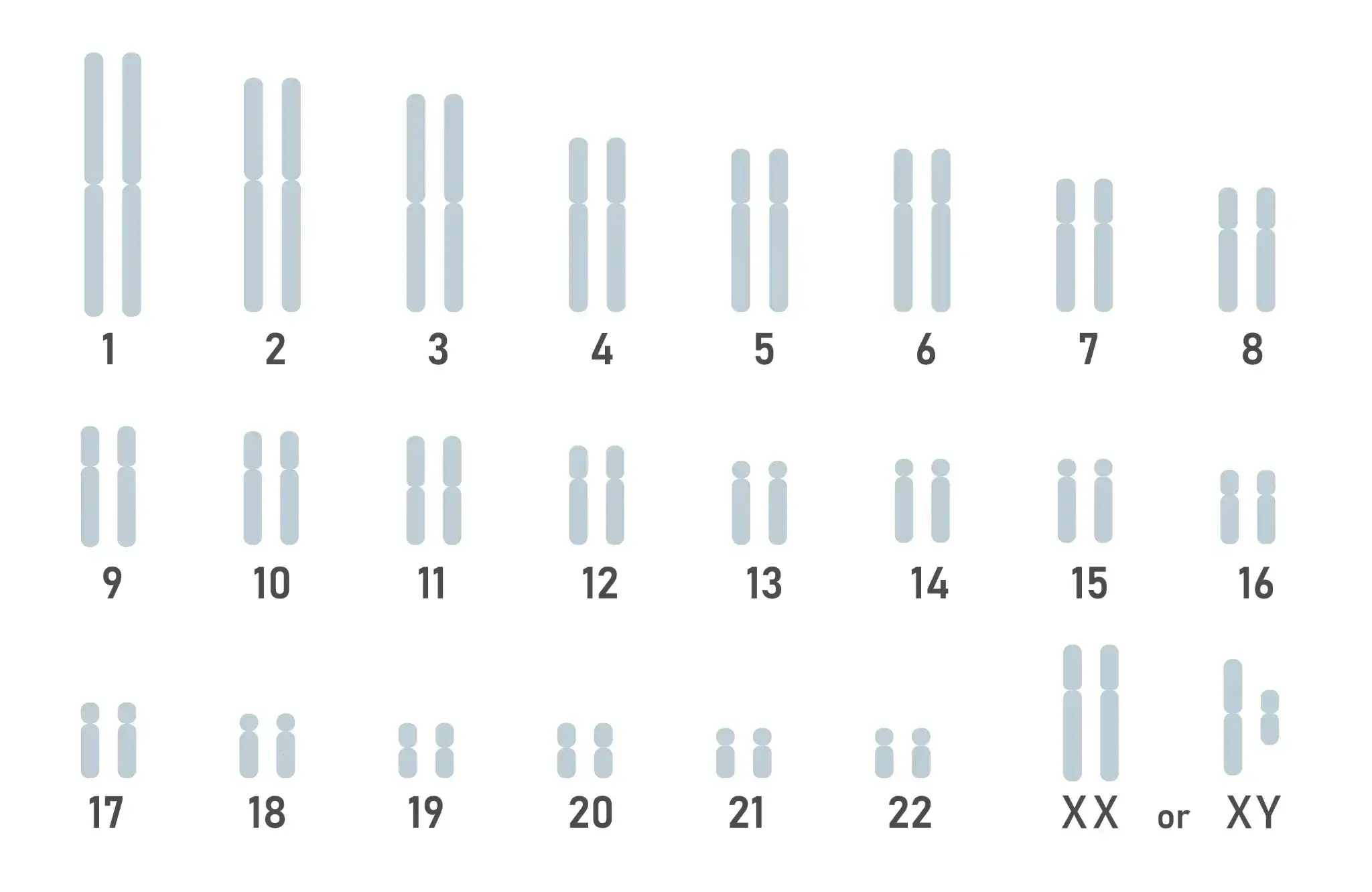
Schematic diagram of DNA map present in cells
- ■
- ■
- ■
- ■
- ■
- ■
- ■
- ■
- ■
Related genes
| Related genes | TSHR |
|---|---|
| Related genes | DIO2 |
Frequently asked questions (FAQ)
Q1. What is hypothyroidism?
Hypothyroidism is an endocrine disease in which the secretion of thyroid hormone (T4) is insufficient, resulting in decreased systemic metabolism.It affects the whole body, including fatigue, weight gain, sensitivity to cold, dry skin, and depression (1).
Q2. What are the main causes of hypothyroidism?
The most common cause isHashimoto's disease (autoimmune thyroiditis)It is. Other causes include too much or too little iodine, after thyroid surgery, or after radiation therapy. Carriers of the G mutation in the DNA region rs1991517 tend to be at increased risk (1).
Q3. How is hypothyroidism diagnosed?
with blood testTSH (thyroid stimulating hormone) levelandFT4 (free thyroxine) valueMeasure. If TSH is high and FT4 is low, hypothyroidism is diagnosed.
Q4. Can genetic testing determine the risk of hypothyroidism?
By examining the genotype of the DNA region rs1991517,Understand the risk trend of developing hypothyroidismYou can. A study by Kollati et al. from Vignan University found that people with the G mutation genotype tend to be at higher risk (1).
References
- Reference link 1: 2020 Jun., Yedukondalu Kollati, 3 Biotech
- Reference link 2: 2018 Oct., Alexander Teumer, Nat Commun