
 hypospadias

- Hypospadias is a congenital malformation in which the urethral opening of the penis opens in an abnormal position.According to Western data, approximately 1 in 300 boys develops the disease.
- DNA region rs1934179 on the X chromosome (DGKK gene)has been identified as a risk factor, and carriers of type A mutation have an increased risk of developing the disease.
- The prevalence of type A mutation (GA+AA) in Japanese people is43.8%This is a low percentage compared to the global average of 57.1%.
Overview Hypospadias is a congenital malformation in which the urine outlet at the base of the penis is located in an abnormal position. When this disease occurs, urine may scatter during urination and the male genitals may become bent, making it difficult to ejaculate into the vagina. According to data from Europe and the United States, about 1 in 300 boys develops the disease. Although it is not clear whether the disease is hereditary, it has been reported that some patients have family members who have the disease, so there is a possibility that it is hereditary. Treatment involves surgery at the age of 12, with the aim of allowing the child to urinate and have sex without any problems. Finding out your own genetic type through genetic testing and knowing your risk of developing hypospadias is expected to be helpful in taking early measures. 2. Rationale A Dutch research team comprehensively analyzed the DNA of 436 patients of European descent with anterior and mid-opening hypospadias and healthy controls, and found that there were single nucleotide polymorphisms (SNPs) that were common in patients with hypospadias. One of these is the DNA region ``rs1934179,'' which was confirmed to exist in a position related to the gene ``DGKK'' on the X chromosome. (Reference link 1) This DNA region ``rs1934179'' was similarly found to be a common mutation in the patient group when comparing the DNA data of 166 Caucasian hypospadias patients and healthy controls. (Reference link 2) A similar trend was observed in data on 466 patients with hypospadias and 402 healthy Chinese individuals, and a relationship was also observed in patients with moderate or severe symptoms. (Reference link 3) The DNA region "rs1934179" has three genotypes: "GG type," "GA type," and "AA type." It was found that 54.3% of Japanese people's genotypes were "GG type," 38.7% were "GA type," and 6.9% were "AA type." (Reference link 4) In addition, in the samples from this Dutch research team, it was suggested that ``AA type'' and ``GA type'' who have the risk allele A in the DNA region ``rs1934179'' tend to be more likely to develop ``hypospadias.'' Thus, it is suspected that hypospadias may be hereditary, and it has been suggested that "rs1934179" is one of the DNA regions that may be affected. 3. Mechanism of action The DNA region "rs1934179" exists on the X chromosome and is located in a region that affects the expression of the gene "DGKK". DGKK is a gene that produces an enzyme called diacylglycerol kinase, which is involved in lipid signal transduction, and its function has not yet been completely elucidated. However, ``DGKK'' is known to be highly expressed in the testis and placenta, and multiple genetic analysis papers have reported a relationship between ``DGKK'' and hypospadias. (Reference link 5) Multiple single nucleotide polymorphisms (SNPs) related to the expression of "DGKK" have been confirmed in the DNA data of patients with hypospadias, and "rs1934179" is one of the DNA regions thought to be related to hypospadias. As mentioned above, the DNA region "rs1934179" is located on chromosome X and is one of the single nucleotide polymorphisms that is attracting attention because it is associated with the risk of "hypospadias."
What is hypospadias?
Hypospadias is a congenital urogenital malformation in which the urethral opening (urine outlet) of the penis opens in an abnormal position on the ventral (lower) side of the penis, rather than at its normal tip.According to epidemiological data from Europe and the United States, it is a relatively common congenital abnormality that occurs in approximately 1 in 300 boys.
Main symptoms of hypospadias
Symptoms of hypospadias are classified from mild to severe depending on the location of the orifice. The main symptoms are:
- Urinary disorders:Abnormal position of the urethral opening causes difficulty in urinating, such as urine scattering or flowing downward.
- Curvature of the penis (cord formation):The penis curves ventrally, and the curvature becomes noticeable during erection.
- Foreskin abnormalities:The foreskin is formed only on the dorsal side and is missing on the ventral side (dorsal hood type foreskin)
- Effects on reproductive function:In severe cases, vaginal ejaculation may become difficult.
Classification of hypospadias
| classification | opening position | frequency | Features |
|---|---|---|---|
| Anterior type (mild) | Glans ~ coronal sulcus | Approximately 50% | most common, symptoms are mild |
| Intermediate (moderate) | penis body | Approximately 30% | with urinary dysfunction and curvature |
| Posterior type (severe) | Scrotum to perineum | Approximately 20% | with marked curvature and dysfunction |
How is hypospadias treated?
The basic treatment for hypospadias is surgery, which is performed between 1 and 2 years of age.The purpose of the surgery is the following three points.
- Reconstruction of the urethral meatus at the tip of the penis:Allows urination in normal position
- Correction of penile curvature:Remove the cord and achieve a straight penis morphology
- Normalization of appearance:Reduce future psychological burden
The surgical success rate is approximately 90-95%, and post-operative improvements in urinary and sexual function can be expected.
The relationship between genes and hypospadias
Why do genes influence hypospadias risk?
A Dutch research team comprehensively analyzed the DNA of 436 European patients with hypospadias and healthy controls and discovered that the DNA region rs1934179 on the X chromosome is associated with hypospadias.
- There are three genotypes of rs1934179: GG, GA, and AA.
- Genotype with risk allele type A(GA and AA types) have an increased risk of developing hypospadias.
- The same results were confirmed in a follow-up study of 166 white Polish patients (Reference link 2)
- A similar trend was confirmed in data from 466 Chinese patients and 402 healthy subjects, and an association with moderate and severe symptoms was also observed (Reference link 3)
Genotype distribution of DNA region rs1934179: Japanese vs. World
| Genotype | Percentage of Japanese people | percentage of the world | Risk related |
|---|---|---|---|
| GG type | 56.2% | 42.8% | standard risk |
| GA type | 37.5% | 45.2% | increased risk |
| AA type | 6.2% | 11.9% | increased risk |
The prevalence of type A mutation in Japanese people (GA+AA) is43.7%, which is lower than the global average of 57.1%. This suggests that the risk of hypospadias from rs1934179 in the Japanese population is slightly lower than the global average.
Genotype distribution of DNA region rs4554617: Japanese vs. the world
| Genotype | Percentage of Japanese people | percentage of the world |
|---|---|---|
| AA type | 70.9% | 41.2% |
| AC type | 26.5% | 45.9% |
| CC type | 2.4% | 12.8% |
Mechanism of action of DGKK gene
The DNA region rs1934179 is located on the X chromosome and affects the expression of the DGKK (diacylglycerol kinase κ) gene.
- DGKK features:Genes that produce diacylglycerol kinase enzymes involved in lipid signal transduction
- Expression site:It is highly expressed in the testis and placenta, suggesting that it may be involved in the development of male reproductive organs.
- Research evidence:The relationship between DGKK and hypospadias has been reproduced in multiple GWAS (genome-wide association studies) (Reference link 5)
rs1934179 is one of the SNPs (single nucleotide polymorphisms) that exist in the expression control region of DGKK, and the type A mutation is thought to contribute to the risk of hypospadias through changes in the expression level of DGKK.
Rationale for testing
Superficial DNA region: hypospadias
The gene region that most strongly affects hypospadias is rs1934179. The distribution of isomorphic genotypes in Japan is as follows.
- GG
56.2 % - GA
37.5 % - AA
6.2 %
Another gene region involved in hypospadias is rs4554617. The distribution of isomorphic genotypes in Japan is as follows
- AA
70.9 % - AC
26.5 % - CC
2.4 %
Basis for inspection
A Dutch research team comprehensively analyzed the DNA of 436 patients of European descent with anterior/intermediate hypospadias and healthy controls, and as a result, it was confirmed that the DNA region rs1934179 on the X chromosome exists at a position related to the DGKK gene and is involved in the risk of hypospadias. This result was replicated in supplementary exams in Poland and China.
The DNA region investigated this time
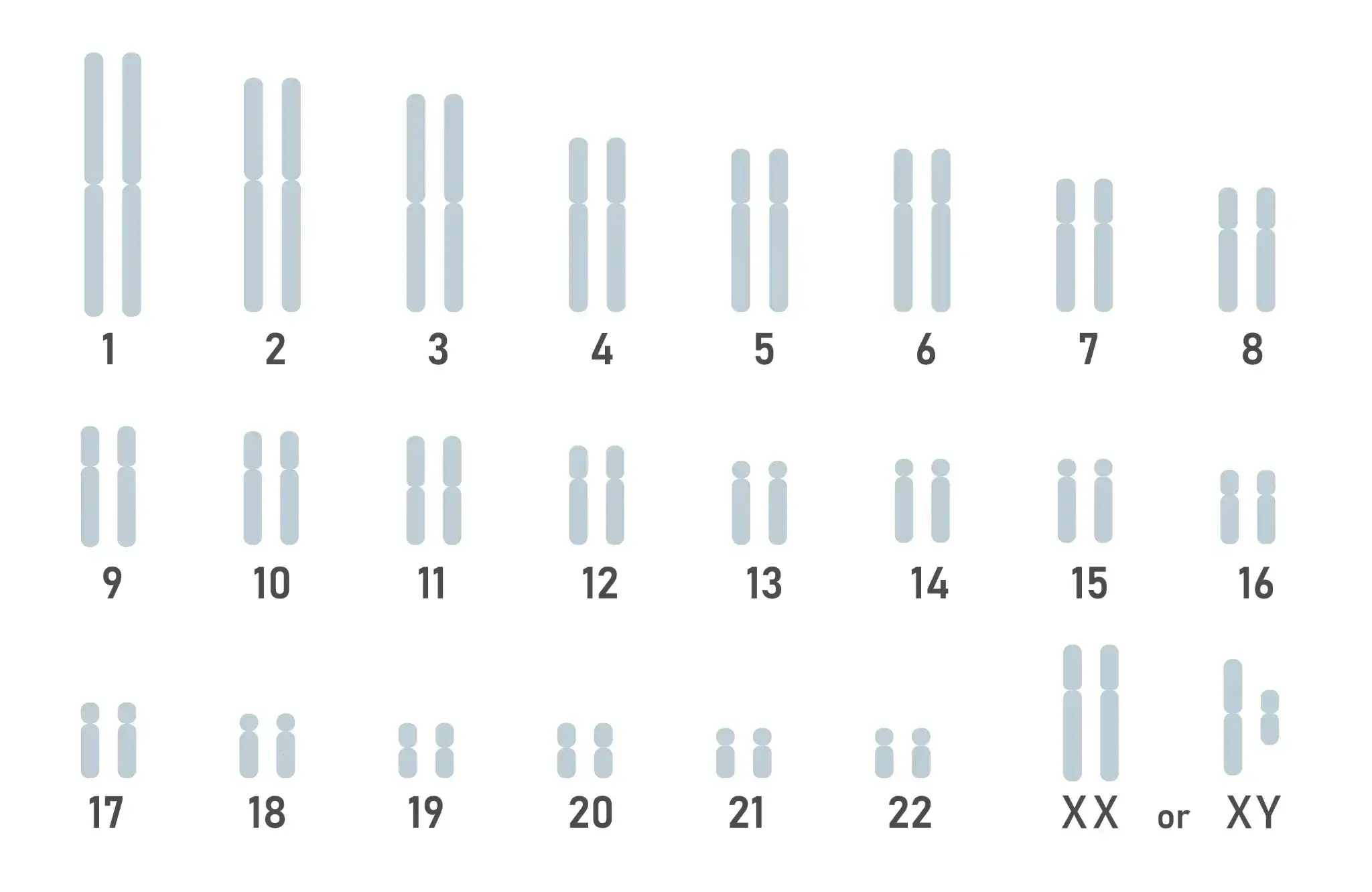
Schematic diagram of DNA map present in cells
- ■
- ■
- ■
- ■
- ■
- ■
- ■
- ■
- ■
Related genes
| Related genes | DGKK |
|---|---|
| Related genes | DGKK |
Frequently asked questions (FAQ)
Q1. What is hypospadias?
Hypospadias is a congenital malformation in which the urethral meatus of the penis opens in an abnormal position ventrally rather than at its normal tip.According to data from Europe and the United States, it occurs in approximately 1 in 300 boys. Symptoms include urinary problems, curvature of the penis, and abnormal foreskin, and treatment is performed by surgery at 1 to 2 years of age.
Q2. Is hypospadias hereditary?
Genetic factors may play a role in hypospadias.A Dutch research team has reported that the DNA region rs1934179 (DGKK gene) on the X chromosome is associated with the risk of developing hypospadias. Cases of the disease running in families have also been confirmed, and understanding an individual's risk through genetic testing will help take early measures.
Q3. What are the genes associated with hypospadias?
The genes most strongly associated with hypospadias areDGKK (diacylglycerol kinase κ)It is. Located on the X chromosome, it produces enzymes involved in lipid signaling. Two SNPs, rs1934179 and rs4554617, have been confirmed to be associated with hypospadias, and are characterized by high expression in the testis and placenta.
Q4. What is the treatment for hypospadias?
The basic treatment for hypospadias is surgery.Surgery is performed when the child is 1 to 2 years old to reconstruct the urethral opening in its normal position. The surgical success rate is approximately 90-95%, and the main goals are to normalize urinary function and secure future sexual function.
Q5. What is the distribution of the hypospadias genotype (rs1934179) in Japanese people?
The genotype distribution of rs1934179 in Japanese people isGG type 56.2%, GA type 37.5%, AA type 6.2%It is. The percentage of Japanese people with risk allele type A (GA+AA) is 43.7%, which tends to be lower than the global average of 57.1%.
References
- Reference link 1: 2010 Nov., Loes F M van der Zanden, Nature Genetics.
- Reference link 2: 2018 Sep., Kamil Konrad Hozyasz, Urology journal.
- Reference link 3: 2014 Oct., Qichao Ma, BJU international.
- Reference link 4: Information on DNA region “rs1934179” NIH
- Reference link 5: 2017 Jun., Hua Xie, Asian Journal of Andrology.
- Reference link 6: 2014 Sep., Frank Geller, Nat Genet