
 Hypertriglyceridemia

- Hypertriglyceridemia is a lipid abnormality in which blood neutral fats (triglycerides) rise to 150 mg/dl or more.and is a risk factor for arteriosclerosis, myocardial infarction, and cerebral infarction.
- T-type mutation in DNA region rs9949617International joint research reveals that people with the disease tend to have a higher risk of developing the disease.
- appropriateImproving diet, exercise, and lifestyle habitsIt is possible to reduce the risk of onset and prevent cerebral infarction and myocardial infarction.
Overview When there is a problem with lipid metabolism, genetic influences have also been pointed out, and the condition is called "primary dyslipidemia," and the frequency is thought to be around 1 to 2 cases per 100 people. If dyslipidemia is left untreated, fat accumulates on the walls of blood vessels, leading to arteriosclerosis, and when blood vessels become hard, there is a risk of cerebral infarction or myocardial infarction, so treatment is necessary. Treatment begins by changing your diet to a diet that is low in fat, which causes arteriosclerosis, and consuming excess fat and sugar through exercise. If there is still no improvement, drug treatment is performed. Through daily habits and early treatment, dyslipidemia can be expected to improve, and the risk of death-related diseases such as cerebral infarction and myocardial infarction can be reduced. Therefore, it is expected that finding out your own genetic type through genetic testing and knowing the risk of developing "hypertriglyceridemia", which is a type of dyslipidemia in which there is a high level of triglycerides (neutral fats) in the blood, is expected to be useful for early detection and early treatment. 2. Rationale Hypertriglyceridemia is a common disease among Mexicans, affecting 31.5% according to national data. In response, a research team from the United States, Mexico, and Finland conducted a genetic study of hypertriglyceridemia using multiple genetic data. Of the 6,073 participants, 4,400 were selected and underwent two rounds of DNA analysis. In the first DNA analysis, 563,599 genetic polymorphisms were analyzed for gene types that are strongly associated with hypertriglyceridemia. In the second DNA analysis, 1,326 gene types that were thought to be strongly associated with hypertriglyceridemia in the first DNA analysis were analyzed again using a different analysis method. The results showed that the genotype of the DNA region "rs9949617" is associated with hypertriglyceridemia. (Reference link 1) The DNA region "rs9949617" has three genotypes: "CC type," "CT type," and "TT type." The Japanese genotypes are 56.6% "CC type," 40.7% "CT type," and 2.7% "TT type." (Reference links 2, 3) According to reports, the risk allele "T" has a slightly higher risk of hypertriglyceridemia, and Japanese people with the "CT type" and "TT type" are said to be at a relatively high risk. Dyslipidemia is diagnosed when serum cholesterol level is 220 mg/dl or higher or serum triglyceride (neutral fat) level is 150 mg/dl or higher. In dyslipidemia, the amount of lipids and proteins in the blood increases, which may indicate problems with lipid metabolism or may be affected by other causes or diseases. 3. Mechanism of action The DNA region "rs9949617" is located on chromosome 18, and it has been pointed out that it is related to the gene "TMEM241". This ``TMEM241'' gene exists in one Golgi apparatus in cells, and has the role of producing sugar-containing substances, and is also thought to be involved in the transport of sugar nucleotides (a type of sugar) necessary for mammalian biological systems. (Reference link 4) However, the exact mechanism of how TMEM241 is involved in dyslipidemia has not been clarified. However, since the intracellular Golgi apparatus is involved in the production of glycoproteins and lipids, it is thought that if ``TMEM241'', which is involved in the transport of sugar nucleotides, becomes malfunctioning, the control of ``triglyceride'', a type of lipid, may not function properly. For this reason, the DNA region "rs9949617" on chromosome 18 is attracting attention as one of the single nucleotide polymorphisms associated with the risk of dyslipidemia.
What is hypertriglyceridemia?
Hypertriglyceridemia is a type of lipid disorder in which serum triglyceride (neutral fat) levels rise above 150 mg/dl."Primary dyslipidemia" caused by genetic factors is observed in approximately 1-2% of the population, and if left untreated, it causes arteriosclerosis and leads to serious diseases such as myocardial infarction and cerebral infarction (1).
Causes and mechanisms of hypertriglyceridemia
Genetic and environmental factors are involved in a complex manner in the development of hypertriglyceridemia.
- Genetic predisposition:The T-type mutation in the DNA region rs9949617 is associated with the risk of developing the disease. Abnormal functioning of the TMEM241 gene affects lipid metabolism
- Disordered eating habits:High-fat diets, high-carbohydrate diets, and excessive alcohol consumption increase triglyceride levels.
- Lack of exercise:Excess fat and sugar are not consumed and accumulate in the body
- Effects of other diseases:Diabetes, hypothyroidism, kidney disease, etc. can secondarily worsen lipid metabolism.
Main symptoms of hypertriglyceridemia
Dyslipidemia is“Silent killer” with almost no symptomsIn most cases, it is first discovered during a blood test during a health checkup.
- Serum cholesterol level 220mg/dl or higher
- Serum triglyceride (neutral fat) value 150mg/dl or more
- If advanced: arteriosclerosis/vascular narrowing
- Severe cases: risk of developing acute pancreatitis
Difference between hypertriglyceridemia and normal lipid status
| Comparison items | Hypertriglyceridemia | normal lipid status |
|---|---|---|
| Neutral fat value | 150mg/dl or more | Less than 150mg/dl |
| arteriosclerosis risk | High (fat accumulates on blood vessel walls) | low |
| Myocardial infarction/cerebral infarction | Increased risk of developing | normal risk |
| subjective symptoms | Almost none (silent killer) | None |
| genetic factors | rs9949617 T-type mutation is involved | There are individual differences |
Prevention and treatment of hypertriglyceridemia
Hypertriglyceridemia isLifestyle improvement and early treatmentImprovements can be expected.
- Diet:Change to a diet with reduced fat and carbohydrates, intake of blue fish (EPA and DHA)
- Exercise therapy:Burn excess fat through aerobic exercise (walking, swimming, etc.)
- No smoking/drinking:Smoking and excessive drinking worsen lipid metabolism
- Drug therapy:If lifestyle changes are insufficient, fibrates or statins may be used.
Mechanism of action of hypertriglyceridemia
DNA region rs9949617 isOn chromosome 18and is associated with the TMEM241 gene. TMEM241 is present in the intracellular Golgi apparatus and plays a role in transporting sugar nucleotides (a type of sugar) (4).
- Golgi apparatus is involved in the production of glycoproteins and lipids
- TMEM241 dysfunction → impaired sugar nucleotide transport
- Dysfunction in triglyceride control → increased blood triglyceride levels
Relationship between genes and hypertriglyceridemia
Relationship between DNA region rs9949617 and onset risk
A study by an international joint research team from the United States, Mexico, and Finland (1) revealed that the DNA region rs9949617 is associated with the risk of developing hypertriglyceridemia.It was confirmed through a large-scale analysis of 563,599 genetic polymorphisms selected from 6,073 people.
- There are three genotypes of rs9949617: CC, CT, and TT.
- Genotype with T-type mutation (Risk Allele)(CT type/TT type) people tend to have a higher risk of hypertriglyceridemia
Genotype distribution in Japanese (rs9949617)
| Genotype | Percentage of Japanese people | percentage of the world |
|---|---|---|
| CC type | 59.9% | 68.1% |
| CT type | 34.9% | 28.7% |
| TT type | 5.1% | 3.0% |
Rationale for testing
Superficial DNA region: hypertriglyceridemia
The gene region most strongly associated with hypertriglyceridemia is rs9949617. The distribution of isomorphic genotypes in Japan is as follows.
- CC
59.9 % - CT
34.9 % - TT
5.1 %
Another gene region involved in hypertriglyceridemia is rs964184. The distribution of isomorphic genotypes in Japan is as follows
- GG
10.3 % - GC
43.6 % - CC
45.9 %
Another gene region involved in hypertriglyceridemia is rs306890. The distribution of isomorphic genotypes in Japan is as follows
- TT
58.3 % - TC
36.0 % - CC
5.5 %
Basis for inspection
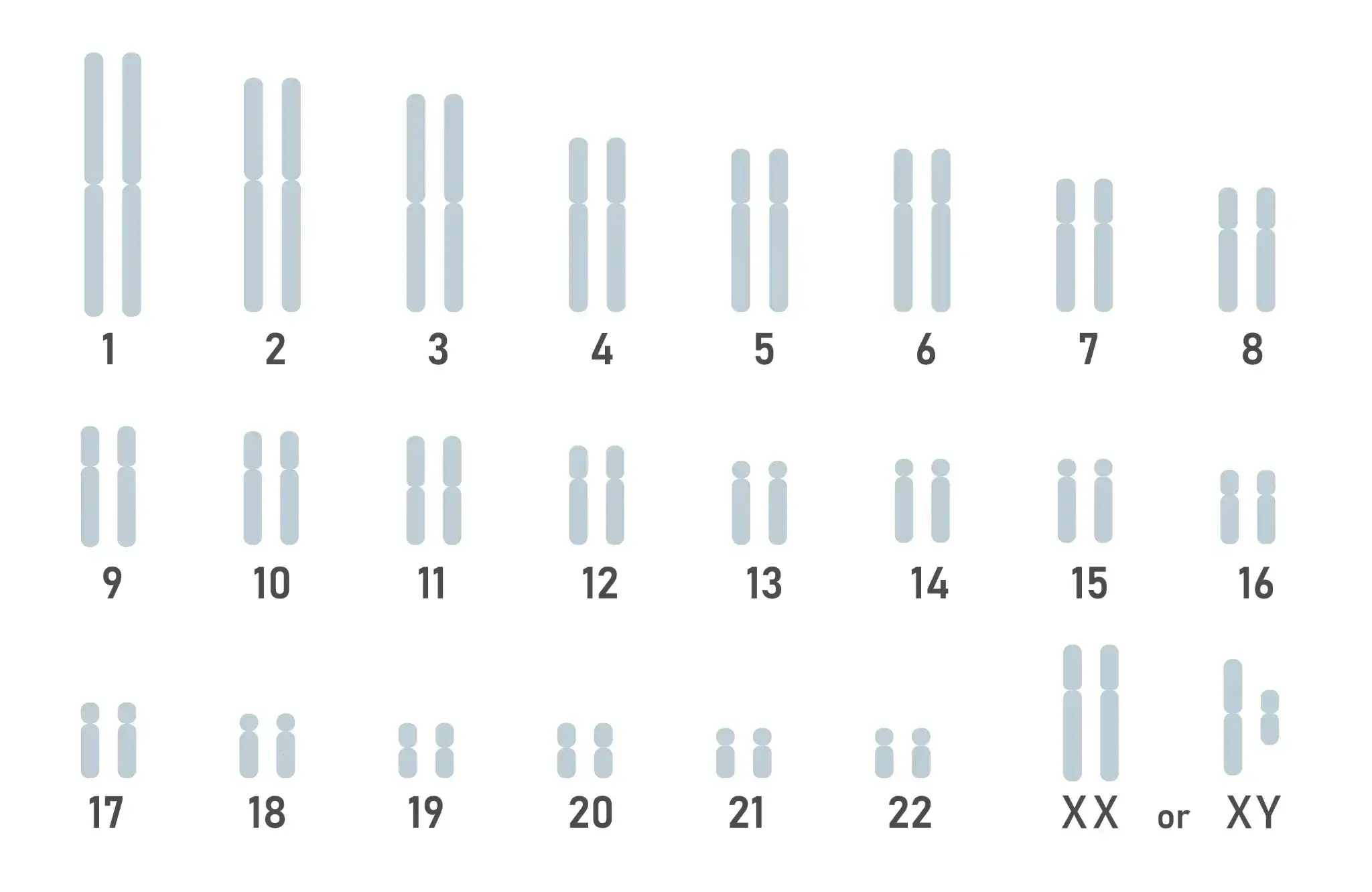
An international joint research team from the United States, Mexico, and Finland has revealed that the risk of developing hypertriglyceridemia is associated with the genotype of the DNA region rs9949617. There are two types of mutations in rs9949617, C and T, and people with the T type mutation (Risk Allele) tend to have a higher risk of hypertriglyceridemia (1). The TMEM241 gene on chromosome 18 is involved in sugar nucleotide transport, and abnormalities in its function are thought to affect triglyceride regulation (4).
The DNA region investigated this time
Schematic diagram of DNA map present in cells
- ■
- ■
- ■
- ■
- ■
- ■
- ■
- ■
- ■
Related genes
| Related genes | TMEM241 |
|---|---|
| Related genes | ZPR1 |
| Related genes | SPRY3 |
Frequently asked questions (FAQ)
Q1. What is hypertriglyceridemia?
Hypertriglyceridemia is a type of lipid disorder in which triglycerides (neutral fats) in the blood rise to 150 mg/dl or more.Primary dyslipidemia due to genetic factors occurs in approximately 1-2% of the population. If left untreated, it can cause arteriosclerosis and increase the risk of myocardial infarction and cerebral infarction (1).
Q2. What is the cause of hypertriglyceridemia?
The main cause isGenetic predisposition and lifestyle habitsThere are two. The T-type mutation in the DNA region rs9949617 has been implicated as a genetic risk factor. Environmental risk factors include a high-fat diet, lack of exercise, and excessive alcohol consumption (1).
Q3. Can genetic testing determine the risk of hypertriglyceridemia?
By examining the genotype of the DNA region rs9949617,Understand the risk trend of developing hypertriglyceridemiaYou can. An international joint study of 6,073 people found that people with CT and TT types who carry the T mutation (Risk Allele) tend to be at higher risk (1).
Q4. Is there a way to prevent hypertriglyceridemia?
Diet therapy (lipid/carbohydrate restriction), regular exercise, smoking cessation/drinkingis valid. If lifestyle changes are not sufficiently effective, drug therapy may be used in combination. Early detection and treatment can reduce the risk of myocardial infarction and cerebral infarction.
References
- Reference link 1: 2013 May., Daphna Weissglas-Volkov, Journal of medical genetics.
- Reference link 2: Information on DNA region “rs9949617” NIH
- Reference link 3: Information on DNA region “rs9949617” SNPedia
- Reference link 4: 2016 May., Alejandra Rodríguez, Arteriosclerosis, Thrombosis, and Vascular Biology.
- Reference link 5: 2013 May., Daphna Weissglas-Volkov, J Med Genet
- Reference link 6: 2014 Jun., Arthur Ko, Nat Commun
- Reference link 7: 2018 Mar., Thomas J Hoffmann, Nat Genet