
 hyperlipidemia

- Hyperlipidemia is a lipid metabolic disorder in which LDL cholesterol (bad cholesterol) increases abnormally in the blood, increasing the risk of arteriosclerosis and cardiovascular disease.is
- T-type mutation in DNA region rs151330264A University of Michigan study found that people with diabetes tend to have a higher risk of hyperlipidemia.
- LDL cholesterol190mg/dL or moreDiagnosed with extremely high levels, requiring management through diet, exercise, and drug therapy
Overview Hyperlipidemia is a condition in which the amount of bad cholesterol (LDLC) increases in the blood. When LDLC increases, plaque can accumulate in blood vessels and cause arteriosclerosis. This increases the risk of cardiovascular diseases such as heart attack and stroke. To diagnose hyperlipidemia, measure the LDLC value. An LDLC value of 100 mg/dL or less is considered normal, and 100 to 129 mg/dL is considered to be no problem. 130-159 mg/dL is considered borderline, 160-189 mg/dL is high, and 190 mg/dL or higher is extremely high. Hyperlipidemia is diagnosed if a blood test shows high LDLC. Hyperlipidemia is influenced by lifestyle and genetic factors. Lifestyle habits such as saturated fatty acids and trans fatty acids in the diet, lack of exercise, obesity, and smoking increase the risk of hyperlipidemia. As for genetic factors, you may be born with a high LDLC level due to a specific genetic mutation. Care for hyperlipidemia includes a review of your diet, moderate exercise, diet, and if necessary, the use of cholesterol-lowering drugs. A study by Graham et al. at the University of Michigan revealed that the risk of developing hyperlipidemia is associated with a DNA region called rs151330264. There are three genotypes in this DNA region: AA, AT, and TT, and it was found that people with the T genotype tend to have a higher risk of hyperlipidemia.
What is hyperlipidemia?
Hyperlipidemia is a lipid metabolic disorder in which LDL cholesterol (bad cholesterol) in the blood increases abnormally.When LDLC increases, plaque (fatty deposits) accumulates on the inner walls of blood vessels, causing arteriosclerosis. As a result, the risk of cardiovascular diseases such as heart attack and stroke increases.
Diagnostic criteria for LDL cholesterol
Diagnosis of hyperlipidemia is made by measuring LDL cholesterol levels through blood tests.
| LDL cholesterol level | Judgment |
|---|---|
| 100 mg/dL or less | normal |
| 100〜129 mg/dL | No problem |
| 130〜159 mg/dL | boundary value |
| 160〜189 mg/dL | high price |
| 190 mg/dL or more | very overpriced |
Causes and risk factors of hyperlipidemia
Hyperlipidemia isLifestyle and genetic factorsBoth are involved in the onset of the disease.
- Dietary factors:Excessive intake of saturated fatty acids and trans fatty acids increases LDLC
- Lack of exercise:Reduced physical activity reduces HDL (good cholesterol)
- Obesity:Increased body fat promotes LDL production
- Smoking:Damages vascular endothelium and accelerates plaque formation
- Genetic factors:There are cases where people are born with high LDLC levels due to certain genetic mutations.
Difference between hyperlipidemia and dyslipidemia
| Comparison items | hyperlipidemia | dyslipidemia |
|---|---|---|
| definition | High LDL/triglycerides | Broad concept including high LDL + low HDL |
| Diagnosis target | Only “high” levels of lipids | “High value” + “low value” of lipids |
| current usage | Old name | Current official diagnosis name |
How to prevent and improve hyperlipidemia
You can manage your LDL cholesterol levels and reduce your risk of cardiovascular disease by:
- Meal review:Avoid saturated fatty acids and trans fatty acids, and actively consume vegetables, fish, and dietary fiber.
- Moderate exercise:150 minutes or more of aerobic exercise per week (walking, jogging, etc.)
- Maintaining a healthy weight:Weight management with a BMI of less than 25
- No smoking:Smoking cessation increases HDL and provides vasoprotective effects.
- Drug therapy:If lifestyle improvements are insufficient, use cholesterol-lowering drugs such as statins.
Relationship between genes and hyperlipidemia
Relationship between DNA region rs151330264 and onset risk
A study by Sarah E Graham and colleagues at the University of Michigan (Nature, December 2021) found that the DNA region rs151330264 is associated with the risk of developing hyperlipidemia.
- There are three genotypes of rs151330264: AA, AT, and TT.
- AT type/TT type with T mutationtend to have a higher risk of hyperlipidemia
- Type AA is relatively low risk.
Genotype distribution (rs151330264)
| Genotype | Percentage of Japanese people | percentage of the world |
|---|---|---|
| AA type | 99.9% | 98.7% |
| AT type | 0.1%以下 | 1.2% |
| TT type | 0.1%以下 | 0.1%以下 |
Other related DNA regions
In addition to rs151330264, the following DNA regions are involved in hyperlipidemia.
- rs306890:In Japanese, 58.3% are TT type, 36.0% are TC type, and 5.5% are CC type.
- rs174570:In Japanese, the distribution is CC type 44.6%, CT type 44.3%, and TT type 11.0%.
Rationale for testing
Surface DNA region: hyperlipidemia
The gene region that most strongly affects hyperlipidemia is rs151330264. The distribution of isomorphic genotypes in Japan is as follows.
- AA
99.9 % - AT
0.1%以下 - TT
0.1%以下
Another gene region involved in hyperlipidemia is rs306890. The distribution of isomorphic genotypes in Japan is as follows
- TT
58.3 % - TC
36.0 % - CC
5.5 %
Another gene region involved in hyperlipidemia is rs174570. The distribution of isomorphic genotypes in Japan is as follows
- CC
44.6 % - CT
44.3 % - TT
11.0 %
Basis for inspection
A study by Sarah E Graham and colleagues at the University of Michigan (Nature, December 2021) revealed that the risk of developing hyperlipidemia is associated with genes. There is a region called rs151330264 in the human genome, and there are two types of mutations, A and T, in the gene in that region. Type AA accounts for 99.9% of Japanese people, and the prevalence of type T is extremely low compared to the world average (98.7%).
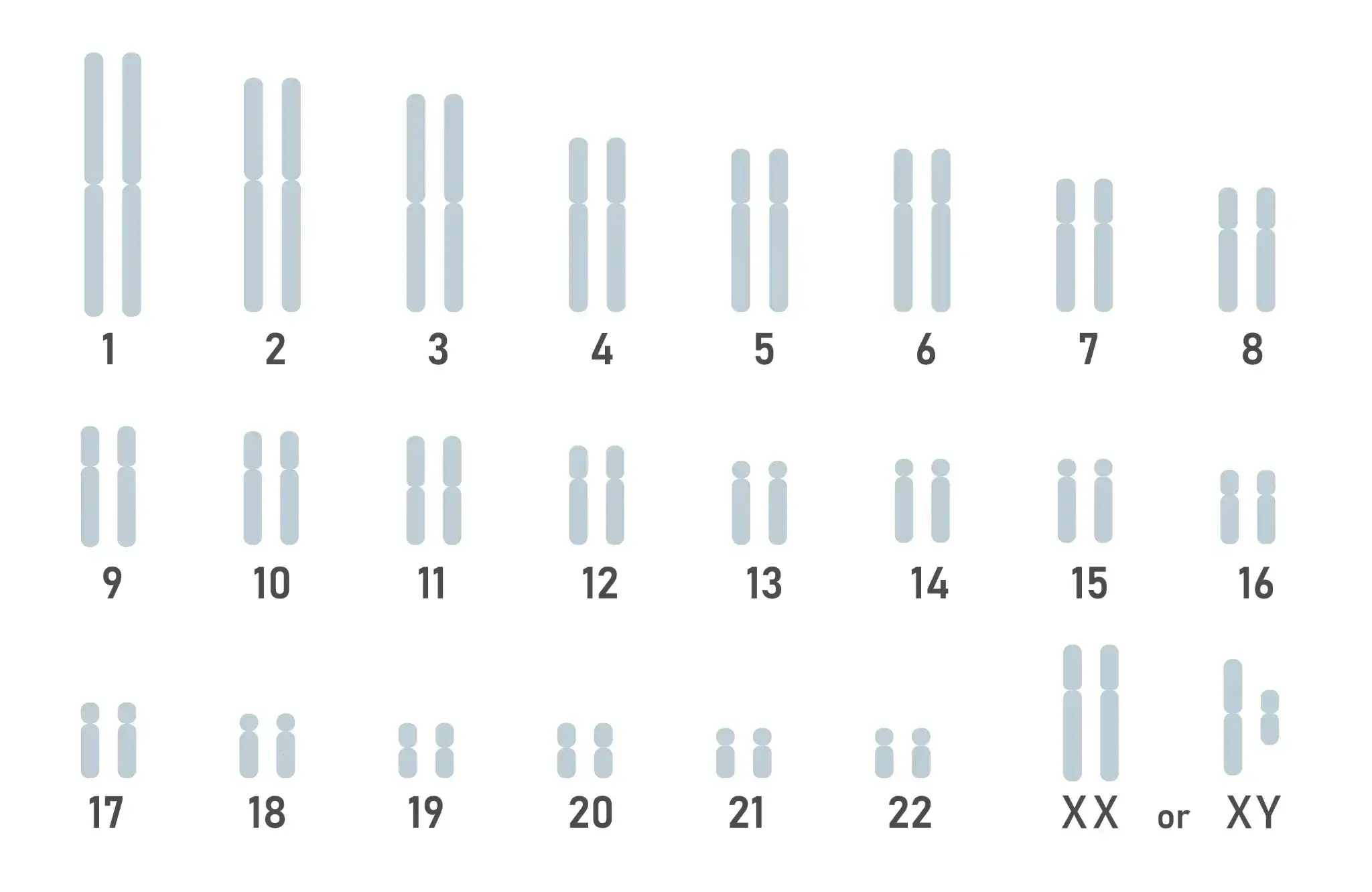
The DNA region investigated this time
Schematic diagram of DNA map present in cells
- ■
- ■
- ■
- ■
- ■
- ■
- ■
- ■
- ■
Related genes
| Related genes | N4BP2L1 |
|---|---|
| Related genes | SPRY3 |
| Related genes | FADS2 |
Frequently asked questions (FAQ)
Q1. What is hyperlipidemia?
Hyperlipidemia is a lipid metabolic disorder in which LDL cholesterol (bad cholesterol) in the blood increases abnormally.LDLC is diagnosed as "high" if it is 160 mg/dL or higher, and "very high" if it is 190 mg/dL or higher. It causes hardening of the arteries and increases the risk of heart attack and stroke.
Q2. Is hyperlipidemia genetic?
Hyperlipidemia isBoth lifestyle and genetic factorsis involved. A study by Graham et al. at the University of Michigan found that people with the T mutation in the rs151330264 DNA region tend to have a higher risk of hyperlipidemia. Excessive intake of saturated and trans fatty acids, lack of exercise, obesity, and smoking are also major risk factors.
Q3. What is the difference between hyperlipidemia and dyslipidemia?
Hyperlipidemia refers to a state in which LDL cholesterol and triglycerides are "high."dyslipidemiais a broader concept that includes not only high LDL but also low HDL (good) cholesterol. Currently, "dyslipidemia" is used as an official diagnosis.
Q4. What are the diagnostic criteria for LDL cholesterol in hyperlipidemia?
The standard values for LDL cholesterol are as follows.100mg/dL or less is normal, 100-129mg/dL is no problem, 130-159mg/dL is a borderline value, 160-189mg/dL is a high value,190mg/dL or higher is extremely highIt is.
Q5. What are the ways to prevent and improve hyperlipidemia?
To prevent and improve hyperlipidemia,Review of diet to avoid saturated fatty acids and trans fatty acids, aerobic exercise for at least 150 minutes a week, maintaining a healthy weight, and quitting smoking are effective. If life improvement is not enough,Statin drugsCholesterol-lowering drugs such as
References
- Reference link 1: 2021 Dec., Sarah E Graham, Nature
- Reference link 2: 2018 Mar., Thomas J Hoffmann, Nat Genet
- Reference link 3: 2009 Jan., Yurii S Aulchenko, Nat Genet