
 Hyperhomocysteinemia
- Hyperhomocysteinemia is a metabolic disorder in which blood homocysteine increases to 15 μmol/L or more., which increases the risk of cardiovascular disease.
- T-type mutation in DNA region rs2851391Research shows that people with the disease tend to be at higher risk of developing
- The prevalence of type TT among Japanese people is 15.5%.Intake of vitamin B groupis considered effective for prevention
Overview Hyperhomocysteinemia is a metabolic disorder in which the blood contains an abnormally large amount of the substance homocysteine. Homocysteine is a sulfur-containing amino acid that is made in the body from the essential amino acid methionine and is quickly metabolized into other substances. However, in homocysteinemia, this metabolism is disrupted for various reasons, including genetic mutations, deficiencies of vitamins B6, B9 (folate), and B12, kidney disease, smoking, and lack of exercise, and homocysteine accumulates in the blood. Elevated homocysteine levels make your blood more likely to clot, increasing your risk of cardiovascular diseases such as heart attack, stroke, deep vein thrombosis, and pulmonary embolism. Additionally, homocysteine's effects on bones can increase the risk of bone fractures and osteoporosis. Homocysteine levels are measured with a blood test. To treat this disease, B vitamin supplements are used to lower homocysteine levels. A study by van Meurs et al. from the Erasmus Medical Center revealed that the risk of developing hyperhomocysteinemia is associated with a DNA region called rs2851391. There are three genotypes in this DNA region: TT, TC, and CC, and it was found that people with the T genotype tend to have a higher risk of hyperhomocysteinemia.
What is hyperhomocysteinemia?
Hyperhomocysteinemia is a metabolic disorder in which homocysteine, a metabolite of the essential amino acid methionine, has an abnormally high level (15 μmol/L or more) in the blood.Normally, homocysteine is quickly metabolized into other substances in the body by the action of B vitamins, but if this metabolic process is inhibited, it accumulates in the blood, causing damage to the vascular endothelium and activation of blood coagulation.
Causes and risk factors for hyperhomocysteinemia
Hyperhomocysteinemia has multiple causes. The main causes are as follows.
- Genetic factors:MTHFR gene mutations and CBS gene mutations reduce the function of homocysteine metabolic enzymes.
- Deficiency of B vitamins:Vitamins B6, B9 (folic acid), and B12 are essential for homocysteine metabolism, and a deficiency will lead to accumulation.
- Kidney disease:Renal dysfunction reduces homocysteine excretion
- Smoking:Promotes consumption of vitamins B6 and B12 and hinders metabolism
- Lack of exercise:Decline in overall metabolic function promotes homocysteine accumulation
Health risks of hyperhomocysteinemia
Elevated homocysteine levels promote blood clotting and increase the risk of:
- Heart attack (myocardial infarction):Accelerates arteriosclerosis in coronary arteries and increases the risk of blood clot formation
- Stroke:Increases the risk of blood clot formation in the brain
- Deep vein thrombosis:Blood clots form in the deep veins of the legs
- Pulmonary embolism:A life-threatening condition in which a pulmonary artery is blocked by a blood clot.
- Fracture/osteoporosis:Homocysteine impairs bone collagen crosslinking and reduces bone strength.
Homocysteine level classification and standard values
| classification | Homocysteine value (μmol/L) | risk level |
|---|---|---|
| normal | 5〜15 | low risk |
| mild high | 15〜30 | medium risk |
| moderately high | 30〜100 | high risk |
| severe high | 100 or more | very high risk |
Diagnosis and prevention of hyperhomocysteinemia
Homocysteine levels are measured with a blood test.The following methods are effective for prevention and treatment.
- Vitamin B9 (folic acid):Recommended intake of 400μg or more per day. Contained in green and yellow vegetables, liver, and beans
- Vitamin B12:Intake from seafood, meat, and dairy products
- Vitamin B6:Contains in chicken, bananas, and potatoes
- No smoking:Prevents depletion of B vitamins due to smoking
- Moderate exercise:Effective for maintaining and improving metabolic function
Relationship between genes and hyperhomocysteinemia
Relationship between DNA region rs2851391 and onset risk
A study by van Meurs et al. from the Erasmus Medical Center (Am J Clin Nutr, September 2013) found that the DNA region rs2851391 is associated with the risk of hyperhomocysteinemia.
- There are three genotypes of rs2851391: TT, TC, and CC.
- TT type with T mutationare more likely to develop hyperhomocysteinemia
- TC typetend to be slightly more likely to develop
- CC type is relatively low risk
However, it does not necessarily mean that people with type TT or type TC will develop the disease.The possibility of developing the disease increases due to a combination of environmental factors such as diet, lifestyle, and kidney function.
Genotype distribution in Japanese (rs2851391)
| Genotype | Percentage of Japanese people | percentage of the world |
|---|---|---|
| TT type | 15.5% | 19.1% |
| TC type | 47.7% | 49.2% |
| CC type | 36.6% | 31.6% |
Mechanism of action: CBS gene and homocysteine metabolism
The CBS (cystathionine beta synthase) gene contains the genetic information for the enzyme that catalyzes the conversion of homocysteine to cystathionine.
- Mutations in the CBS gene → Metabolic efficiency from homocysteine to cystathionine decreases
- Decrease in metabolic efficiency → Increased blood homocysteine concentration
- Accumulation of homocysteine → damage to vascular endothelial cells and increase in oxidative stress
- Vascular damage → Promotion of arteriosclerosis and thrombus formation
Rationale for testing
Superficial DNA region: hyperhomocysteinemia
The gene region that most strongly influences hyperhomocysteinemia is rs2851391. The distribution of isomorphic genotypes in Japan is as follows.
- TT
15.5 % - TC
47.7 % - CC
36.6 %
Basis for inspection
A study by van Meurs et al. from the Erasmus Medical Center revealed that the risk of developing hyperhomocysteinemia is linked to genes. There are two types of mutations in the rs2851391 region, T and C, and people with the T type mutation tend to have a higher risk of hyperhomocysteinemia. Among Japanese people, 15.5% are TT type, 47.7% are TC type, and 36.6% are CC type, which is characterized by a slightly lower prevalence of TT type compared to the world average.
The DNA region investigated this time
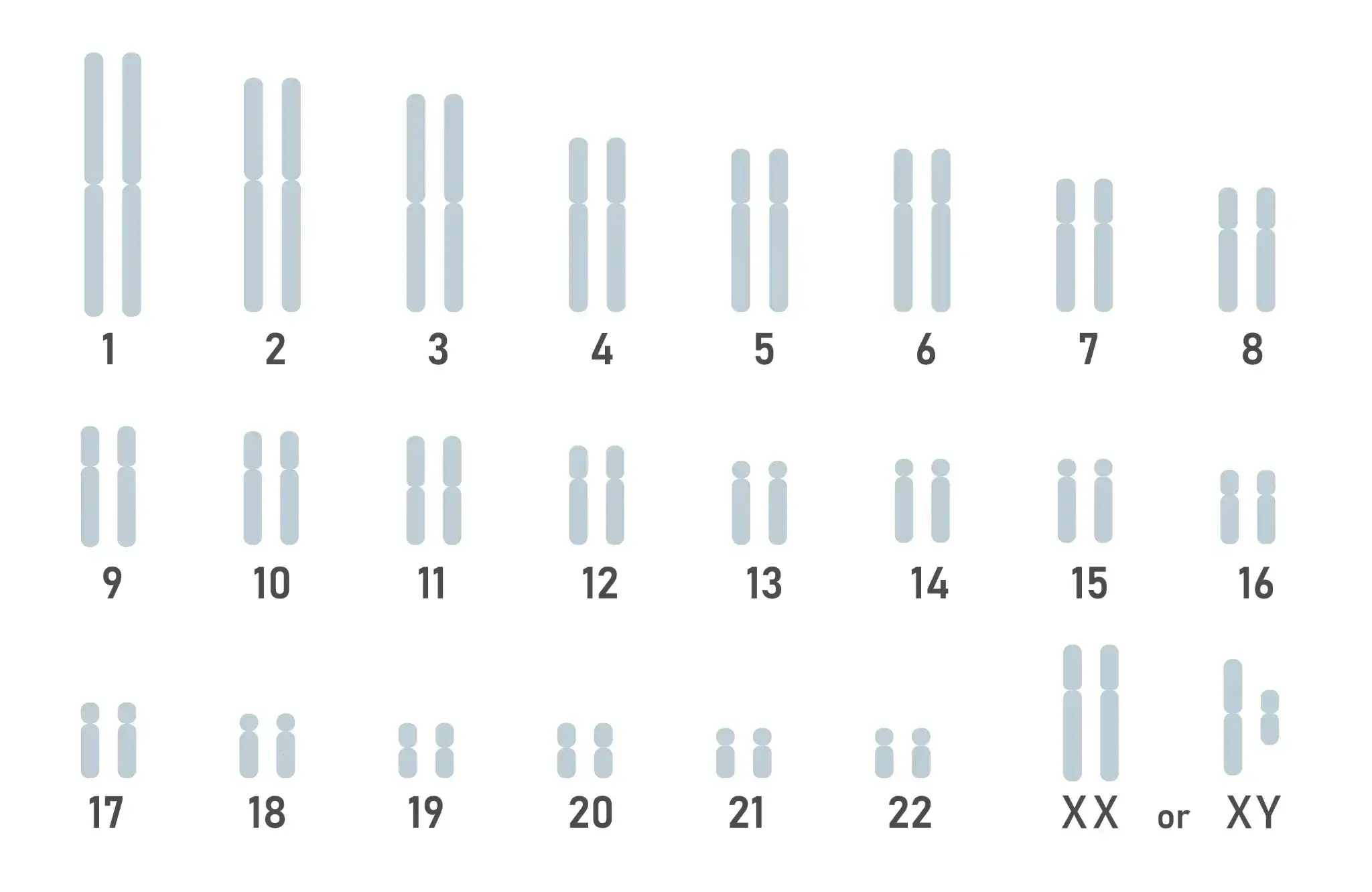
Schematic diagram of DNA map present in cells
- ■
- ■
- ■
- ■
- ■
- ■
- ■
- ■
- ■
Related genes
| Related genes | CBS |
|---|
Frequently asked questions (FAQ)
Q1. What is hyperhomocysteinemia?
Hyperhomocysteinemia is a metabolic disorder in which homocysteine, a metabolite of the essential amino acid methionine, has an abnormally high level (15 μmol/L or more) in the blood.Due to a lack of vitamins B6, B9 (folic acid), and B12, as well as genetic factors, homocysteine metabolism becomes stagnant and accumulates in the blood. It is a risk factor for cardiovascular disease and osteoporosis.
Q2. What is the cause of hyperhomocysteinemia?
The main cause isGene mutations (CBS gene/MTHFR gene)andDeficiency of B vitamins (B6, B9, B12)It is. Decreased excretion due to kidney disease, vitamin depletion due to smoking, and decreased metabolism due to lack of exercise are also causes. T-type mutation in DNA region rs2851391 has been identified as a risk factor.
Q3. What are the risks of hyperhomocysteinemia?
High homocysteine levelsPromotes blood clottingand increases the risk of heart attack, stroke, deep vein thrombosis, and pulmonary embolism.Impairs bone collagen crosslinkingIt is also associated with an increased risk of bone fractures and osteoporosis. It has also been reported to be associated with cognitive decline.
Q4. Can genetic testing determine the risk of hyperhomocysteinemia?
By examining the genotype of the DNA region rs2851391,Understand the risk trend of hyperhomocysteinemiaYou can. A study by the Erasmus Medical Center found that people with the T mutation (TT and TC) tend to be at higher risk.
Q5. Is there any way to prevent hyperhomocysteinemia?
400μg or more of vitamin B9 (folic acid) per dayIt is recommended that you take it. Actively consume green and yellow vegetables, liver, and beans that contain folic acid, as well as vitamins B6 and B12. Smoking cessation, moderate exercise, and regular blood tests to monitor homocysteine levels are effective.
References
- Reference link 1: 2013 Sep., Joyce B J van Meurs, Am J Clin Nutr