
 Hypercholesterolemia (dyslipidemia)

- Hypercholesterolemia (dyslipidemia) is a condition in which the blood cholesterol level is 240 mg/dL or higher.This increases the risk of arteriosclerosis, myocardial infarction, and stroke.
- T-type mutation in DNA region rs151330264A University of Michigan study found that people with
- appropriateDiet, exercise, drug therapycan help manage blood cholesterol levels and reduce cardiovascular disease risk
Overview Hypercholesterolemia refers to a condition in which the level of cholesterol in the blood is high. Cholesterol is a lipid necessary for building cell membranes and producing hormones, but too much can cause health problems. Hypercholesterolemia is caused by genetic factors and lifestyle factors such as diet, lack of exercise, and obesity. The condition usually has no physical symptoms and is detected when a blood test shows a total cholesterol level of 240 milligrams per deciliter (mg/dL) or higher. Hypercholesterolemia can include high LDL cholesterol (the "bad" cholesterol) and low HDL cholesterol (the "good" cholesterol). This imbalance causes cholesterol plaques to form in the arteries, causing atherosclerosis and increasing the risk of heart attack and stroke. People with very high cholesterol levels may develop xanthomas, fatty deposits around the eyes, elbows, knees, and tendons. Early detection and treatment with diet, exercise, and drug therapy if necessary are important. A study by Graham et al. at the University of Michigan revealed that the risk of developing hypercholesterolemia (dyslipidemia) is associated with the DNA region rs151330264. There are three genotypes in this DNA region: AA, AT, and TT, and it has been found that people with the T genotype tend to have a higher risk of hypercholesterolemia.
What is hypercholesterolemia (dyslipidemia)?
Hypercholesterolemia (dyslipidemia) is a disease in which blood cholesterol levels are higher than the standard value.Diagnosis is made when the total cholesterol level is 240 mg/dL or higher (1).
Causes and mechanisms of hypercholesterolemia
Cholesterol is an essential lipid for building cell membranes and producing hormones, but excess can cause health problems.
- Genetic factors:Genetic diseases such as familial hypercholesterolemia, T-type mutation in DNA region rs151330264
- Diet:Excessive intake of saturated fatty acids, trans fatty acids, and cholesterol
- Lack of exercise:Causes a decrease in HDL cholesterol (good)
- Obesity:Promotes raising LDL cholesterol (bad) cholesterol and lowering HDL cholesterol
- Age/gender:Postmenopausal women tend to have higher cholesterol levels
Main symptoms of hypercholesterolemia
Hypercholesterolemia is“Silent killer” with almost no symptomsThe majority of cases are detected through blood tests.
- Usually shows no physical symptoms (asymptomatic)
- For very high values,xanthomas(fatty deposits appear around the eyes, elbows, knees, and tendons)
- Corneal ring (white ring around the cornea)
- As the disease progresses, chest pain and shortness of breath occur due to arteriosclerosis.
Difference between LDL cholesterol and HDL cholesterol
| Comparison items | LDL cholesterol (bad) | HDL cholesterol (good) |
|---|---|---|
| role | Transports cholesterol from the liver to the entire body | Collects excess cholesterol to the liver |
| Standard value | Normal is less than 140mg/dL | 40mg/dL or more is normal |
| Risk of abnormality | High levels increase risk of arteriosclerosis | Low levels increase risk of arteriosclerosis |
| Effect on arteries | Plaque formation/vascular stenosis | Plaque removal/blood vessel protection |
| Improvement method | Dietary restrictions/statin drugs | Aerobic exercise/no smoking |
Risk of complications from hypercholesterolemia
Elevated LDL cholesterol forms cholesterol plaques on artery walls, leading to the following complications:
- Arteriosclerosis:Hardening/stenosis of blood vessel walls
- Myocardial infarction:Myocardial necrosis due to coronary artery occlusion
- Stroke:Occlusion/rupture of cerebral blood vessels
- Peripheral artery disease:Blood flow disorders in the extremities
Prevention and treatment of hypercholesterolemia
early detection andImproving lifestyle habitsis the basis of treatment.
- Diet:Limit saturated fatty acids, actively intake dietary fiber and unsaturated fatty acids
- Exercise therapy:Perform at least 150 minutes of aerobic exercise per week
- Weight management:Maintain a healthy weight with a BMI of less than 25
- No smoking:Smoking lowers HDL cholesterol
- Drug therapy:Drug treatment with statin drugs, ezetimibe, etc.
Main influencing factors
Cholesterol levels vary from person to person due to the following factors:
- Genetic factors (genotype of DNA region rs151330264, etc.)
- Meal content (type and amount of fat)
- Existence of exercise habits
- Weight/BMI
- Age/gender
The relationship between genes and hypercholesterolemia
Relationship between DNA region rs151330264 and onset risk
A study by Graham et al. at the University of Michigan (1) revealed that the DNA region rs151330264 is associated with the risk of developing hypercholesterolemia (dyslipidemia).
- There are three genotypes of rs151330264: AA, AT, and TT.
- Genotype with T-type mutation(AT type/TT type) people tend to have a higher risk of hypercholesterolemia.
Genotype distribution in Japanese (rs151330264)
| Genotype | Percentage of Japanese people | percentage of the world |
|---|---|---|
| AA type | 99.9% | 98.7% |
| AT type | 0.1%以下 | 1.2% |
| TT type | 0.1%以下 | 0.1%以下 |
Rationale for testing
Surface DNA region: Hypercholesterolemia (dyslipidemia)
The gene region that most strongly affects hypercholesterolemia (dyslipidemia) is rs151330264. The distribution of isomorphic genotypes in Japan is as follows.
- AA
99.9 % - AT
0.1%以下 - TT
0.1%以下
Another gene region involved in hypercholesterolemia (dyslipidemia) is rs7570971. The distribution of isomorphic genotypes in Japan is as follows
- CC
0.1%以下 - CA
0.1%以下 - AA
99.9 %
Another gene region involved in hypercholesterolemia (dyslipidemia) is rs174570. The distribution of isomorphic genotypes in Japan is as follows
- CC
44.6 % - CT
44.3 % - TT
11.0 %
Another gene region involved in hypercholesterolemia (dyslipidemia) is rs9987289. The distribution of isomorphic genotypes in Japan is as follows
- AA
0.1%以下 - AG
1.9 % - GG
98.0 %
Another gene region involved in hypercholesterolemia (dyslipidemia) is rs149615216. The distribution of isomorphic genotypes in Japan is as follows
- CC
99.9 % - CT
0.1%以下 - TT
0.1%以下
Another gene region involved in hypercholesterolemia (dyslipidemia) is rs1805081. The distribution of isomorphic genotypes in Japan is as follows
- TT
54.8 % - TC
38.4 % - CC
6.7 %
Another gene region involved in hypercholesterolemia (dyslipidemia) is rs306890. The distribution of isomorphic genotypes in Japan is as follows
- TT
58.3 % - TC
36.0 % - CC
5.5 %
Basis for inspection
A study by Graham et al. at the University of Michigan revealed that the risk of developing hypercholesterolemia (dyslipidemia) is related to genes. There is a region called rs151330264 in the human genome, and there are two types of mutations, A and T, in the gene in that region. It was found that people with the T-type mutation tend to have a higher risk of hypercholesterolemia.
The DNA region investigated this time
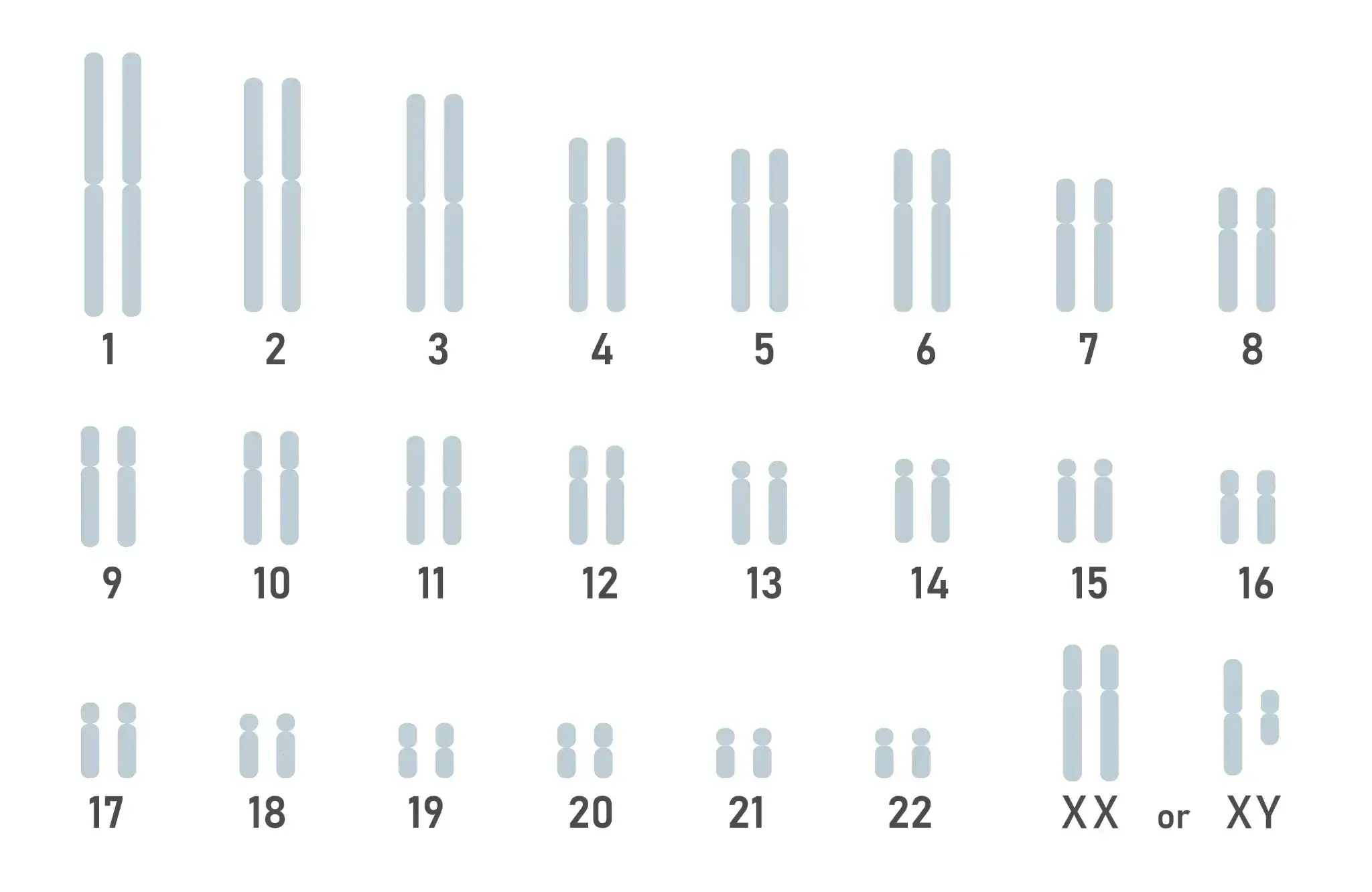
Schematic diagram of DNA map present in cells
- ■
- ■
- ■
- ■
- ■
- ■
- ■
- ■
- ■
Related genes
| Related genes | N4BP2L1 |
|---|---|
| Related genes | RAB3GAP1 |
| Related genes | FADS2 |
| Related genes | PPP1R3B-DT |
| Related genes | LIPG |
| Related genes | NPC1 |
| Related genes | SPRY3 |
Frequently asked questions (FAQ)
Q1. What is hypercholesterolemia (dyslipidemia)?
Hypercholesterolemia (dyslipidemia) is a condition in which the blood cholesterol level exceeds the standard value (total cholesterol 240 mg/dL or more).An increase in LDL cholesterol (bad) and a decrease in HDL cholesterol (good) increases the risk of arteriosclerosis, myocardial infarction, and stroke (1).
Q2. What is the cause of hypercholesterolemia?
The main cause isGenetic factors, dietary habits (excessive intake of saturated fatty acids and trans fatty acids), lack of exercise, obesityIt is. As a genetic factor, the T-type mutation in the DNA region rs151330264 is involved in the risk. Familial hypercholesterolemia is a highly inherited disease (1).
Q3. Can genetic testing determine the risk of hypercholesterolemia?
By examining the genotype of the DNA region rs151330264,Understanding risk trends for developing hypercholesterolemiaYou can. A study by Graham et al. at the University of Michigan found that people with the T genotype (AT type and TT type) tend to be at higher risk (1).
Q4. Is there a way to prevent hypercholesterolemia?
Dietary therapy (restriction of saturated fatty acids/intake of dietary fiber), aerobic exercise (150 minutes or more per week), maintenance of appropriate weight, quitting smokingis valid. If necessary, drug therapy such as statin drugs may be used in combination. Early detection through blood tests and continuous management are important.
Q5. What is the relationship between hypercholesterolemia and arteriosclerosis?
When LDL cholesterol becomes excessiveCholesterol plaque builds up on artery wallsand causes arteriosclerosis. As arteriosclerosis progresses, blood vessels narrow and become occluded, increasing the risk of developing serious cardiovascular diseases such as myocardial infarction and stroke.
References
- Reference link 1: 2021 Dec., Sarah E Graham, Nature
- Reference link 2: 2010 Aug., Tanya M Teslovich, Nature
- Reference link 3: 2018 Nov., Derek Klarin, Nat Genet
- Reference link 4: 2009 Jan., Yurii S Aulchenko, Nat Genet
- Reference link 5: 2017 May., Cassandra N Spracklen, Hum Mol Genet
- Reference link 6: 2015 Jun., Ida Surakka, Nat Genet
- Reference link 7: 2011 Sep., Camilla Helene Sandholt, PLoS One
- Reference link 8: 2018 Mar., Thomas J Hoffmann, Nat Genet