
 good reflexes

- Good reflexes (attention) are the ability to respond quickly and accurately to stimuli.and is directly connected to productivity in daily life such as sports, driving, and learning.
- AA type of DNA region rs4321351 of PID1 geneA study by Spain's Environmental Epidemiology Research Center found that people with
- The prevalence of type AA in Japanese people is73.2%This is a high percentage compared to the world average of 51.2%.
Overview Attention is an essential ability in daily life, and refers to the ability to stay focused on one thing. Decreased attention can lead to problems such as decreased productivity and accidents in many situations such as work, study, and sports. Conversely, high alertness is said to be suitable for jobs that require quick response to situations, such as sports, driving, gaming, and debating. Recent research has shown that human DNA has a certain influence on attention. According to the Spanish Center for Environmental Epidemiology Research, certain types of the PID1 gene have been reported to have a significant impact on attentional function. By determining your own genetic type through genetic testing, you can determine your genetic tendency toward attention. Rationale According to the Spanish Center for Research in Environmental Epidemiology, a link has been found between attentional function and a specific type of the PID1 gene. The specific region of the PID1 gene involved in attention function is called ``rs4321351.'' There are three genotypes in the region ``rs4321351'': GG, AG, and AA, and it has been revealed that people with the AA type genotype tend to be more attentive, and people with the AG type tend to be slightly more attentive. Furthermore, ``rs4321351'' was associated with a test called HRT, which measures the speed of response to a stimulus, and a region that forms the attention function system (frontal lobe basal ganglia) based on brain image analysis. (Reference link 1) In this way, by scientifically confirming genetic tendencies related to attention, it becomes possible to take measures tailored to attention. For example, people with the A genotype who tend to be easily distracted tend to have trouble making plans or being organized. Therefore, in order to increase your attentiveness, you can try to prioritize and make a schedule, and by being conscious of organization, you can avoid focusing on unnecessary things. In this way, by choosing the appropriate study location and method, adults can devise a working environment, and children can devise a learning environment. Taking into account genetic predispositions for attention can help us learn and work more effectively. Mechanism of action The PID1 gene, which is related to attention, is located on chromosome 2 of the 24 human chromosomes. This gene is present in abundance in the brain, adrenal glands, and adipose tissue, and is involved in the uptake of glucose into cells by stimulation of the hormone insulin, known as insulin signaling. Brain diabetes known as Alzheimer's disease causes a decline in attention, and it is known that PID1 expression is low in the brains of Alzheimer's disease patients. It has also been suggested that Alzheimer's disease may be associated with attention in patients with attention-deficit/hyperactivity disorder (ADHD). (Reference link 2) From this, it is thought that the PID1 gene is involved in glucose metabolism and nerve function, and may affect attention. The proportion of the "rs4321351" genotype in Japanese people is 2.2% for GG, 24.9% for GA, and 72.9% for AA. (Reference link 3) In this way, "rs4321351" is one of the SNPs that is attracting attention because it is related to talents such as attention.
What is good reflexes (attention)?
Good reflexes are the ability to react quickly and accurately to stimuli, and are closely related to high alertness.Attention is an essential ability in daily life and refers to the ability to stay focused on one thing.
Why Attention is Important
The level of attentiveness is an important factor that affects success in work, study, and sports. The specific impacts are as follows.
- If you are attentive:Works well in situations where quick response to situations is required, such as sports, driving, games, and debates.
- If you have low attention span:Reduced productivity and increased risk of accidents at work, study, and sports
Comparison of attention level and daily life
| Comparison items | If you are attentive | If you have low attention span |
|---|---|---|
| work | Able to accurately prioritize tasks and accomplish them efficiently | Tends to be unable to plan and organize |
| sports | It is easy to achieve high results in competitions that require instant judgment and reaction. | Delayed reaction leads to poor performance |
| learning | Maintains concentration and improves retention of learning content | It is easy to lose concentration and learning efficiency decreases. |
| Safety | Possible to respond quickly when driving or avoiding danger | Increased risk of accidents and troubles |
Relationship between genes and good reflexes
Relationship between PID1 gene (rs4321351) and attention
A study by Spain's Environmental Epidemiology Research Center revealed that the DNA region rs4321351 of the PID1 gene is associated with attentional function.(Reference link 1)
- There are three genotypes of rs4321351: GG, AG, and AA.
- AA typePeople with this genotype tend to be more attentive.
- AG typePeople also tend to be slightly more attentive.
rs4321351 isHRT(Hit Reaction Time)A relationship between this reaction speed test to a stimulus and components of the attention function system (frontal lobe/basal ganglia) has been confirmed through brain image analysis.
Comparison of genotype distribution in Japanese and the world (rs4321351)
| Genotype | Percentage of Japanese people | percentage of the world |
|---|---|---|
| AA type | 73.2% | 51.2% |
| AG type | 24.6% | 40.6% |
| GG type | 2.0% | 8.0% |
The prevalence of type AA in Japanese people is73.2%This is approximately 1.4 times higher than the global average of 51.2%. This suggests that genetic predispositions favoring attention are more widely distributed in the Japanese population. (Reference link 3)
Rationale for testing
Body surface DNA area: Good reflexes
The gene region that most strongly influences reflexes is rs4321351. The distribution of isomorphic genotypes in Japan is as follows.
- AA
73.2 % - AG
24.6 % - GG
2.0 %
Mechanism of action of PID1 gene
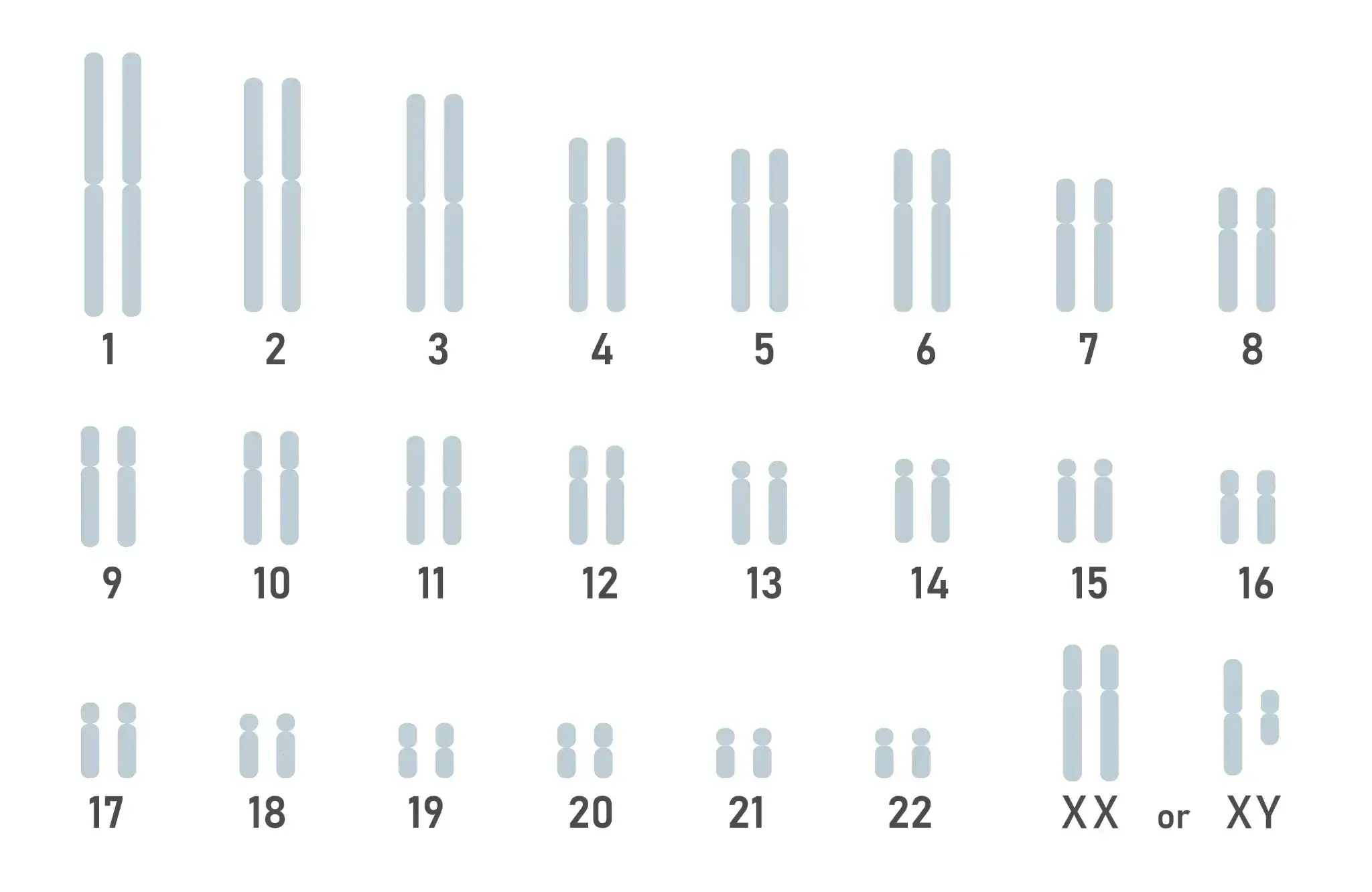
The PID1 gene is located on chromosome 2 and is present in the brain, adrenal glands, and adipose tissue.It is involved in insulin signaling (the action of glucose uptake into cells stimulated by insulin hormone).
- Association with Alzheimer's disease:PID1 expression is reduced in the brains of Alzheimer's disease (also known as brain diabetes) patients, and a decline in attention is observed (Reference link 2)
- Connection with ADHD:It has been suggested that Alzheimer's disease and attention deficit hyperactivity disorder (ADHD) may be related.
From these findings,The PID1 gene is involved in both glucose metabolism and nerve function, and influences attention.It is thought that.
Measures to increase alertness
If you have a genetic tendency to be easily distracted, the following measures may be effective.
- Setting priorities:Prioritize tasks and plan accordingly
- Awareness of organization:Organize your physical and digital environment and eliminate unnecessary stimuli
- Environment optimization:Choose a study/work environment that makes it easy to concentrate
The DNA region investigated this time
Schematic diagram of DNA map present in cells
- ■
- ■
- ■
- ■
- ■
- ■
- ■
- ■
- ■
Related genes
| Related genes | PID1 |
|---|
Frequently asked questions (FAQ)
Q1. What is good reflexes?
Good reflexes are the ability to react quickly and accurately to stimuli, and are closely related to high alertness.It plays an important role in situations where instant decisions are required, such as sports, driving, games, and debates. People who are more attentive are more productive and have a lower risk of accidents.
Q2. Are good reflexes related to genes?
Yes.Research by the Center for Environmental Epidemiology Research in Spain has revealed that the DNA region rs4321351 of the PID1 gene is associated with attentional functions.There are three genotypes of rs4321351: GG, AG, and AA, and people with the AA genotype tend to be more attentive.
Q3. How does the PID1 gene affect attention?
The PID1 gene is located on chromosome 2 and is involved in brain glucose metabolism and nerve function.PID1 expression is reduced in the brains of Alzheimer's disease patients, and a decline in attention has been observed. It has been suggested that abnormalities in glucose metabolism may affect neurological function and lead to changes in attention.
Q4. What is the distribution of genotypes related to reflexes (rs4321351) in Japanese people?
The genotype distribution of rs4321351 in Japanese people isAA type 73.2%, AG type 24.6%, GG type 2.0%It is. Worldwide, 51.2% of people have type AA, 40.6% have type AG, and 8.0% have type GG, and Japanese people have a characteristic that the prevalence of type AA is about 1.4 times higher than the world average.
References
- Reference link 1: 2016 Sep., Silvia Alemany, PLoS One.
- Reference link 2: 2015 Jul., Alemany, Silvia, American Journal of Medical Genetics Part B: Neuropsychiatric Genetics.
- Reference link 3: Information on DNA region “rs4321351” NIH
- Reference link 4: 2016 Sep., Silvia Alemany, PLoS One