
 Hip fracture tolerance

- Hip fracture resistance is determined by bone mineral density (BMD), low bone density increases fracture risk
- C-type mutation in DNA region rs7776725Study finds that people with this condition tend to have a higher risk of hip fracture
- appropriateNutritional intake, weight-bearing exercise, lifestyle improvementIt is possible to maintain bone density and reduce the risk of fractures.
Overview Bone mineral density (BMD) is an indicator of bone strength. It measures the amount of minerals contained in bones and shows the ratio of minerals to bone volume. Low bone density weakens bone structure and increases the risk of fractures. The hip joint is particularly important for measuring bone density. The hip joint supports your body's weight and is important for many of the basic movements of daily life, such as standing, walking, running, and squatting. Therefore, a hip fracture can significantly reduce the quality of life and, in severe cases, require surgery or long-term rehabilitation. In order to maintain a healthy condition as we age, it is important to increase the bone density of the hip joint through lifestyle improvements, drug treatments, and nutritional supplements. A study by Hyung Jin Choi and colleagues at Seoul National University revealed that the risk of hip fracture is associated with a DNA region called rs7776725. There are three genotypes in this DNA region: TT, TC, and CC, and it was found that people with the C genotype tend to have a higher risk of hip fracture.
What is hip fracture tolerance?
Hip fracture resistance is an index of the difficulty of fractures determined by the bone mineral density (BMD) of the hip joint.The higher the bone density, the lower the risk of fracture, and the lower the bone density, the weaker the bone structure and the higher the risk of fracture.
Relationship between bone mineral density (BMD) and hip joint
Bone mineral density (BMD) is an indicator of bone strengthIt measures the amount of minerals contained in bones and indicates the ratio of minerals to bone volume.
- The hip joint is a major weight-bearing jointIt is essential for basic movements such as standing, walking, running, and crouching.
- When you fracture your hip jointSignificant decline in quality of life (QOL)In some cases, surgery or long-term rehabilitation may be necessary.
- If your bone density is low,osteoporosisdiagnosed with a significantly increased risk of fractures.
Risk factors for hip fractures
The following factors increase the risk of hip fracture:
- Aging:Bone density tends to decrease especially in people over 65 years of age.
- Gender:Postmenopausal women rapidly lose bone density due to decreased estrogen
- Genetic predisposition:Type C mutation in DNA region rs7776725 is associated with risk
- Malnutrition:Insufficient intake of calcium and vitamin D
- Lack of exercise:Bone density decrease due to lack of weight-bearing exercise
How to prevent hip fractures
The following measures are effective for maintaining and increasing bone density.
| Prevention method | Specific content | effect |
|---|---|---|
| nutritional intake | Calcium, vitamin D, protein | Maintains bone mineral density |
| load movement | Walking/strength training | Promotes bone formation |
| Lifestyle improvement | No smoking/drinking | Suppresses bone density loss |
| Regular inspection | Bone density measurement by DXA method | Early detection/early response |
| drug treatment | Bisphosphonate preparations, etc. | Inhibits bone resorption |
Association between genes and hip fracture risk
Relationship between DNA region rs7776725 and fracture risk
A study by Hyung Jin Choi and colleagues at Seoul National University (1) revealed that the DNA region rs7776725 is associated with the risk of hip fracture.
- There are three genotypes of rs7776725: TT, TC, and CC.
- Genotype with type C mutation(TC type/CC type) people tend to have a higher risk of hip fracture.
Genotype distribution in Japanese (rs7776725)
| Genotype | Percentage of Japanese people | percentage of the world |
|---|---|---|
| TT type | 75.7% | 53.3% |
| TC type | 22.5% | 39.3% |
| CC type | 1.6% | 7.2% |
Japanese people have the CC type at 1.6%, which is lower than the world average (7.2%), and the TT type at 75.7%, which is higher than the world average (53.3%).
Genotype distribution in Japanese (rs9594759)
| Genotype | Percentage of Japanese people | percentage of the world |
|---|---|---|
| CC type | 71.5% | 23.5% |
| CT type | 26.0% | 49.9% |
| TT type | 2.3% | 26.5% |
Rationale for testing
Superficial DNA regions: resistance to hip fractures
The gene region that most strongly influences hip fracture resistance is rs7776725. The distribution of isomorphic genotypes in Japan is as follows.
- TT
75.7 % - TC
22.5 % - CC
1.6 %
Another gene region involved in hip fracture resistance is rs9594759. The distribution of isomorphic genotypes in Japan is as follows
- CC
71.5 % - CT
26.0 % - TT
2.3 %
Basis for inspection
A study by Hyung Jin Choi and colleagues at Seoul National University revealed that the risk of hip fracture is related to genes. There is a region called rs7776725 in the human genome, and there are two types of mutations, T and C, in the gene in this region. It has been found that people with the type C mutation tend to have an increased risk of hip fracture (1).
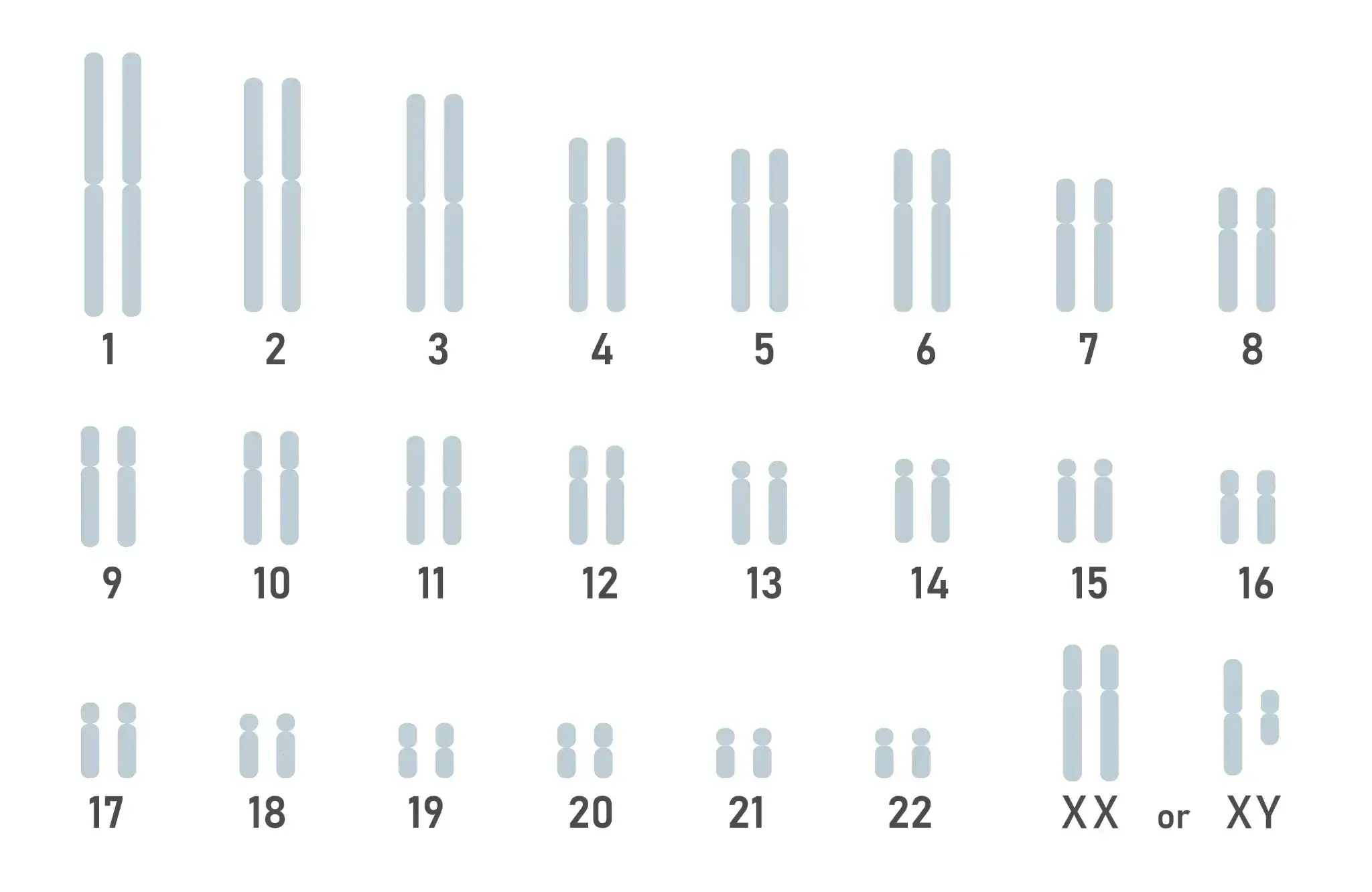
The DNA region investigated this time
Schematic diagram of DNA map present in cells
- ■
- ■
- ■
- ■
- ■
- ■
- ■
- ■
- ■
Related genes
| Related genes | FAM3C |
|---|---|
| Related genes | LINC02341 |
Frequently asked questions (FAQ)
Q1. What is hip fracture tolerance?
Hip fracture resistance is an index of the resistance to fracture determined by the bone mineral density (BMD) of the hip joint.The higher the bone density, the lower the risk of fracture, and the lower the bone density, the weaker the bone structure and the higher the risk of fracture.
Q2. Are genes related to the risk of hip fracture?
According to research by Hyung Jin Choi et al. of Seoul National University,DNA region rs7776725 is associated with hip fracture riskIt turns out that. People with the genotype C mutation (TC type/CC type) tend to be at higher risk (1).
Q3. How can I prevent hip fractures?
Adequate intake of calcium and vitamin D, walking, strength training, etc.load movement, quitting smoking and drinking less alcohol, and regular bone density tests are effective. Regular check-ups are especially recommended for postmenopausal women and people over 65 years of age.
Q4. What is the relationship between bone density and hip fracture?
Bone mineral density (BMD) is an indicator of bone strength.Low bone density weakens bone structure and increases the risk of hip fractures.The hip joint in particular is an important part of the body that supports the body's weight, and fractures require surgery and long-term rehabilitation.
Q5. Is the genotype distribution of hip fractures different between Japan and the rest of the world?
The genotype distribution of rs7776725 is different between Japan and the world.In Japan, TT type 75.7%, TC type 22.5%, CC type 1.6%In contrast, in the world, 53.3% are TT type, 39.3% are TC type, and 7.2% are CC type. Japanese people tend to have a low rate of CC type (1)(2).
References
- Reference link 1: 2016 Oct., Hyung Jin Choi, Bone
- Reference link 2: 2008 May., Unnur Styrkarsdottir, N Engl J Med