
 hernia

- Hernia is a disease in which internal tissues and organs protrude from their original position.The typical cases are intervertebral disc herniation and abdominal wall hernia.
- C-type mutation in DNA region rs1346786Research shows that people with the disease tend to be at higher risk of developing
- early diagnosis andAppropriate treatment and regular exerciseIt is possible to prevent worsening of symptoms and improve quality of life.
Overview A hernia is a condition in which tissue or organs in the body protrude from their original position. Common types of hernia include intervertebral disc hernia and abdominal wall hernia. A herniated disc occurs when the intervertebral disc between the vertebrae bulges outward, compressing the nerves and causing back and leg pain. It is mainly seen in middle-aged adults and the elderly, and is caused by lifting heavy objects and hunching over. An abdominal wall hernia is a condition in which the intestine or fatty tissue protrudes through a weak muscle in the abdomen, causing swelling and pain in the abdomen. Inguinal hernias are especially common and are more common in men. It can be caused by lifting heavy objects or standing for long periods of time. Mild hernias can be treated with rest, painkillers, anti-inflammatory drugs, and exercises and stretches to strengthen the muscles. Surgery is necessary in severe cases or when it interferes with daily life. Early diagnosis and appropriate treatment can prevent symptoms from worsening and improve quality of life. It is important to have regular health checkups and exercise within your means. A study by Ahmed et al. at the University of Oxford revealed that the risk of developing a hernia is associated with a DNA region called rs1346786. There are three genotypes in this DNA region: CC, CT, and TT, and it was found that people with the C genotype tend to have a higher risk of hernia.
What is a hernia?
A hernia is a disease in which tissues or organs within the body protrude from their original position.There are two typical types of hernia: intervertebral disc hernia and abdominal wall hernia.
Types and causes of hernia
Hernias are broadly classified into the following two types depending on the location where they occur.
| Comparison items | herniated disc | abdominal wall hernia |
|---|---|---|
| Occurrence site | spinal discs | weak abdominal muscles |
| Pathological condition | The intervertebral disc protrudes outward and presses on the nerves. | Intestines and fatty tissue protrude from the abdominal wall |
| Main symptoms | Lower back pain/leg pain/numbness | Abdominal swelling/pain |
| Favorable demographic | middle-aged to elderly | Common in men (especially inguinal hernia) |
| Main cause | Lifting heavy objects, stooping back, aging | Lifting heavy objects and standing for long periods of time |
Main symptoms of hernia
Symptoms of hernia vary depending on the type.
- Herniated disc:Lower back pain, lower limb pain/numbness, muscle weakness
- Abdominal wall hernia (such as inguinal hernia):Abdominal swelling, dull pain, worse with standing and coughing
hernia treatment
Treatments are selected in stages according to severity as follows:
- Conservative treatment (mild):Rest, analgesics, and anti-inflammatory drugs
- Rehabilitation therapy:Exercises and stretches to strengthen muscles
- Surgery (severe cases):Implemented if there is a problem with daily life
Early diagnosis and appropriate treatment can prevent symptoms from worsening and improve quality of life. It is important to have regular health checkups and exercise within your means.
Relationship between genes and hernia
Relationship between DNA region rs1346786 and onset risk
A study by Ahmed et al. at the University of Oxford (1) revealed that the DNA region rs1346786 is associated with the risk of hernia.
- There are three genotypes of rs1346786: CC, CT, and TT.
- Genotype with type C mutationpeople tend to have a higher risk of hernia
Genotype distribution in Japanese (rs1346786)
| Genotype | Percentage of Japanese people | percentage of the world |
|---|---|---|
| CC type | 4.0% | 46.0% |
| CT type | 32.2% | 43.6% |
| TT type | 63.6% | 10.3% |
In Japan, the TT type is the most common at 63.6%, and the percentage of people with the C mutation tends to be lower than the world average.
Rationale for testing
Superficial DNA region: hernia
The gene region that most strongly affects hernia is rs1346786. The distribution of isomorphic genotypes in Japan is as follows.
- CC
4.0 % - CT
32.2 % - TT
63.6 %
Basis for inspection
A study by Ahmed et al. at the University of Oxford revealed that the risk of developing a hernia is linked to genes. There is a region called rs1346786 in the human genome, and the gene in that region has two types of mutations, C and T. It was found that people with type C mutations tend to have a higher risk of hernia.
The DNA region investigated this time
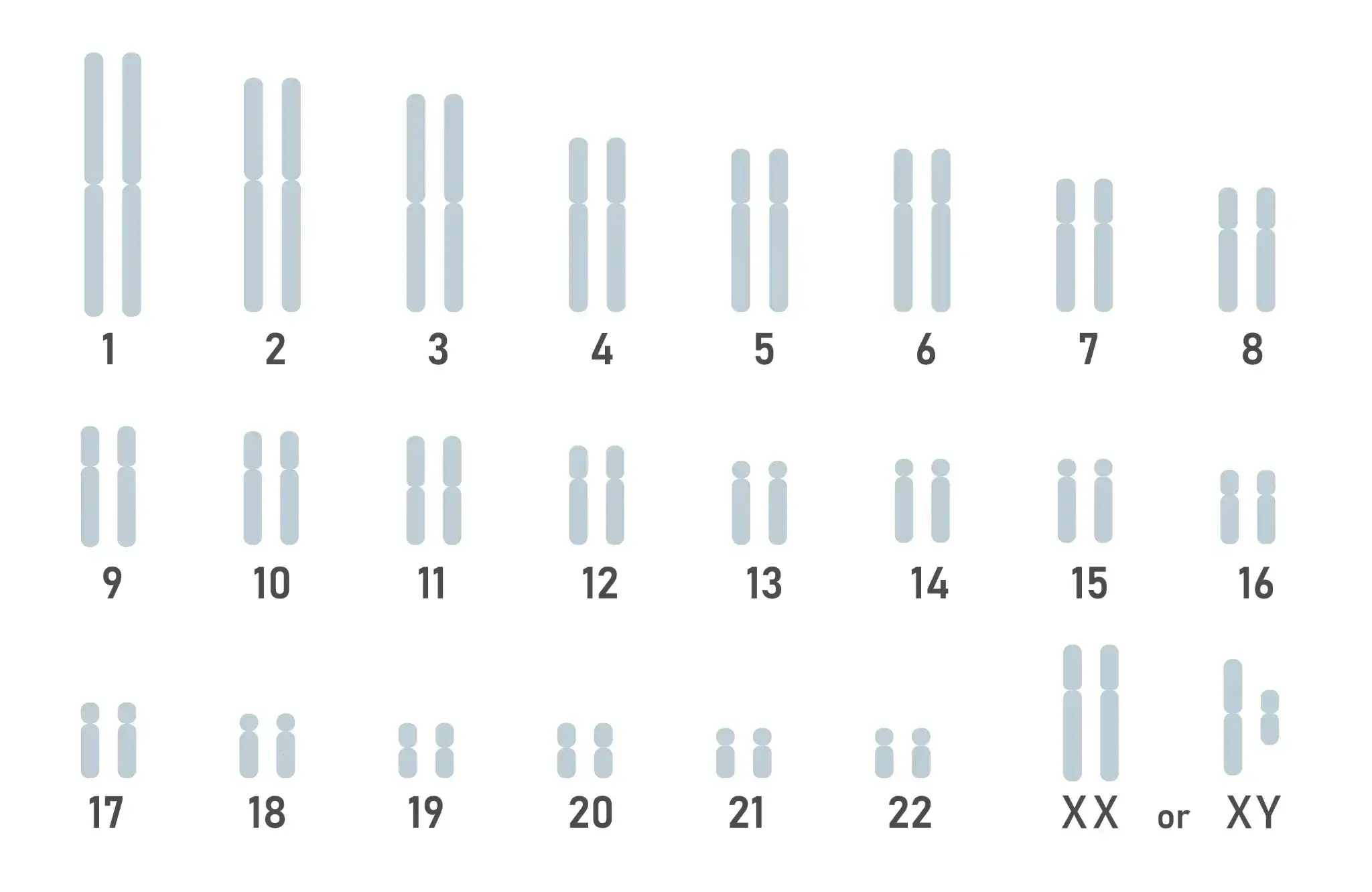
Schematic diagram of DNA map present in cells
- ■
- ■
- ■
- ■
- ■
- ■
- ■
- ■
- ■
Related genes
| Related genes | EFEMP1 |
|---|
Frequently asked questions (FAQ)
Q1. What is a hernia?
A hernia is a disease in which tissues or organs within the body protrude from their original position.Typical examples include intervertebral disc herniation (an intervertebral disc in the spine protrudes and presses on nerves) and abdominal wall hernia (intestines and fatty tissue protrude through weak abdominal muscles).
Q2. What is the cause of hernia?
The main cause of herniated disc isLifting heavy objects, poor posture such as hunched back, agingIt is. abdominal wall herniaWeakening of abdominal muscles, lifting heavy objects, and standing for long periods of timeis the cause. As a genetic factor, the C mutation in the DNA region rs1346786 is also associated with risk (1).
Q3. What is the relationship between hernia and genes?
According to research by Ahmed et al. at the University of Oxford,DNA region rs1346786 is associated with hernia riskIt turns out that it is. People with the genotype C mutation (CC type/CT type) tend to have a higher risk of hernia (1).
Q4. What treatments are available for hernia?
For mild herniasRest, analgesics, anti-inflammatory drugs, exercises and stretches to strengthen musclesis valid. If the case is severe or interferes with daily life,surgeryis required. Early diagnosis and early treatment are important to prevent symptoms from worsening.
References
- Reference link 1: 2022 Dec., Waheed Ul-Rahman Ahmed, PLoS One