
 heart health

- Heart health is assessed by left ventricular systolic function (ejection rate EF)EF of 55-70% is considered normal.
- T-type mutation in DNA region rs2801617University of Montreal study finds that people with diabetes tend to be at higher risk for heart health
- The prevalence of type TT among Japanese people is99.9%, which is higher than the global average of 87.9%.
Overview Measuring left ventricular systolic function is critical in assessing heart health. The left ventricle is the main part of the heart that pumps blood throughout the body. The left ventricular systolic function indicates the heart's ability to pump blood efficiently. When this function is working properly, it indicates that the heart is properly supplying the body with the oxygen and nutrients it needs. Left ventricular systolic function is evaluated by ultrasound (echo) of the heart. This test visually observes the heart's pumping action and measures the ejection fraction (EF), which is the rate of blood ejected from the left ventricle. A release rate of 55% to 70% is considered normal and indicates healthy heart function. ,p>Decrease in left ventricular systolic function indicates a decrease in the pumping ability of the heart, leading to heart failure and cardiomyopathy. It also limits sufficient blood supply to the body's organs, causing symptoms such as shortness of breath and fatigue. Therefore, diagnosis of left ventricular systolic function is important for early detection of decreased cardiac function and early treatment. Research by Tadros et al. at the University of Montreal has revealed a link between heart health and a DNA region called rs2801617. There are three genotypes in this DNA region: TT, TC, and CC, and it was found that people with the T genotype tend to have a higher risk for heart health.
What is heart health?
A healthy heart means that the left ventricular systolic function is maintained normally and that it is able to pump sufficient blood throughout the body.The left ventricle is the main part of the heart's four chambers that pumps blood throughout the body, and its contractile function reflects the overall health of the heart.
What is left ventricular systolic function?
Left ventricular systolic function is the ability of the heart to pump blood efficiently.refers to When this function is working properly, the heart can properly supply the oxygen and nutrients necessary to each organ in the body.
- Evaluation method:Measurement of emission fraction (EF) by echocardiography
- Normal value:Emission rate (EF) 55-70%
- Inspection details:Visually observe the pumping action of the heart and quantify the percentage of blood ejected from the left ventricle
Emission rate (EF) standard value and meaning
| Emission rate (EF) | Judgment | condition |
|---|---|---|
| 55〜70% | normal | Healthy heart function and adequate blood supply |
| 40〜54% | mild decline | Pumping capacity is slightly reduced. Follow-up required |
| less than 40% | Moderate to severe decrease | High risk of heart failure and cardiomyopathy. treatment required |
What happens when left ventricular systolic function declines?
Decreased left ventricular systolic function means a decrease in the heart's pumping ability. It may cause the following symptoms/diseases.
- Heart failure:A condition in which the heart cannot pump enough blood and oxygen does not reach all organs in the body.
- Cardiomyopathy:A disease in which the structure and function of the myocardium become abnormal and the pumping ability decreases.
- Shortness of breath/fatigue:Typical symptoms due to restricted blood supply to internal organs
Therefore,Regular testing of left ventricular systolic function is essential for early detection and early treatment of decreased heart function.It is.
The link between genes and heart health
Relationship between DNA region rs2801617 and heart health
A study by Tadros et al. (2021) from the University of Montreal revealed that heart health is associated with the DNA region rs2801617.
- There are three genotypes of rs2801617: TT, TC, and CC.
- Genotype with T-type mutationPeople with type TT and type TC tend to be at higher risk for heart health.
Comparison of genotype distribution in Japanese and the world (rs2801617)
| Genotype | Percentage of Japanese people | percentage of the world |
|---|---|---|
| TT type | 99.9% | 87.9% |
| TC type | 0.1%以下 | 11.6% |
| CC type | 0.1%以下 | 0.3% |
The prevalence of type TT among Japanese people is99.9%This is approximately 1.14 times higher than the global average of 87.9%. Almost everyone in the Japanese population has the TT type, indicating that this is an area with low genetic diversity.
Rationale for testing
Superficial DNA regions: heart health
The gene region that most strongly influences heart health is rs2801617. The distribution of isomorphic genotypes in Japan is as follows.
- TT
99.9 % - TC
0.1%以下 - CC
0.1%以下
Basis for inspection
Research by Tadros and colleagues at the University of Montreal has revealed a link between heart health and genes. There is a region called rs2801617 in the human genome, and there are two types of mutations, T and C, in the gene in this region. It turns out that people with the T-type mutation tend to have higher heart health risks.
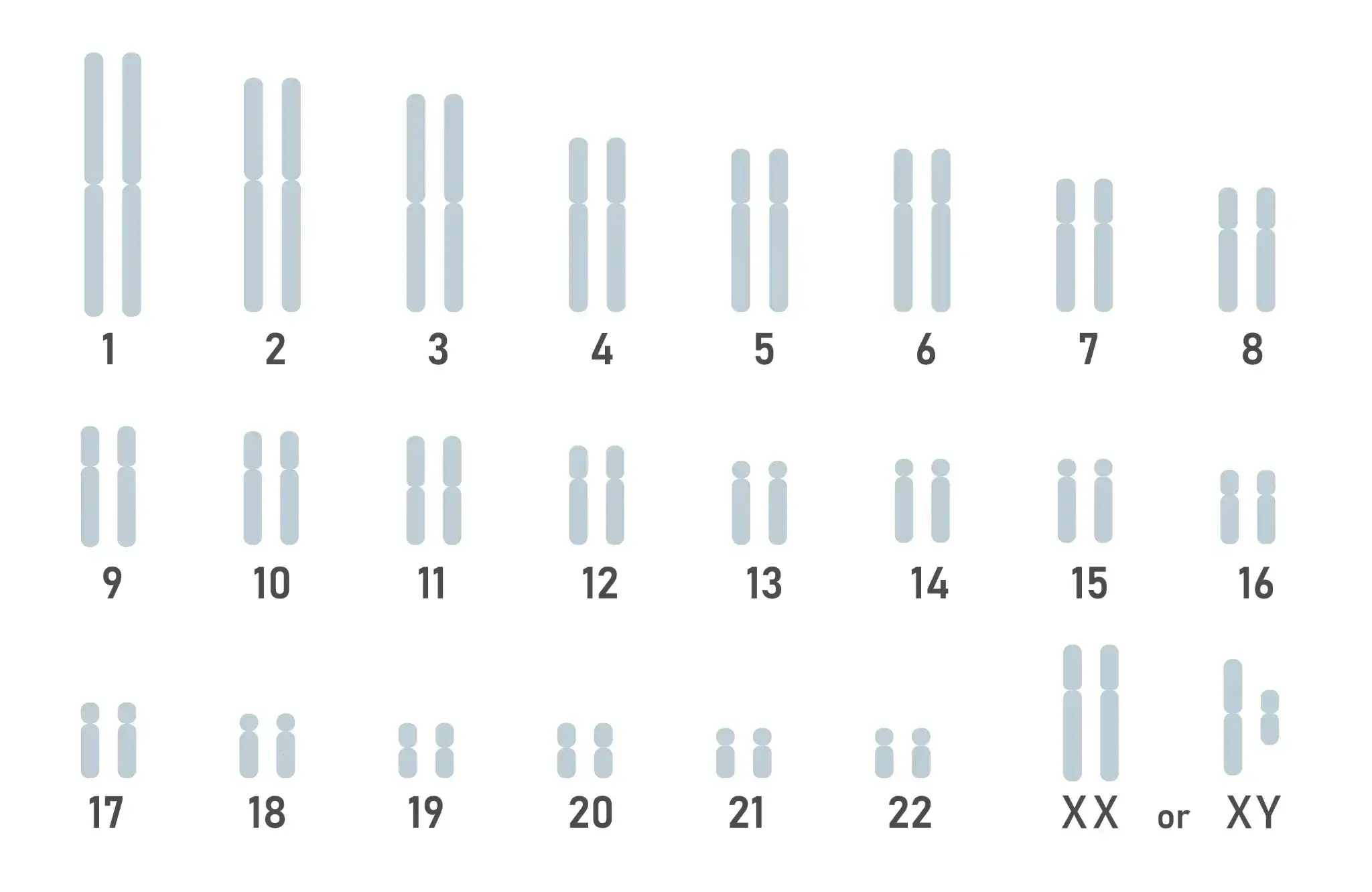
The DNA region investigated this time
Schematic diagram of DNA map present in cells
- ■
- ■
- ■
- ■
- ■
- ■
- ■
- ■
- ■
Related genes
| Related genes | MIR5007 |
|---|
Frequently asked questions (FAQ)
Q1. What is heart health?
A healthy heart means that the left ventricular systolic function is maintained normally and that it is able to pump sufficient blood throughout the body.The left ventricle is the main part of the heart, and an ejection fraction (EF) of 55-70% is normal. It is evaluated by echocardiography (echocardiography), which quantifies the heart's pumping action and blood output to make the diagnosis.
Q2. How to test left ventricular systolic function?
Ultrasound of the heart (echocardiography) is the standard testing method.This test visually observes the heart's pumping action and measures the ejection fraction (EF), which is the rate of blood ejected from the left ventricle. An EF of 55% to 70% is considered normal, and an EF of less than 40% is considered moderately to severely impaired.
Q3. Is heart health related to genes?
Yes.A study by Tadros et al. (2021) from the University of Montreal found that the DNA region rs2801617 is associated with heart health.There are three genotypes of rs2801617: TT, TC, and CC, and people with the T mutation tend to have a higher risk for heart health.
Q4. What is the distribution of the genotype (rs2801617) associated with heart health in Japanese people?
The genotype distribution of rs2801617 in Japanese people isTT type 99.9%, TC type 0.1%以下, CC type 0.1%以下It is. Worldwide, 87.9% of people have the TT type, 11.6% have the TC type, and 0.3% have the CC type, and almost all Japanese people have the TT type.
References
- Reference link 1: 2021 Feb., Rafik Tadros, Nat Genet