
 HDL level

- HDL cholesterol (good cholesterol) collects excess cholesterol from blood vessel walls and prevents arteriosclerosis.is a type of lipid
- T-type mutation in DNA region rs7323893Study finds that people with ADHD tend to have higher HDL levels
- Aerobic exercise, smoking cessation, and maintaining a proper weightIt is possible to improve HDL cholesterol levels by
Overview High-density lipoprotein (HDL) cholesterol is called "good cholesterol" and plays an important role in cardiovascular health. HDL supports blood vessel health by transporting other cholesterol from the bloodstream out of the body. Measuring HDL levels and apolipoprotein C1 (ApoA1) can help assess an individual's lipid profile and understand their risk of heart disease and stroke. ApoA1 is the main component of HDL particles and is important in transporting cholesterol in the body to the liver. Thereby, ApoA1 participates in anti-atherosclerotic processes that help prevent plaque buildup and inflammation in blood vessels. High HDL cholesterol tends to lower the risk of cardiovascular disease. This is based on HDL's ability to transport cholesterol from the blood vessels to the liver for processing. Therefore, measurements of HDL levels and ApoA1 provide insight into the efficiency of reverse cholesterol transport. Clinically, knowing these numbers can help treat and prevent heart disease. It is an important source of information when administering treatments to increase HDL levels and improve cardiovascular outcomes. High values are considered protective, while low values are considered a risk factor and require appropriate measures and lifestyle adjustments. A study by Lettre and colleagues at the Montreal Heart Institute revealed that HDL levels are associated with a DNA region called rs7323893. There are three genotypes in this DNA region: TT, TC, and CC, and it was found that people with the T genotype tend to have high HDL levels.
What is HDL cholesterol (good cholesterol)?
HDL cholesterol (high-density lipoprotein cholesterol) is the "good cholesterol" that collects excess cholesterol accumulated on blood vessel walls and transports it to the liver.It is an important lipid indicator that is directly linked to reducing the risk of cardiovascular disease.
What is the role of HDL cholesterol?
HDL cholesterol is responsible for a process called "reverse cholesterol transport." Specifically, it performs three functions:
- Cholesterol recovery:Collects excess cholesterol accumulated on blood vessel walls
- Transport to the liver:Transport the recovered cholesterol to the liver and excrete it as bile acids
- Anti-arteriosclerotic effect:Prevents plaque accumulation and inflammation in blood vessels and suppresses the progression of arteriosclerosis
Standard value for HDL cholesterol
The standard values set by the Japanese Society of Arteriosclerosis are as follows.
| classification | Standard value | Judgment |
|---|---|---|
| low HDL cholesterolemia | Less than 40mg/dL | Risk factors for arteriosclerosis |
| Normal range (male) | 40〜80mg/dL | normal |
| Normal range (female) | 40〜90mg/dL | normal |
| high hdl | 100mg/dL or more | Protective (lower cardiovascular risk) |
Relationship with apolipoprotein A1 (ApoA1)
Apolipoprotein A1 (ApoA1) is the main component of HDL particlesand influences the efficiency of reverse cholesterol transport.
- ApoA1 maintains structural stability of HDL particles
- ApoA1 promotes cholesterol withdrawal from blood vessel walls
- Higher ApoA1 levels are associated with lower risk of cardiovascular events
Why is it good to have high HDL cholesterol?
People with higher HDL cholesterol have a lower risk of cardiovascular disease.The reason is that HDL efficiently collects cholesterol from blood vessels and processes and excretes it in the liver.
Data from the Framingham Heart Study reports that each 1 mg/dL increase in HDL cholesterol reduces the risk of coronary artery disease by approximately 2% in men and by approximately 3% in women.
Difference between HDL cholesterol and LDL cholesterol
| Comparison items | HDL cholesterol | LDL cholesterol |
|---|---|---|
| Common name | good cholesterol | bad cholesterol |
| role | Collects and excretes cholesterol | transports cholesterol to tissues |
| Cardiovascular effects | High = protective | High value = risk factor |
| ideal number | 40mg/dL or more | Less than 120mg/dL |
| Measures for the rise | Aerobic exercise/no smoking | Diet therapy/statin |
How to raise HDL cholesterol
The following lifestyle habits are effective in improving HDL cholesterol levels.
- Aerobic exercise:Walking or jogging for at least 30 minutes a day 5 or more days a week increases HDL by an average of 5-10%.
- No smoking:Smoking is a major factor that lowers HDL, and quitting smoking can be expected to increase it by approximately 5 mg/dL.
- Maintaining a healthy weight:There is a report that HDL increases by approximately 1 mg/dL for every 3 kg of weight loss.
- Improving your diet:Intake of olive oil, nuts, and blue fish (EPA/DHA) contributes to increased HDL
Relationship between genes and HDL levels
Relationship between DNA region rs7323893 and HDL level
A study by Lettre and colleagues at the Montreal Heart Institute revealed that the DNA region rs7323893 is associated with HDL cholesterol levels.
- There are three genotypes of rs7323893: TT, TC, and CC.
- Genotype with T-type mutationpeople tend to have higher HDL levels
Genotype distribution in Japanese (rs7323893)
| Genotype | Percentage of Japanese people | percentage of the world |
|---|---|---|
| TT type | 99.9% | 98.6% |
| TC type | 0.1%以下 | 1.3% |
| CC type | 0.1%以下 | 0.1%以下 |
In the Japanese population, TT type accounts for 99.9%, and they carry the T type mutation, which tends to have high HDL levels.
Rationale for testing
Surface DNA region: HDL level
The gene region that most strongly influences HDL levels is rs7323893. The distribution of isomorphic genotypes in Japan is as follows.
- TT
99.9 % - TC
0.1%以下 - CC
0.1%以下
Another gene region involved in HDL levels is rs77947762. The distribution of isomorphic genotypes in Japan is as follows
- GG
99.9 % - GA
0.1%以下 - AA
0.1%以下
Another gene region involved in HDL levels is rs99780. The distribution of isomorphic genotypes in Japan is as follows
- CC
44.6 % - CT
44.3 % - TT
11.0 %
Another gene region involved in HDL levels is rs9987289. The distribution of isomorphic genotypes in Japan is as follows
- AA
0.1%以下 - AG
1.9 % - GG
98.0 %
Another gene region involved in HDL levels is rs149615216. The distribution of isomorphic genotypes in Japan is as follows
- CC
99.9 % - CT
0.1%以下 - TT
0.1%以下
Another gene region involved in HDL levels is rs41292412. The distribution of isomorphic genotypes in Japan is as follows
- CC
99.9 % - CT
0.1%以下 - TT
0.1%以下
Basis for inspection
A study by Lettre and colleagues at the Montreal Heart Institute revealed that HDL levels are linked to genes. There is a region called rs7323893 in the human genome, and there are two types of mutations, T and C, in the gene in this region. It was found that people with the T-type mutation tended to have higher HDL levels.
The DNA region investigated this time
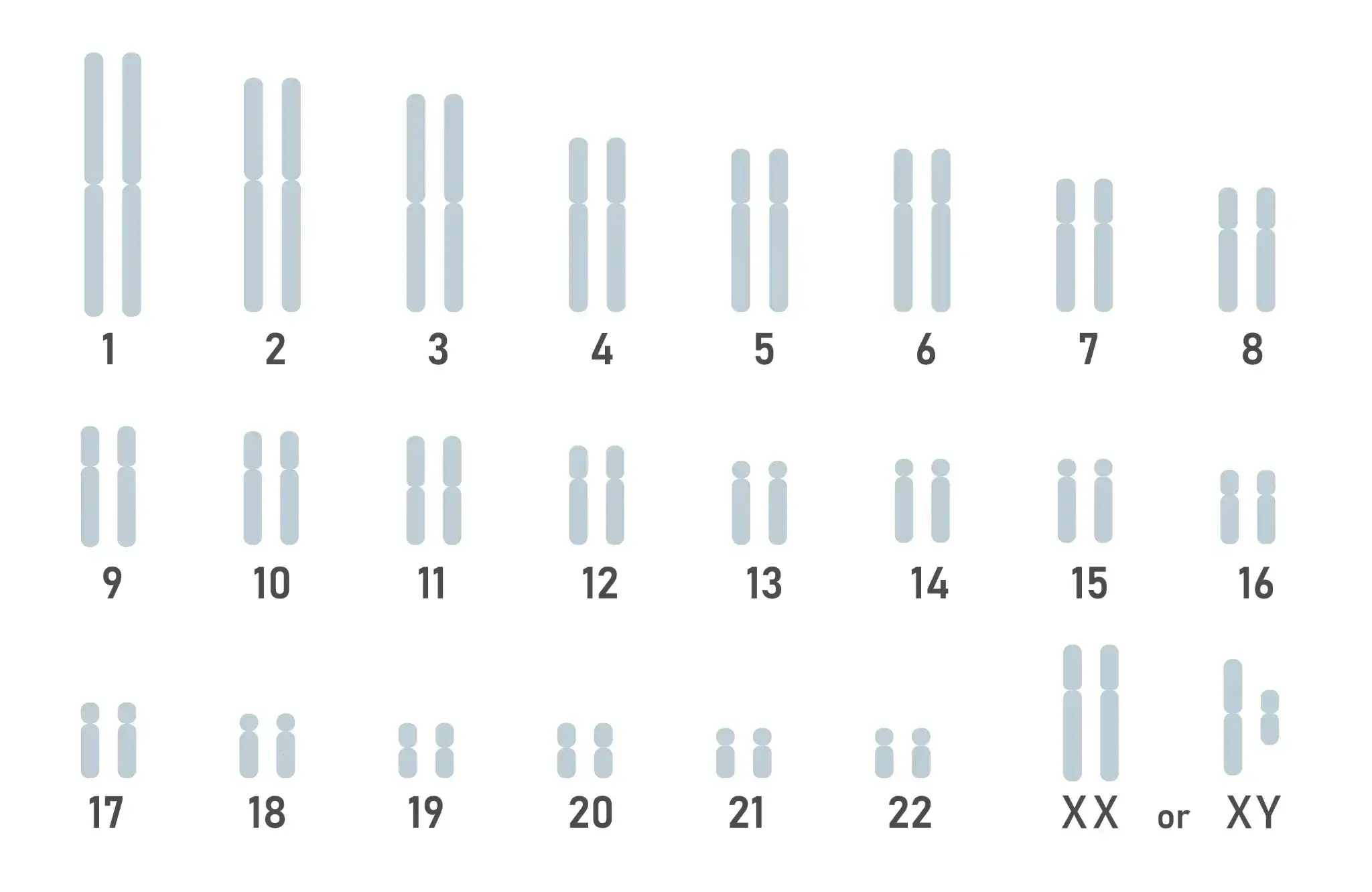
Schematic diagram of DNA map present in cells
- ■
- ■
- ■
- ■
- ■
- ■
- ■
- ■
- ■
Related genes
| Related genes | TET1P1 |
|---|---|
| Related genes | LINC01630 |
| Related genes | FADS2 |
| Related genes | PPP1R3B-DT |
| Related genes | LIPG |
| Related genes | MIR3591 |
Frequently asked questions (FAQ)
Q1. What is HDL cholesterol (good cholesterol)?
HDL cholesterol (high-density lipoprotein cholesterol) is a lipid that collects excess cholesterol accumulated in blood vessel walls and transports it to the liver.It plays an important role in preventing arteriosclerosis and contributes to reducing the risk of cardiovascular disease.
Q2. What is the standard value for HDL cholesterol?
According to the standards of the Japanese Society of Arteriosclerosis,HDL cholesterol less than 40mg/dL is "hypoHDL cholesterolemia"is diagnosed. The normal range is 40 to 80 mg/dL for men and 40 to 90 mg/dL for women.
Q3. What is the relationship between HDL cholesterol and genes?
In a study by Lettre et al. from the Montreal Heart Institute,DNA region rs7323893 is associated with HDL levelsIt turns out that it is. People with the T mutation genotype tend to have higher HDL levels.
Q4. How can I raise HDL cholesterol?
aerobic exerciseIt is said that by walking or jogging for at least 30 minutes a day five or more days a week, HDL cholesterol increases by an average of 5 to 10%.No smokingYou can expect an increase of approximately 5mg/dL.
References
- Reference link 1: 2011 Feb., Guillaume Lettre, PLoS Genet
- Reference link 2: 2020 Mar., Tom G Richardson, PLoS Med
- Reference link 3: 2021 Dec., Ruifang Li-Gao, Diabetes
- Reference link 4: 2016 Jun., Symen Ligthart, BMC Genomics
- Reference link 5: 2021 Oct., Saori Sakaue, Nat Genet
- Reference link 6: 2021 Dec., Sarah E Graham, Nature