
 hair color (blond)
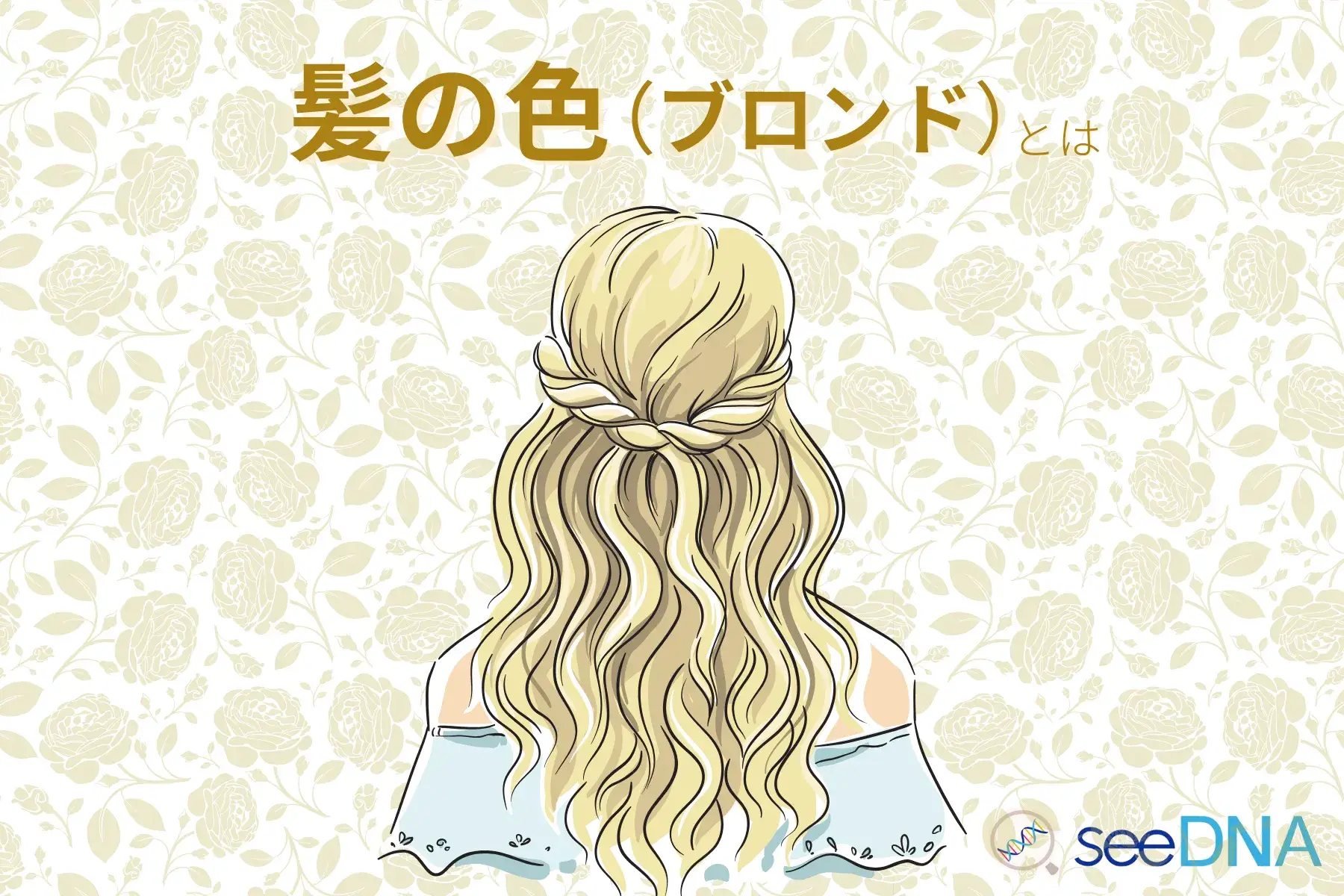
- Blonde hair is a hair color that is formed when there is little eumelanin (black pigment) and pheomelanin (yellow pigment) remains.It is found in about 2% of the world's population.
- G-type mutation in DNA region rs12913832is responsible for blonde hair, and the rate of type AA among Japanese people is 99.9%, the highest in the world.
- blonde hair isRecessive (recessive) inheritanceIt is distributed mainly in Northern Europe and Central Europe.
Overview Blonde hair is one of the lighter shades of hair color, and primarily refers to hair with blonde or light yellow undertones. This hair color has a low content of a pigment called melanin, which makes it look paler than other hair colors. Specifically, blonde hair is formed by having a small amount of a black pigment called eumelanin and a certain amount of a yellow to red pigment called pheomelanin. Blonde hair is mostly found in people from northern and central Europe. A large proportion of the population has blonde hair, especially in Scandinavian countries and around the Baltic Sea, but blonde hair can also be found in America, Australia, and other regions due to immigration or genetic background. In addition, blonde hair is not a genetically dominant trait, but appears as a result of a combination of specific genes inherited from both parents, so the frequency of its appearance differs depending on the region. A study by Han et al. at Harvard Medical School revealed that blonde hair is associated with a DNA region called rs12913832. There are three genotypes in this DNA region: AA, AG, and GG, and it was found that people with the G type mutation tend to have blonde hair.
What is blonde hair?
Blonde hair (blonde hair) is a bright hair color that is formed when the content of the black pigment eumelanin is low among the hair pigments melanin, and the yellow to red pigment pheomelanin remains.Approximately 2% of the world's population has naturally blonde hair, and it is mainly concentrated in Northern Europe and Central Europe.
Why blonde hair is formed
Hair color is determined by the type and amount of melanin pigment in the hair. The mechanism by which blonde hair is formed is as follows.
- Decrease in eumelanin:Genetically low production of eumelanin, a black to brown pigment
- Remaining pheomelanin:Pheomelanin, a yellow to red pigment, remains, forming a golden to pale yellow tone.
- Regulation of HERC2/OCA2 gene:G-type mutation of rs12913832 reduces OCA2 gene expression and suppresses melanin synthesis
Regional distribution of blonde hair
The frequency of blonde hair varies greatly depending on the region.
| region | Blonde appearance rate | Features |
|---|---|---|
| finland | Approximately 80% | World's highest appearance rate |
| sweden | Approximately 75% | scandinavian countries |
| norway | Approximately 70% | scandinavian countries |
| germany | Approximately 30-40% | central europe |
| america | Approximately 5% (natural) | Mixed by immigrants |
| Japan | Almost 0% | AA type 99.9%, natural blonde does not appear |
Is blonde hair a dominant gene?
Blonde hair is not a dominant (dominant) trait, but a recessive (recessive) trait.It only occurs if you inherit the genetic mutation associated with blonde hair from both parents. Therefore, it has the following characteristics.
- There are cases where black-haired or brown-haired parents have blond children (if both parents carry the recessive gene).
- Even if your hair is blonde as a child, as you grow up, eumelanin production increases and your hair color may darken.
- In Scandinavia, the probability of both parents having the blonde gene is high, so the incidence is higher.
Difference between eumelanin and pheomelanin
| Comparison items | eumelanin | pheomelanin |
|---|---|---|
| tone | black to brown | yellow to red |
| role | darken hair | lighten hair |
| UV protection power | expensive | low |
| relationship with blonde | low content | Remains to form a golden color |
| Relationship with redheads | low content | Predominantly forming red color |
The relationship between genes and blonde hair
Relationship between DNA region rs12913832 and blonde hair
A 2008 study by Han and colleagues at Harvard Medical School found that the DNA region rs12913832 near the HERC2 gene is strongly associated with blonde hair.
- There are three genotypes of rs12913832: AA, AG, and GG.
- People with type G mutation(GG type/AG type) tend to have blonde hair.
- People with blood type AA tend to have dark hair (black/brown).
- AA type accounts for 99.9% of Japanese people, and G type mutation is almost non-existent.
Genotype distribution in Japanese and the world (rs12913832)
| Genotype | Percentage of Japanese people | percentage of the world |
|---|---|---|
| AA type | 99.9% | 13.4% |
| AG type | 0.1%以下 | 46.4% |
| GG type | 0.1%以下 | 40.0% |
Role of DNA region rs1426654 (SLC24A5 gene)
The DNA region rs1426654 of the SLC24A5 gene is also involved in light and dark hair color and skin color. People with the type A mutation tend to have lighter pigmentation.
Genotype distribution in Japanese and the world (rs1426654)
| Genotype | Percentage of Japanese people | percentage of the world |
|---|---|---|
| AA type | 0.1%以下 | 85.0% |
| AG type | 0.9% | 14.3% |
| GG type | 99.0% | 0.6% |
GG type accounts for 99.0% of Japanese people, and they tend to have dark pigmentation. Worldwide, 85.0% of people are type AA, and there is a tendency for people of European descent to have lighter pigmentation.
Rationale for testing
External DNA region: Hair color (blond)
The gene region that most strongly influences hair color (blonde) is rs12913832. The distribution of isomorphic genotypes in Japan is as follows.
- AA
99.9 % - AG
0.1%以下 - GG
0.1%以下
Another gene region related to hair color (blonde) is rs1426654. The distribution of isomorphic genotypes in Japan is as follows
- AA
0.1%以下 - AG
0.9 % - GG
99.0 %
Basis for inspection
A 2008 study by Han et al. at Harvard Medical School revealed that hair color (blonde) is associated with genes. There are two types of mutations, A and G, in the rs12913832 region of the human genome, and people with the G type mutation tend to have blonde hair. In Japan, type AA accounts for 99.9%, while type G mutations are widely distributed worldwide, with 40.0% being GG and 46.4% being AG. In addition, the rs1426654 region of the SLC24A5 gene is also involved in hair color, and the type A mutation works to lighten the pigment.
The DNA region investigated this time
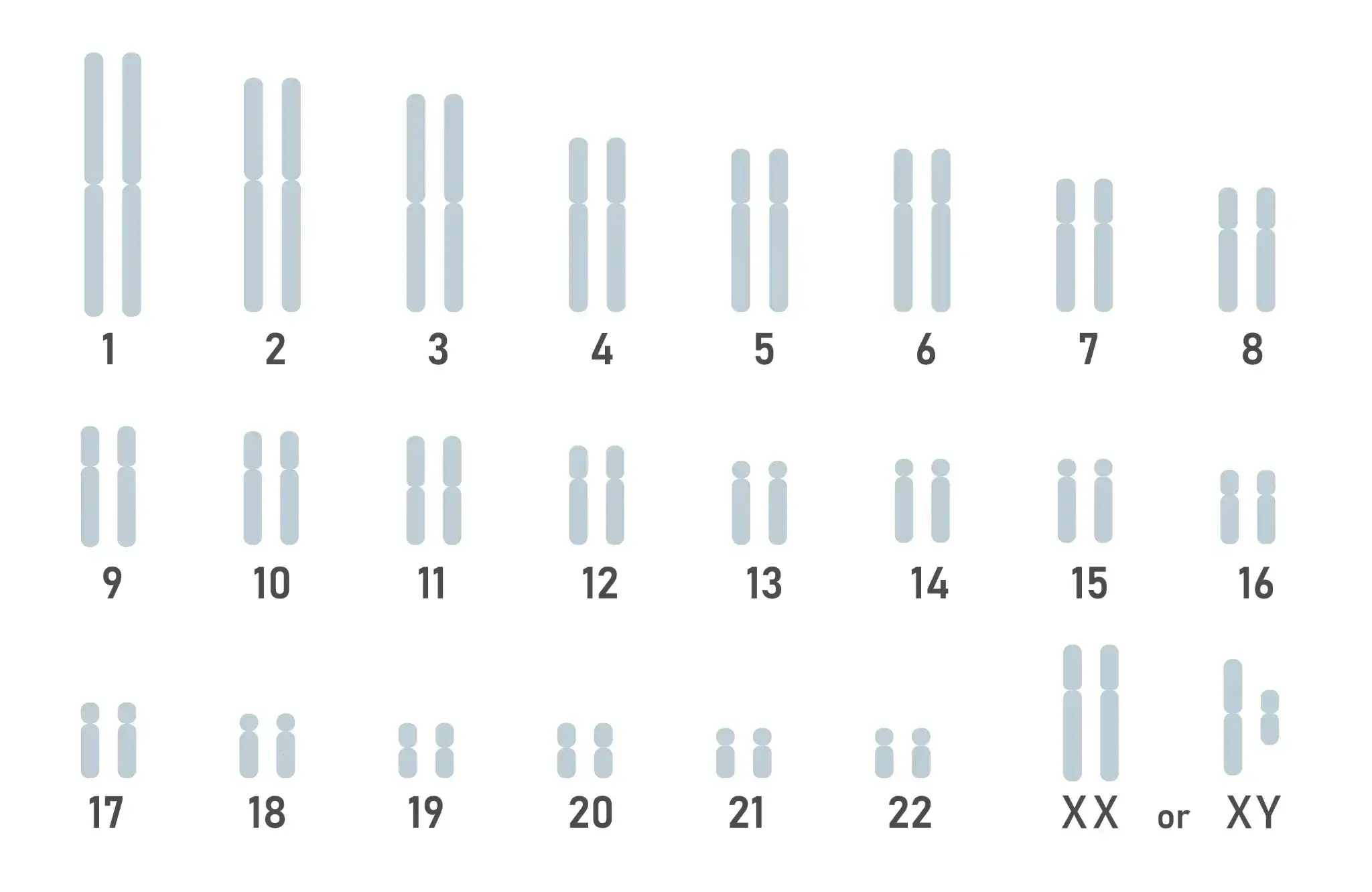
Schematic diagram of DNA map present in cells
- ■
- ■
- ■
- ■
- ■
- ■
- ■
- ■
- ■
Related genes
| Related genes | HERC2 |
|---|---|
| Related genes | SLC24A5 |
Frequently asked questions (FAQ)
Q1. What is blonde hair?
Blonde hair is a bright hair color that has a low content of the black pigment eumelanin, and the yellow to red pigment pheomelanin remains.Approximately 2% of the world's population has naturally blonde hair, and it is concentrated in northern and central Europe.
Q2. What is the gene that causes blonde hair?
According to a study by Han et al. at Harvard Medical School,DNA region rs12913832 near the HERC2 gene is strongly associated with blonde hairIt turns out that it does. People with the G mutation tend to be blonde. Additionally, rs1426654 of the SLC24A5 gene is also involved in light and dark hair color.
Q3. In which region is blonde hair common?
blonde hair isFocused on Northern Europe and Central EuropeI'm doing it. Approximately 80% of the population in Finland and 75% in Sweden have blonde hair. 99.9% of Japanese people have the AA type with rs12913832, and natural blonde hair is almost never found.
Q4. Is blonde hair a dominant gene?
Blonde hair is a recessive trait.It only occurs if you inherit the blonde-related gene mutation from both parents. There are cases where blonde children are born to parents with black or brown hair.
Q5. What is the difference between eumelanin and pheomelanin?
Eumelanin is a black to brown pigmentIt has the role of darkening hair.Pheomelanin is a yellow to red pigmentIt is. Blonde hair is formed when there is less eumelanin and pheomelanin remains. Red hair is a state in which pheomelanin is dominant.
References
- Reference link 1: 2008 May., Jiali Han, PLoS Genet
- Reference link 2: 2021 Nov., Longda Jiang, Nat Genet