
 Graves' disease

- Graves' disease is an autoimmune disease that causes excessive secretion of thyroid hormones., and if the mother is affected, her daughter is about 6 to 10 times more likely to develop the disease than normal.
- Type A mutation in DNA region rs5912838 (AA type/AC type)Research shows that people with the disease tend to be at higher risk of developing
- In Japanese, the distribution is 22.1% for type AA, 49.8% for type AC, and 28.1% for type CC.Smoking, excessive drinking, and intake of large amounts of carbohydratesincreases risk
Overview Graves' disease is a type of autoimmune thyroid disease in which antibodies are produced against areas that promote thyroid hormone production, resulting in excessive secretion of thyroid hormone. The main symptoms include palpitations, shaking of the hands, sweating, weight loss, muscle weakness, fatigue, and mental irritability.
What is Graves' disease?
Graves' disease is a type of autoimmune thyroid disease in which autoantibodies (TRAb) against thyroid-stimulating hormone receptors are produced, resulting in excessive secretion of thyroid hormone.Excess secretion of thyroid hormone accelerates the metabolism of the whole body, causing symptoms such as palpitations, trembling of fingers, sweating, weight loss, muscle weakness, fatigue, and mental irritability.
Cause and mechanism of Graves' disease
Graves disease occurs when the immune system produces antibodies that stimulate the thyroid gland. The main mechanisms of onset are as follows.
- Autoimmune disorders:The immune system produces autoantibodies against the thyroid-stimulating hormone receptor (TSH receptor)
- Excessive secretion of thyroid hormone:Autoantibodies continuously stimulate TSH receptors, resulting in excessive secretion of thyroid hormones (T3 and T4)
- Genetic predisposition:DNA region rs5912838 near gene ITM2A is involved in risk of developing disease
If the mother has Graves' disease, the probability that her daughter will develop Graves' disease isApproximately 6 to 10 times normalIt is estimated that genetic factors contribute to the onset of the disease.
Main symptoms of Graves' disease
Graves' disease includes:Three major symptomsThere is.
- enlarged thyroid(diffuse goiter)
- proptosis(Graves' eye disease)
- Tachycardia/palpitations
Other symptoms include trembling of the fingers, increased sweating, weight loss, muscle weakness, fatigue, mental irritability, and diarrhea.
Complications of Graves' disease: What is thyrotoxic periodic paralysis (TPP)?
TPP is a complication of Graves' disease, and is a disease that occurs when thyroid hormones are poorly controlled and is triggered by intense exercise or excessive eating and drinking, resulting in loss of limb movement.
- When potassium levels drop too muchfatal arrhythmiathere is a risk of causing
- Male patient with Graves' diseaseFrequently occurs in
- Intense exercise, alcohol consumption, and intake of large amounts of carbohydrates can trigger the onset of the disease.
Comparison of treatments for Graves' disease
| treatment method | Overview | Features |
|---|---|---|
| antithyroid drugs | Suppresses thyroid hormone synthesis | First choice/needs long-term use |
| radioactive iodine treatment | Destruction of thyroid tissue with radiation | No surgery required, results visible after a few months |
| Surgery (thyroidectomy) | Surgical removal of the thyroid gland | Immediate effect; thyroid hormone replacement required after surgery |
Relationship between genes and Graves' disease
Relationship between DNA region rs5912838 and onset risk
A joint study between St. Vincent Hospital in South Korea and Shanghai Jiao Tong University School of Medicine in China revealed that the DNA region rs5912838 near the gene ITM2A is associated with the risk of developing Graves' disease and TPP.
- There are three genotypes of rs5912838: AA, AC, and CC.
- AA type with risk allele type Aare more likely to develop Graves' disease/TPP
- AC typetend to be slightly more likely to develop
- CC type is relatively low risk
However, people with type AA or AC type do not necessarily develop Graves' disease or TPP.The risk of developing the disease increases due to a combination of environmental factors such as lifestyle habits.
Genotype distribution in Japanese (rs5912838)
| Genotype | Percentage of Japanese people | percentage of the world |
|---|---|---|
| AA type | 22.1%(26.3%) | 18.8% |
| AC type | 49.8%(49.9%) | 49.1% |
| CC type | 28.1%(23.7%) | 32.0% |
Environmental factors that increase risk
The main environmental factors that increase the risk of developing Graves' disease/TPP are as follows.
- Smoking:Compared to non-smokers, the risk of developing Graves' disease increases, and the degree of ``proptophthalmia'', one of the three major symptoms, increases.
- Intense exercise:Triggers the onset of TPP
- Drinking alcohol and consuming large amounts of carbohydrates:Increases the risk of developing TPP (more noticeable in male patients)
It is recommended that men with type AA and AC blood types avoid excessive alcohol consumption and carbohydrate intake.
Mechanism of action: Relationship between gene ITM2A and immune abnormalities
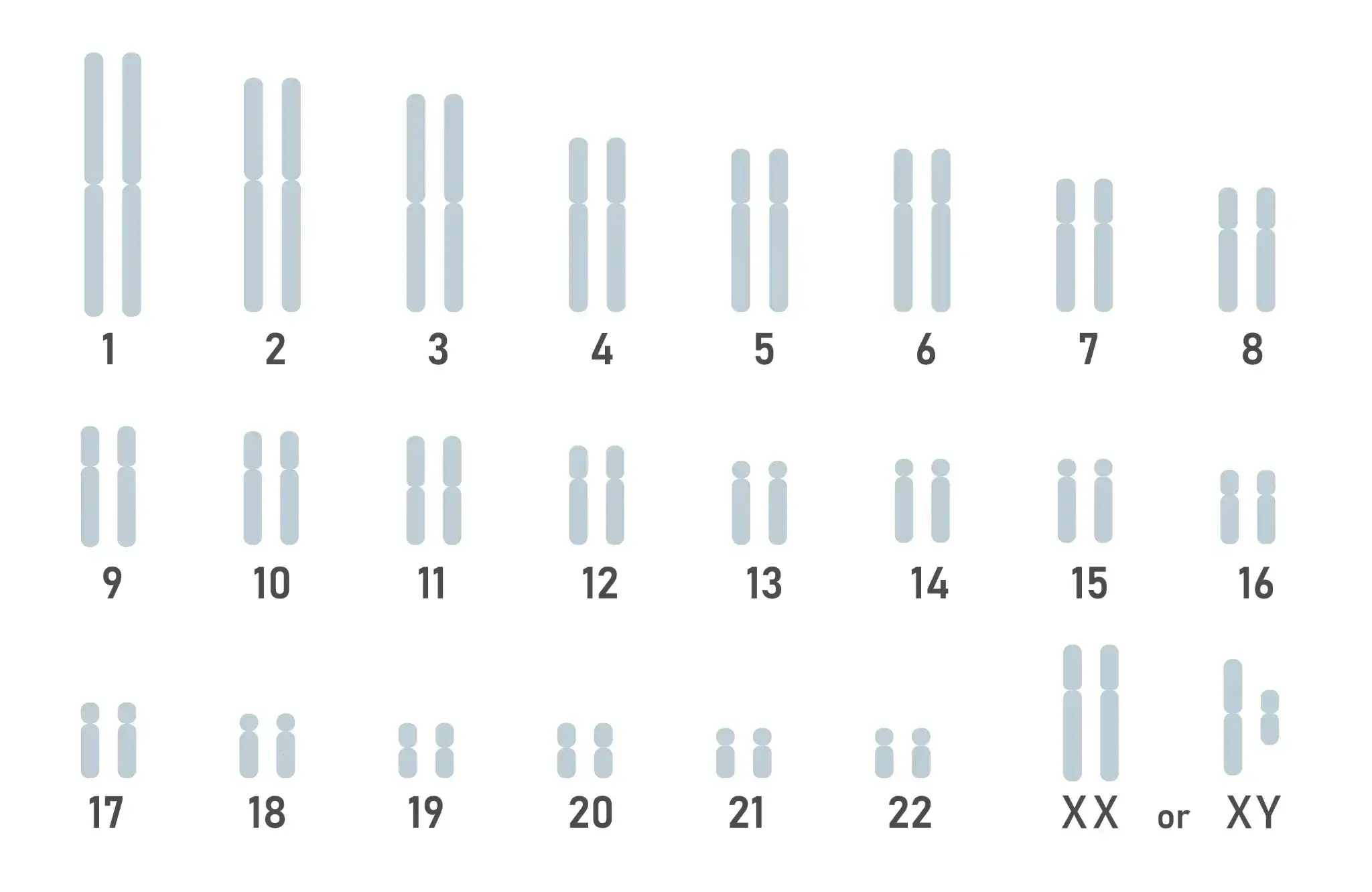
The gene ITM2A is one of the 24 human chromosomes.X chromosomeIt is located in In addition to the thyroid and ovary, it is also expressed in immune-related cells such as monocytes and lymphocytes, and contains important information regarding immune differentiation and activation.
The mechanism of DNA region rs5912838 in type AA is estimated as follows.
- Abnormal expression of ITM2A → ITM2A expression in monocytes (a type of white blood cell) becomes unregulated
- After bacterial/viral infection → induces thyroid immune abnormality
- Activation of autoimmune reaction → onset of Graves' disease
The onset of TPP is associated with abnormal movement of intracellular potassium due to excessive carbohydrate intake or stress caused by exercise.
Rationale for testing
Superficial DNA region: Graves' disease
The gene region that most strongly affects Graves' disease is rs5912838. The distribution of isomorphic genotypes in Japan is as follows.
- AA
26.3 % - AC
49.9 % - CC
23.7 %
Basis for inspection
A study by St. Vincent Hospital in South Korea and Shanghai Jiao Tong University School of Medicine in China revealed that the risk of developing Graves' disease and TPP is linked to genes. There are two types of mutations in the rs5912838 region, A and C, and people with the risk allele type A mutation tend to have a higher risk of Graves' disease and TPP. In Japanese, the distribution is 26.3% for type AA, 49.9% for type AC, and 23.7% for type CC.
The DNA region investigated this time
Schematic diagram of DNA map present in cells
- ■
- ■
- ■
- ■
- ■
- ■
- ■
- ■
- ■
Related genes
| Related genes | CTHRC1P1 |
|---|
Frequently asked questions (FAQ)
Q1. What is Graves' disease?
Graves' disease is a type of autoimmune thyroid disease in which autoantibodies against thyroid-stimulating hormone receptors are produced, resulting in excessive secretion of thyroid hormone.The main symptoms include palpitations, trembling of fingers, sweating, weight loss, and muscle weakness, and the three major symptoms include enlarged thyroid, proptosis of the eyes, and tachycardia.
Q2. What is the cause of Graves' disease?
The main cause isautoimmune disorderIt is. The immune system produces antibodies against the thyroid-stimulating hormone receptor, causing excessive secretion of thyroid hormone. The type A mutation in the DNA region rs5912838 near the gene ITM2A has been identified as a risk factor.
Q3. Is Graves' disease hereditary?
For Graves' diseasegenetic predispositionThere is. If a mother has Graves' disease, her daughter has a normal chance of developing it.Approximately 6-10 timesIt is estimated that. People with the AA type in the DNA region rs5912838 tend to have a higher risk of developing the disease.
Q4. What is Graves' disease complication TPP?
Thyrotoxic periodic paralysis (TPP)is a disease that occurs when thyroid hormones are poorly controlled and is triggered by strenuous exercise or excessive eating and drinking, resulting in the inability to move the limbs. When potassium levels drop too muchfatal arrhythmiaIt is more common in male patients with Graves' disease.
Q5. Can genetic testing determine the risk of Graves' disease?
By examining the genotype of the DNA region rs5912838,Understand the risk trends of Graves' disease and TPPYou can. Studies have shown that 22.1% of Japanese people have type AA and 49.8% have type AC, and people with type A, which is a risk allele, tend to have a higher risk.
References
- Reference link 1: Information on “thyroid” Kuma Hospital
- Reference link 2: 2020 Jul., Cho, Won Kyoung, Genes.
- Reference link 3: 2019 May., Shuang-Xia Zhao, JAMA Network Open.
- Reference link 4: Information on DNA region “rs5912838” NIH
- Reference link 5: 2020., Koichi Fujii, Kanto Journal of the Japanese Association of Emergency Physicians.
- Reference link 6: 2016 Nov., Xiao-Ping Ye, The Journal of Clinical Endocrinology & Metabolism.
- Reference link 7: 2013 Aug., Shuang-Xia Zhao, Hum Mol Genet
- Reference link 8: 2019 May., Shuang-Xia Zhao, JAMA Netw Open