
 gout
gout

- Gout is a metabolic disease in which uric acid crystals accumulate in joints, causing rapid pain, swelling, and inflammation.The main causes are excessive intake of high purine foods and decreased renal function.
- G-type mutation in DNA region rs17786744University of Otago research finds people with the disease tend to be at higher risk of developing the disease.
- appropriateImproving dietary management, water intake, and lifestyle habitsIt is possible to reduce the risk of onset and prevent recurrence.
Overview Gout is a disease that occurs when uric acid crystals accumulate in the joints, causing sudden pain and swelling. Uric acid is a waste product produced when purines are broken down. Purines are found in a variety of foods and are also produced within the body. Normally, uric acid dissolves in the blood and is excreted through the kidneys in the urine. However, when too much uric acid is produced or the kidneys are unable to excrete enough uric acid, it crystallizes and accumulates in the joints. Uric acid crystals are needle-shaped and can cause severe pain and inflammation when they accumulate in joints. Symptoms first occur in the ball of the foot, but other joints such as the knees, ankles, elbows, and wrists may also be affected. This pain comes on suddenly and may be worse at night. Once the pain subsides, gout attacks can return and cause joint damage unless uric acid levels are lowered. Improving lifestyle habits and using medication to return uric acid levels to normal levels are effective ways to suppress gout symptoms and prevent complications. A study by Boocock et al. at the University of Otago revealed that the risk of developing gout is associated with a DNA region called rs17786744. There are three genotypes in this DNA region: AA, AG, and GG, and it was found that people with the G genotype tend to have a higher risk of gout.
What is gout?
Gout is a metabolic disease in which the concentration of uric acid in the blood increases and uric acid crystals accumulate in the joints, causing rapid pain, swelling, and inflammation.Uric acid is a metabolite produced during the breakdown of purines and is normally excreted in the urine through the kidneys (1).
Cause and mechanism of gout
Gout develops through two mechanisms:
- Overproduction of uric acid:Excessive intake of foods containing purines (meat, seafood, beer) and increased metabolism of purines in the body
- Decreased uric acid excretion:The kidney's ability to excrete uric acid decreases, and blood uric acid levels increase.
The main risk factors are:
- Diet:Excessive intake of foods containing purines or alcohol (especially beer)
- Obesity:Visceral fat obesity promotes uric acid production and suppresses excretion.
- Genetic predisposition:People with type G mutation in DNA region rs17786744 tend to be at higher risk
- Dehydration:Increased uric acid concentration due to lack of water intake
- Gender/Age:It occurs more frequently in men, and the incidence is higher in middle-aged and elderly people.
Main symptoms of gout
Gout attacksudden onsetand exhibits the following symptoms:
- Severe pain at the base of the big toe (the most common initial symptom)
- Swelling, redness, and warmth in the joints
- Pain worsens at night
- Spread to other joints such as knees, ankles, elbows, and wrists
- Joint deformation/damage due to repeated seizures
Difference between gout and hyperuricemia
| Comparison items | gout | Hyperuricemia |
|---|---|---|
| definition | Acute arthritis due to uric acid crystals | Blood uric acid level over 7.0 mg/dL |
| subjective symptoms | Severe joint pain/swelling | Asymptomatic |
| incidence rate | Approximately 10% of patients with hyperuricemia | Approximately 20% of adult men |
| Frequently occurring site | base of big toe | No specific part |
| treatment | Anti-inflammatory analgesic + uric acid lowering drug | Lifestyle improvement + follow-up observation |
Prevention and treatment
To prevent gout and prevent recurrenceComprehensive lifestyle improvementis valid.
- Meal management:Avoid excessive intake of purines and actively consume vegetables and dairy products
- Water intake:Drink at least 2L of water a day to promote uric acid excretion
- Alcohol restrictions:Limit alcohol intake, including beer
- Moderate exercise:Prevent obesity with aerobic exercise (walking, swimming)
- Regular inspection:Regular measurement of serum uric acid level is recommended.
The relationship between genes and gout
Relationship between DNA region rs17786744 and onset risk
A study by Boocock et al. (1) from the University of Otago found that the DNA region rs17786744 is associated with the risk of developing gout.
- There are three genotypes of rs17786744: AA, AG, and GG.
- Genotype with type G mutationPeople with this condition tend to be at higher risk of gout.
Genotype distribution in Japanese (rs17786744)
| Genotype | Percentage of Japanese people | percentage of the world |
|---|---|---|
| AA type | 52.7% | 35.7% |
| AG type | 39.7% | 48.0% |
| GG type | 7.5% | 16.1% |
Genotype distribution in Japanese (rs686364)
| Genotype | Percentage of Japanese people | percentage of the world |
|---|---|---|
| AA type | 36.1% | 52.5% |
| AG type | 47.9% | 39.8% |
| GG type | 15.9% | 7.5% |
Genotype distribution in Japanese (rs6031598)
| Genotype | Percentage of Japanese people | percentage of the world |
|---|---|---|
| GG type | 40.8% | 17.5% |
| GT type | 46.1% | 48.6% |
| TT type | 13.0% | 33.7% |
Genotype distribution in Japanese (rs1171614)
| Genotype | Percentage of Japanese people | percentage of the world |
|---|---|---|
| TT type | 0.1%以下 | 4.8% |
| TC type | 0.1%以下 | 34.3% |
| CC type | 99.9% | 60.8% |
Rationale for testing
Superficial DNA region: Gout
The gene region that most strongly affects gout is rs17786744. The distribution of isomorphic genotypes in Japan is as follows.
- AA
52.7 % - AG
39.7 % - GG
7.5 %
Another gene region involved in gout is rs686364. The distribution of isomorphic genotypes in Japan is as follows
- AA
36.1 % - AG
47.9 % - GG
15.9 %
Another gene region involved in gout is rs6031598. The distribution of isomorphic genotypes in Japan is as follows
- GG
40.8 % - GT
46.1 % - TT
13.0 %
Another gene region involved in gout is rs1171614. The distribution of isomorphic genotypes in Japan is as follows
- TT
0.1%以下 - TC
0.1%以下 - CC
99.9 %
Basis for inspection
A study by Boocock and colleagues at the University of Otago revealed that the risk of developing gout is linked to genes. There is a region called rs17786744 in the human genome, and there are two types of mutations, A and G, in the gene in this region. It has been found that people with the G mutation tend to have an increased risk of gout (1).
The DNA region investigated this time
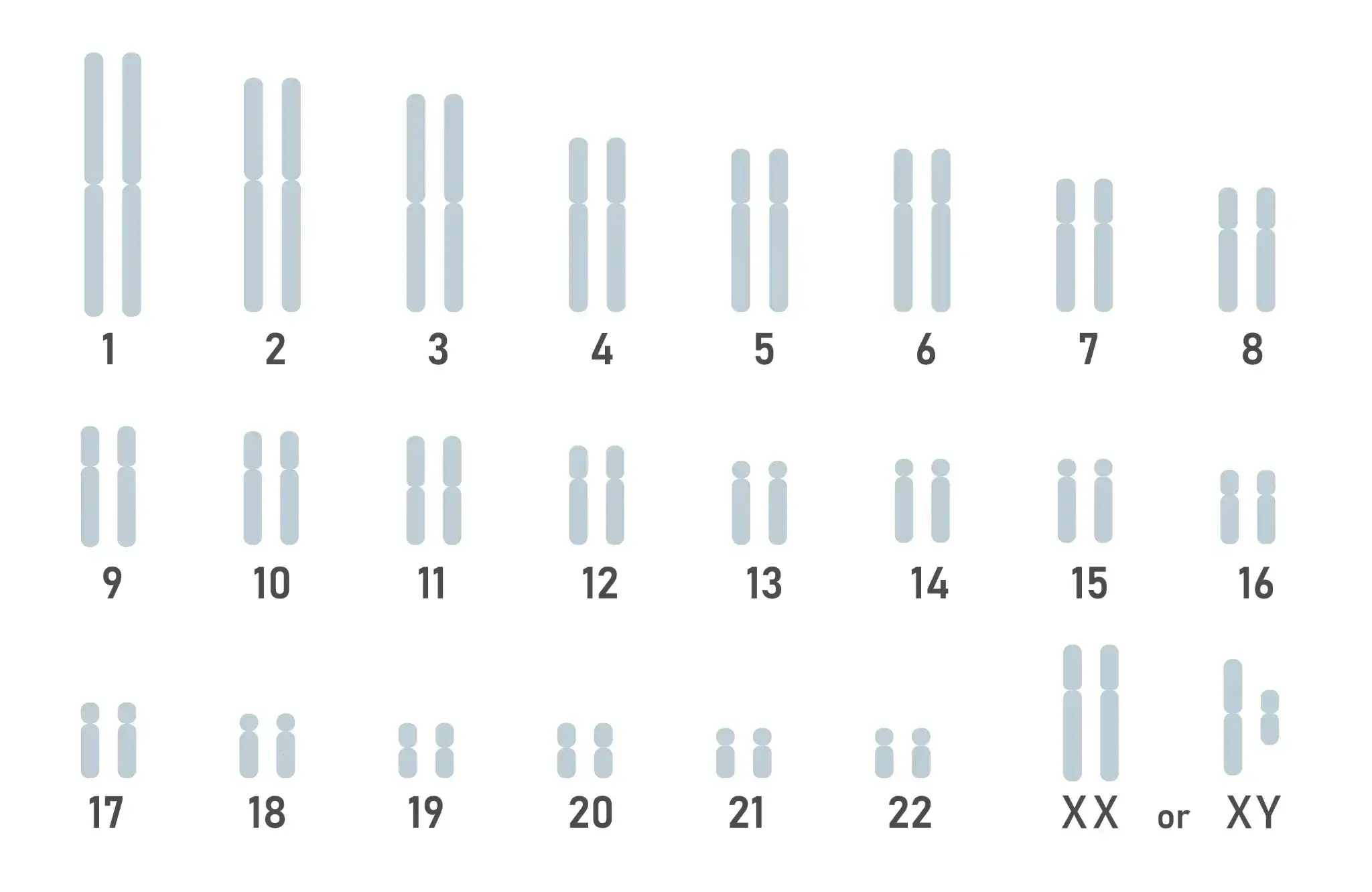
Schematic diagram of DNA map present in cells
- ■
- ■
- ■
- ■
- ■
- ■
- ■
- ■
- ■
Related genes
| Related genes | STC1 |
|---|---|
| Related genes | CLDN8 |
| Related genes | HNF4A |
| Related genes | SLC16A9 |
Frequently asked questions (FAQ)
Q1. What is gout?
Gout is a metabolic disease in which the concentration of uric acid in the blood increases and uric acid crystals accumulate in the joints, causing rapid pain, swelling, and inflammation.The main cause is excessive intake of purines and decreased excretory function of the kidneys, and it is characterized by the initial symptoms appearing at the base of the big toe (1).
Q2. What is the cause of gout?
The main cause of gout isHyperuricemiaIt is. Excessive intake of foods containing purines (meat, seafood, beer), a decline in the kidney's ability to excrete uric acid, and genetic predisposition are all involved. Carriers of the G mutation in the DNA region rs17786744 tend to be at increased risk (1).
Q3. What is the difference between gout and hyperuricemia?
Hyperuricemia isCondition in which blood uric acid level exceeds 7.0 mg/dLThere are no noticeable symptoms. In gout, hyperuricemia progresses,Acute arthritis caused by deposits of uric acid crystals in the jointsThis is the condition that caused the. Approximately 10% of patients with hyperuricemia develop gout.
Q4. Can genetic testing determine the risk of gout?
By examining the genotype of the DNA region rs17786744,Understanding trends in the risk of developing goutYou can. A study by Boocock et al. at the University of Otago found that people with the G mutation genotype tend to be at increased risk (1).
Q5. How to prevent gout?
For gout preventionAvoid excessive intake of purines, drink at least 2L of water per day, do moderate aerobic exercise, and limit alcohol (especially beer).is valid. Obesity management and regular uric acid level testing are also recommended.
References
- Reference link 1: 2020 Apr., James Boocock, Hum Mol Genet
- Reference link 2: 2021 Oct., Saori Sakaue, Nat Genet
- Reference link 3: 2013 Feb., Anna Köttgen, Nat Genet
- Reference link 4: 2019 Apr., Masahiro Nakatochi, Commun Biol
- Reference link 5: 2019 Oct., Adrienne Tin, Nat Genet