
 glaucoma

- Glaucoma is an eye disease that damages the optic nerve and narrows visual field.Approximately 5% (1 in 20 people) of people over the age of 40 are affected, and it is the number one cause of blindness in Japan.
- AG type/GG type mutations in DNA region rs12913832 of HERC2 geneA 2020 study found that people with glaucoma tend to have a higher risk of glaucoma.
- Early eye examination, intraocular pressure management, genetic testingenables personalized prevention and treatment for high-risk populations.
Overview Glaucoma is a disease that damages the optic nerve and gradually causes vision loss. It is thought that approximately 1 in 20 people over the age of 40 will develop glaucoma, so it is not a rare disease. If the intraocular pressure remains high, the optic nerve is damaged, resulting in glaucoma. There are several types of glaucoma, each with different causes. There are primary glaucoma, secondary glaucoma, and developmental glaucoma. Primary glaucoma and secondary glaucoma are divided into open-angle glaucoma and closed-angle glaucoma. The most common primary type of glaucoma is pigmentary glaucoma. This type is caused by scattering of pigment granules due to posterior deviation of the mid-periphery of the iris. There are two types: chronic and acute, and the acute type causes symptoms such as eye pain, headache, and nausea. This type is more common in white people and young people between the ages of 20 and 50 who are nearsighted, especially men. In order to prevent the progression of glaucoma, it is important to lower the intraocular pressure, and early detection of glaucoma is necessary. Most glaucoma patients have no symptoms, so it is usually discovered during a health checkup. By knowing your own risk through genetic testing, you can take an individualized approach. 2. Rationale In 2020, a joint study conducted by Australian universities and research institutes identified glaucoma risk genes from optic nerve photographs of 67,040 British people. There are three types of the risk DNA region "rs12913832" newly discovered in this study on chromosome 15: "AA type," "AG type," and "GG type." In East Asia, the proportion of ``AA type'' is 99.863%, ``AG type'' is 0.27961%, and ``GG type'' is 0.0002%. However, ``AG type'' and ``GG type'' who are at risk of glaucoma do exist, although they are a minority. The research group says that by using these genetic information to facilitate a personalized approach, early treatment can be provided for those at high risk of glaucoma, and appropriate monitoring and treatment for low-risk groups (Reference links 1, 2). 3. Mechanism of action The DNA region "rs12913832" is known to have a strong relationship with pigmentation. This region is located within the genetic region of the non-pigment gene "HERC2" and upstream of the pigment gene "OCA2". Additionally, the perimeter of this region is highly conserved across animal species. This "rs12913832" is a DNA region of the gene "HERC2" and has been shown to function as a factor regulating OCA2 transcription (Reference link 3). It is thought that polymorphisms in this gene cause differences in the formation of chromatin loops, resulting in differences in gene expression and influencing the phenotype.
What is glaucoma?
Glaucoma is an eye disease that damages the optic nerve due to increased intraocular pressure and gradually narrows the visual field.According to the Japanese Ophthalmological Association, approximately 1 in 20 people (approximately 5%) over the age of 40 is affected. Glaucoma is the number one cause of blindness in Japan, and early detection and appropriate treatment are the keys to maintaining vision.
Types and causes of glaucoma
Glaucoma is classified as follows depending on cause and structure.
- Primary open-angle glaucoma:The most common type. The drainage channels for aqueous humor (trabecular meshwork) gradually become clogged, and intraocular pressure rises. chronically progressive
- Primary angle-closure glaucoma:The iris moves forward and the angle is physically occluded. In the acute form, sudden eye pain, headache, and nausea occur.
- Normal tension glaucoma:A type in which the optic nerve is damaged even if the intraocular pressure is within the normal range. Approximately 70% of Japanese glaucoma patients have this type.
- Secondary glaucoma:Occurs due to trauma, inflammation, drugs (such as steroids), or other eye diseases.
- Pigmented glaucoma:It is caused by the scattering of pigment granules due to posterior deviation of the mid-periphery of the iris. The incidence is higher in white men and myopic men aged 20 to 50.
- Developmental glaucoma:Onset in early childhood due to a congenital abnormality in the development of the angle.
Main symptoms of glaucoma
Symptoms of glaucoma areType and progressionIt depends.
- Chronic type (open angle):In the beginning, I was almost unconscious. The defect gradually spreads from the periphery of the visual field, and as it progresses, central vision also deteriorates.
- Acute type (angle closure):Sudden onset of severe eye pain, headache, nausea, vomiting, decreased vision, and bloodshot eyes. Emergency treatment within 24-48 hours is required
- Common symptoms in advanced stages:Constricted visual field, appearance of scotoma, decreased contrast sensitivity
Difference between genetic and environmental causes of glaucoma
| Comparison items | genetic factors | environmental factors |
|---|---|---|
| cause | Mutations in the HERC2 gene, etc. | Increased intraocular pressure, aging, myopia, steroid use |
| degree of influence | People with a family history of this have an approximately 3-9 times increased risk | Prevalence increases rapidly with increasing age (40 years and older) |
| Time of onset | Exists as a congenital predisposition | Risk of onset increases after age 40 |
| How to deal with it | Understand risk trends through genetic testing | Regular checkups, intraocular pressure control, lifestyle improvement |
| Preventability | Preventive monitoring with early recognition | Progression can be suppressed with eye drops, surgery, and laser treatment |
Mechanism of action of HERC2 gene
DNA region rs12913832 is within the region of the non-pigment gene HERC2It is located upstream of the pigment gene OCA2.
- Relationship with pigmentation:rs12913832 is known to have a strong relationship with pigmentation (iris color)
- Regulation of OCA2 transcription:This region functions as a factor that controls transcription of the OCA2 gene. Formation of chromatin loops differs depending on genetic polymorphism
- Interspecific conservation:The area around this region is highly conserved among animal species and has important biological functions.
- Effect on phenotype:Differences in chromatin loops cause differences in gene expression and influence the phenotype of ocular tissues
Effective prevention and treatment of glaucoma
To prevent the progression of glaucoma,lowering intraocular pressureis the most important.
- Regular check-up:For those over 40 years old, annual eye examination (intraocular pressure measurement, fundus examination, visual field examination) is recommended.
- Eye drop treatment:Lower intraocular pressure by 20-30% with prostaglandin-related drugs and beta-blockers.
- Laser treatment (SLT):Laser irradiates the trabecular meshwork to promote aqueous humor drainage
- Surgical therapy:Controlling intraocular pressure with trabeculectomy and tube shunt surgery
- Utilization of genetic testing:Early treatment for those at high risk and appropriate monitoring frequency for those at low risk
- Improving lifestyle habits:Moderate aerobic exercise, limit caffeine intake, stop smoking, and get enough sleep
The relationship between genes and glaucoma
Relationship between DNA region rs12913832 and onset risk
In 2020, a joint study between Australian universities and research institutions (Craig et al.) identified glaucoma risk genes from optic nerve photographs of 67,040 British people.
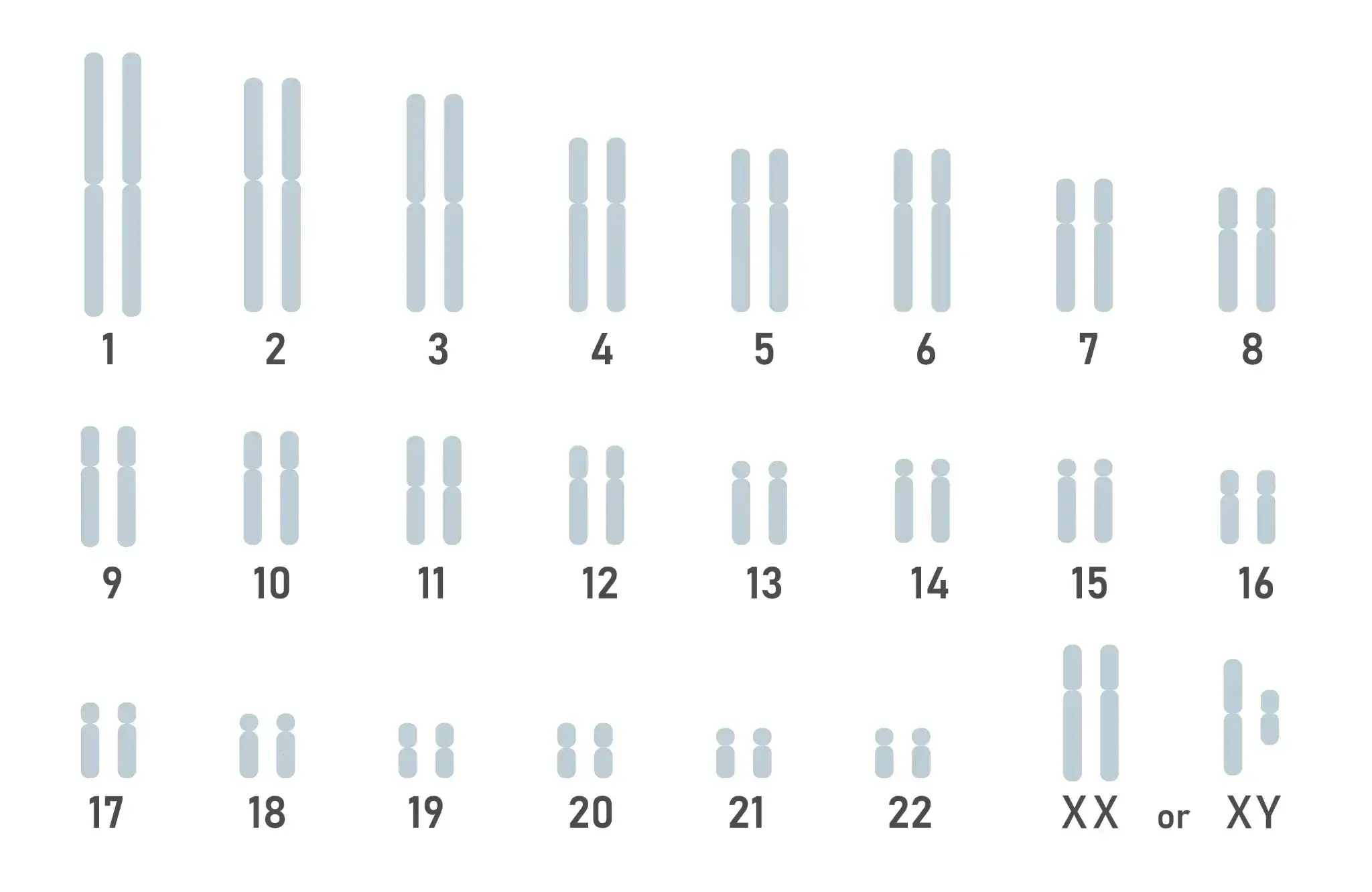
- The DNA region rs12913832 on chromosome 15 has three genotypes: AA, AG, and GG.
- AG/GG type peopletend to have a higher risk of pigmentary glaucoma
- AA type persontend to be less risky
Genotype distribution in Japanese and the world (rs12913832)
| Genotype | Percentage of Japanese people | percentage of the world | risk trends |
|---|---|---|---|
| AA type | 99.9% | 13.4% | low risk |
| AG type | Approximately 0.3% | 46.4% | somewhat risky |
| GG type | Approximately 0.1%以下 | 40.0% | high risk |
In Japanese (East Asia), the AA type is overwhelmingly high at 99.9%, while the AG type is present at a high frequency of 46.4% and the GG type at 40.0% in the world as a whole. The research group states that a personalized approach using genetic information will enable early treatment of high-risk individuals and appropriate monitoring of low-risk groups (1)(2).
Rationale for testing
Superficial DNA region: Glaucoma
The gene region that most strongly affects glaucoma is rs12913832. The distribution of isomorphic genotypes in Japan is as follows.
- AA
99.9 % - AG
0.1%以下 - GG
0.1%以下
Basis for inspection
In 2020, a joint study by Craig et al. from Australia identified that the DNA region rs12913832 on chromosome 15 is associated with glaucoma risk from an analysis of optic nerve photographs of 67,040 British people. This region is located within the HERC2 gene and functions as a factor regulating transcription of the pigment gene OCA2 (1). Differences in chromatin loop formation due to genetic polymorphisms affect gene expression and are thought to affect the phenotype of eye tissue (3).
The DNA region investigated this time
Schematic diagram of DNA map present in cells
- ■
- ■
- ■
- ■
- ■
- ■
- ■
- ■
- ■
Related genes
| Related genes | HERC2 |
|---|
Frequently asked questions (FAQ)
Q1. What is glaucoma?
Glaucoma is an eye disease that damages the optic nerve and narrows the visual field due to increased intraocular pressure.According to the Japanese Ophthalmological Society, it affects approximately 5% (1 in 20 people) of people over the age of 40 and is the number one cause of blindness in Japan. Approximately 90% of glaucoma patients have no symptoms, and most cases are only discovered during a health checkup or eye exam.
Q2. What is the relationship between glaucoma and genes?
Through Australian joint research in 2020,The DNA region rs12913832 of the HERC2 gene is associated with the risk of developing glaucomaIt turns out that it is. People with the AG and GG genotypes tend to be at higher risk (1)(2).
Q3. What are the main symptoms of glaucoma?
In chronic typeIn the early stages, there are almost no symptoms, and the area that cannot be seen gradually spreads from the periphery of the visual field.The acute type causes sudden onset of eye pain, headache, nausea, and decreased vision, and requires emergency treatment within 24 to 48 hours.
Q4. Can genetic testing determine the risk of glaucoma?
By examining the genotype of the DNA region rs12913832,Understanding genetic risk trends for glaucomaYou can. In Japanese people, AA type accounts for 99.9% and tends to have a low risk, but globally, high-risk types exist at high frequency, with AG type 46.4% and GG type 40.0% (1) (2).
Q5. What is the effective prevention method for glaucoma?
People over 40 years old should have an eye exam once a year (intraocular pressure measurement, fundus examination, visual field test)is recommended. If detected early, progression can be suppressed with eye drops, laser treatment, and surgery. For people with a high genetic risk, regular eye exams and intraocular pressure management can help prevent the disease.
References
- Reference link 1: 2020 Feb., Jamie E Craig, Nature genetics
- Reference link 2: Information on DNA region "rs 12913832" NIH
- Reference link 3: 2012 Mar., Mijke Visser, Genome Research