
 frontotemporal dementia

- Frontotemporal dementia (FTD) is a neurodegenerative disease that progressively damages neurons in the frontal and temporal lobes of the brain.This causes personality changes, behavioral abnormalities, and language disorders.
- Type A mutation in DNA region rs465401Research shows that people with the disease tend to be at higher risk of developing
- in blood/cerebrospinal fluidNfL (neurofilament light chain) concentrationmonitoring is useful for diagnosis and progress assessment
Overview Frontotemporal dementia (FTD) is a type of dementia that gradually damages the frontal and temporal lobes of the brain, affecting personality, behavior, and language. FTD occurs when neurons in these brain areas become damaged. When neurons are damaged, NfL (an important component of the neuron's cytoskeleton) is released into the cerebrospinal fluid (CSF) and can be detected in blood samples. Higher levels of NfL indicate more severe neuronal damage and increase the likelihood of FTD. Therefore, measurement of NfL may be useful in diagnosing FTD and assessing its progression. Monitoring changes in NfL concentration in blood and cerebrospinal fluid over time helps to understand the progress of the disease. However, this index is not specific to FTD and is also elevated in other neurological diseases, so the diagnosis of FTD requires combination with clinical evaluation and other diagnostic tools. Research by Chai et al. at the National University of Singapore revealed that the risk of developing Alzheimer's syndrome is associated with a DNA region called rs11083411. There are three genotypes in this DNA region: AA, AG, and GG, and it was found that people with the A genotype tend to have a higher risk of Alzheimer's syndrome.
What is frontotemporal dementia (FTD)?
Frontotemporal dementia (FTD) is a neurodegenerative disease in which neurons in the frontal and temporal lobes of the brain are progressively damaged and atrophied, causing personality changes, behavioral abnormalities, and language disorders.It accounts for approximately 5-10% of all dementia cases and is one of the main causes of early-onset dementia in people under 65 years of age.
Causes and mechanisms of frontotemporal dementia
FTD occurs when neurons in the frontal and temporal lobes are damaged.
- Neuron damage:Neurons in the frontal and temporal lobes are gradually destroyed.
- NfL release:When neurons are damaged, NfL (neurofilament light chain, a component of the neuron's cytoskeleton) is released into the cerebrospinal fluid (CSF).
- Biomarker:NfL concentrations can be detected in blood samples, and higher NfL levels indicate more severe neuronal damage and a higher likelihood of FTD.
Measuring NfL is useful in diagnosing and assessing progression of FTD. However, NfL is not a specific indicator for FTD and is also elevated in other neurological diseases, so it requires clinical evaluation and combination with other diagnostic tools.
Main symptoms of frontotemporal dementia
Symptoms of FTD depend on the area of the brain affected.3 clinical typesIt is classified as
- Behavioral modification FTD (bvFTD):Personality changes, disinhibition, apathy, emotional blunting, stereotypic behavior
- Semantic primary progressive aphasia (svPPA):Impairment in understanding the meaning of words/difficulty in naming objects
- Non-fluent primary progressive aphasia (nfvPPA):Effortful speech/grammatical disorders
Difference between frontotemporal dementia and Alzheimer's disease
| Comparison items | Frontotemporal dementia (FTD) | Alzheimer's dementia (AD) |
|---|---|---|
| Main lesion site | Frontal lobe/temporal lobe | hippocampus/parietal lobe |
| early symptoms | Personality changes, behavioral abnormalities, language disorders | Memory impairment (decrease in recent memory) |
| Age of onset | 45-65 years old (more likely to occur in young people) | Over 65 years old |
| percentage | Approximately 5-10% of all dementia cases | Approximately 60-70% of all dementia cases |
| memory impairment | relatively preserved initially | Noticeable from the beginning |
| biomarker | NfL (neurofilament light chain) | Amyloid β/tau protein |
Advantages and limitations of diagnosis using NfL
Disease progression can be monitored by monitoring NfL concentration over time.
- Advantages:Can be measured with a blood test and is minimally invasive
- Advantages:Ability to quantitatively assess disease progression
- Limit:Not specific to FTD but also elevated in other neurological diseases
- Limit:Must be used in conjunction with clinical evaluation and image diagnosis
Relationship between genes and frontotemporal dementia
Relationship between DNA region rs465401 and onset risk
A study by Niu et al. at Qingdao University found that the DNA region rs465401 is associated with the risk of developing frontotemporal dementia.
- There are three genotypes of rs465401: AA, AG, and GG.
- Genotype with type A mutationpeople tend to be at higher risk of frontotemporal dementia
Genotype distribution in Japanese (rs465401)
| Genotype | Percentage of Japanese people | percentage of the world |
|---|---|---|
| AA type | 52.7% | 2.1% |
| AG type | 39.7% | 25.1% |
| GG type | 7.5% | 72.6% |
In Japan, type AA accounts for the majority at 52.7%, while type GG has the highest proportion in the world at 72.6%. This difference in distribution reflects genetic diversity among populations.
Rationale for testing
Physical DNA region: frontotemporal dementia
The gene region that most strongly influences frontotemporal dementia is rs465401. The distribution of isomorphic genotypes in Japan is as follows.
- AA
52.7 % - AG
39.7 % - GG
7.5 %
Basis for inspection
A study by Niu et al. at Qingdao University revealed that the risk of developing frontotemporal dementia is related to genes. There is a region called rs465401 in the human genome, and there are two types of mutations, A and G, in the gene in this region. It was found that people with the type A mutation tend to have an increased risk of frontotemporal dementia.
The DNA region investigated this time
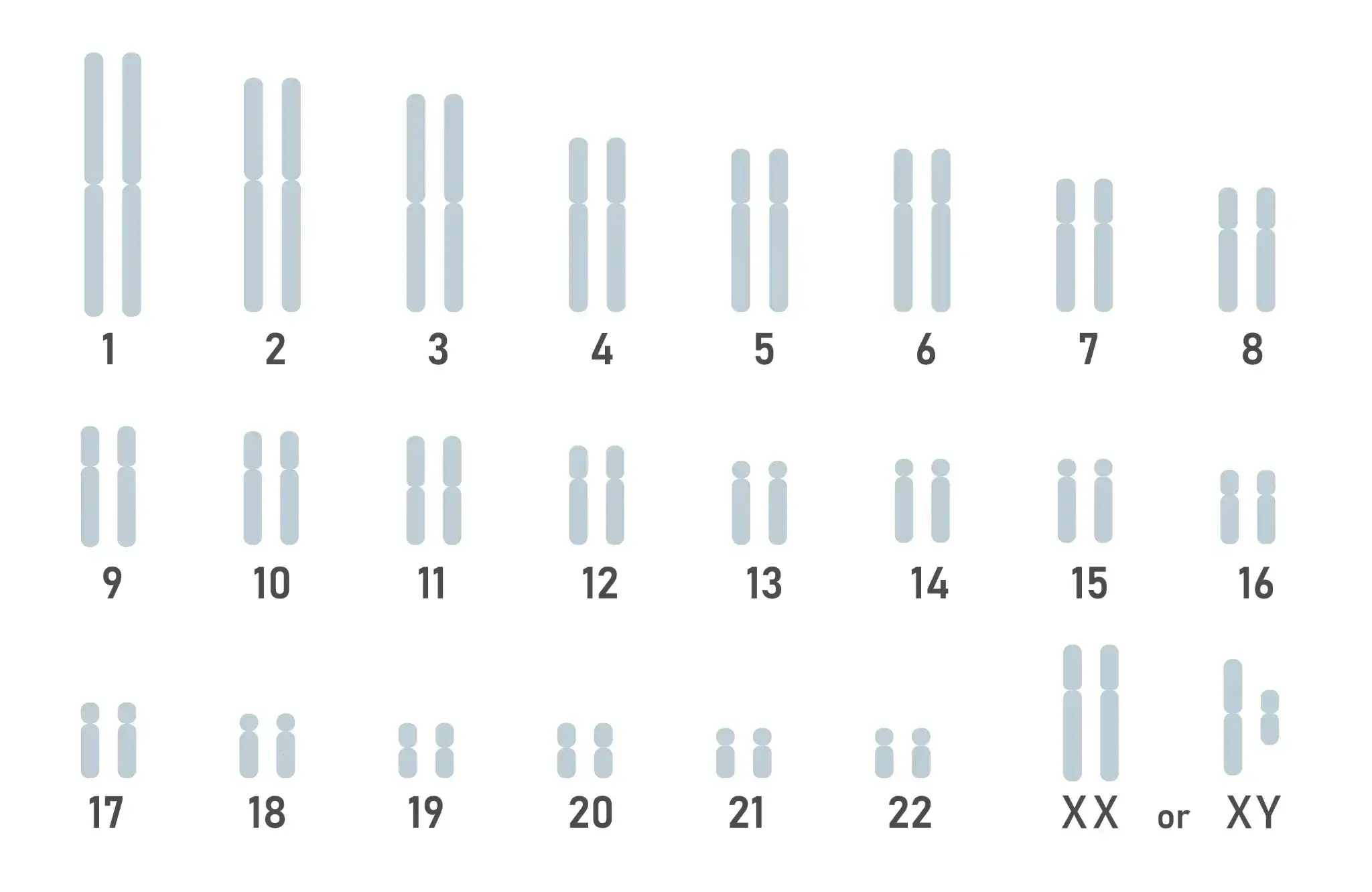
Schematic diagram of DNA map present in cells
- ■
- ■
- ■
- ■
- ■
- ■
- ■
- ■
- ■
Related genes
| Related genes | CYYR1 |
|---|
Frequently asked questions (FAQ)
Q1. What is frontotemporal dementia (FTD)?
Frontotemporal dementia (FTD) is a neurodegenerative disease that causes personality changes, behavioral abnormalities, and language disorders due to progressive damage and atrophy of neurons in the frontal and temporal lobes of the brain.It accounts for approximately 5-10% of all dementia cases and is one of the main causes of early-onset dementia in people under 65 years of age.
Q2. What is the cause of frontotemporal dementia?
The main cause isNeuron damage in the frontal and temporal lobesIt is. When neurons are damaged, NfL (neurofilament light chain) is released into the cerebrospinal fluid. As a genetic factor, people with type A mutation in the DNA region rs465401 tend to have a higher risk of developing the disease.
Q3. What is the difference between frontotemporal dementia and Alzheimer's dementia?
FTD isAtrophy of the frontal and temporal lobesThe main symptoms are personality changes and behavioral abnormalities. Alzheimer's typeAtrophy mainly in the hippocampusMemory loss is an early symptom. FTD is more common in people under 65 years of age, and Alzheimer's disease is more common in people over 65 years of age.
Q4. Can genetic testing determine the risk of frontotemporal dementia?
By examining the genotype of the DNA region rs465401,Understanding trends in the risk of developing frontotemporal dementiaYou can. A study by Niu et al. at Qingdao University found that people with the type A mutation tend to be at higher risk.
References
- Reference link 1: 2019 Nov., Li-Dong Niu, Ann Transl Med