
 femoral hernia

- Femoral hernia is a disease in which abdominal tissue protrudes into the femoral canal.The disease is particularly likely to occur in women, and the risk of strangulation is high at approximately 40%.
- C-type mutation in DNA region rs3791675A study by Wei et al. found that people with
- The prevalence of type C mutation (CC+CT) in Japanese people is47.2%This is a low percentage compared to the global average of 93.2%.
Overview A femoral hernia is a type of hernia that occurs when a piece of tissue pushes apart a weak point in the abdominal muscle wall and protrudes into the femoral canal. This area is located in the groin, just below the inguinal ligament, where the femoral artery, vein, and nerves run from the abdomen to the leg. Femoral hernias are less common than inguinal hernias, especially in women. This is because women's pelvises are wider. The main symptom of a femoral hernia is a bump or bulge that appears on the upper thigh near the groin. This bump becomes more noticeable when you put pressure on your abdomen, such as by standing up, coughing, bending over, or lifting heavy objects. Sometimes the hernia can be pushed back (reducible), and sometimes it gets stuck in the femoral canal (incarcerated). Symptoms include discomfort and pain at the hernia site, which may be worsened by certain activities. If the hernia tissue becomes trapped and restricts blood flow (strangulation), it can cause severe pain, nausea, vomiting, and potentially life-threatening complications that require urgent medical attention. Femoral hernias do not heal on their own and usually require surgery because of the high risk of complications. A study by Wei and colleagues at North Shore University Health System revealed that the risk of developing a femoral hernia is associated with a DNA region called rs3791675. There are three genotypes in this DNA region: CC, CT, and TT, and it was found that people with the C genotype tend to have a higher risk of femoral hernia.
What is a femoral hernia?
A femoral hernia is a condition in which abdominal tissue (intestine or fatty tissue) protrudes into the femoral canal through a weak spot in the abdominal wall.It protrudes through the femoral canal, located just below the inguinal ligament in the groin, and does not heal on its own, requiring surgery.
Main symptoms of femoral hernia
Symptoms of femoral hernia areA bump or bulge that appears on the upper thigh near the groin areais typical. The stages of progression of symptoms are as follows:
- Early stage:Bumps become noticeable when standing, coughing, bending forward, or lifting heavy objects.
- Insertion:A condition in which the hernia becomes stuck in the femoral canal and cannot be pushed back out.
- Strangulation:Blood flow to tissues is blocked, causing severe pain, nausea, and vomiting → emergency surgery required
Why femoral hernias are more common in women
The incidence of femoral hernia is approximately four times higher in women than in men.Because women's pelvises are wider, there is more space in the femoral canal, making it easier for tissues to protrude. especiallyWomen who have experienced pregnancy or childbirthYaWomen over 40 years oldThe risk of developing the disease increases.
Difference between femoral hernia and inguinal hernia
| Comparison items | femoral hernia | inguinal hernia |
|---|---|---|
| protruding part | Below the inguinal ligament (femoral canal) | Above the inguinal ligament (inguinal canal) |
| Prevalence gender | More common in women (male to female ratio approximately 1:4) | More common in men (male to female ratio approximately 9:1) |
| Frequency of occurrence | Approximately 2-4% of all hernias | Approximately 75% of all hernias |
| strangulation risk | Approximately 40% (high risk) | Approximately 1-3% (low risk) |
| Urgency of treatment | High (early surgery recommended) | Progress observation is also possible |
Treatment for femoral hernia
Since femoral hernias do not heal naturally, surgery is the only definitive treatment.There are two main surgical methods:
- Laparoscopic surgery:Repaired using mesh through small incisions. Faster recovery and smaller scars
- Open surgery:Repair by direct incision. Selected for emergency surgery for strangulated hernia
Relationship between genes and femoral hernia
Relationship between DNA region rs3791675 and femoral hernia
A study by Wei and colleagues at North Shore University Health System revealed that the risk of developing a femoral hernia is associated with the DNA region rs3791675.
- There are three genotypes of rs3791675: CC, CT, and TT.
- Genotype with type C mutation(CC type/CT type) people tend to have a higher risk of femoral hernia
Comparison of genotype distribution in Japanese and the world (rs3791675)
| Genotype | Percentage of Japanese people | percentage of the world |
|---|---|---|
| CC type | 7.5% | 54.8% |
| CT type | 39.7% | 38.4% |
| TT type | 52.7% | 6.7% |
The prevalence of type C mutation (CC+CT) in Japanese people is47.2%, which is lower than the global average of 93.2%. This suggests a lower distribution of genetic risk factors associated with femoral hernia in the Japanese population.
Comparison of genotype distribution in Japanese and the world (rs1346786)
| Genotype | Percentage of Japanese people | percentage of the world |
|---|---|---|
| CC type | 4.0% | 46.0% |
| CT type | 32.2% | 43.6% |
| TT type | 63.6% | 10.3% |
Rationale for testing
Superficial DNA region: femoral hernia
The gene region that most strongly affects femoral hernia is rs3791675. The distribution of isomorphic genotypes in Japan is as follows.
- CC
7.5 % - CT
39.7 % - TT
52.7 %
Another gene region related to femoral hernia is rs1346786. The distribution of isomorphic genotypes in Japan is as follows
- CC
4.0 % - CT
32.2 % - TT
63.6 %
Basis for inspection
A study by Wei and colleagues at North Shore University Health System revealed that the risk of developing a femoral hernia is linked to genes. There is a region called rs3791675 in the human genome, and the gene in that region has two types of mutations, C and T. It was found that people with type C mutations tend to have a higher risk of developing femoral hernias.
The DNA region investigated this time
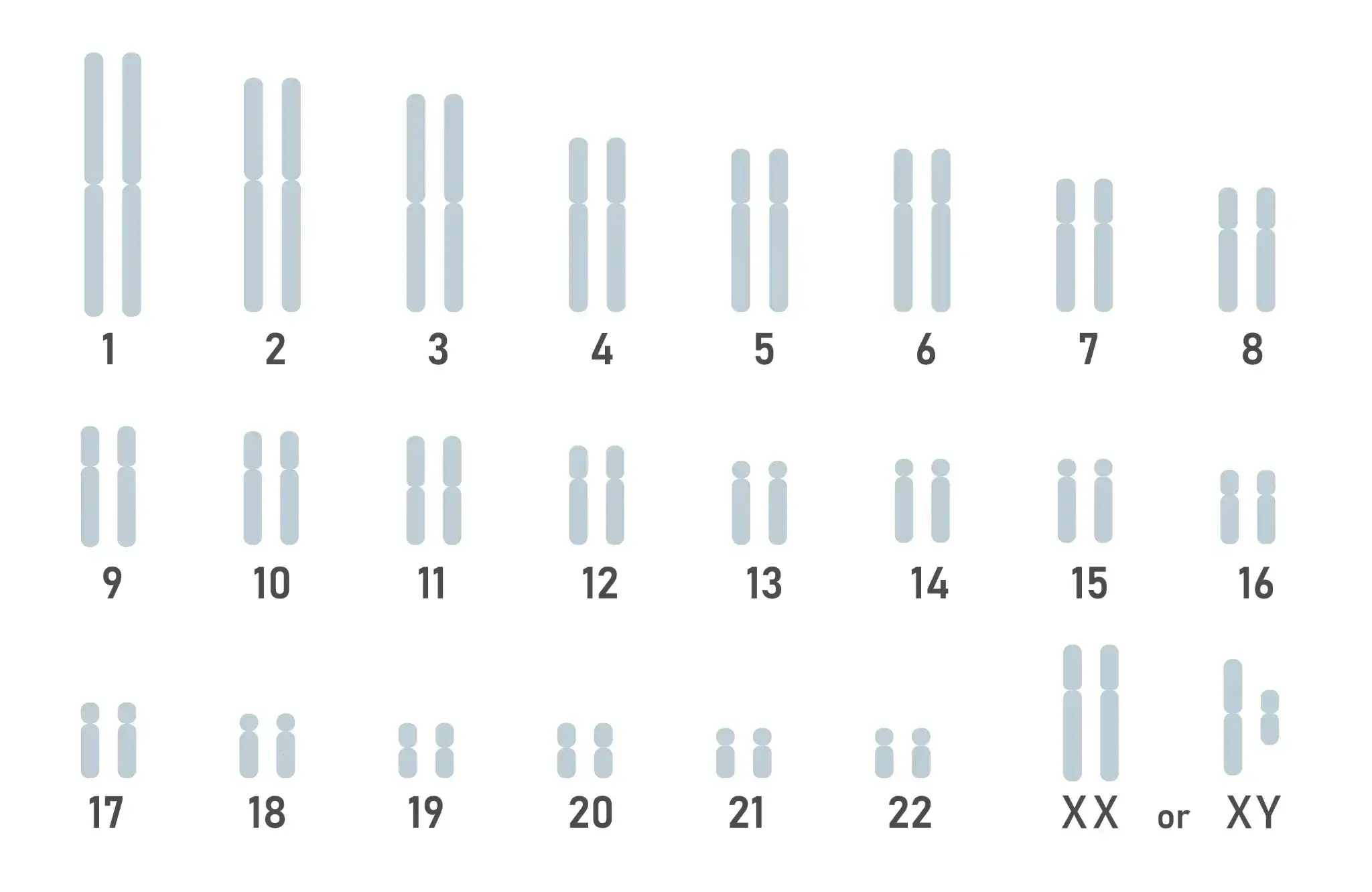
Schematic diagram of DNA map present in cells
- ■
- ■
- ■
- ■
- ■
- ■
- ■
- ■
- ■
Related genes
| Related genes | EFEMP1 |
|---|---|
| Related genes | EFEMP1 |
Frequently asked questions (FAQ)
Q1. What is a femoral hernia?
A femoral hernia is a condition in which abdominal tissue (intestine or fatty tissue) protrudes into the femoral canal through a weak spot in the abdominal wall.It occurs in the area just below the inguinal ligament in the groin, and although it occurs less frequently than inguinal hernias, the risk of strangulation (blockage of blood flow) is high at approximately 40%, and emergency surgery is often required.
Q2. Why are femoral hernias more common in women?
Women's pelvises are wider than men's, so there is more space in the femoral canal.For this reason, the tissue tends to protrude, and the ratio of men to women with femoral hernias is approximately 1:4, with women far more likely to experience it. The stress on the abdominal wall due to pregnancy and childbirth is also a factor that increases the risk of developing the disease.
Q3. Is femoral hernia related to genes?
Yes.A study by Wei and colleagues at North Shore University Health System found that the DNA region rs3791675 is associated with the risk of developing a femoral hernia.There are three genotypes of rs3791675: CC, CT, and TT, and people with the C mutation genotype tend to be at higher risk.
Q4. What is the difference between femoral hernia and inguinal hernia?
Femoral hernia is a disease that protrudes from below the inguinal ligament (femoral canal)An inguinal hernia protrudes from above the inguinal ligament. Femoral hernias have a high risk of strangulation, approximately 40%, and are more common in women (male to female ratio of approximately 1:4).
Q5. What is the distribution of the femoral hernia genotype (rs3791675) in Japanese people?
The genotype distribution of rs3791675 in Japanese people isCC type 7.5%, CT type 39.7%, TT type 52.7%It is. Globally, 54.8% are CC type, 38.4% are CT type, and 6.7% are TT type, and Japanese people have a lower prevalence of type C mutation than the world average.
References
- Reference link 1: 2022 Feb., J Wei, Hernia