
 face recognition ability
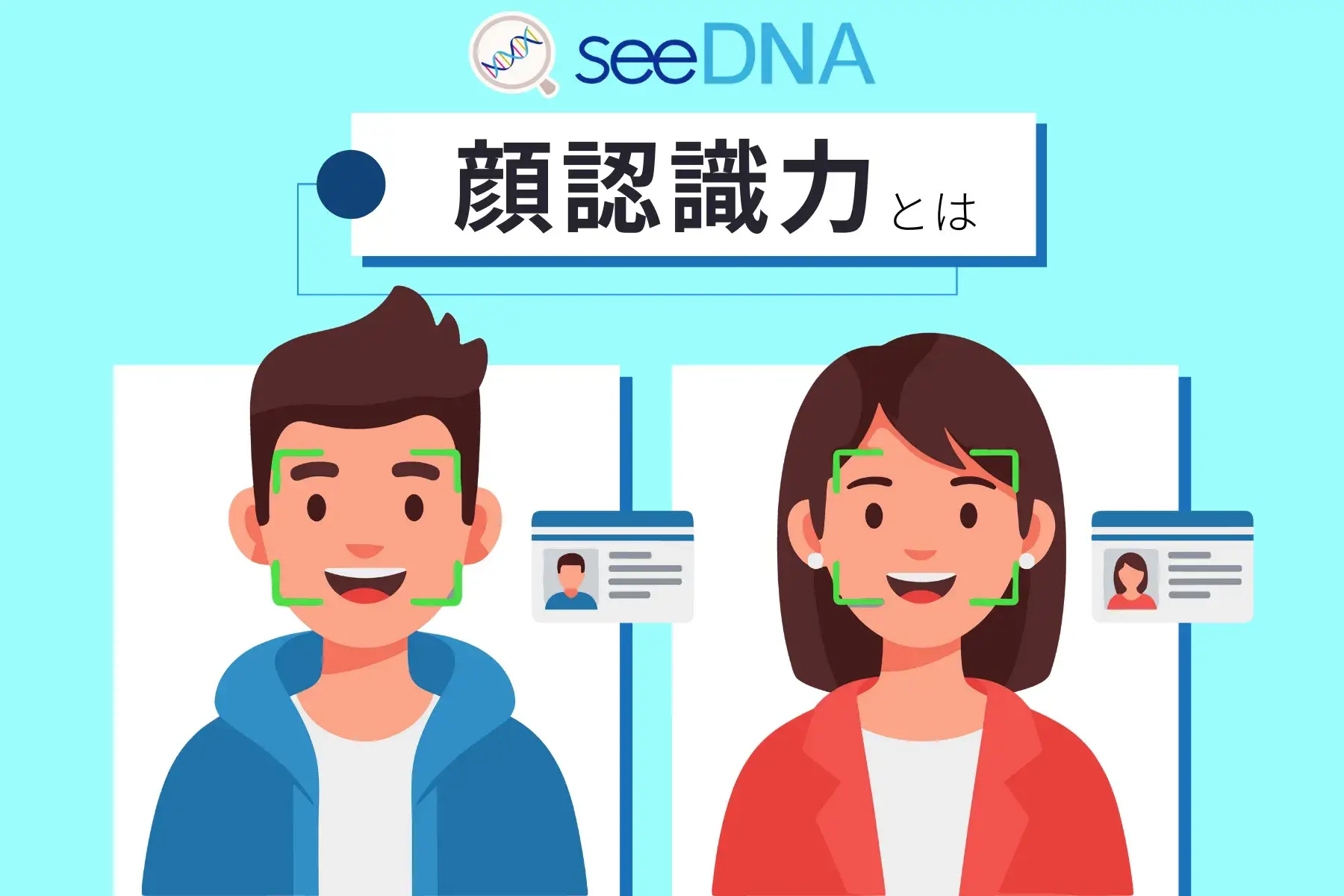
- Facial recognition ability is the ability to identify and remember facial features.There are genetic differences depending on the genotype of the RAPGEF5 gene (rs1522280).
- TT type has high face recognition ability.A study by the University of Cambridge found that CT types tend to be slightly lower, and CC types tend to be lower.
- In JapaneseTT type 34.9%, TC type 48.3%, CC type 16.6%CC type is slightly higher than the world average.
Overview Facial recognition refers to the ability to recognize a trompe l'oeil picture made from a combination of black and white as a face, and to distinguish the features of each face. Some people have a tendency to see things like the faces of people who are not supposed to appear in photos when they look at them, and some people can remember the faces of people they have only met once, even after a long period of time. These people are said to have high facial recognition abilities. Until now, it was thought that facial recognition ability could be improved through training, but it is now known that it is actually influenced to some extent by a person's DNA. According to a study conducted at the University of Cambridge in the UK, a specific type of RAPGEF5 gene has been reported to have a significant impact on a person's ability to recognize faces. By finding out your genetic type through genetic testing, you can confirm your genetic tendency toward facial recognition ability. Please try it. Rationale A recent study by the Department of Psychology at the University of Cambridge in the UK found that a specific type of the RAPGEF5 gene influences facial recognition ability. (Reference link 1) There are three genotypes of this gene, rs1522280, which are TT, CT, and CC.People with the TT type tend to have high face recognition ability, people with the CT type have a slightly lower ability, and people with the CC type tend to have a lower ability. This revealed that there were differences in face recognition ability. People with high facial recognition ability can be expected to improve familiarity and sociability when students start a new semester, or when working adults graduate or change jobs. In addition, people with extremely high facial recognition abilities may have the ability called ``super recognizers,'' which is required by investigators of wanted criminals. (Reference link 2) On the other hand, people with poor facial recognition may have the misunderstanding that they ignored me even though I had met them many times. Therefore, when meeting new people, it is important to write down their name and facial features, and to be able to identify them by their voice, clothing, and other characteristics. In this way, we found that there is a genetic tendency for facial recognition ability. By considering in advance the hobbies and occupations that match your facial recognition ability, you may be able to create a life plan that suits you more. Mechanism of action The RAPGEF5 gene is one of the genes related to facial recognition ability, and is located on chromosome 7 of the 24 human chromosomes. This gene is abundant in the fusiform gyrus of the brain, and influences the activation of pathways for transmitting visual and other sensory information. Additionally, the fusiform gyrus is known to be a region that responds when seeing a face, and is said to be involved in determining whether a visual stimulus is a face or not, and identifying an individual. It is estimated that around 10% of people in the world have CC type who have poor facial recognition ability. On the other hand, in Japanese, it has been reported that 32.7% are TT type, 51.3% are CT type, and 15.9% are CC type. (Reference links 3 and 4) From the above, "rs1522280" is attracting attention as one of the SNPs related to facial recognition ability such as talent and intelligence.
What is facial recognition ability?
Facial recognition ability is the ability to recognize a trompe l'oeil picture made from a combination of black and white as a face and to distinguish individual facial features.People with high levels of this ability are able to find faces in photos that are not supposed to appear in photos, and are able to memorize faces of people they have only met once for long periods of time.
Characteristics of people with high and low face recognition ability
High facial recognition ability has a direct impact on social life.
| Comparison items | A person with good facial recognition ability | People with poor facial recognition ability |
|---|---|---|
| social aspect | Easy to adapt to new environment | May be misunderstood as “ignored” |
| memory | Long-term memory of faces of people you meet once | Difficulty remembering faces even if we meet repeatedly |
| extreme case | Super recognizer (used for criminal investigation) | Tendency towards prosopagnosia |
| How to deal with it | Possibility to choose a career that takes advantage of one's abilities | Identification by notes, voice, and clothing is effective |
Why does face recognition ability vary between individuals?
It has been found that facial recognition ability is influenced not only by training but also genetically by DNA.A study by the Department of Psychology at the University of Cambridge in the UK (reference link 1) reported that a specific type of the RAPGEF5 gene affects facial recognition ability.
- TT type:Tendency to have high face recognition ability
- CT type:Facial recognition ability tends to be somewhat low
- CC type:Facial recognition ability tends to be low (approximately 10% worldwide)
The relationship between genes and facial recognition ability
Relationship between RAPGEF5 gene (rs1522280) and face recognition ability
The RAPGEF5 gene is located on chromosome 7 and is abundant in the fusiform gyrus of the brain.The fusiform gyrus is known as the part of the brain that responds when seeing faces, and is involved in determining whether a visual stimulus is a face and identifying individuals.
- RAPGEF5 gene influences pathway activation that transmits sensory information
- The fusiform gyrusDetermine whether a visual stimulus is a facePart to be treated
- In the rs1522280 areaThree genotypes: TT, CT, and CCexists
Genotype distribution in Japanese and the world (rs1522280)
| Genotype | Percentage of Japanese people | percentage of the world | Trends in face recognition ability |
|---|---|---|---|
| TT type | 34.9% | 48.4% | expensive |
| TC type | 48.3% | 42.3% | somewhat low |
| CC type | 16.6% | 9.2% | low |
The percentage of Japanese people with type CC (a tendency to have poor facial recognition ability) is 16.6%, which is higher than the world average of 9.2%.
What to do if your face recognition ability is low
Even if your face recognition ability is low, you can supplement your person recognition ability with the following tips.
- Record names and facial features when meeting for the first time
- Voice, clothes, hairstyleGet into the habit of identifying people based on features other than faces, such as
- Utilize ways to remember things based on the scene or situation you met.
By knowing the genetic tendency of your facial recognition ability, you will be able to consider suitable hobbies and occupations in advance, and design a life that is more suitable for you.
Rationale for testing
External DNA region: facial recognition ability
The gene region that most strongly influences face recognition ability is rs1522280. The distribution of isomorphic genotypes in Japan is as follows.
- TT
34.9 % - TC
48.3 % - CC
16.6 %
Basis for inspection
A study by Verhallen et al. (2014) from the Department of Psychology at the University of Cambridge in the United Kingdom found that the rs1522280 region of the RAPGEF5 gene influences face recognition ability. There are three genotypes of rs1522280: TT, CT, and CC, and the TT type tends to have high face recognition ability, the CT type has a slightly lower ability, and the CC type tends to have lower ability (Reference link 1).
The DNA region investigated this time
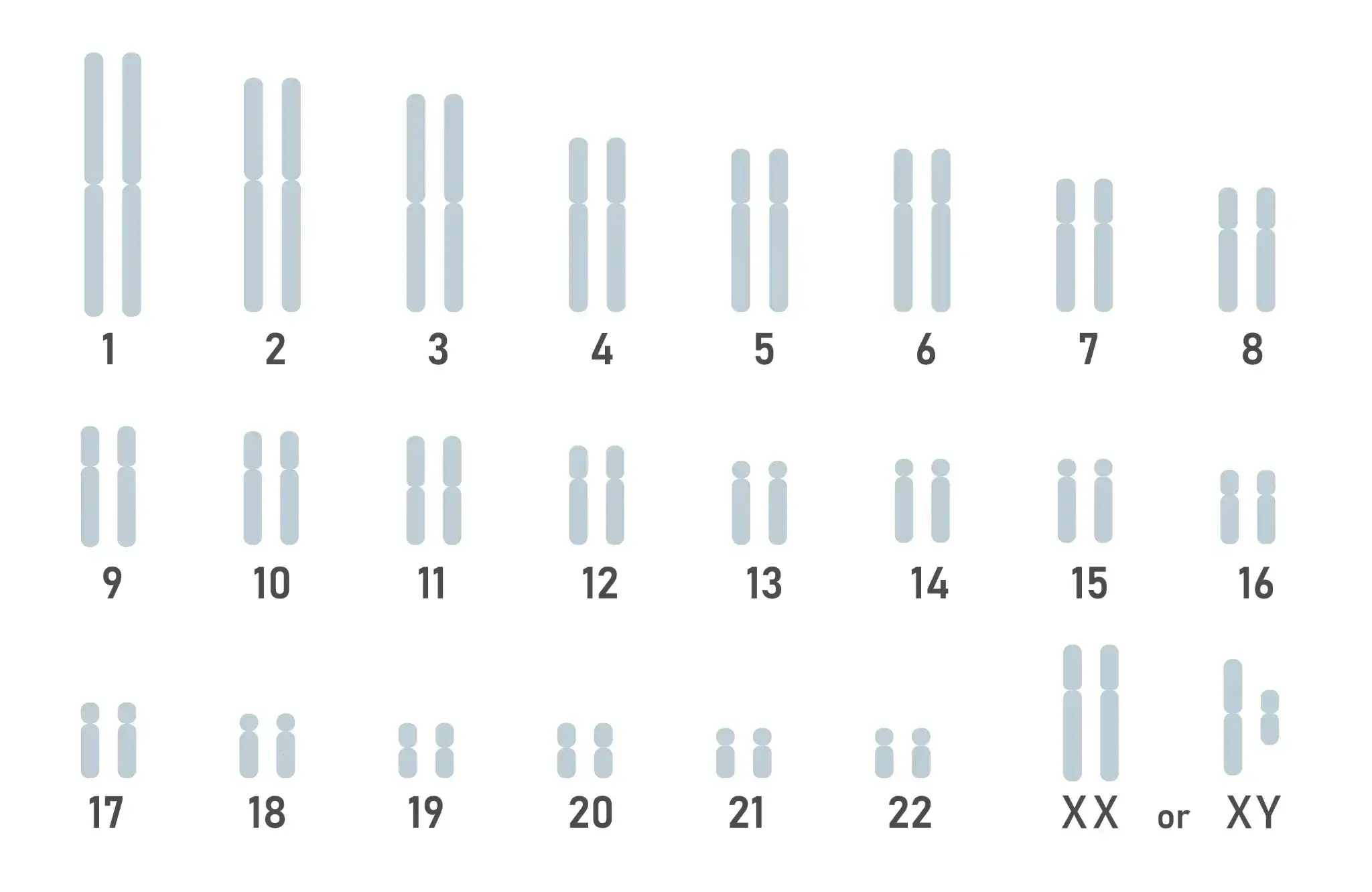
Schematic diagram of DNA map present in cells
- ■
- ■
- ■
- ■
- ■
- ■
- ■
- ■
- ■
Frequently asked questions (FAQ)
Q1. What is facial recognition ability?
Facial recognition is the ability to recognize faces in trompe l'oeil pictures and to identify and remember individual facial features.Research at the University of Cambridge has revealed that there are genetic differences in this ability depending on the genotype of the RAPGEF5 gene (rs1522280) (reference link 1).
Q2. How do genes affect facial recognition ability?
There are three genotypes in the rs1522280 region of the RAPGEF5 gene.TT type has high face recognition ability, CT type has slightly lower ability, and CC type tends to have lower ability.There is. In Japanese, the distribution is 34.9% for type TT, 48.3% for type TC, and 16.6% for type CC (reference links 3 and 4).
Q3. What is Super Recognizer?
Super recognizer is a term used to describe people who have extremely high facial recognition abilities.They can remember faces once they have seen them for long periods of time, and are excellent at identifying specific people from a crowd. It is attracting attention as a required ability for investigators of wanted criminals (reference link 2).
Q4. What should I do if my face recognition ability is low?
Measures can be taken even if face recognition ability is low.Record names and facial features in notesIt is effective to get into the habit of identifying people by characteristics other than their faces, such as voice, clothing, and hairstyle.
Q5. Can we find out trends in facial recognition ability through genetic testing?
By examining the genotype of the rs1522280 region of the RAPGEF5 gene,Understanding genetic trends in face recognition abilityYou can. By knowing your own tendencies, you can utilize them to find the right career and plan your life.
References
- Reference link 1: 2014 Aug., Roeland J Verhallen, Neuropsychologia
- Reference link 2: 2020 Nov., James D. Dunn, PloS one
- Reference link 3: Information on DNA region “rs1522280” NIH
- Reference link 4: DNA information “rs1522280” information NIH