
 eye color
- Eye color is determined by the amount and distribution of melanin pigment in the iris.The more melanin, the darker the color, and the less melanin, the brighter the color.
- Type C mutation in DNA region rs1800414A University of Toronto study found that people with this condition tend to have a certain eye color.
- The prevalence of type C mutation (TC+CC) in Japanese people is81.6%This is an extremely high percentage compared to the world average of 1.7%.
Overview Eye color changes depending on the amount and distribution of melanin within the iris. Melanin absorbs light, so the more it is, the darker it looks, and the less it is, the brighter it looks. Dark brown eyes have more melanin and absorb light, making them look dark, while blue eyes have less melanin and reflect light, making them appear blue. The neutral color varies depending on the amount of melanin and the reflection of light, and there are various shades. Eye color is also influenced by genetic factors, and multiple genes are involved. Therefore, different eye colors can be seen in individuals and groups. Research by Rawofi and colleagues at the University of Toronto, Mississauga has revealed that eye color variation is associated with a DNA region called rs1800414. There are three genotypes in this DNA region: TT, TC, and CC, and it was found that people with the C genotype tend to have a specific eye color.
what is eye color
Eye color is a physical characteristic determined by the amount and distribution of the pigment melanin within the iris.Melanin is a pigment that absorbs light, and its content determines the color of your eyes.
What is the mechanism that determines eye color?
Eye color is determined by the amount of melanin pigment and the reflection and scattering of light. The relationship between eye color classification and melanin is shown below.
Relationship between eye color and melanin amount
- Brown/dark eyes:Contains a lot of melanin, which absorbs light and appears dark
- Blue eyes:There is less melanin, and light reflects blue due to Rayleigh scattering.
- Green/hazel:Intermediate amounts of melanin and light reflection combine to produce a variety of shades.
Comparison of eye color types and characteristics
| eye color | Melanin amount | distributed population |
|---|---|---|
| brown | abundance | Common in East Asia, Africa, and Southern Europe |
| blue | small amount | Common in Northern Europe (approximately 8-10% of the population) |
| green | intermediate amount | Distributed in Northern Europe and Central Europe (approximately 2% of the world's population) |
| hazel | intermediate amount | Distributed in Europe and America, color changes depending on the angle of light |
Why are our eyes different colors?
Eye color is determined by genetic factors, and multiple genes such as OCA2, HERC2, SLC24A5, and SLC45A2 are involved.Therefore, different eye colors can be seen between individuals and groups. Previously thought to be a simple inheritance based on Mendel's laws, the latest research has revealed that more than 16 genes influence eye color.
Relationship between genes and eye color
Relationship between DNA region rs1800414 and eye color
A study by Rawofi et al. (published in PeerJ, 2017) from the University of Toronto, Mississauga revealed that eye color variation is associated with the DNA region rs1800414.
- There are three genotypes of rs1800414: TT, TC, and CC.
- Genotype with type C mutation(TC type/CC type) people tend to have a certain eye color.
- This gene region is related to the OCA2 gene
Comparison of genotype distribution in Japanese and the world (rs1800414)
| Genotype | Percentage of Japanese people | percentage of the world |
|---|---|---|
| TT type | 18.3% | 98.2% |
| TC type | 48.9% | 1.7% |
| CC type | 32.7% | 0.1%以下 |
The prevalence of type C mutation in Japanese people (TC+CC) is81.6%This is an extremely high percentage compared to the global average of 1.7%. This result reflects genetic characteristics unique to East Asian populations.
Other eye color-related DNA regions
In addition to rs1800414, rs12913832 (HERC2 gene), rs1426654 (SLC24A5 gene), and rs16891982 (SLC45A2 gene) are also associated with eye color.
Comparison of major DNA regions between Japanese and the rest of the world
| DNA region | Related genes | Main types of Japanese people | Major types in the world |
|---|---|---|---|
| rs1800414 | OCA2 | TC type 48.9% | TT type 98.2% |
| rs12913832 | HERC2 | AA type 99.9% | AG type 46.4% |
| rs1426654 | SLC24A5 | GG type 99.0% | AA type 85.0% |
| rs16891982 | SLC45A2 | CC type 99.9% | GG type 74.9% |
Rationale for testing
External DNA region: eye color
The gene region that most strongly influences eye color is rs1800414. The distribution of isomorphic genotypes in Japan is as follows.
- TT
18.3 % - TC
48.9 % - CC
32.7 %
Another gene region related to eye color is rs12913832. The distribution of isomorphic genotypes in Japan is as follows
- AA
99.9 % - AG
0.1%以下 - GG
0.1%以下
Another gene region related to eye color is rs1426654. The distribution of isomorphic genotypes in Japan is as follows
- AA
0.1%以下 - AG
0.9 % - GG
99.0 %
Another gene region related to eye color is rs16891982. The distribution of isomorphic genotypes in Japan is as follows
- CC
99.9 % - CG
0.1%以下 - GG
0.1%以下
Basis for inspection
Research by Rawofi and colleagues at the University of Toronto, Mississauga has revealed that eye color variation is linked to genes. There is a region called rs1800414 in the human genome, and there are two types of mutations, T and C, in the gene in this region. It turns out that people with the T-type mutation tend to have a certain eye color.
The DNA region investigated this time
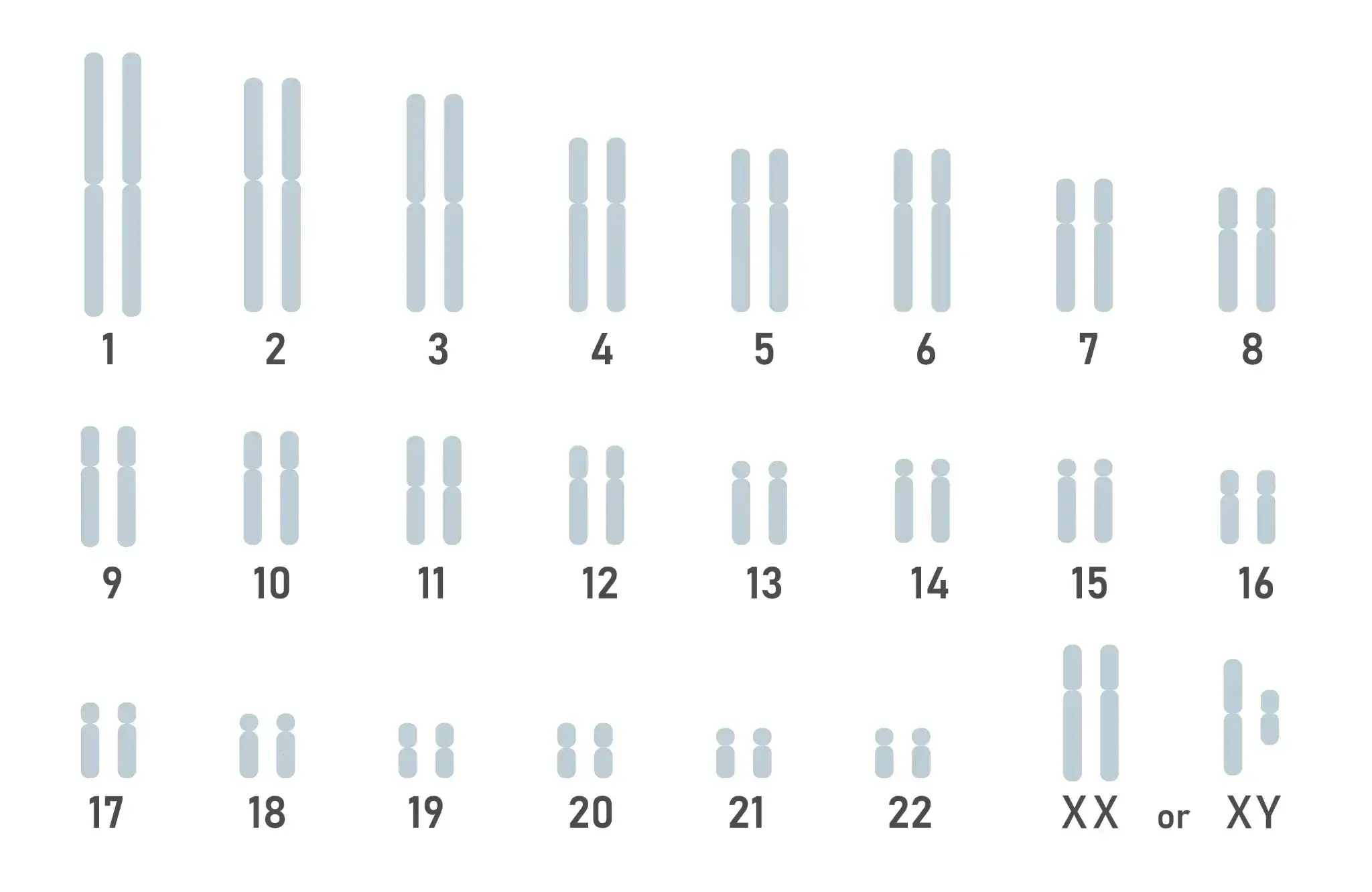
Schematic diagram of DNA map present in cells
- ■
- ■
- ■
- ■
- ■
- ■
- ■
- ■
- ■
Related genes
| Related genes | OCA2 |
|---|---|
| Related genes | HERC2 |
| Related genes | SLC24A5 |
| Related genes | SLC45A2 |
Frequently asked questions (FAQ)
Q1. How is eye color determined?
Eye color is determined by the amount and distribution of melanin pigment within the iris.If there is an abundance of melanin, the skin will appear brown or dark; if there is little melanin, it will appear blue due to light scattering. Research has revealed that multiple genes are involved, including OCA2, HERC2, SLC24A5, and SLC45A2, and that more than 16 genes influence eye color.
Q2. What is the relationship between eye color and genes?
A study by Rawofi et al. (2017, PeerJ) from the University of Toronto, Mississauga found that the DNA region rs1800414 is associated with eye color variation.There are three genotypes of rs1800414: TT, TC, and CC, and people with the C mutation tend to have a specific eye color.
Q3. What is the distribution of genotypes regarding eye color in Japanese people?
The genotype distribution of rs1800414 in Japanese people isTT type 18.3%, TC type 48.9%, CC type 32.7%It is. Globally, 98.2% are TT type, 1.7% are TC type, and 0.1%以下 are CC type.Japanese people have an extremely high prevalence of type C mutation compared to the world average, which reflects the genetic characteristics of the East Asian population.
Q4. What genes are related to eye color?
The main genes related to eye color areOCA2(controls the amount of melanin in the iris),HERC2(regulating OCA2 expression),SLC24A5(involved in melanin synthesis),SLC45A2(Involved in pigment transport). The combination of these genes determines eye colors, which vary between individuals and populations.
References
- Reference link 1: 2017 Nov., Lida Rawofi, PeerJ
- Reference link 2: 2010 Jun., Nicholas Eriksson, PLoS Genet
- Reference link 3: 2021 Mar., Mark Simcoe, Sci Adv