
 esophageal cancer

- Esophageal cancer is a malignant tumor that develops from the cells lining the esophagus.Approximately 26,000 people are newly diagnosed annually in Japan, and the incidence rate for men is approximately five times that of women.
- T-type mutation in DNA region rs1229984Research at the University of Tokyo reveals that people with cancer tend to have a higher risk of developing esophageal cancer.
- The T mutation (TT+TC) prevalence among Japanese people is92.7%This is an extremely high percentage compared to the world average of 9.4%.
Overview Esophageal cancer is a malignant tumor that begins in the cells lining the esophagus, which transports food from the throat to the stomach. There are two main types of this cancer: squamous cell carcinoma and adenocarcinoma. Squamous cell carcinoma begins in the squamous cells that line the top and middle of the esophagus. Adenocarcinoma develops from glandular cells in the lower part of the esophagus, and may develop following chronic Barrett's esophagus (a condition in which the esophageal mucosa at the junction of the stomach and esophagus is replaced by gastric mucosa due to acid reflux). Common early symptoms of esophageal cancer include difficulty swallowing solid foods or liquids (dysphagia), weight loss, chest pain or discomfort, persistent cough, hoarseness, and vomiting that may be bloody. As the cancer progresses, symptoms worsen, leading to further difficulty swallowing, significant loss of weight and strength, and a decreased quality of life. The disease outlook for esophageal cancer varies greatly depending on the condition at the time of diagnosis and the individual's overall health. Early detection is difficult because symptoms do not appear on the surface, and treatments include surgery, chemotherapy, and radiation therapy. Smoking, excessive alcohol consumption, obesity, and chronic reflux esophagitis are factors that increase the risk of developing the disease. As with all cancers, prevention and early detection are important, and regular health checkups and lifestyle care are necessary. A study by Cui et al. at the University of Tokyo revealed that the risk of developing esophageal cancer is associated with a DNA region called rs1229984. There are three genotypes in this DNA region: TT, TG, and GG, and it has been found that people with the T genotype tend to have a higher risk of esophageal cancer.
What is esophageal cancer?
Esophageal cancer is a malignant tumor that begins in the cells lining the esophagus, which transports food from the throat to the stomach.Approximately 26,000 people are newly diagnosed in Japan each year, and the incidence rate for men is approximately five times that of women. The 5-year survival rate is approximately 45% overall, but increases to approximately 80% when detected early.
Types and comparison of esophageal cancer
Esophageal cancer is mainly classified into two types. The location and cause of occurrence are different.
| Comparison items | squamous cell carcinoma | adenocarcinoma |
|---|---|---|
| Occurrence site | Upper/middle part of the esophagus | lower part of the esophagus |
| developmental cells | squamous epithelial cells | glandular cells |
| Main risk factors | Smoking/drinking | Barrett's esophagus/obesity |
| Percentage in Japan | Approximately 90% | Approximately 5-10% |
What are the main symptoms of esophageal cancer?
Symptoms of esophageal cancer vary depending on the stage of progression. Symptoms are categorized by stage below.
early symptoms
- Difficulty swallowing:Difficulty swallowing solid foods or liquids
- Weight loss:Weight loss due to decreased food intake
- Chest discomfort:Persistent chest pain or pressure
Symptoms in advanced stages
- Persistent cough:Chronic cough occurs due to infiltration of the trachea
- Hoarse voice:Hoarseness appears due to recurrent laryngeal nerve paralysis
- Vomiting blood:Vomiting with blood is seen due to cancer invasion
- Significant decline in physical strength:Poor quality of life due to nutritional deficiencies and general weakness
Risk factors for esophageal cancer
Factors that increase the risk of developing esophageal cancer include:
- Smoking:Approximately 3-5 times increased risk compared to non-smokers
- Excessive alcohol consumption:In particular, people with inactive aldehyde-degrading enzyme (ALDH2) have a markedly increased risk.
- Obesity:The risk of adenocarcinoma approximately doubles with a BMI of 30 or more.
- Chronic reflux esophagitis:Increased risk of adenocarcinoma via Barrett's esophagus
- Regular use of hot drinks:Chronic thermal stimulation of the esophageal mucosa increases risk
How to prevent esophageal cancer
The following lifestyle changes are effective in preventing esophageal cancer.
- No smoking:Smoking increases the risk of squamous cell carcinoma by approximately 3-5 times
- Drinking limit:Aim for 20g or less of pure alcohol per day (equivalent to 1 cup of sake)
- Maintaining a healthy weight:Aim for a BMI of 18.5 to 24.9
- Intake of vegetables and fruits:Antioxidants contribute to the protection of the esophageal mucosa
- Treatment of reflux esophagitis:Prevent progression to Barrett's esophagus
- Regular endoscopy:Early detection improves the 5-year survival rate to approximately 80%
Association between genes and esophageal cancer risk
What is the relationship between DNA region rs1229984 and esophageal cancer?
A study by Cui et al. from the University of Tokyo (published in Gastroenterology in 2009) revealed that the risk of developing esophageal cancer is associated with the DNA region rs1229984.
- There are three genotypes of rs1229984: TT, TC, and CC.
- Genotype with T-type mutation(TT type/TC type) people tend to have a higher risk of esophageal cancer
- This gene region is related to the ADH1B gene (alcohol dehydrogenase 1B)
- ADH1B gene is involved in alcohol metabolism and is closely related to the onset mechanism of esophageal cancer
Comparison of genotype distribution in Japanese and the world (rs1229984)
| Genotype | Percentage of Japanese people | percentage of the world |
|---|---|---|
| TT type | 53.4% | 0.2% |
| TC type | 39.3% | 9.2% |
| CC type | 7.2% | 90.4% |
The T mutation prevalence rate (TT+TC) in Japanese people is92.7%This is an extremely high percentage compared to the global average of 9.4%. The percentage of Japanese people with type TT is53.4%This is approximately 267 times higher than the world average of 0.2%, reflecting the genetic characteristics of the ADH1B gene in the Japanese population.
Rationale for testing
Surface DNA region: Esophageal cancer
The gene region that most strongly affects esophageal cancer is rs1229984. The distribution of isomorphic genotypes in Japan is as follows.
- TT
53.4 % - TC
39.3 % - CC
7.2 %
Basis for inspection
Research by Cui et al. at the University of Tokyo revealed that the risk of developing esophageal cancer is related to genes. There is a region called rs1229984 in the human genome, and there are two types of mutations, T and G, in the gene in this region. It was found that people with T-type mutations tend to have a higher risk of esophageal cancer.
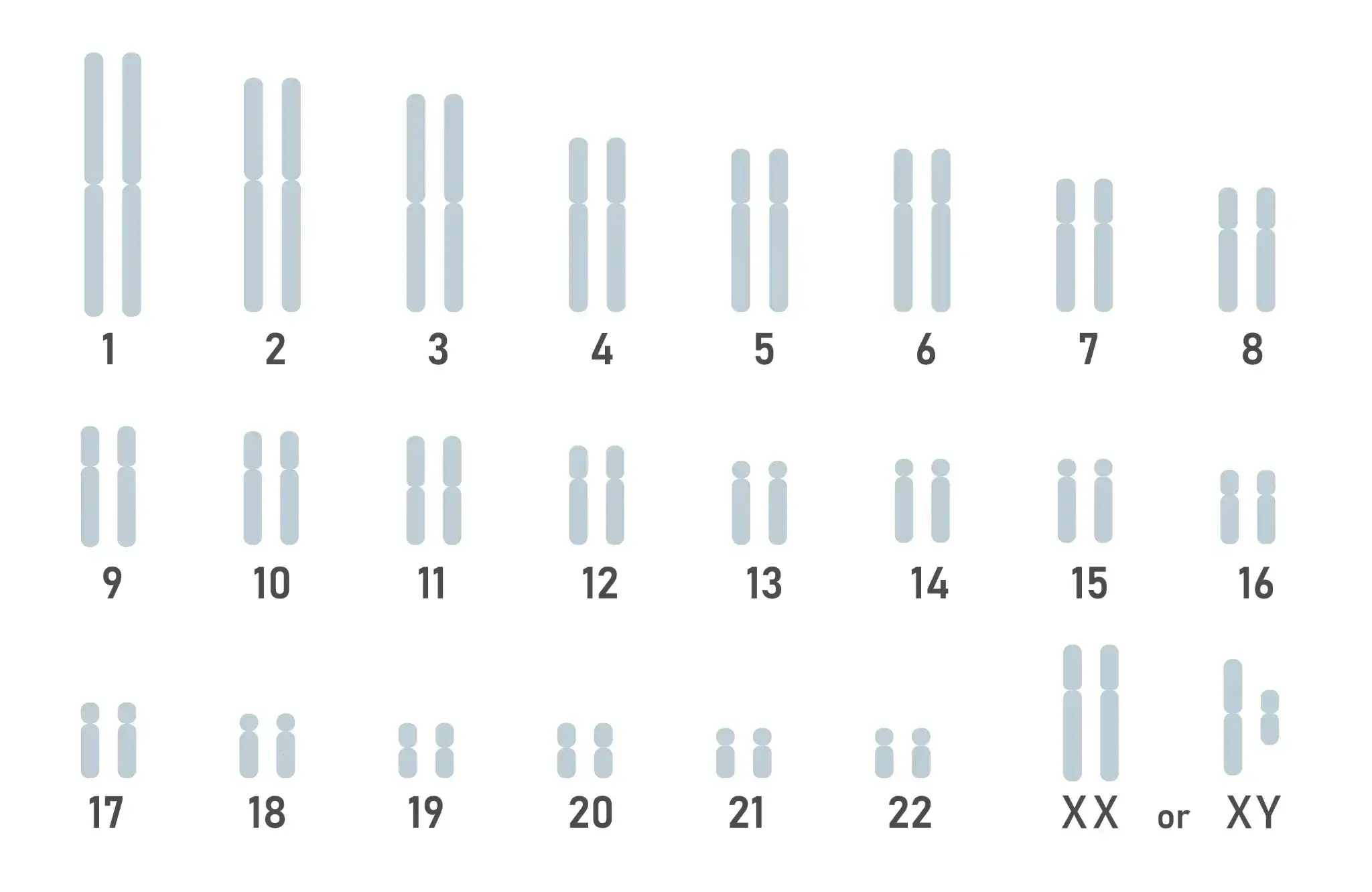
The DNA region investigated this time
Schematic diagram of DNA map present in cells
- ■
- ■
- ■
- ■
- ■
- ■
- ■
- ■
- ■
Related genes
| Related genes | ADH1B |
|---|
Frequently asked questions (FAQ)
Q1. What is esophageal cancer?
Esophageal cancer is a malignant tumor that begins in the cells that line the esophagus, which transports food from the throat to the stomach.It is mainly classified into two types: squamous cell carcinoma and adenocarcinoma. Approximately 26,000 people are newly diagnosed in Japan each year, and the incidence rate for men is approximately five times that of women. Early symptoms include difficulty swallowing, weight loss, and chest discomfort.
Q2. Is the risk of esophageal cancer related to genes?
Yes.A study by Cui et al. (2009, Gastroenterology) at the University of Tokyo revealed that the DNA region rs1229984 is associated with the risk of esophageal cancer.There are three genotypes of rs1229984: TT, TC, and CC, and people with the T mutation genotype (TT type and TC type) tend to have a higher risk of esophageal cancer. This gene is related to ADH1B (alcohol dehydrogenase 1B) and is involved in the ability to metabolize alcohol and the risk of esophageal cancer.
Q3. What is the distribution of the genotype (rs1229984) associated with esophageal cancer in Japanese people?
The genotype distribution of rs1229984 in Japanese people isTT type 53.4%, TC type 39.3%, CC type 7.2%It is. The T mutation prevalence rate (TT+TC) is 92.7%, which is extremely high compared to the global average of 9.4%. This genetic feature is unique to Asian populations and is associated with a high prevalence of esophageal cancer in East Asia.
Q4. What are the main symptoms of esophageal cancer?
Early symptoms of esophageal cancer aredifficulty swallowing(difficulty swallowing solids and liquids),weight loss、chest discomfortIt is. As the disease progresses, persistent cough, hoarseness, and blood vomit appear. Since symptoms typically surface in the advanced stages, early detection through regular endoscopy is important.
Q5. How can I prevent esophageal cancer?
To prevent esophageal cancer,No smoking(reducing risk by approximately 3-5 times),Limit alcohol consumption(Pure alcohol 20g/day or less),Maintaining a healthy weight(BMI 18.5〜24.9)、Active intake of vegetables and fruits、Treatment of reflux esophagitisis valid. It is also important to identify risks early through regular endoscopy and genetic testing.
References
- Reference link 1: 2009 Nov., Ri Cui, Gastroenterology