
 Epileptic seizures (focal cortical dysplasia)

- Epileptic seizures (focal cortical dysplasia/FCD) are caused by nerve cell abnormalities in the cerebral cortex.It is one of the main causes of drug-resistant epilepsy.
- Type A mutation in DNA region rs4962081People with this condition tend to have a higher risk of developing the disease due to decreased function of the tumor suppressor gene TSC1.
- Early genetic testingIt is possible to understand the risk of onset, leading to early detection and appropriate treatment intervention.
Overview Nerve cells generate electricity themselves and use it as a signal to communicate with surrounding neurons. A variety of information processing is performed in the brain using this network of electrical signals from nerve cells. However, if the amount of electricity generated by nerve cells is too high, the brain short-circuits, causing sudden loss of consciousness or physical convulsions. This symptom is called an "epileptic seizure." In addition, a disease that causes epileptic seizures due to abnormalities in the neurons that make up the cerebral cortex is called focal cortical dysplasia (FCD). The cerebral cortex controls functions essential to daily life and social activities. In recent years, it has been pointed out that tumor suppressor genes may be involved in focal cortical dysplasia (FCD), and one of them is TSC1. "TSC1" is a protein that suppresses cell division and proliferation, and it is known that the function of this protein is weakened in certain genotypes. (Reference link 1) Research has shown that this may lead to excessive cell division and proliferation, which may be a contributing factor to focal cortical dysplasia (FCD), which is a cause of epileptic seizures. 2. Rationale There are multiple genes associated with focal cortical dysplasia (FCD), including the TSC1 gene. Additionally, the DNA region ``rs4962081'' is located within the ``TSC1'' gene, and it has been pointed out that the genotype of this region may be related to the onset of ``FCD.'' (Reference links 2, 3) There are two types of genotypes, "G type" and "A type", and three types: "GG type", "GA type", and "AA type". The most common genotype among Japanese people is the GG type at approximately 93.7%, followed by the GA type at approximately 6.2% and the AA type at approximately 0.1%. On the other hand, globally, "GG type" is the most common type, accounting for approximately 84.5%, followed by "GA type" at approximately 14.9%, and "AA type" at approximately 0.7%. (Reference link 4) This trend is almost the same as in Japan, but the number of "GA type" and "AA type" tends to be slightly higher. It has been pointed out that type A of the DNA region rs4962081 may be associated with the onset of epilepsy. It is known that compared to healthy people, epilepsy patients tend to have a higher incidence of type AA and type GA. 3. Mechanism of action DNA is composed of chains that connect four types of bases: adenine (A), thymine (T), guanine (G), and cytosine (C), and the base sequence represents the blueprint of a protein. A change in the base sequence can change the structure and function of a protein, but on the other hand, the blueprint of the TSC1 protein does not change whether the base in the DNA region rs4962081 is G or A. Such mutations are called "silent mutations." Silent mutations are known to change the amount and structure of a protein by affecting the process of making the protein, rather than changes in the protein blueprint itself. (Reference link 5) In FCD, abnormalities occur in the formation and arrangement of neurons in the cerebral cortex, which is thought to be the cause of epileptic seizures. The specific mechanism by which the DNA region ``rs4962081'' is associated with ``FCD'' is unknown, but the ``A type'' of the DNA region ``rs4962081'' suppresses the function of ``TSC1'', leading to excessive cell division and proliferation, which may impede the formation and arrangement of neurons and the construction of the cerebral cortex. Based on the above, it is expected that knowing the genetic tendency of the DNA region "rs4962081" through genetic testing will be useful for early detection and treatment of epileptic seizures.
What are epileptic seizures (focal cortical dysplasia)?
An epileptic seizure is a symptom in which nerve cells in the brain generate excessive electrical signals, causing a sudden loss of consciousness or convulsions in the body.Focal cortical dysplasia (FCD) Cortical Dysplasia is a disease that causes epileptic seizures due to abnormal formation and arrangement of neurons in the cerebral cortex.
Mechanism of onset of epileptic seizures
Nerve cells use electrical signals to communicate with surrounding neurons. The brain processes information through this electrical signal network,When nerve cells generate too much electricity, the brain becomes short-circuited.This results in epileptic seizures.
- Loss of consciousness:suddenly lose consciousness and collapse
- Convulsions:Involuntary muscle contractions of the whole body or parts of the body
- Paresthesia:Temporary changes in vision, hearing, taste, etc.
- Automatism:Repetitive movements of moving the mouth or hands unconsciously
What is focal cortical dysplasia (FCD)?
Focal cortical dysplasia (FCD) is a developmental abnormality in the neurons that form the cerebral cortex.It is a disease caused by. The cerebral cortex controls cognitive, motor, and sensory functions that are essential for daily life and social activities.
In FCD, abnormalities occur in the shape and arrangement of nerve cells, which causes repeated epileptic seizures.One of the main causes of drug-resistant epilepsyIn some cases, surgical treatment may be considered.
Role of TSC1 gene involved in FCD
Recent research has shown that FCDTumor suppressor gene TSC1It has become clear that they may be involved. TSC1 is a protein with the following functions.
- Suppression of cell division/proliferation:Prevent cells from overgrowing
- Regulation of mTOR pathway:Appropriately regulate cell growth and metabolism
It has been pointed out that in certain genotypes, the function of the TSC1 protein is weakened, leading to excessive cell division and proliferation, which may cause abnormal formation of nerve cells (Reference link 1).
Main treatments for epileptic seizures
| treatment method | Content | adaptation |
|---|---|---|
| drug therapy | Administration of antiepileptic drugs | First choice/all types |
| surgery | Abnormal cortex removal | In case of drug resistance |
| Vagus nerve stimulation therapy | Implantation of neurostimulation devices | When surgery is difficult |
| ketogenic diet | High-fat, low-carbohydrate diet | adjunctive therapy |
The relationship between genes and epileptic seizures (FCD)
Relationship between DNA region rs4962081 and onset risk
The DNA region rs4962081 is located within the TSC1 gene, and studies have reported that the genotype of this region is associated with the risk of developing FCD (Reference links 2, 3).
- There are three genotypes of rs4962081: GG, GA, and AA.
- Genotype with type A mutationPeople with type GA and type AA tend to have a higher risk of epileptic seizures.
- Compared to healthy individuals, epilepsy patients have a higher proportion of type AA and GA types.
Mechanism of silent mutation
The rs4962081 mutation is"Silent mutations" that do not change the protein blueprint (amino acid sequence) itselfIt is classified as However, even if the blueprint is the same, by affecting the protein synthesis process,Changes in expression level and structure of TSC1 proteinIt is known that there is a possibility of doing so (Reference link 5).
Type A mutations suppress TSC1 function, leading to excessive cell division and proliferation, which may lead to abnormalities in the formation and arrangement of neurons in the cerebral cortex.
Genotype distribution in Japanese (rs4962081)
| Genotype | Percentage of Japanese people | percentage of the world |
|---|---|---|
| GG type | 93.3% | 84.1% |
| GA type | 6.5% | 15.1% |
| AA type | 0.1% | 0.6% |
The percentage of Japanese people with type GA and type AA tends to be lower than the world average (reference link 4). By understanding the genetic tendency of rs4962081 in advance through genetic testing, it can be used for early detection and treatment of epileptic seizures.
Rationale for testing
Superficial DNA region: epileptic seizures (focal cortical dysplasia)
The gene region that most strongly influences epileptic seizures (focal cortical dysplasia) is rs4962081. The distribution of isomorphic genotypes in Japan is as follows.
- GG
93.3 % - GA
6.5 % - AA
0.1 %
Basis for inspection
A study by Schick et al. revealed that the risk of developing focal cortical dysplasia (FCD) is associated with the genotype of the DNA region rs4962081. There are two types of mutations in rs4962081, G and A, and people with type A mutations tend to have a higher risk of epileptic seizures related to FCD (Reference link 2, 3).
The DNA region investigated this time
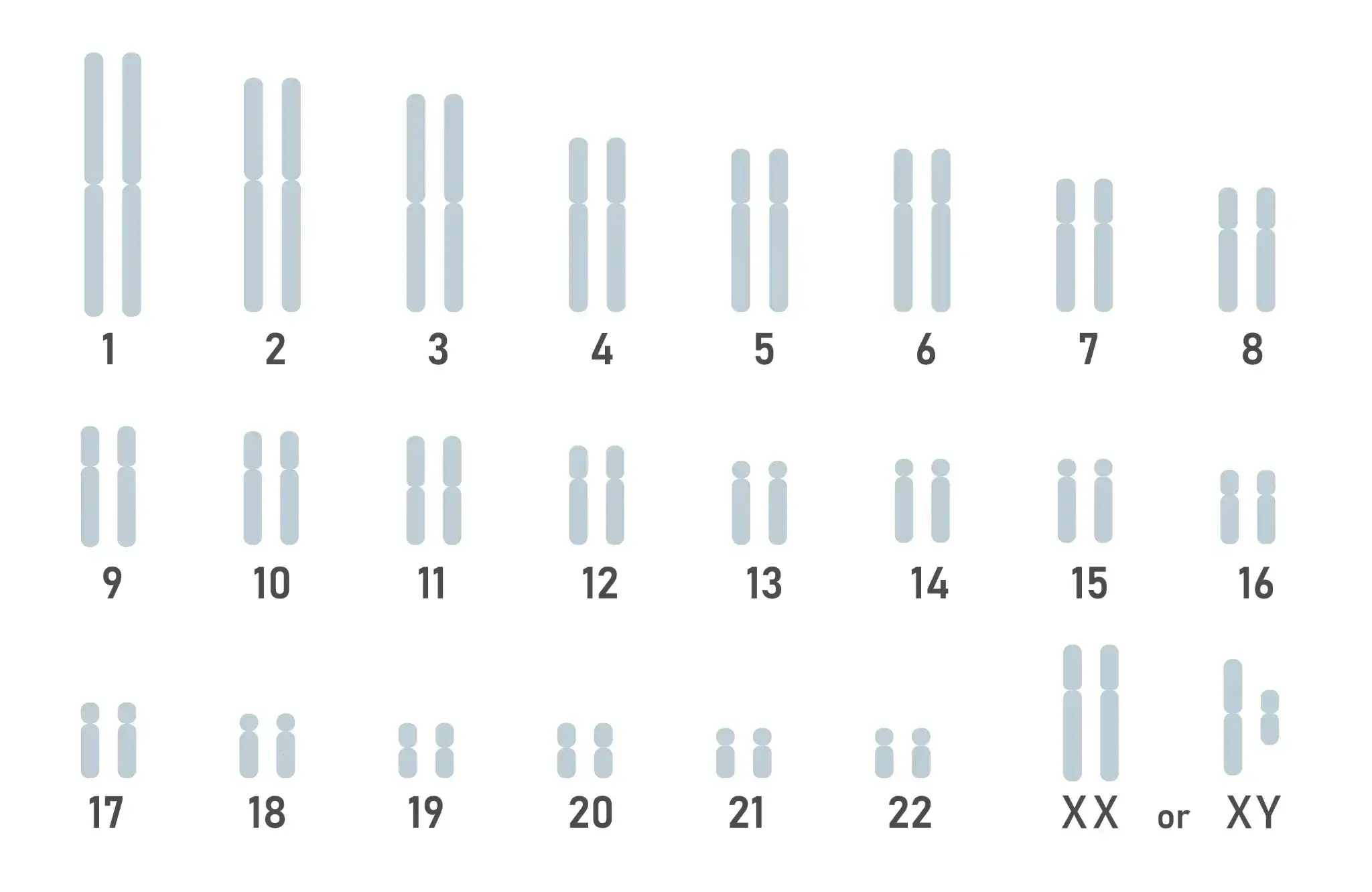
Schematic diagram of DNA map present in cells
- ■
- ■
- ■
- ■
- ■
- ■
- ■
- ■
- ■
Related genes
| Related genes | TSC1 |
|---|
Frequently asked questions (FAQ)
Q1. What is epileptic seizure (focal cortical dysplasia)?
Epileptic seizures are brain seizure symptoms caused by excessive electrical signals from nerve cells.Focal cortical dysplasia (FCD) is a disease that causes repeated epileptic seizures due to abnormal formation and arrangement of neurons in the cerebral cortex, and is one of the main causes of drug-resistant epilepsy.
Q2. What is the cause of focal cortical dysplasia (FCD)?
What causes FCD?Abnormal development of neurons in the cerebral cortexis. A decrease in the function of the tumor suppressor gene TSC1 is involved, and the loss of control over cell division and proliferation causes problems in the formation of nerve cells. Carriers of type A mutation in the DNA region rs4962081 tend to be at higher risk (Reference link 2, 3).
Q3. Can genetic testing determine the risk of epileptic seizures?
By examining the genotype of the DNA region rs4962081,Understand the risk trends of epileptic seizures related to FCDYou can. Studies have shown that people with type GA and AA types who carry the type A mutation tend to be at higher risk.
Q4. How is focal cortical dysplasia (FCD) treated?
The first choice isDrug therapy with antiepileptic drugsIt is. If drug therapy is ineffective, surgical treatment to surgically remove the abnormal cerebral cortex may be considered. Early diagnosis and therapeutic intervention are important to improve prognosis.
Q5. What is the genotype distribution of rs4962081 in Japanese people?
In Japanese, the GG type is the most common at about 93.3%, the GA type at about 6.5%, and the AA type at about 0.1%.Compared to the world as a whole, Japanese people tend to have a lower proportion of type GA and type AA.(Worldwide: GA type 15.1%, AA type 0.6%) (Reference link 4).
References
- Reference link 1: 2020 Jun., Thomas Rosengren, Scientific Reports.
- Reference link 2: 2007 Oct., Volker Schick, Epilepsia.
- Reference link 3: 2006 Feb., Becker, Albert J., Journal of Neuropathology & Experimental Neurology.
- Reference link 4: Information on DNA region "rs4962081" TogoVar
- Reference link 5: "Silent mutations" information on "in cancer" EU CORDIS
- Reference link 6: 2007 Dec., Volker Schick, Epilepsia