
 Eosinopenia

- Eosinopenia is a condition in which there is an abnormal decrease in eosinophils, a type of white blood cell.This is an indicator of decreased immune function.
- Genotype of DNA region rs11700925is involved in the number of eosinophils, and people with the T mutation tend to have a higher number of eosinophils.
- For diagnosisComplete blood count (CBC) testis used, and it is important to identify and treat the causative disease.
Overview Eosinopenia is a condition in which the number of eosinophils, a type of white blood cell, is significantly lower than normal. Eosinophils are part of the body's immune system and help protect against parasitic infections and control allergic reactions. Normally, eosinophils make up about 16% of the white blood cells in the body. However, in people with eosinopenia, this rate is much lower than normal. Eosinopenia has many causes, including severe stress and the use of steroid drugs. Also, when an infection such as a bacteria or virus occurs in the body, the immune system responds and the number of eosinophils may decrease. A complete blood count (CBC) test, which counts the number and type of cells in the blood, is commonly used to diagnose eosinopenia. Determining the number of eosinophils with a CBC test is very important because it allows you to check the progress of the disease and the effectiveness of treatment. A study by Vuckovic and colleagues at the University of Cambridge revealed that the number of eosinophils is associated with a DNA region called rs11700925. There are three genotypes in this DNA region: CC, CT, and TT, and it was found that people with the T genotype tend to have a higher number of eosinophils.
What is eosinopenia?
Eosinopenia is a condition in which eosinophils, a type of white blood cell, are abnormally reduced in the blood.Eosinophils normally make up about 1-6% of white blood cells and are involved in defense against parasitic infections and control of allergic reactions.
Causes and mechanisms of eosinopenia
Eosinopenia is caused by the following factors:
- Severe stress:Acute stress increases adrenocortical hormone (cortisol) and decreases eosinophils.
- Use of steroid drugs:Corticosteroids promote apoptosis (cell death) of eosinophils
- Acute infections:The number of eosinophils decreases as an immune response during bacterial and viral infections.
- Cushing's syndrome:Persistent decrease in eosinophils due to overproduction of adrenal corticosteroids
Role of eosinophils and effects of decrease
Eosinophils play important functions in the immune system, including:
- from parasitic infectionsbiological defense
- allergic reactionAdjustment/control
- in inflammatory responsetissue repair
A decrease in eosinophils may reduce these defenses and increase the risk of infection.
How to diagnose eosinopenia
Complete blood count (CBC) testMeasures the number of eosinophils in the blood.
- The absolute number of eosinophilsLess than 50 cells per μL of bloodDiagnosed with eosinopenia
- Confirm the percentage of eosinophils by leukocyte differential test
- Additional tests were conducted to identify the causative disease.
Difference between eosinopenia and eosinophilia
| Comparison items | Eosinopenia | eosinophilia |
|---|---|---|
| definition | Abnormally low number of eosinophils | Abnormally high number of eosinophils |
| Standard value | Less than 50 pieces/μL | 500 pieces/μL or more |
| Main cause | Stress/steroids/infectious diseases | Allergies, parasites, autoimmune diseases |
| symptoms | Decreased immunity/increased risk of infection | Organ damage/inflammatory response |
Relationship between genes and eosinophil counts
Relationship between DNA region rs11700925 and eosinophil count
A study by Vuckovic and colleagues at the University of Cambridge found that the DNA region rs11700925 was associated with eosinophil counts.
- There are three genotypes of rs11700925: CC, CT, and TT.
- Genotype with T-type mutationPeople tend to have a high number of eosinophils
Genotype distribution in Japanese (rs11700925)
| Genotype | Percentage of Japanese people | percentage of the world |
|---|---|---|
| CC type | 99.9% | 58.2% |
| CT type | 0.1%以下 | 36.1% |
| TT type | 0.1%以下 | 5.5% |
Rationale for testing
Superficial DNA region: eosinopenia
The gene region most strongly associated with eosinopenia is rs11700925. The distribution of isomorphic genotypes in Japan is as follows.
- CC
99.9 % - CT
0.1%以下 - TT
0.1%以下
Another gene region involved in eosinopenia is rs34290285. The distribution of isomorphic genotypes in Japan is as follows
- GG
72.4 % - GA
25.3 % - AA
2.2 %
Another gene region involved in eosinopenia is rs7080536. The distribution of isomorphic genotypes in Japan is as follows
- GG
99.9 % - GA
0.1%以下 - AA
0.1%以下
Another gene region involved in eosinopenia is rs3093479. The distribution of isomorphic genotypes in Japan is as follows
- AA
24.0 % - AG
49.9 % - GG
25.9 %
Basis for inspection
Research by Vuckovic et al. at the University of Cambridge revealed that eosinophil counts are linked to genes. There are two types of mutations in the rs11700925 region, C and T, and people with type C mutations tend to have a higher number of eosinophils (1).
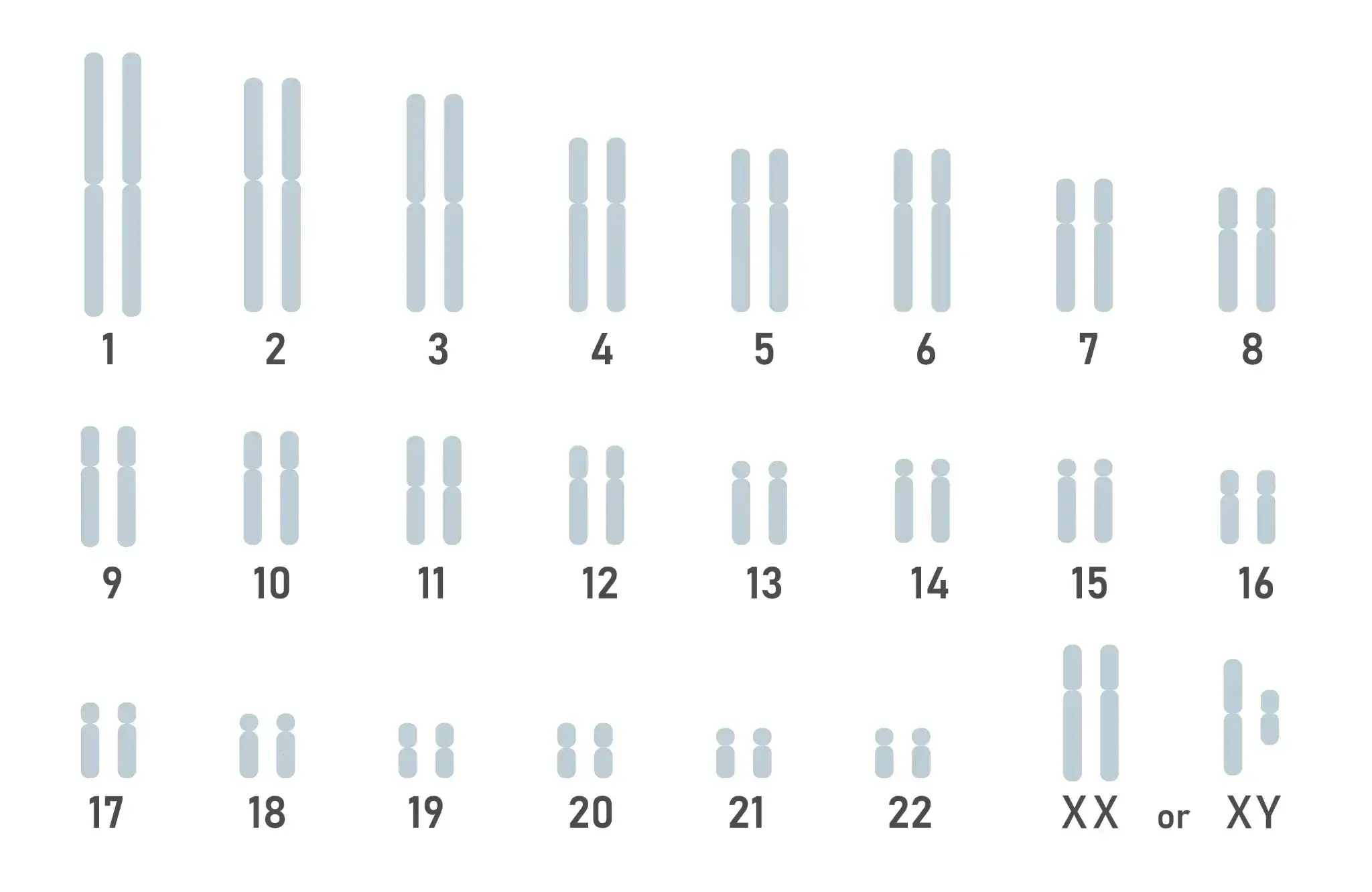
The DNA region investigated this time
Schematic diagram of DNA map present in cells
- ■
- ■
- ■
- ■
- ■
- ■
- ■
- ■
- ■
Related genes
| Related genes | RUNX1 |
|---|---|
| Related genes | D2HGDH |
| Related genes | HABP2 |
| Related genes | IL9R |
Frequently asked questions (FAQ)
Q1. What is eosinopenia?
Eosinopenia is a condition in which eosinophils, a type of white blood cell, are abnormally reduced in the blood.Eosinophils normally make up approximately 1–6% of white blood cells and are involved in defense against parasitic infections and regulation of allergic responses (1).
Q2. What is the cause of eosinopenia?
The main cause isSevere stress, use of corticosteroids, acute bacterial or viral infectionsIt is. Cushing's syndrome and alcoholism are also causes. Studies have shown that the genotype of the DNA region rs11700925 influences the number of eosinophils (1).
Q3. How is eosinopenia diagnosed?
Complete blood count (CBC) testMeasures the number of eosinophils in the blood. Eosinopenia is diagnosed when the absolute number of eosinophils is less than 50 per μL of blood.
Q4. Can genetic testing determine the risk of eosinopenia?
By examining the genotype of DNA region rs11700925,Understand trends in eosinophil countsYou can. A study by Vuckovic et al. at the University of Cambridge found that people with the T mutation genotype tend to have a higher number of eosinophils (1).
References
- Reference link 1: 2020 Sep., Dragana Vuckovic, Cell
- Reference link 2: 2016 Nov., William J Astle, Cell
- Reference link 3: 2020 Sep., Ming-Huei Chen, Cell