
 end stage renal disease
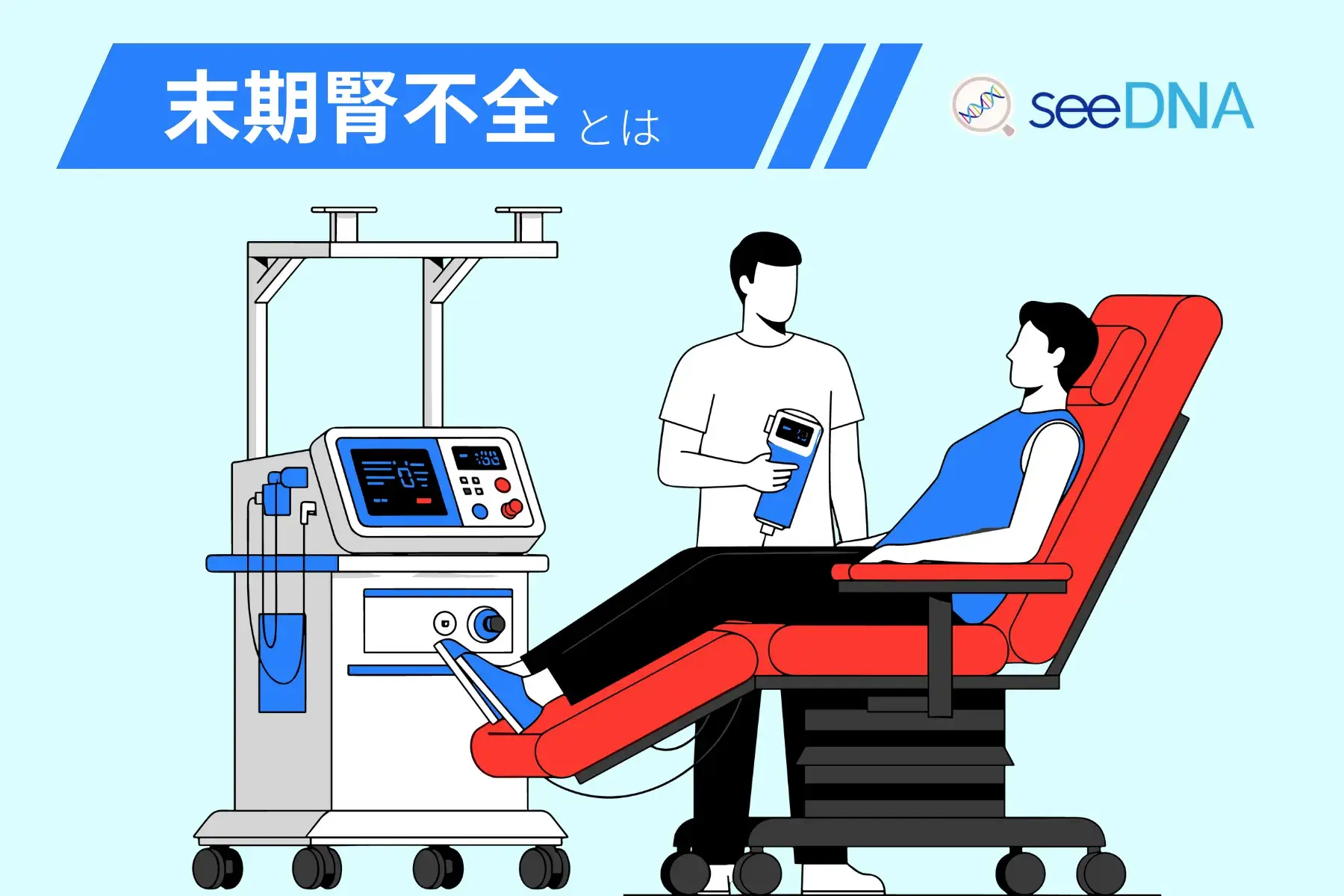
- End-stage renal disease (ESKD) is the final stage of chronic kidney diseaseA condition in which kidney function has decreased to 10-15% or less and life cannot be supported without dialysis or kidney transplantation.
- T-type mutation in DNA region rs12963285A University of North Carolina study finds that people with the disease tend to have a higher risk of end-stage renal disease.
- The T mutation (TT+TC) prevalence among Japanese people is96.0%This is a slightly lower percentage than the world average of 99.6%.
Overview End-stage renal disease (ESKD) or end-stage renal disease (ESRD) is the final stage of chronic kidney disease (CKD) and represents a state in which the kidneys have lost most of their function. When this stage progresses, kidney function decreases to less than 10-15%, and important functions such as filtering waste and excess fluid, producing urine, and regulating minerals are almost impossible. People with ESKD may exhibit a variety of symptoms due to the buildup of waste and excess fluid. These include fatigue and fatigue due to anemia, edema due to fluid accumulation (especially in the legs and around the eyes), loss of appetite, and weight loss. Fluid buildup can also affect the lungs and cause breathing difficulties. ESKD can be fatal if untreated. Dialysis replaces kidney function, and kidney transplantation provides a healthy kidney. A significant decline in kidney function can disrupt the balance of substances in the blood, leading to health problems such as abnormal heart rhythms and bone disease. It can have a significant impact on your quality of life and requires specialized medical treatment. A study by Bridget M Lin and colleagues at the University of North Carolina at Chapel Hill revealed that the risk of developing end-stage renal disease is associated with a DNA region called rs12963285. There are three genotypes in this DNA region: TT, TC, and CC, and it was found that people with the T genotype tend to have a higher risk of end-stage renal disease.
What is end stage renal disease (ESKD)?
End-Stage Kidney (ESKD) Chronic kidney disease (CKD) is the final stage of chronic kidney disease (CKD), and refers to a condition in which kidney function has decreased to 10-15% or less.Without treatment, the disease is fatal and dialysis or kidney transplantation is essential.
What is the impact of end-stage renal disease on the body?
When kidney function declines below 10-15%, important functions such as filtering waste and excess fluid, producing urine, and regulating minerals almost cease. The specific symptoms are categorized below.
Main physical symptoms
- Feeling of fatigue/malaise:Erythropoietin secretion, which produces red blood cells, decreases due to anemia.
- Edema:Swelling in the legs and around the eyes due to fluid accumulation
- Anorexia/weight loss:Digestive system affected by waste accumulation
- Difficulty breathing:Fluid builds up in the lungs, reducing respiratory function
Complication risk
- Cardiovascular system:Abnormal heart rhythm (arrhythmia) occurs due to disruption of the substance balance in the blood.
- Bone disease:Abnormal calcium and phosphorus metabolism weakens bones
- Quality of life:Dialysis treatment requires 3 times a week for about 4 hours each time, which puts restrictions on daily life.
Comparison of treatments for end-stage renal disease
| Comparison items | hemodialysis | peritoneal dialysis | kidney transplant |
|---|---|---|---|
| method | Machine filters blood | Filtration using the peritoneum | transplant donor kidney |
| frequency | 3 times a week, approximately 4 hours each time | Every day (can be done at home) | 1 surgery |
| life restrictions | Hospital visit required/dietary restrictions apply | home management required | Need to take immunosuppressants |
| long term prognosis | 5-year survival rate approximately 35% | 5-year survival rate approximately 35% | 5-year survival rate of approximately 85% or more |
Association between genes and risk of end-stage renal disease
Relationship between DNA region rs12963285 and end-stage renal disease
Research by Bridget M Lin et al., University of North Carolina at Chapel Hill (2019, Front (published in Genet) revealed that the risk of developing end-stage renal disease is associated with the DNA region rs12963285.
- There are three genotypes of rs12963285: TT, TC, and CC.
- Genotype with T-type mutation(TT type/TC type) people tend to have a higher risk of end-stage renal disease.
- This gene region is related to the LINC-ROR gene
Comparison of genotype distribution in Japanese and the world (rs12963285)
| Genotype | Percentage of Japanese people | percentage of the world |
|---|---|---|
| TT type | 64.4% | 89.5% |
| TC type | 31.6% | 10.1% |
| CC type | 3.8% | 0.2% |
The T mutation prevalence rate (TT+TC) in Japanese people is96.0%This is a slightly lower percentage than the global average of 99.6%. On the other hand, the percentage of Japanese people with type CC is3.8%This is approximately 19 times higher than the world average of 0.2%, reflecting the genetic characteristics of the Japanese population.
Rationale for testing
Superficial DNA region: End-stage renal disease
The gene region most strongly associated with end-stage renal disease is rs12963285. The distribution of isomorphic genotypes in Japan is as follows.
- TT
64.4 % - TC
31.6 % - CC
3.8 %
Basis for inspection
Bridget M from the University of North Carolina at Chapel Hill A study by Lin et al. revealed that the risk of developing end-stage renal disease is linked to genes. There is a region called rs12963285 in the human genome, and there are two types of mutations, T and C, in the gene in this region. It was found that people with the T-type mutation tend to have a higher risk of end-stage renal disease.
The DNA region investigated this time
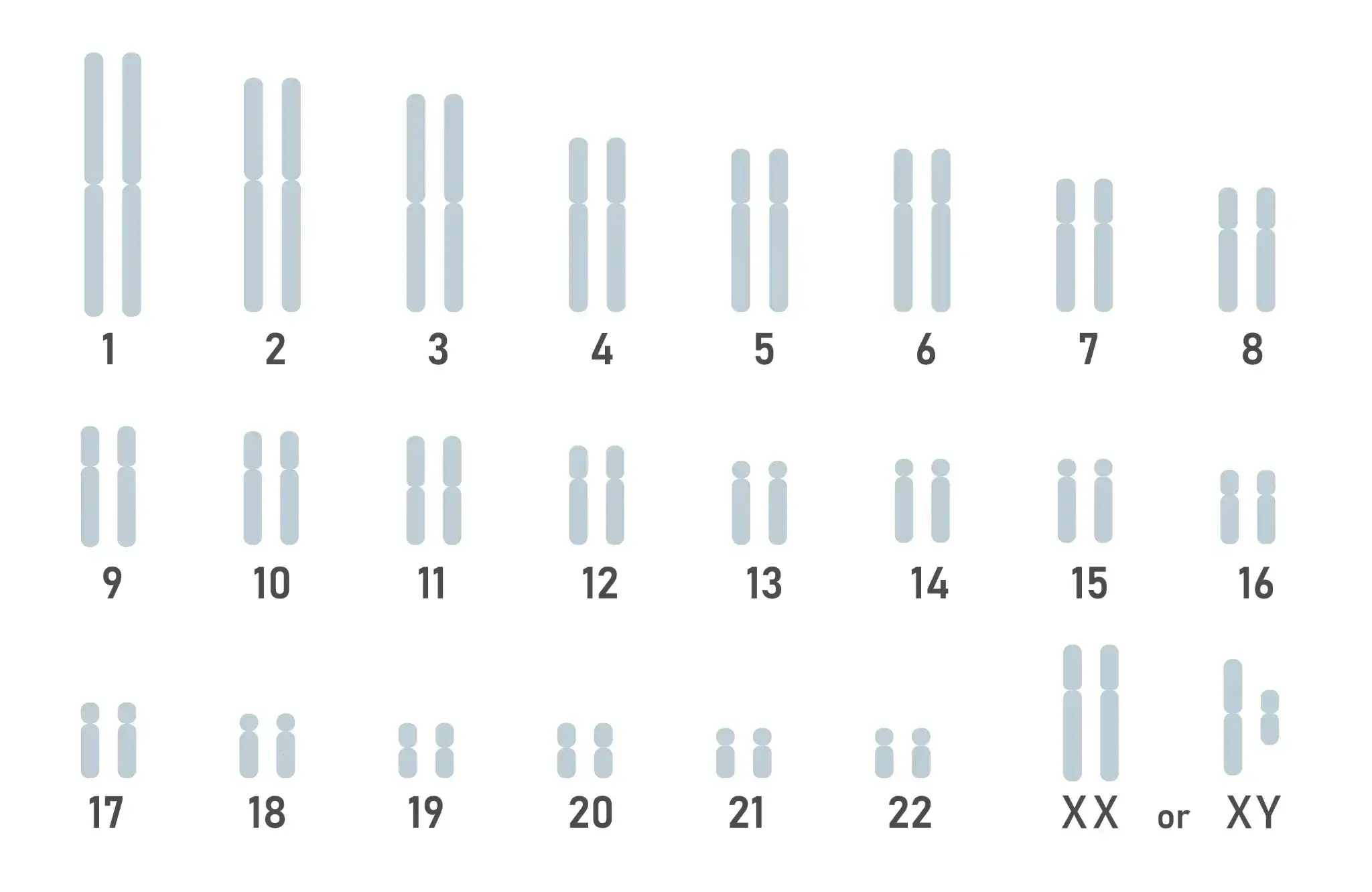
Schematic diagram of DNA map present in cells
- ■
- ■
- ■
- ■
- ■
- ■
- ■
- ■
- ■
Related genes
| Related genes | LINC-ROR |
|---|
Frequently asked questions (FAQ)
Q1. What is end-stage renal disease (ESKD)?
End-stage renal disease (ESKD) is the final stage of chronic kidney disease (CKD) and refers to a condition in which kidney function has decreased to 10-15% or less.The kidneys' basic functions, such as filtering waste and excess fluid, producing urine, and regulating minerals, have almost ceased, and life cannot be sustained without dialysis or a kidney transplant. Symptoms include anemia, edema, loss of appetite, and difficulty breathing.
Q2. Is end stage renal disease related to genes?
Yes.Research by Bridget M Lin et al., University of North Carolina at Chapel Hill (2019, Front Genet) found that the DNA region rs12963285 is associated with the risk of end-stage renal disease.There are three genotypes of rs12963285: TT, TC, and CC, and people with the T mutation tend to have a higher risk of end-stage renal disease.
Q3. What is the distribution of the genotype (rs12963285) associated with end-stage renal disease in Japanese people?
The genotype distribution of rs12963285 in Japanese people isTT type 64.4%, TC type 31.6%, CC type 3.8%It is. Worldwide, 89.5% are TT type, 10.1% are TC type, and 0.2% are CC type, and Japanese people have a higher proportion of TC type and CC type than the world average.
Q4. What are the main symptoms of end-stage renal disease?
The main symptoms of end-stage renal disease areFatigue and malaise due to anemia、Edema due to fluid accumulation(especially around the feet and eyes),Anorexia/weight loss、difficulty breathingis. Decreased kidney function causes waste products to accumulate in the body, leading to complications such as abnormal heart rhythms and bone disease.
Q5. What treatments are available for end-stage renal disease?
The main treatments for end-stage renal disease aredialysis therapy(hemodialysis/peritoneal dialysis)kidney transplantThere are two types. Hemodialysis requires hospital visits three times a week for approximately four hours each time, while peritoneal dialysis can be performed daily at home. Kidney transplantation is the treatment with the best prognosis, with a 5-year survival rate of over 85%, but it requires securing a donor and continuing to take immunosuppressants.
References
- Reference link 1: 2019 May., Bridget M Lin, Front Genet