
 Efficacy of steroids for nephrotic syndrome

- Nephrotic syndrome is a disease in which the kidney's glomerular filter function is impaired and protein leaks into the urine.In this case, steroid treatment is used as the first choice drug.
- Type A mutation in DNA region rs1128503A study by Md Abdul Aziz and colleagues found that steroid treatment tends to be more effective in people with
- JapaneseApproximately 84.0% carry type A mutation(AA type 36.1% + AG type 47.9%), and can be expected to be highly responsive to steroid treatment.
Overview Nephrotic syndrome is a disease in which the filtering function of the kidneys is impaired and protein leaks into the urine. Normally, the kidneys remove unwanted substances from the blood into the urine and retain needed proteins, but in this disease, damage to the glomeruli causes proteins to leak out. This results in symptoms such as hypoalbuminemia, edema, and hyperlipidemia. Steroids are commonly used as a treatment. Steroid treatment reduces proteinuria and improves symptoms by suppressing glomerular inflammation and immune responses. However, there are some patients for whom steroids do not respond well or who experience strong side effects (steroid-resistant patients), so in such cases it is necessary to consider other treatment methods. Main side effects include increased risk of infection due to immunosuppression, weight gain, swelling, high blood pressure, worsening of diabetes, osteoporosis, and stomach ulcers. Steroid therapy plays an important role in the treatment of nephrotic syndrome, but it is important to determine the balance between its effectiveness and side effects. A study by Md Abdul Aziz and colleagues at Noakhali University of Science and Technology revealed that the effectiveness of steroids against nephrotic syndrome is associated with a DNA region called rs1128503. There are three genotypes in this DNA region: AA, AG, and GG, and it has been found that people with the A genotype are expected to be highly effective in steroid treatment.
What is nephrotic syndrome?
Nephrotic syndrome is a disease in which the glomerular filter function of the kidneys is impaired, causing large amounts of proteins in the blood (mainly albumin) to leak into the urine.In Japan, the incidence rate is reported to be approximately 3 to 4 per 100,000 people in adults and approximately 2 to 7 per 100,000 in children.
Causes and mechanisms of nephrotic syndrome
The following factors are involved in the development of nephrotic syndrome:
- Primary (idiopathic):The main causes are minimal change type (approximately 80% of children), focal segmental glomerulosclerosis (FSGS), and membranous nephropathy.
- Secondary:Occurs in conjunction with systemic diseases such as diabetic nephropathy, lupus nephritis, and amyloidosis.
- Genetic factors:Mutations in the ABCB1 gene (DNA region rs1128503) affect steroid treatment response
The kidney's glomeruli normally remove unwanted waste products from the blood into the urine, while retaining needed proteins. in nephrotic syndromeAbnormally increased permeability of the glomerular basement membraneand high-molecular-weight proteins such as albumin leak into the urine.
Main symptoms of nephrotic syndrome
The four main clinical findings are:
- Severe proteinuria:More than 3.5g of protein is excreted in the urine per day
- Hypoalbuminemia:Serum albumin level falls below 3.0g/dL
- Edema (swelling):Noticeable in the eyelids and lower limbs, accompanied by generalized edema, ascites, and pleural effusion in severe cases
- Hyperlipidemia:Increased lipoprotein synthesis in the liver, raising total cholesterol levels
Why is steroid treatment effective for nephrotic syndrome?
Steroids (corticosteroids) suppress glomerular inflammatory reactions and immune system overreactions.This reduces proteinuria and improves symptoms.
The mechanism of action of steroids is as follows.
- Suppresses activation of T cells and B cells and calms immune system overreactions
- Reduces production of inflammatory cytokines (IL-1, TNF-α, etc.)
- Improves glomerular basement membrane permeability and reduces protein leakage
- Stabilizes the cytoskeleton of podocytes (glomerular epithelial cells)
Difference between steroid sensitivity and steroid resistance
| Comparison items | steroid sensitivity | steroid resistance |
|---|---|---|
| definition | Complete remission achieved with steroid treatment | No remission after 4-8 weeks of steroid treatment |
| Percentage of pediatric patients | Approximately 80-90% | Approximately 10-20% |
| Main causative diseases | minimal change nephrosis | Focal segmental glomerulosclerosis (FSGS) |
| gene related | rs1128503 Type A mutation prevalence is high | Suggested association with G-type mutation |
| prognosis | Good (with recurrence) | Careful follow-up required |
| alternative treatment | Re-administer steroids in case of recurrence | Immunosuppressants such as cyclosporine and tacrolimus |
Main side effects of steroid treatment
It is important to determine the balance between the effectiveness and side effects of steroids. The main side effects are as follows.
- Immunosuppression:The risk of infectious diseases (pneumonia, shingles, etc.) increases approximately 2 to 3 times.
- Metabolic abnormalities:Weight gain, moon face, worsening diabetes
- Bone metabolic disorders:Osteoporosis (long-term use increases fracture risk by approximately 30-50%)
- Digestive disorders:Gastric ulcer/gastrointestinal bleeding
- Circulatory disorders:Hypertension, worsening of edema
- Adrenal insufficiency:Risk of developing symptoms if sudden discontinuation after long-term use
Relationship between genes and steroid treatment effects
Relationship between DNA region rs1128503 and steroid efficacy
Md Abdul of Noakhali University of Science and Technology A study by Aziz et al. (1) revealed that the DNA region rs1128503 was associated with the effectiveness of steroid treatment for nephrotic syndrome.
- There are three genotypes of rs1128503: AA, AG, and GG.
- Genotype with type A mutation (AA type/AG type)People can expect high efficacy from steroid treatment.
- Located on the ABCB1 gene and affects the expression level and function of P-glycoprotein
Genotype distribution in the Japanese and the world (rs1128503)
| Genotype | Percentage of Japanese people | percentage of the world |
|---|---|---|
| AA type | 36.1% | 17.8% |
| AG type | 47.9% | 48.8% |
| GG type | 15.9% | 33.3% |
Compared to the world average, the JapaneseThe proportion of type AA was approximately twice as high (36.1% vs. 17.8%), the prevalence of type A mutations tends to be high. Approximately 84.0% of Japanese people (AA type + AG type) carry the type A mutation, suggesting that this is a population that is highly responsive to steroid treatment.
Rationale for testing
Superficial DNA region: effectiveness of steroids for nephrotic syndrome
The gene region that most strongly influences the effectiveness of steroids for nephrotic syndrome is rs1128503. The distribution of isomorphic genotypes in Japan is as follows.
- AA
36.1 % - AG
47.9 % - GG
15.9 %
Basis for inspection
Md Abdul of Noakhali University of Science and Technology A study by Aziz et al. revealed that the effectiveness of steroids for nephrotic syndrome is linked to genes. There is a region called rs1128503 in the human genome, and there are two types of mutations, A and G, in the gene in this region. It has been found that people with the type A mutation can expect high efficacy from steroid treatment (1).
The DNA region investigated this time
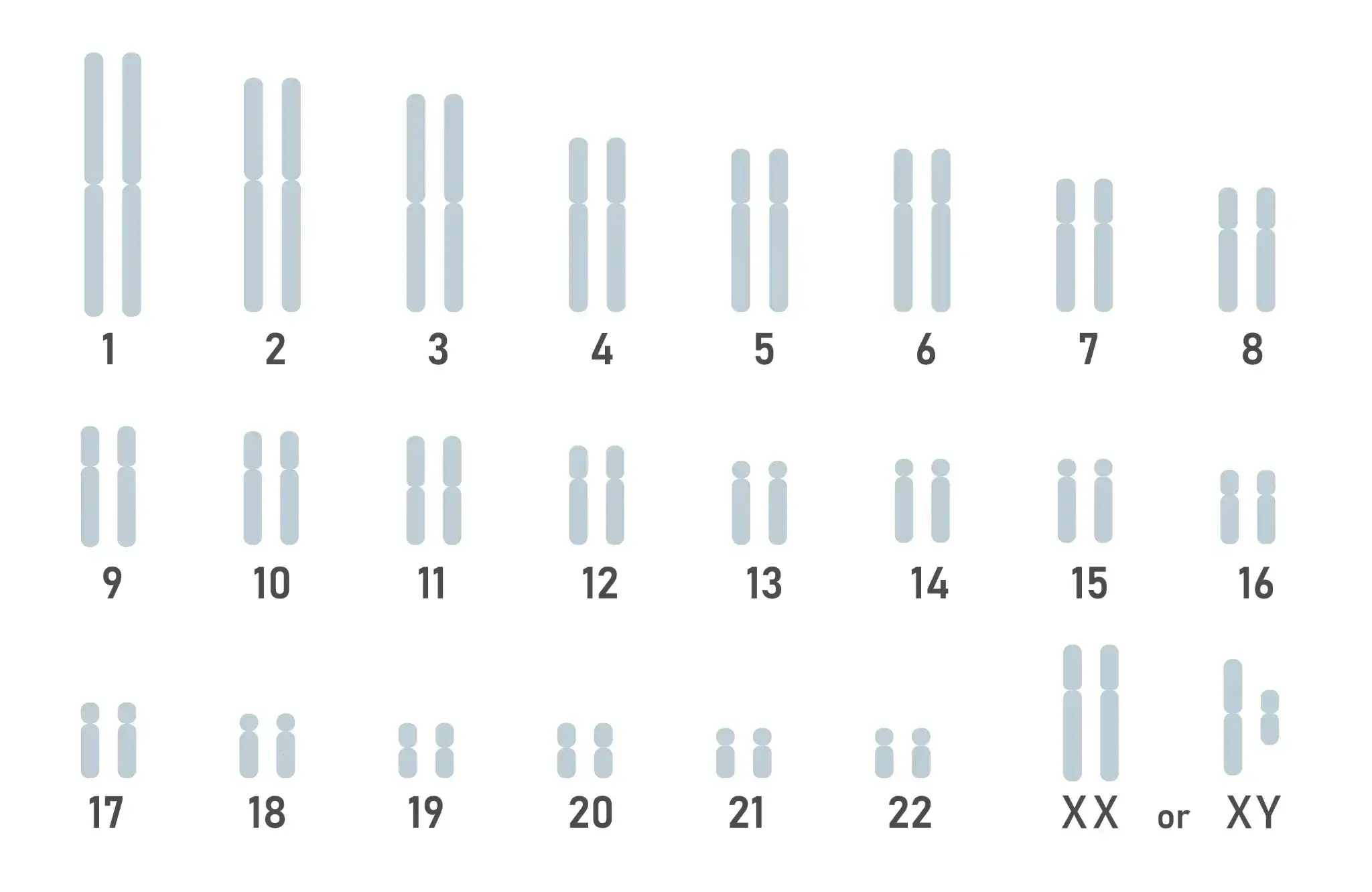
Schematic diagram of DNA map present in cells
- ■
- ■
- ■
- ■
- ■
- ■
- ■
- ■
- ■
Related genes
| Related genes | ABCB1 |
|---|
Frequently asked questions (FAQ)
Q1. What is nephrotic syndrome?
Nephrotic syndrome is a disease in which the glomerular filter function of the kidneys is impaired, causing large amounts of protein from the blood to leak into the urine.The main symptoms are proteinuria of 3.5 g or more per day, hypoalbuminemia, edema, and hyperlipidemia, and the incidence among adults in Japan is approximately 3 to 4 per 100,000 people.
Q2. Why is steroid treatment effective for nephrotic syndrome?
steroids areSuppresses glomerular inflammatory response and immune system overreactionThis reduces proteinuria. It improves the permeability of the glomerular basement membrane by suppressing the activation of T and B cells and decreasing the production of inflammatory cytokines (1).
Q3. Are genes related to the effectiveness of steroid treatment?
Genotype of DNA region rs1128503 is associated with efficacy of steroid treatment.People with genotype A mutation (AA type/AG type) are more effective with steroid treatment.The trend is that Md This was found in a study by Abdul Aziz et al. (1).
Q4. What is steroid-resistant nephrotic syndrome?
If complete remission is not achieved after 4 to 8 weeks of steroid treatmentis defined as steroid resistance. Approximately 10-20% of pediatric patients develop steroid resistance and require switching to immunosuppressants such as cyclosporine/tacrolimus.
Q5. What are the main side effects of steroid treatment?
The main side effects areIncreased risk of infections due to immunosuppression, weight gain, high blood pressure, osteoporosis, and gastric ulcersIt is. There is a risk of adrenal insufficiency with long-term use, so careful administration is required under the guidance of a doctor.
References
- Reference link 1: 2022 Jul., Md Abdul Aziz, J Gene Med