
 Tendency to have higher educational background

- The tendency for higher educational attainment is an index that quantifies the influence of genes on academic performance using the polygenic risk score (PRS).to integrate and evaluate multiple genetic mutations.
- T-type mutation in DNA region rs10897561A study by the Vrije Universiteit Amsterdam found that people with
- The T mutation (TT+TC) prevalence among Japanese people is69.9%, which is lower than the global average of 94.6%.
Overview Predicting educational attainment using the Polygenic Risk Score (PRS) is a way to examine how an individual's genes influence academic performance and educational success. This score combines the influence of many genes related to education and schoolwork to predict an individual's academic performance. This method first uses large-scale genetic data to identify genetic variants that affect academic performance and education. Next, we examine how these genetic variations exist in an individual's genes, and calculate the PRS based on that. This score can be used to predict how likely an individual is to succeed academically. A high PRS may predict academic success, whereas a low PRS may lead to poor academic success. However, for educational success, not only genetic factors are important, but also the educational environment, individual efforts, and family environment. Therefore, PRS alone does not determine everything. There are advantages and disadvantages to using PRS to predict educational attainment. The advantage is that the influence of genetic factors on educational outcomes can be quantitatively evaluated. This can help with educational support and resource allocation. On the other hand, issues include not only genetic factors, but also the educational environment and individual motivation, and these cannot be ignored. Because there are limits to the accuracy and interpretation of PRS, it is important to evaluate it in conjunction with other factors, rather than relying solely on genetic factors. A study by Okbay et al. at Vrije Universiteit Amsterdam revealed that a tendency to have a high level of educational attainment is associated with a DNA region called rs10897561. There are three genotypes in this DNA region: TT, TC, and CC, and it was found that people with the T genotype tend to have higher educational attainment.
What is the tendency for higher educational background?
Propensity for higher educational attainment is an indicator that quantitatively evaluates the degree to which an individual's genes influence academic performance and educational attainment using the Polygenic Risk Score (PRS).This score is calculated by integrating the effects of multiple genetic variants related to education and academic performance.
What is Polygenic Risk Score (PRS)?
PRS (Polygenic Risk Score)is a method that identifies genetic variations associated with specific traits from large-scale genetic data, combines their effects, and quantifies individual tendencies. Prediction of educational attainment is calculated using the following process.
- Step 1:Using large-scale genetic data to identify genetic variants that affect academic performance
- Step 2:Find out how identified genetic mutations are present in an individual's genes
- Step 3:Calculate PRS by integrating the effect size of each gene mutation
Comparison of benefits and challenges of PRS
| Comparison items | Benefits | Challenge |
|---|---|---|
| Quantitative evaluation | It is possible to understand numerically the influence of genetic factors on educational outcomes. | Environmental factors (educational environment/family environment) are not reflected. |
| Utilization | Serves as reference data for educational support and resource allocation | Not everything is determined by genes alone |
| accuracy | There is statistical evidence based on large-scale studies | There are limits to the accuracy of predictions at the individual level. |
Factors influencing educational attainment
In addition to genetic factors, educational success is influenced by the following factors:
- Educational environment:Quality of school, teaching ability of teachers, enrichment of curriculum
- Home environment:Parents' educational awareness, financial support, and learning habits at home
- Individual efforts:Willingness to learn, motivation, self-management ability
- Social factors:Regional educational infrastructure and cultural background
The relationship between genes and the tendency to have a high educational background
Relationship between DNA region rs10897561 and tendency to have high educational background
A study by Okbay et al. from Vrije Universiteit Amsterdam revealed that a tendency to have a higher educational background is associated with the DNA region rs10897561.
- There are three genotypes of rs10897561: TT, TC, and CC.
- Genotype with T-type mutation(TT type/TC type) people tend to have higher educational background
- A total of nine DNA regions have been reported to be associated with higher educational attainment.
Comparison of genotype distribution in Japanese and the world (rs10897561)
| Genotype | Percentage of Japanese people | percentage of the world |
|---|---|---|
| TT type | 20.4% | 59.2% |
| TC type | 49.5% | 35.4% |
| CC type | 30.0% | 5.2% |
The T mutation prevalence rate (TT+TC) in Japanese people is69.9%, which is lower than the global average of 94.6%. This indicates that the distribution patterns of genotypes are different between the Japanese population and the world population.
Rationale for testing
External DNA region: Tendency to have higher educational background
The gene region that most strongly influences the tendency for higher educational attainment is rs10897561. The distribution of isomorphic genotypes in Japan is as follows.
- TT
20.4 % - TC
49.5 % - CC
30.0 %
Another gene region associated with a tendency for higher educational attainment is rs116967397. The distribution of isomorphic genotypes in Japan is as follows
- AA
99.9 % - AC
0.1%以下 - CC
0.1%以下
Another gene region associated with a tendency for higher educational attainment is rs12449488. The distribution of isomorphic genotypes in Japan is as follows
- AA
10.0 % - AG
43.3 % - GG
46.6 %
Another gene region associated with a tendency for higher educational attainment is rs13050131. The distribution of isomorphic genotypes in Japan is as follows
- CC
1.5 % - CA
21.8 % - AA
76.5 %
Another gene region associated with a tendency for higher educational attainment is rs13187428. The distribution of isomorphic genotypes in Japan is as follows
- TT
50.6 % - TG
41.0 % - GG
8.3 %
Another gene region associated with a tendency for higher educational attainment is rs1544. The distribution of isomorphic genotypes in Japan is as follows
- GG
37.8 % - GA
47.3 % - AA
14.7 %
Another gene region associated with a tendency for higher educational attainment is rs17331777. The distribution of isomorphic genotypes in Japan is as follows
- AA
70.9 % - AG
26.5 % - GG
2.4 %
Another gene region associated with a tendency for higher educational attainment is rs2223928. The distribution of isomorphic genotypes in Japan is as follows
- CC
55.5 % - CT
37.9 % - TT
6.4 %
Another gene region associated with a tendency for higher educational attainment is rs2731670. The distribution of isomorphic genotypes in Japan is as follows
- AA
75.7 % - AC
22.5 % - CC
1.6 %
Basis for inspection
A study by Okbay et al. at Vrije Universiteit Amsterdam revealed that the tendency to have a high educational background is linked to genes. There is a region called rs10897561 in the human genome, and there are two types of mutations, T and C, in the gene in this region. It was found that people with the T-type mutation tended to have higher educational attainment.
The DNA region investigated this time
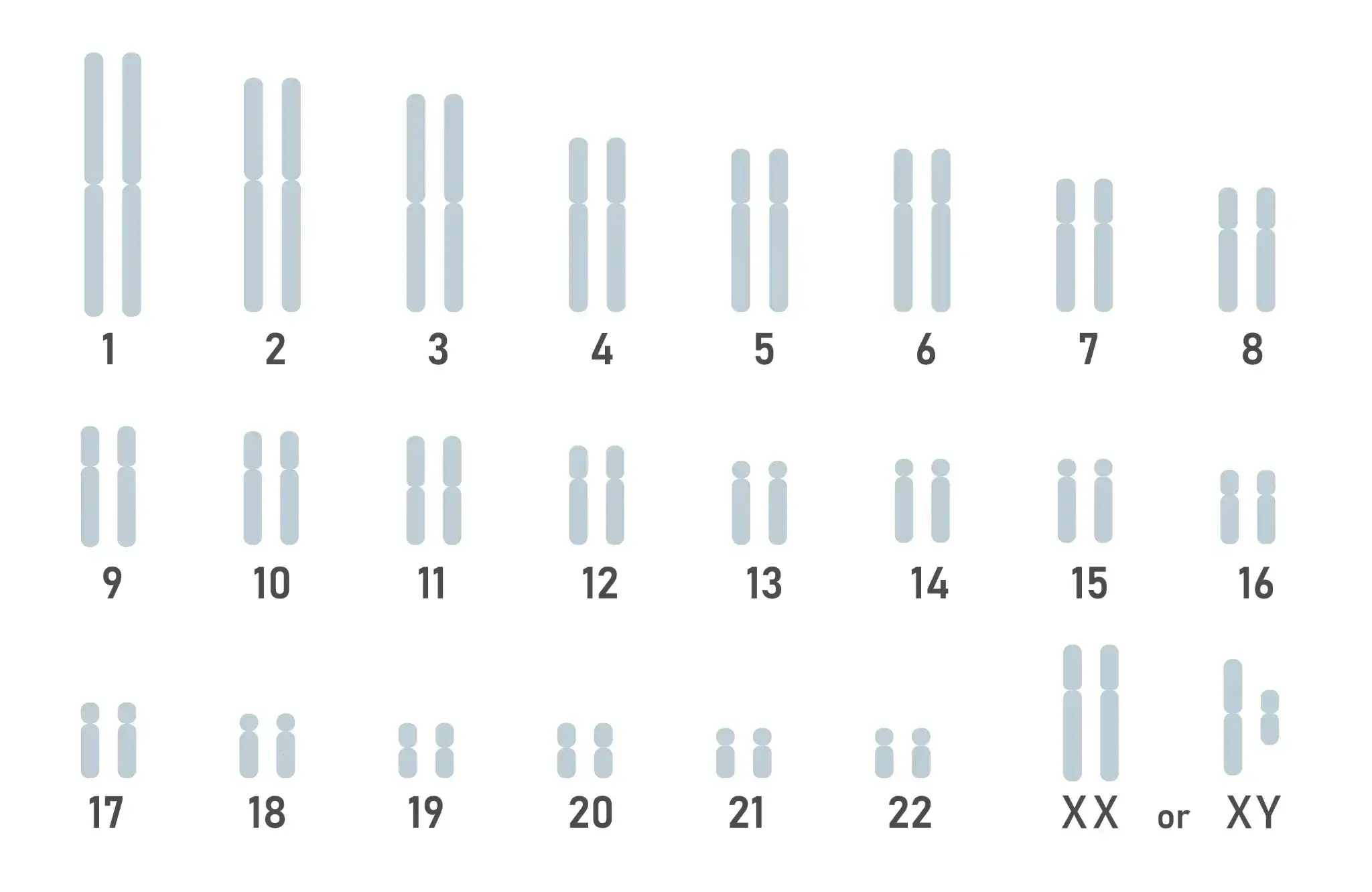
Schematic diagram of DNA map present in cells
- ■
- ■
- ■
- ■
- ■
- ■
- ■
- ■
- ■
Related genes
| Related genes | TENM4 |
|---|---|
| Related genes | PCDH17 |
| Related genes | PITPNM3 |
| Related genes | MIR548XHG |
| Related genes | MAN2A1 |
| Related genes | SCAF4 |
| Related genes | NXF3 |
| Related genes | LINC02306 |
| Related genes | GRK6 |
Frequently asked questions (FAQ)
Q1. What is the trend of higher educational background?
Propensity for higher educational attainment is an index that quantifies the influence of an individual's genes on academic performance using the Polygenic Risk Score (PRS).It integrates the effects of multiple genetic variants related to education and schoolwork to create a score that predicts the likelihood of academic success. A high PRS predicts academic success, whereas a low PRS suggests that academic success may be limited.
Q2. Is the tendency to have a high level of educational attainment determined solely by genes?
No. In addition to genetic factors, educational success is influenced by the educational environment, individual effort, and family environment.PRS only assesses genetic factors and does not include environmental factors such as educational environment or individual motivation. It is important to comprehensively evaluate the condition in conjunction with environmental factors, rather than relying solely on genetic factors.
Q3. How many genetic regions are associated with a tendency to have a high level of educational attainment?
In this inspection9 DNA regionsIt has been confirmed that (rs10897561, rs116967397, rs12449488, rs13050131, rs13187428, rs1544, rs17331777, rs2223928, rs2731670) are associated with higher educational attainment.
Q4. What is the distribution of the genotype (rs10897561) that tends to have higher educational attainment in Japanese people?
The genotype distribution of rs10897561 in Japanese people isTT type 20.4%, TC type 49.5%, CC type 30.0%It is. Worldwide, 59.2% are TT type, 35.4% are TC type, and 5.2% are CC type, and Japanese people have a higher rate of CC type than the world average.
References
- Reference link 1: 2022 Apr., Aysu Okbay, Nat Genet
- Reference link 2: 2018 Jul., James J Lee, Nat Genet