
 Effectiveness of chlorpromazine (mental stabilizing effect)

- Chlorpromazine is a first generation antipsychotic drugIt contributes to the mental stability of schizophrenia and bipolar disorder by blocking dopamine D2 receptors.
- T-type mutation in DNA region rs789859Study finds that chlorpromazine tends to be more effective in people with
- The balance between effectiveness and side effectsGenotype/dose/individual differencesindividualized dosage adjustment is important
Overview Chlorpromazine is a first-generation antipsychotic drug used to treat schizophrenia, bipolar disorder, and severe behavioral problems. Taking it has a huge impact on your mental stability. However, the effects and side effects vary depending on the individual. This is influenced by dosage, drug metabolism, genes, and the nature of the disease. At low doses, chlorpromazine primarily suppresses dopamine receptors, which relieves symptoms such as hallucinations and thought disorders. This may help patients organize their thoughts, reduce anxiety, and improve their overall mood. This brings a sense of stability and improves daily life and relationships. However, at higher doses, chlorpromazine may also affect other neurotransmitters. While this increases the effectiveness of the treatment, it also increases the risk of side effects. Sedation, hypotension, dry mouth, and extrapyramidal symptoms may occur, leading to physical discomfort. To use chlorpromazine most effectively, it is important to adjust the dose to the patient's individual condition. It is important for a doctor to carefully care for the patient and determine the balance between effectiveness and side effects. A study by Koga et al. at the University of Toronto revealed that the effects of chlorpromazine are associated with a DNA region called rs789859. There are three genotypes in this DNA region: GG, GT, and TT, and it has been found that people with the T genotype tend to be more effective with chlorpromazine.
What is chlorpromazine
Chlorpromazine (CPZ) is a drug classified as a first-generation (typical) antipsychotic, and it primarily blocks dopamine D2 receptors to bring about mental stability.It was developed in France in the 1950s and laid the foundation for psychiatric drug therapy.
Why chlorpromazine brings mental stability
Chlorpromazine in the brainBlocks dopamine D2 receptorsand suppresses excessive dopamine transmission. This has the following effects:
- Reducing hallucinations and delusions:Suppressing positive symptoms of schizophrenia
- Organizing your thoughts:Stabilize confusing thought patterns
- Anxiety reduction:Alleviates emotional overreactions
- Mood stability:Calming the manic state of bipolar disorder
Differences in effects depending on dose
| Comparison items | low dose | high dose |
|---|---|---|
| Main target of action | dopamine d2 receptor | D2 + serotonin, histamine, adrenergic receptors |
| therapeutic effect | Alleviation of hallucinations and thought disorders | Suppression of a wide range of psychiatric symptoms |
| Side effect risk | relatively low | Increased risk of sedation, hypotension, and extrapyramidal symptoms |
Main side effects of chlorpromazine
With increasing doses, the following side effects may occur:
- Sedation (excessive sleepiness):Due to histamine H1 receptor blockade
- Orthostatic hypotension:Blood pressure reduction due to α1 adrenergic receptor blockade
- Dry mouth:Due to anticholinergic effect
- Extrapyramidal symptoms:Muscle stiffness, tremor, akathisia (unable to sit still)
- Tardive dyskinesia:Risk of involuntary movements due to long-term use
Applicable diseases
- Schizophrenia (management of positive symptoms)
- Bipolar disorder (manic sedation)
- severe behavioral disorder
- Control of nausea and vomiting before and after surgery
Relationship between genes and the effects of chlorpromazine
Relationship between DNA region rs789859 and drug efficacy
A study by Koga et al. at the University of Toronto found that the genotype of the DNA region rs789859 is associated with the tranquilizing effects of chlorpromazine.
- There are three genotypes of rs789859: GG, GT, and TT.
- Genotype with T-type mutation(GT type/TT type) people tend to be more effective with chlorpromazine
Genotype distribution in Japanese (rs789859)
| Genotype | Percentage of Japanese people | percentage of the world |
|---|---|---|
| GG type | 62.1% | 36.9% |
| GT type | 33.3% | 47.6% |
| TT type | 4.4% | 15.3% |
Among Japanese people, GG type has the highest percentage at 62.1%. Approximately 37.7% of people carry the T mutation (GT type + TT type), which is lower than the global average of 62.9%.
Rationale for testing
Surface DNA region: effectiveness of chlorpromazine (mental stabilizing effect)
The gene region that most strongly influences the effectiveness of chlorpromazine (a tranquilizing effect) is rs789859. The distribution of isomorphic genotypes in Japan is as follows.
- GG
62.1 % - GT
33.3 % - TT
4.4 %
Basis for inspection
A study by Koga et al. at the University of Toronto revealed that the effects of chlorpromazine are linked to genes. There is a region called rs789859 in the human genome, and there are two types of mutations, G and T, in the gene in this region. It was found that people with the T mutation tend to be more effective on chlorpromazine.
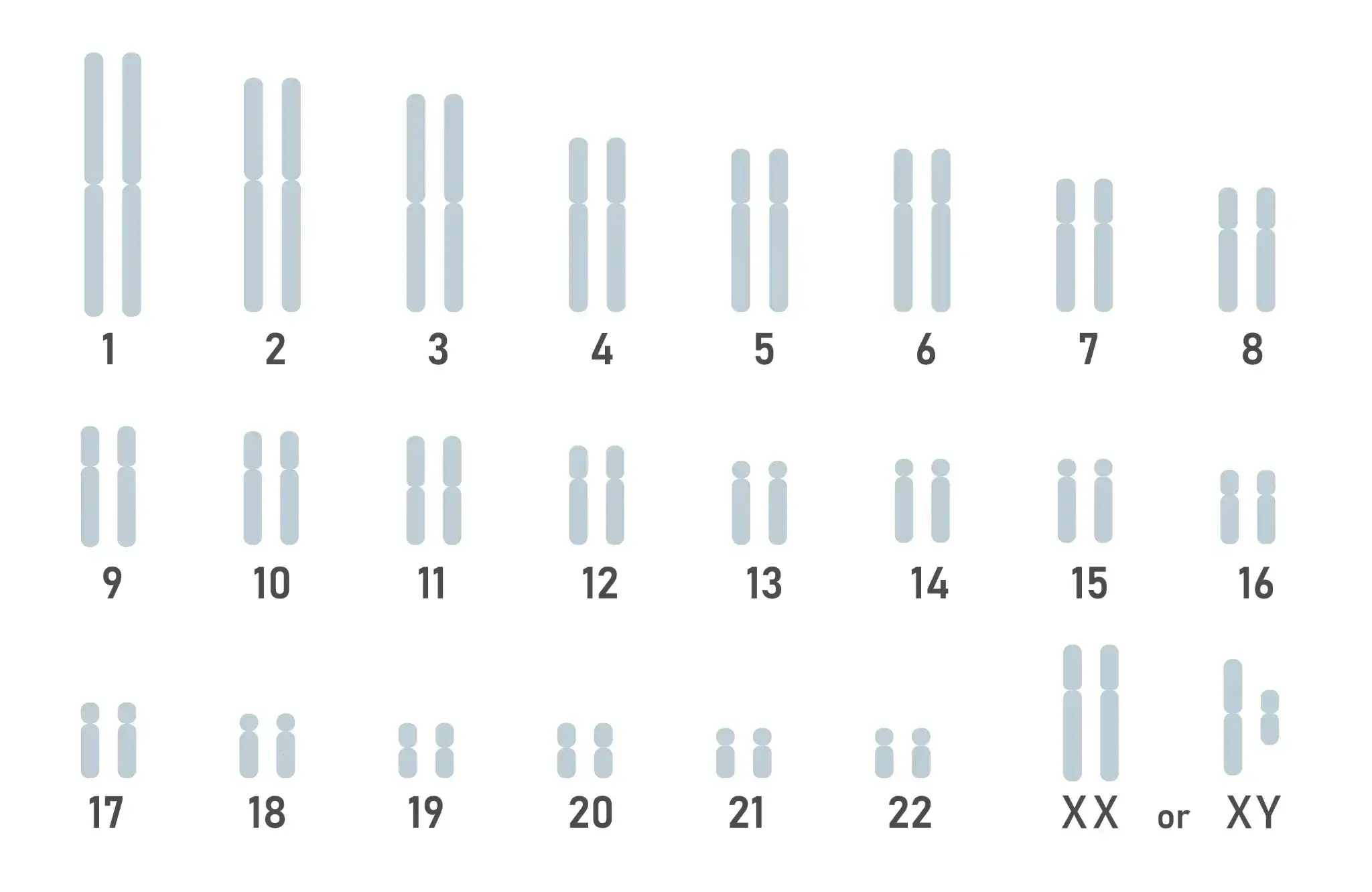
The DNA region investigated this time
Schematic diagram of DNA map present in cells
- ■
- ■
- ■
- ■
- ■
- ■
- ■
- ■
- ■
Related genes
| Related genes | LSG1 |
|---|
Frequently asked questions (FAQ)
Q1. What is chlorpromazine?
Chlorpromazine (CPZ) is a drug classified as a first-generation (typical) antipsychotic.Mainly by blocking dopamine D2 receptors, this medicine suppresses the positive symptoms of schizophrenia (hallucinations and delusions) and the manic state of bipolar disorder, resulting in mental stability. It was developed in France in the 1950s and laid the foundation for psychiatric drug therapy.
Q2. How does chlorpromazine's tranquilizing effect work?
Chlorpromazine in the brainBlocks dopamine D2 receptorsand suppresses excessive dopamine transmission. In low doses, it alleviates hallucinations, thought disorders, and reduces anxiety. As the dose increases, it also acts on serotonin, histamine, and adrenergic receptors, increasing the sedative effect but also increasing the risk of side effects.
Q3. Does the effect of chlorpromazine change depending on the gene?
According to research by Koga et al. at the University of Toronto,Genotype of DNA region rs789859 is associated with the effect of chlorpromazineIt turned out to be. People with the T mutation genotype (GT type/TT type) tend to be more effective. Among Japanese people, 62.1% are GG type, 33.3% are GT type, and 4.4% are TT type.
Q4. What are the main side effects of chlorpromazine?
The main side effects includeSedation (excessive sleepiness), orthostatic hypotension, dry mouth, extrapyramidal symptoms(muscle stiffness, tremor, akathisia). A risk of tardive dyskinesia has also been reported with long-term use. Side effects increase in a dose-dependent manner, so it is important to adjust the dose according to individual conditions.
References
- Reference link 1: 2016 Mar., Arthur T Koga, J Neural Transm (Vienna)