
 tooth decay
- Dental caries is a disease in which teeth dissolve due to the acid produced by Streptococcus mutans.Approximately 90% of Japanese people over the age of 20 have had the disease.
- C-type mutation in DNA region rs17145638People with this condition have an increased risk of tooth decay due to functional changes in the BCOR gene involved in tooth formation.
- appropriateBrushing, carbohydrate restriction, regular dental checkupsTherefore, it is possible to prevent the development of tooth decay even if there is a genetic risk.
Overview Have you ever had tooth decay? It is said that approximately 90% of Japanese people over the age of 20 have had cavities. This is not only caused by eating too much sweets, but also by not brushing or caring for your teeth properly. However, it is said that genetic factors (constitution) are also involved in susceptibility to tooth decay (Reference link 1). Why not use a genetic test to find out if you are predisposed to getting cavities? 2. Rationale Tooth decay, also called "caries," is a disease in which teeth are dissolved by acids produced by bacteria such as Streptococcus mutans. The dissolution of teeth by acid is called demineralization, and as it progresses, it causes tooth pain. One of the genes found to cause this is the gene "BCOR (encoding BCL6 interacting corepressor)" located on chromosome 11, and one of the various DNA regions belonging to this gene is "rs17145638". This DNA region was discovered in an analysis of genetic polymorphisms conducted on approximately 2,000 Caucasians as a polymorphic DNA region associated with tooth surface caries (reference link 2). "rs17145638" has three genotypes: "TT type", "TC type", and "CC type". The genotypes of Japanese people are 98.2% TT type, 1.8% TC type, and 0.1% CC type. (Reference link 3) "BCOR" is also a gene involved in tooth formation. If the DNA region rs17145638 contains a C-containing type TC or CC, it is said that the teeth may not be formed properly, making the teeth more brittle and more susceptible to cavities. In particular, if you have the ``CC type,'' cavities progress more quickly, making it easier for holes to form in your teeth and making you more likely to feel pain (Reference link 4). 3. Mechanism of action Teeth have enamel on the surface, dentin on the inside, and an area called the tooth root that contains nerves. Cavity bacteria (such as Streptococcus mutans) use carbohydrates as a nutritional source and produce acid, which dissolves the tooth and invades the inside of the tooth from the surface. When cavities reach the dentin, the tooth often becomes painful. The gene "BCOR" plays an important role in tooth formation, and is said to be involved in dentin formation and tooth root development in the early stages of tooth formation (Reference links 4 and 5). When the DNA region "rs17145638" becomes the "TC type" or "CC type", the formation of dentin to protect the tooth root is insufficient, and the teeth tend to be more brittle and more susceptible to cavities than the "TT type". Additionally, the roots of the teeth may not be fully developed, making the teeth more likely to break or fall out. Teeth cannot be regenerated, so it is important to take care of your current teeth. It is important to be careful not to eat too many sweets and take appropriate care such as brushing your teeth.
What is tooth decay?
Dental caries is a disease in which tooth enamel dissolves (demineralizes) due to acids produced by oral bacteria such as Streptococcus mutans that break down carbohydrates.Approximately 90% of Japanese people over the age of 20 have experienced dental caries.
Causes and risk factors of tooth decay
Tooth decay is caused not only by excessive intake of sweet foods, but also by the combined involvement of multiple factors.
- Bacterial factors:Streptococcus mutans uses carbohydrates as a nutritional source to produce acid and demineralize teeth.
- Eating habits factors:Frequent carbohydrate intake maintains an acidic environment in the oral cavity for a long time
- Lack of oral care:Plaque builds up due to insufficient tooth brushing
- Genetic predisposition:Mutations in the BCOR gene affect tooth formation
Mechanism of tooth decay progression
Teeth have enamel on the surface, dentin on the inside, and the root containing the pulp (nerve).
- Stage 1 (C1):Enamel begins to dissolve with acid (asymptomatic)
- Second stage (C2):Reaches the dentin and feels pain due to cold and sweet stimulation
- Third stage (C3):It reaches the pulp of the tooth and causes severe pain.
- Fourth stage (C4):The crown of the tooth collapses and only the root remains
Relationship between genetic risk of tooth decay and tooth formation
How easy it is to get cavitiesGenetic factors also play a roleI'm doing it. Genes located on chromosome 11BCOR(BCL6 interacting corepressor)plays an important role in dentin formation and tooth root development during the tooth formation process.
| Genotype (rs17145638) | Effect on tooth formation | tooth decay risk |
|---|---|---|
| TT type | Normal tooth formation | standard |
| TC type | Slightly insufficient dentin formation | somewhat expensive |
| CC type | Insufficient dentin formation, which also affects tooth root development | expensive |
People with the TC type or CC type who carry the C mutation have insufficient dentin formation, and their teeth tend to be more brittle and more prone to cavities than those with the TT type. In the case of CC type, cavities progress faster and holes are more likely to form in the tooth.
How to prevent tooth decay
Because teeth are tissues that cannot regenerate, prevention is important.
- Brushing after every meal:Brush carefully with fluoride toothpaste
- Use of dental floss:Remove plaque from interdental areas
- Managing carbohydrate intake:Reduce the number of snacks and avoid lazy eating
- Regular dental checkups:Early detection and treatment can be achieved by visiting the doctor every 3 to 6 months.
- Sealant treatment:Coating the grooves of back teeth to prevent cavities from entering
Relationship between genes and tooth decay risk
Relationship between DNA region rs17145638 and dental caries risk
In a study conducted by Zeng et al., a genetic polymorphism analysis of approximately 2,000 Caucasians revealed that the DNA region rs17145638 was associated with tooth surface caries.
- There are three genotypes of rs17145638: TT, TC, and CC.
- Genotype with type C mutationPeople with type TC and type CC tend to have a higher risk of tooth decay.
- The BCOR gene is involved in dentin formation and tooth root development during the early stages of tooth formation.
Genotype distribution in Japanese (rs17145638)
| Genotype | Percentage of Japanese people | percentage of the world |
|---|---|---|
| TT type | 99.9% | 77.5% |
| TC type | 0.1%以下 | 20.9% |
| CC type | 0.1%以下 | 1.4% |
In Japan, the TT type is overwhelmingly predominant at 99.9%, but worldwide there is a difference in distribution, with TC type at 20.9% and CC type at 1.4%.
Rationale for testing
Surface DNA region: tooth decay
The gene region that most strongly affects tooth decay is rs17145638. The distribution of isomorphic genotypes in Japan is as follows.
- TT
99.9 % - TC
0.1%以下 - CC
0.1%以下
Another gene region involved in dental caries is rs5922945. The distribution of isomorphic genotypes in Japan is as follows
- CC
65.4 % - CT
30.8 % - TT
3.6 %
Another gene region involved in dental caries is rs10048146. The distribution of isomorphic genotypes in Japan is as follows
- AA
49.9 % - AG
41.4 % - GG
8.6 %
Basis for inspection
In a study conducted by Zeng et al., a genetic polymorphism analysis of approximately 2,000 Caucasians revealed that the DNA region rs17145638 was associated with tooth surface caries. There are two types of mutations in rs17145638, T and C, and people with type C mutations (TC type and CC type) have changes in the function of the BCOR gene involved in tooth formation, making them more prone to tooth decay. It has been reported that caries progresses more rapidly in CC type teeth in particular.
The DNA region investigated this time
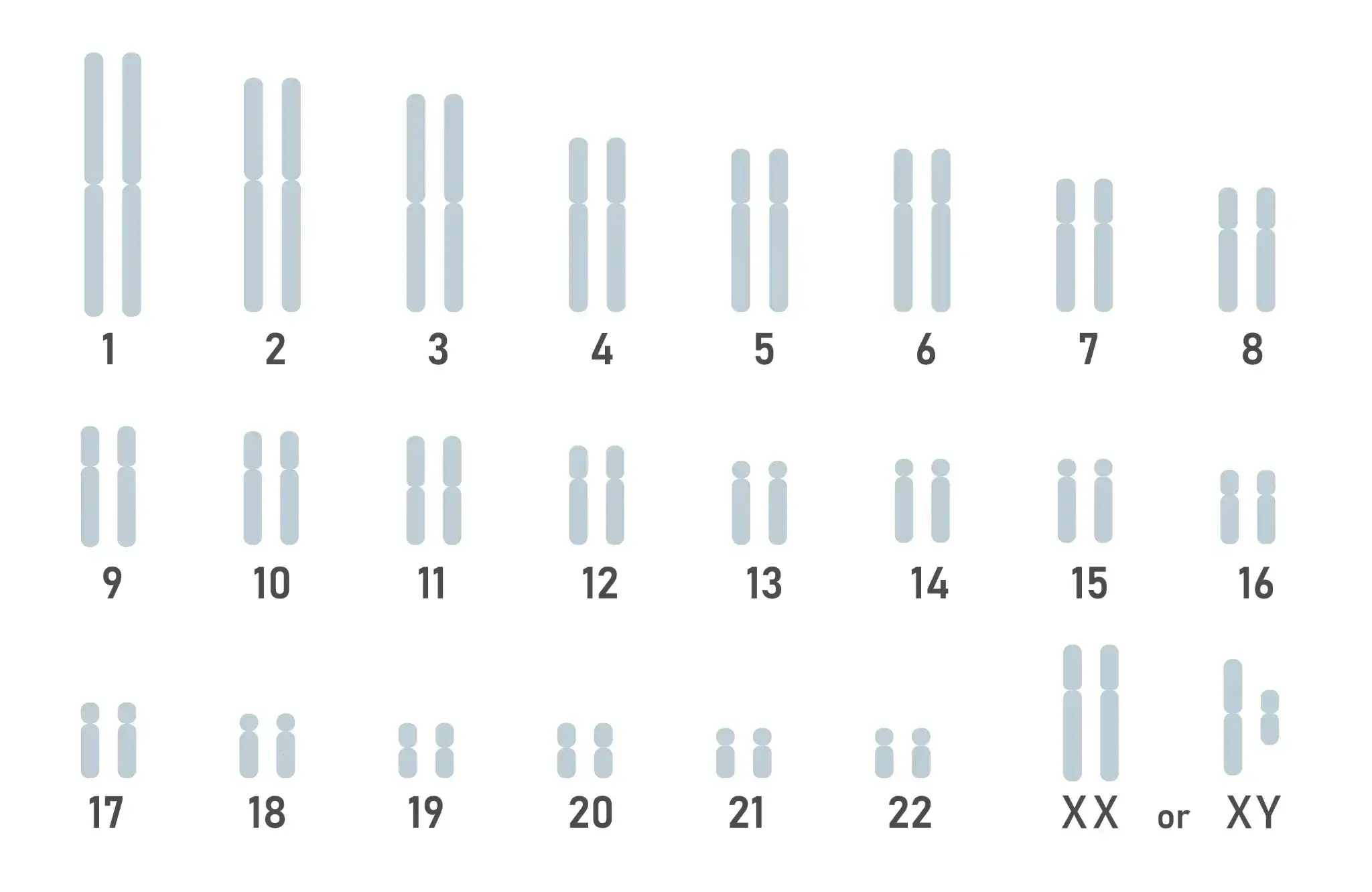
Schematic diagram of DNA map present in cells
- ■
- ■
- ■
- ■
- ■
- ■
- ■
- ■
- ■
Related genes
| Related genes | LINC03053 |
|---|---|
| Related genes | MIR548I4 |
| Related genes | FOXL1 |
Frequently asked questions (FAQ)
Q1. What is dental caries?
Dental caries is a disease in which tooth enamel dissolves due to acid produced by oral bacteria such as Streptococcus mutans when they break down carbohydrates.Approximately 90% of Japanese people over the age of 20 have had the disease. Both genetic factors and lifestyle factors play a role in the onset.
Q2. Are there any genotypes that are more prone to tooth decay?
Genotype of DNA region rs17145638 is associated with dental caries risk.TC type and CC type including type C mutationPeople with this condition tend to be more susceptible to tooth decay due to changes in the function of the BCOR gene, which is involved in tooth formation, resulting in insufficient dentin formation.
Q3. What is the cause of tooth decay?
The direct cause of tooth decay isStreptococcus mutans produces acid using carbohydrates as a nutritional sourceand demineralizes tooth enamel. Excessive consumption of sweet foods, inadequate tooth brushing, and genetic predisposition are major risk factors.
Q4. What can I do to prevent tooth decay?
Brushing after every meal, flossing, avoiding excessive sugar intake, and regular dental checkups every 3 to 6 months can help.People who are genetically at high riskconsider additional preventive measures such as using fluoride toothpaste and sealant treatments.
References
- Reference link 1: 2010 Jul., X Wang, Caries research.
- Reference link 2: 2013 Mar., Z Zeng, Journal of dental research.
- Reference link 3: Information on DNA region “rs17145638” NIH
- Reference link 4: 2010 Jun., Jinglei Cai, Cell and tissue research.
- Reference link 5: 2014 May., Piranit Nik Kantaputra, Journal of Human Genetics.
- Reference link 6: 2013 May., Z Zeng, J Dent Res
- Reference link 7: 2019 Jun., Dmitry Shungin, Nat Commun