
 Melanoma (malignant melanoma)

- Melanoma accounts for approximately 4% of all skin cancers, but approximately 80% of skin cancer deaths.Highly malignant skin cancer
- T-type mutation in DNA region rs45430 of gene MX2People with this type have a high risk of developing the disease, and approximately 97.6% of Japanese people have the TT type or CT type.
- It is easy to overlook because it resembles a "mole",Early detection through genetic testingis important
Overview Melanoma is a type of skin cancer and is also called melanoma. This disease is very similar to a mole, and is caused by cells that produce melanin, the pigment in the skin, turning into cancer. Although melanoma accounts for only 4% of all skin cancers, it is said to be responsible for 80% of deaths from this disease. Melanoma is mainly classified into four types: ``lentigo maligna type'', ``superficial spreading type'', ``acral lentigo type'', and ``nodular type'', and the frequency and location of each type differs depending on race. The "superficial spread type", which is more common in Caucasians, often develops on exposed areas of the face and trunk, and is thought to be closely related to sunlight's ultraviolet rays and genetic mutations. The acral lentigo type, which is common in Japanese people, often develops in areas that are not exposed to ultraviolet rays, such as the soles of the feet, and trauma and skin friction are thought to be one of the causes of cancer. (Reference link 1) There are still many things that are not clear, and research into the mechanism of melanoma onset is still ongoing. However, recent research reports have revealed that the gene MX2 has a certain degree of influence on the risk of developing melanoma. (Reference link 2) 2. Rationale Research involving Stanford University in the United States has found that a specific type of gene ``MX2'' increases the risk of melanoma. The DNA region of "MX2" has a region named "rs45430," and there are three genotypes: "TT type," "CT type," and "CC type." The risk allele T increases the risk of developing melanoma, so those with the TT type tend to have a higher risk of developing melanoma, while those with the CT type tend to have a slightly higher risk. Regarding the Japanese genotypes, the most common genotype is the TT type at 71.6%, followed by the CT type at 26.0%, the least common at 2.4%, and the TT/CT type accounting for approximately 97.6%. Globally, "TT type" accounts for 24.6%, "CT type" 50.0% (the most common), "CC type" 25.4% (the least), and "TT/CT type" accounts for approximately 75.4%. (Reference link 3) In other words, Japanese people can be said to be a race with genetic polymorphisms that have a high risk of developing melanoma. Melanoma progresses very rapidly, and lymph node metastasis is known to occur in approximately one-quarter of patients in Japan. (Reference link 4) Also, as mentioned above, melanoma resembles a mole and is often overlooked, so early detection is very important. Knowing the genetic predisposition to melanoma through genetic testing is expected to be useful for early detection and treatment. 3. Mechanism of action The gene "MX2" is one of the 24 chromosomes located on chromosome 21, and is a gene that may be involved in the development of melanoma. This gene is known to have the ability to suppress the proliferation of cancer cells and slow the progression of melanoma. It has also been reported that when human cells divide, they slow down cell division by extending the period called the "G1 phase" and "S phase" of the cell cycle. (Reference link 5) It is thought that genetic polymorphism in the DNA region ``rs45430'' causes differences in the movement of the gene ``MX2'' protein, which may be related to the onset of melanoma. In this way, the DNA region ``rs45430'' of the ``MX2'' gene is one notable single nucleotide polymorphism that is associated with the risk of developing melanoma.
What is melanoma?
Melanoma (malignant melanoma) is a skin cancer in which melanocytes, which produce the skin pigment melanin, become malignant.Melanoma accounts for only about 4% of all skin cancers, but approximately 80% of skin cancer deaths are caused by melanoma.
Four classifications and characteristics of melanoma
Melanoma is classified into the following four types, and the frequency and location of onset differ depending on race.
| classification | Frequently occurring site | Features |
|---|---|---|
| Lentigo maligna type | Face (exposed parts of elderly people) | Progresses slowly, occurs more frequently in the elderly |
| superficial expansion type | Exposed areas of face and trunk | Common in Caucasians, UV rays and genetic mutations are involved |
| acral lentigo type | soles/palms | Common in Japanese people; trauma and friction are one of the causes |
| nodular type | All parts of the body | Rapid vertical growth, poor prognosis |
Why is melanoma dangerous?
Why melanoma is dangerousFast progression speed and high metastasis rateIt is located in
- Only about 4% of all skin cancersHowever, skin cancer deathsApproximately 80%occupy
- In Japan, patientsApproximately one-quarter (approximately 25%) have lymph node metastasisis confirmed (reference link 4)
- It looks very similar to a mole and is easily overlooked.
Differences between Japanese and Caucasian melanoma
| Comparison items | Japanese | white people |
|---|---|---|
| Frequent type | acral lentigo type | superficial expansion type |
| Frequently occurring site | Soles of feet/palms (non-exposed areas) | Face/trunk (ultraviolet-exposed areas) |
| Main cause | Trauma/friction | UV rays/genetic mutations |
Relationship between genes and melanoma
Relationship between DNA region rs45430 and onset risk
A research team including Stanford University found that the DNA region rs45430 of gene MX2 is involved in the risk of developing melanoma (Reference link 2).
- rs45430 hasTT type, CT type, CC typeThere are three genotypes of
- T type which is Risk AlleleThe more you have, the higher your risk of developing the disease.
- TT type:High risk of developing the disease
- CT type: Moderately high risk tendency
Genotype distribution in Japanese (rs45430)
| Genotype | Percentage of Japanese people | percentage of the world |
|---|---|---|
| TT type(high risk) | 71.6% | 24.6% |
| CT type(Slightly high risk) | 26.0% | 50.0% |
| CC type(low risk) | 2.4% | 25.4% |
JapaneseApproximately 97.6% are TT type or CT typeThis is a high percentage compared to the world average (approximately 75.4%). In other words, Japanese people tend to have genetic polymorphisms that increase the risk of developing melanoma (reference link 3).
Mechanism of action of MX2 gene
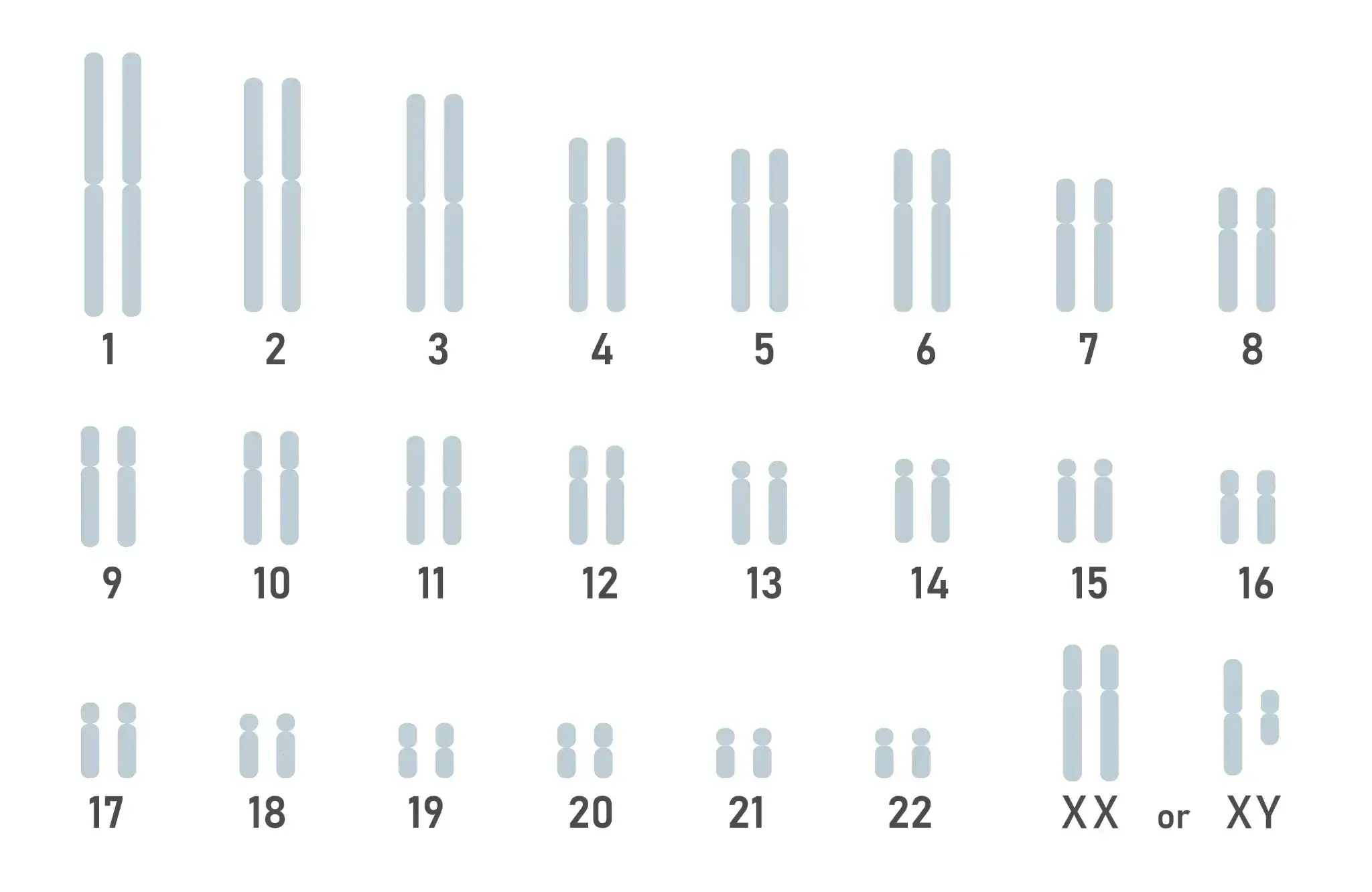
MX2 geneis a gene located on chromosome 21 that is involved in the development of melanoma.
- Suppresses cancer cell growthand has the ability to delay the progression of melanoma.
- cell division cycleExtends G1 and S phasesand reduce cell division rate (Reference link 5)
- Genetic polymorphism in the DNA region rs45430 causes differences in the function of the MX2 protein, which affects the risk of developing the disease.
Significance of genetic testing
Melanoma looks very similar to a mole, so there is a risk of it being overlooked.Identifying high-risk groups and early detection/treatment by determining the rs45430 genotype in advance through genetic testingHelpful.
Rationale for testing
Surface DNA region: Melanoma (malignant melanoma)
The gene region that most strongly affects melanoma is rs45430. The distribution of isomorphic genotypes in Japan is as follows.
- CC
4.4 % - CT
33.3 % - TT
62.1 %
Another gene region involved in melanoma (malignant melanoma) is rs2853667. The distribution of isomorphic genotypes in Japan is as follows
- AA
77.4 % - AG
21.1 % - GG
1.4 %
Basis for inspection
A study by Ransohoff et al., a research team including Stanford University, revealed that the risk of developing melanoma is associated with the gene MX2. There are two types of mutations in the rs45430 region, T and C, and people with the T mutation tend to have a higher risk of melanoma (reference link 2).
The DNA region investigated this time
Schematic diagram of DNA map present in cells
- ■
- ■
- ■
- ■
- ■
- ■
- ■
- ■
- ■
Related genes
| Related genes | MX2 |
|---|---|
| Related genes | TERT |
Frequently asked questions (FAQ)
Q1. What is melanoma?
Melanoma is a skin cancer in which melanocytes, which produce the skin pigment melanin, become malignant.It accounts for approximately 4% of all skin cancers, but approximately 80% of skin cancer deaths. It is classified into four types: lentigo maligna type, superficial spreading type, acral lentigo type, and nodular type (reference link 1).
Q2. What genes are involved in the risk of developing melanoma?
geneMX2 DNA region rs45430are involved in the risk of developing melanoma. The risk allele is T type, the higher the risk, and the JapaneseApproximately 97.6% are TT type or CT type(Reference links 2 and 3).
Q3. Is the location of melanoma different between Japanese and Caucasians?
The superficial expansion type, which is more common in Caucasians, isUV-exposed areas such as the face and trunkIt occurs in The acral lentiginous type is common in Japanese people.Areas that are not exposed to UV rays, such as the soles of the feetIt develops in humans, and trauma and friction are thought to be one of the causes (Reference link 1).
Q4. Can genetic testing determine the risk of melanoma?
By examining the genotype of DNA regions rs45430 and rs2853667,Understanding trends in the risk of developing melanomaYou can. Knowing the risks in advance through genetic testing can help with early detection and treatment (Reference link 2).
References
- Reference link 1: 2007., Minoru takata, Shinshu Medical Journal
- Reference link 2: 2017 Feb., Katherine J Ransohoff, Oncotarget
- Reference link 3: Information on DNA region “rs45430” TogoVar
- Reference link 4: 2019 Apr., Yasuhiro Fujisawa, Cancer medicine
- Reference link 5: 2019 Oct., Marina Juraleviciute, Pigment cell & melanoma research
- Reference link 6: 2017 Mar., Katherine J Ransohoff, Oncotarget
- Reference link 7: 2020 May., Maria Teresa Landi, Nat Genet
- Reference link 8: 2011 Oct., Jennifer H Barrett, Nat Genet