
 Good prognosis for Crohn's disease

- The prognosis of Crohn's disease depends on the extent and severity of inflammation, and the presence or absence of complications.It varies greatly depending on the patient, and early treatment is the key to improvement.
- G-type mutation in DNA region rs5929166A University of Cambridge study found that people with this condition tend to have a worse prognosis.
- Anti-inflammatory drugs, immunosuppressants, nutritional management, stress careLong-term prognosis can be improved by the combination of
Overview Crohn's disease is a chronic inflammatory disease of the gastrointestinal (GI) tract and is part of inflammatory bowel disease (IBD). The prognosis of this disease (the outlook for the disease and treatment) varies depending on the location of the disease, its severity, the presence or absence of complications, and is difficult to predict. The prognosis is good if the symptoms are relatively mild and the inflammation is localized and mild. On the other hand, when the overall inflammation spreads, the ulcer is severe, and complications such as stenosis and perforation progress, treatment becomes more difficult and the prognosis tends to be worse. Starting appropriate treatment early and using anti-inflammatory drugs and immunosuppressants to stabilize the condition and improve symptoms will lead to improved long-term prognosis. Crohn's disease is a disease that requires long-term symptoms and treatment, and the accompanying stress and decreased quality of life have a negative impact on prognosis. Early and appropriate treatment and psychological care are important for improving prognosis. A study by Lee et al. at the University of Cambridge revealed that the prognosis of Crohn's disease is associated with a DNA region called rs5929166. There are three genotypes in this DNA region: GG, GA, and AA, and it was found that people with the G genotype tend to have a poor prognosis for Crohn's disease.
What is the prognosis of Crohn's disease?
Crohn's disease prognosis refers to the outlook for the course of the disease and treatment after it has been diagnosed.Crohn's disease is a type of inflammatory bowel disease (IBD) that causes chronic inflammation in the gastrointestinal tract (GI tract).
What factors affect the prognosis of Crohn's disease?
Prognosis depends on the following factors:
- Scope and severity of inflammation:The prognosis is good if the inflammation is local and mild.
- Presence of complications:Prognosis worsens as stenosis, perforation, and fistula progress.
- Treatment start time:Long-term prognosis improves if appropriate treatment is started early
- Genetic factors:Genotype of DNA region rs5929166 is involved in prognosis
- Psychological factors:Stress and decreased quality of life (QOL) associated with chronic diseases have a negative impact on prognosis
Difference between cases with good and poor prognosis of Crohn's disease
| Comparison items | Good prognosis | poor prognosis |
|---|---|---|
| Inflammation range | local/limited | Wide range/entire digestive tract |
| ulcer depth | Superficial/mild | deep/severe |
| complications | None/mild | Stenosis/perforation/fistula |
| Start of treatment | Early (within 6 months of onset) | Delayed (after complications appear) |
| Genotype (rs5929166) | Type AA (low risk) | GG type/GA type (high risk) |
Treatments that improve Crohn's disease prognosis
The following treatment approaches are effective in improving long-term prognosis.
- Anti-inflammatory drugs (5-ASA preparations):Suppresses mild to moderate inflammation
- Immunosuppressants (azathioprine, etc.):Adjust immune response and prevent flare-ups
- Biological products (anti-TNF-α antibodies, etc.):Highly effective for moderate to severe cases
- Nutritional therapy:Calming the intestinal tract and providing nutrition through enteral nutrition
- Surgical treatment:Surgery for complications such as stenosis and fistula
Difference in prognosis between Crohn's disease and ulcerative colitis
| Comparison items | crohn's disease | ulcerative colitis |
|---|---|---|
| Inflammation site | Entire digestive tract (mouth to anus) | limited to the large intestine |
| inflammatory pattern | Discontinuous (stepping stone) | Continuous (from rectum to mouth) |
| surgery rate | Approximately 70-80% (within 20 years of onset) | Approximately 25-30% |
| Postoperative recurrence | High (approximately 50% within 5 years) | Completely curable with total colectomy |
Relationship between genes and Crohn's disease prognosis
Relationship between DNA region rs5929166 and prognostic risk
A study by Lee et al. at the University of Cambridge (1) revealed that the DNA region rs5929166 is associated with Crohn's disease prognosis.
- There are three genotypes of rs5929166: GG, GA, and AA.
- Genotype with type G mutationPeople with Crohn's disease tend to have a worse prognosis.
Genotype distribution in Japanese (rs5929166)
| Genotype | Percentage of Japanese people | percentage of the world |
|---|---|---|
| GG type | 99.9% | 96.2% |
| GA type | 0.1%以下 | 3.7% |
| AA type | 0.1%以下 | 0.1%以下 |
Rationale for testing
Surface DNA region: Good prognosis for Crohn's disease
The gene region that most strongly influences the prognosis of Crohn's disease is rs5929166. The distribution of isomorphic genotypes in Japan is as follows.
- GG
99.9 % - GA
0.1%以下 - AA
0.1%以下
Basis for inspection
A study by Lee et al. at the University of Cambridge revealed that the prognosis of Crohn's disease is related to genes. There is a region called rs5929166 in the human genome, and there are two types of mutations, G and A, in the gene in this region. It was found that people with type G mutations tend to have a worse prognosis for Crohn's disease.
The DNA region investigated this time
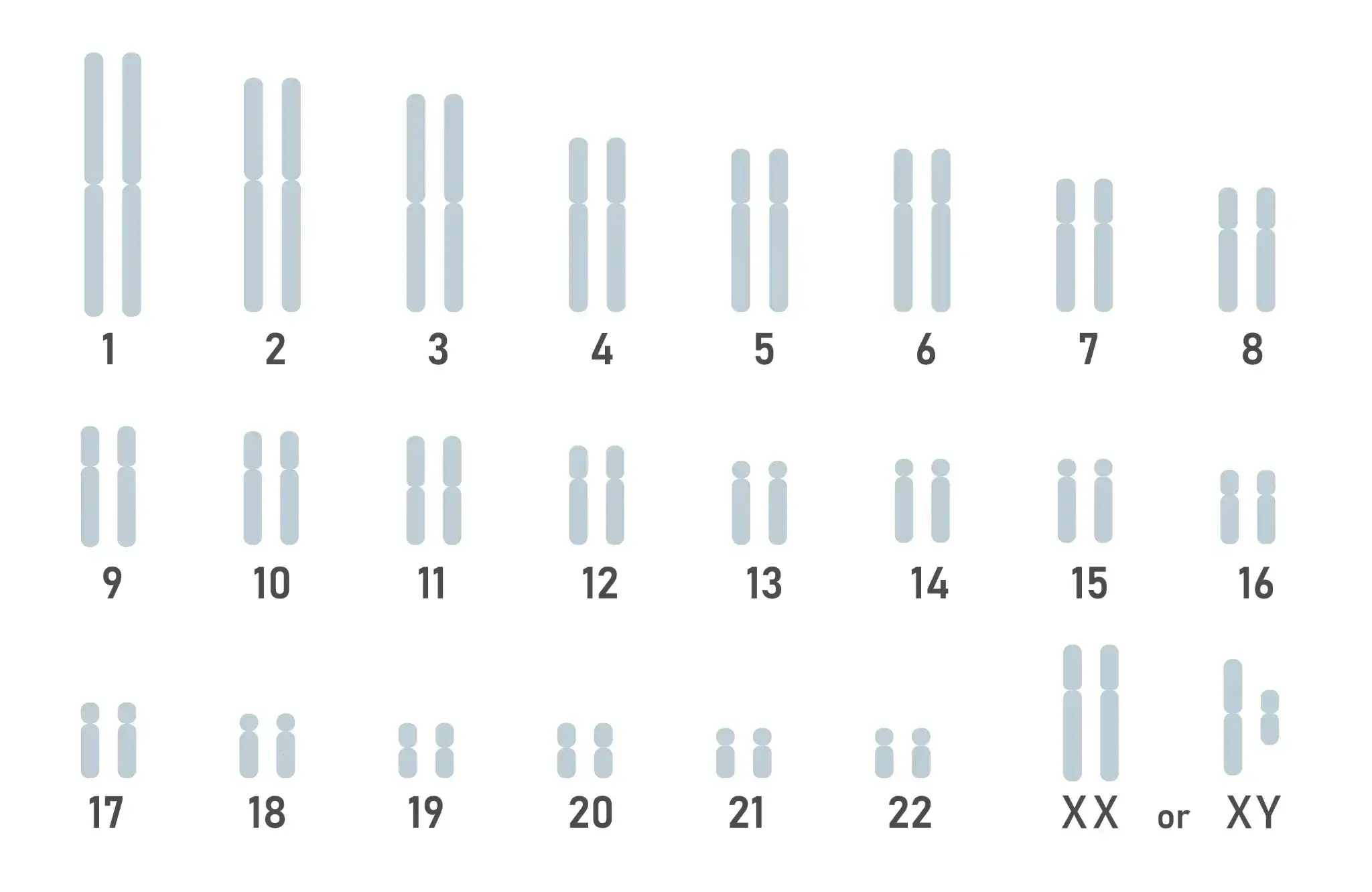
Schematic diagram of DNA map present in cells
- ■
- ■
- ■
- ■
- ■
- ■
- ■
- ■
- ■
Related genes
| Related genes | XACT |
|---|
Frequently asked questions (FAQ)
Q1. What is the prognosis of Crohn's disease?
Crohn's disease prognosis refers to the course of the disease and the prospects for treatment after it has been diagnosed.It varies greatly depending on the extent of inflammation, severity, and presence or absence of complications (stenosis, perforation, fistula). Mild local inflammation has a good prognosis, but widespread inflammation and deep ulceration worsen the prognosis (1).
Q2. Do genes affect the prognosis of Crohn's disease?
According to research by Lee et al. at the University of Cambridge,Genotype of DNA region rs5929166 is associated with Crohn's disease prognosisIt turns out that it is. People with the G mutation genotype tend to have a poor prognosis (1).
Q3. Is there a way to improve the prognosis of Crohn's disease?
Early diagnosis and appropriate treatmentis the key to improving prognosis. In addition to stabilizing the condition with anti-inflammatory drugs, immunosuppressants, and biological agents, early detection of complications through nutritional management, smoking cessation, stress management, and regular endoscopy are important.
Q4. What is the difference in prognosis between Crohn's disease and ulcerative colitis?
Crohn's disease causes discontinuous inflammation throughout the gastrointestinal tract.The surgery rate is approximately 70-80% within 20 years of onset.It will be high. Ulcerative colitis is confined to the large intestine, and the surgical rate is approximately 25-30%. Crohn's disease also tends to have a high recurrence rate after surgery.
References
- Reference link 1: 2017 Feb., James C Lee, Nat Genet