
 crohn's disease

- Crohn's disease is an incurable disease that causes chronic inflammation throughout the gastrointestinal tract.In Japan, more than 70,000 people are affected by this disease, and it often occurs in people in their teens to 20s.
- T-type mutation in DNA region rs1260326A study by Liu et al. found that people with this condition tend to have a higher risk of developing the disease.
- appropriateReview of drug therapy, nutritional management, and lifestyle habitsIt is possible to maintain remission and improve quality of life (QOL) by
Overview Crohn's disease is a chronic inflammatory disease of the gastrointestinal tract that often primarily affects the small and large intestines, but can affect any part of the gastrointestinal tract. The exact cause of Crohn's disease is unknown, but it is thought to be caused by a combination of genetic factors, environmental factors, and immune system abnormalities. In this disease, inflammation tends to spread throughout the gastrointestinal tract. Symptoms are wide-ranging and include abdominal pain, diarrhea, weight loss, fever, and fatigue. Abdominal pain and diarrhea in particular significantly reduce the patient's quality of life. Prolonged inflammation may also cause narrowing of the gastrointestinal tract or the formation of abnormal passageways called fistulas. In addition, Crohn's disease can affect organs outside the gastrointestinal tract, and complications such as joint pain, skin lesions, eye disease, and liver disease may occur. Treatments include anti-inflammatory drugs, immunosuppressive drugs, and biologics that aim to suppress inflammation. In severe cases or when medications are not effective, surgery may be necessary. Crohn's disease is a chronic disease that has a significant negative impact on patients' lives, but with appropriate treatment and lifestyle changes, it is possible to alleviate symptoms and improve quality of life. A study by Liu et al. at the Sanger Institute revealed that the risk of developing Crohn's disease is associated with a DNA region called rs1260326. There are three genotypes in this DNA region: TT, TC, and CC, and it was found that people with the T genotype tend to have a higher risk of developing Crohn's disease.
What is Crohn's disease?
Crohn's disease is a chronic inflammatory disease that can affect any part of the gastrointestinal tract (from the mouth to the anus).It particularly occurs in the terminal part of the small intestine (ileum) and large intestine, and is characterized by ``full-thickness inflammation,'' which involves the entire thickness of the intestinal wall. In Japan, it has been designated as an incurable disease, and more than 70,000 patients have been confirmed to have it.
Cause and mechanism of Crohn's disease
The exact cause of Crohn's disease is unknown, but the following factors are thought to be involved in a complex manner.
- Genetic predisposition:Individuals with the T mutation in the DNA region rs1260326 have an increased risk of developing the disease (Liu et al., 2015)
- Immune abnormality:The immune response of the intestinal mucosa is overactivated and attacks the own gastrointestinal tissues.
- Changes in intestinal flora:Disruption of the balance of intestinal flora causes inflammation
- Environmental factors:Smoking (approximately double the risk of developing the disease), Westernized eating habits, and stress
Main symptoms of Crohn's disease
The symptoms areChronic relapse and remissionIt is characterized by
- Persistent abdominal pain (especially in the lower right abdomen)
- Chronic diarrhea (may occur more than 6 times a day)
- Weight loss/malnutrition
- Fever/general malaise
- Anal lesions (anal fistulas/anal fissures): Occurs in approximately 30-50% of patients.
Difference between Crohn's disease and ulcerative colitis
| Comparison items | crohn's disease | ulcerative colitis |
|---|---|---|
| Lesion site | Entire digestive tract (oral to anus) | Large intestine only |
| depth of inflammation | Full thickness (entire intestinal wall) | limited to mucosal layer |
| Distribution of lesions | Discontinuity (stepping stones) | Continuity (from rectum to mouth) |
| complications | Fistula/stenosis/abscess | Massive bleeding/toxic megacolon |
| Age of onset | 10s to 20s | 20s to 30s |
| Effects of smoking | aggravating factor | Possible protective factors |
Complications of Crohn's disease
Long-term inflammation can lead to the following complications:
- Intestinal stricture:Repeated inflammation narrows the intestinal tract and causes intestinal obstruction.
- Fistula:Abnormal passages form between the intestinal tract and other organs
- Extraintestinal complications:Arthralgia, skin lesions (erythema nodosum), eye diseases (uveitis), hepatobiliary tract diseases
- Malnutrition:Iron deficiency anemia, vitamin B12 deficiency, and osteoporosis due to malabsorption
treatment method
We aim to induce and maintain remission using the following treatment methods.
- Drug therapy:5-ASA preparations, corticosteroids, immunomodulators (azathioprine)
- Biological products:Anti-TNF-α antibody (infliximab, adalimumab)
- Nutritional therapy:Enteral nutrition therapy (resting the intestinal tract with component nutrients)
- Surgery:Surgery for complications such as stenosis, fistula, and abscess (approximately 70% of patients undergo surgery at least once in their lifetime)
Relationship between genes and Crohn's disease
Relationship between DNA region rs1260326 and onset risk
A study by Liu et al. (1) at the Sanger Institute revealed that the DNA region rs1260326 is associated with the risk of developing Crohn's disease.
- There are three genotypes of rs1260326: TT, TC, and CC.
- Genotype with T-type mutationpeople tend to be at higher risk for Crohn's disease
Genotype distribution in Japanese (rs1260326)
| Genotype | Percentage of Japanese people | percentage of the world |
|---|---|---|
| TT type | 33.8% | 16.7% |
| TC type | 48.6% | 48.3% |
| CC type | 17.4% | 34.8% |
Rationale for testing
External DNA region: Crohn's disease
The gene region that most strongly affects Crohn's disease is rs1260326. The distribution of isomorphic genotypes in Japan is as follows.
- TT
33.8 % - TC
48.6 % - CC
17.4 %
Another gene region involved in Crohn's disease is rs2823286. The distribution of isomorphic genotypes in Japan is as follows
- GG
74.8 % - GA
23.2 % - AA
1.8 %
Basis for inspection
A study by Lee et al. at the University of Cambridge revealed that the risk of developing Crohn's disease is linked to genes. There is a region called rs5929166 in the human genome, and there are two types of mutations, G and A, in the gene in this region. It was found that people with the G-type mutation tend to have a higher risk of developing Crohn's disease.
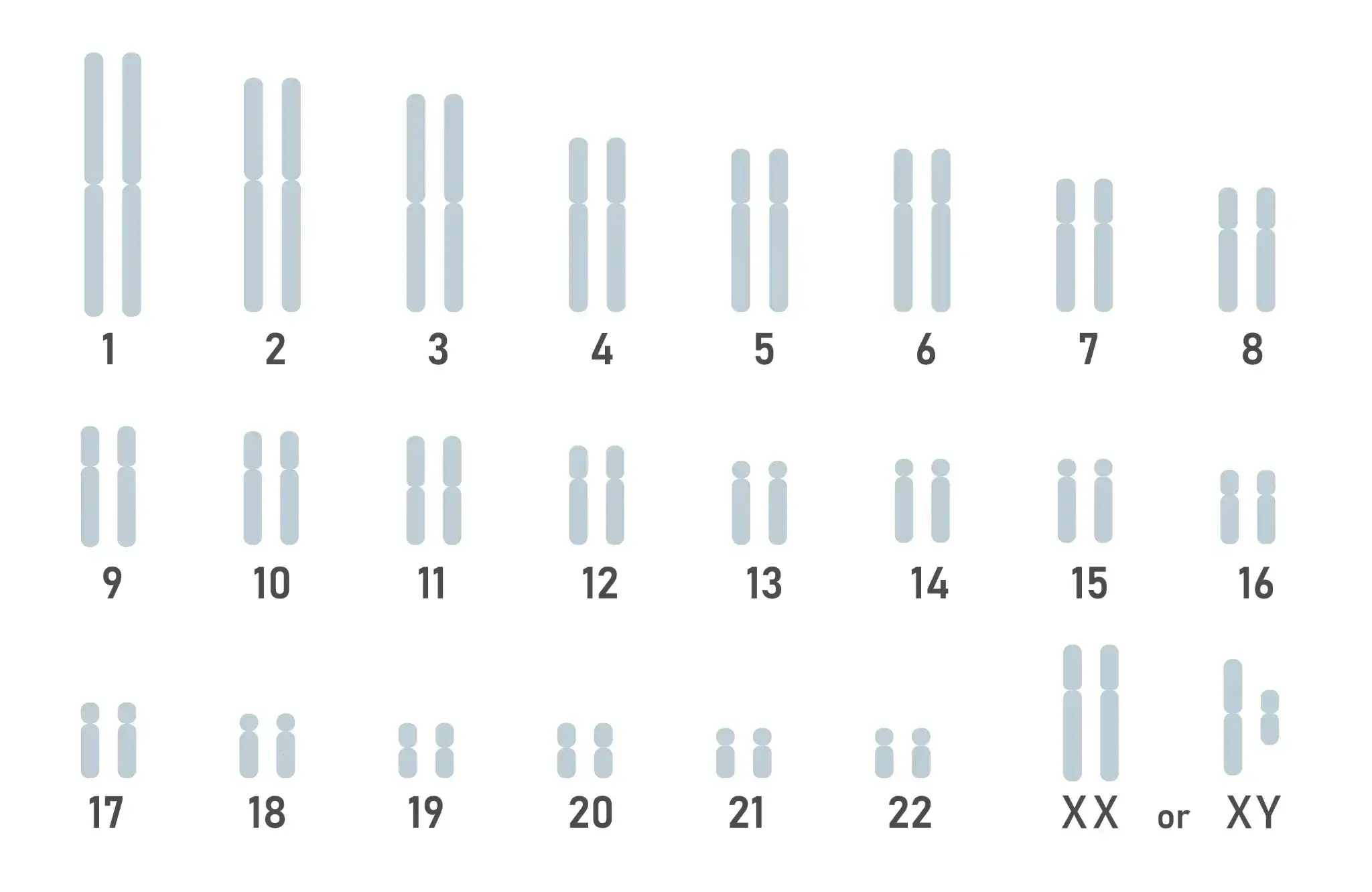
The DNA region investigated this time
Schematic diagram of DNA map present in cells
- ■
- ■
- ■
- ■
- ■
- ■
- ■
- ■
- ■
Related genes
| Related genes | GCKR |
|---|---|
| Related genes | LINC02920 |
Frequently asked questions (FAQ)
Q1. What is Crohn's disease?
Crohn's disease is a chronic inflammatory disease that can affect any part of the gastrointestinal tract (from the oral cavity to the anus).It particularly occurs in the terminal part of the small intestine (ileum) and large intestine, and more than 70,000 people in Japan are affected. The onset peaks between the ages of 10 and 20.
Q2. What is the cause of Crohn's disease?
The exact cause is unknown, butGenetic predisposition, immune abnormalities, changes in intestinal flora, environmental factors (smoking, westernization of diet)are involved in multiple ways. Carriers of the T mutation in the DNA region rs1260326 tend to have a higher risk of developing the disease (1).
Q3. What is the difference between Crohn's disease and ulcerative colitis?
Crohn's disease isDiscontinuous full-thickness inflammation throughout the gastrointestinal tractThis can lead to complications such as fistula and stenosis. ulcerative colitis isContinuous inflammation confined to the colonic mucosaIt is characterized by spreading from the rectum towards the mouth.
Q4. Can genetic testing determine the risk of Crohn's disease?
By examining the genotype of DNA regions rs1260326 and rs2823286,Understanding trends in the risk of developing Crohn's diseaseYou can. Studies have shown that people with the T mutation genotype tend to be at increased risk (1).
Q5. Is Crohn's disease completely curable?
at the momentThere is no radical treatment.The goal of treatment is to maintain remission and improve QOL through medication treatment with anti-inflammatory drugs, immunosuppressants, and biological agents. Severe cases may require surgery.
References
- Reference link 1: 2015 Sep., Jimmy Z Liu, Nat Genet