
 colorectal cancer

- Colorectal cancer is a malignant tumor that occurs in the large intestine and rectum.It ranks first in the number of cancer cases in Japan (approximately 150,000 people are newly diagnosed annually).
- G-type mutation in DNA region rs1128503A University of Ottawa study finds that people with cancer tend to have a higher risk of colorectal cancer.
- The 5-year survival rate when detected early is90% or moreTherefore, a fecal occult blood test is recommended once a year for people over 40 years of age.
Overview Colorectal cancer is a type of cancer that starts in the large intestine or rectum, which is the part of the gastrointestinal tract that is responsible for digesting and processing food. Typically, cells in the colorectal area grow abnormally and form a malignant tumor. They start out as polyps, which are clumps of non-cancerous cells, but over time some of them can become cancerous. Symptoms vary, but commonly include persistent diarrhea or constipation, abdominal discomfort, rectal bleeding or blood in the stool, weight loss, weakness, and fatigue. These can also be seen in other conditions, so a medical professional's consultation is required for an accurate diagnosis. Risk factors for colorectal cancer include family history, history of polyps, inflammatory bowel disease, genetic conditions, lifestyle (diet, smoking, lack of exercise), and older age. Diagnosis typically involves blood tests and an endoscopy, in which abnormal tissue is biopsied to determine whether it is cancerous. Screening for early detection is important, and treatments range from surgery to chemotherapy and radiation therapy, depending on the stage of the cancer. A study by Montazeri et al. at the University of Ottawa revealed that the risk of developing colorectal cancer is associated with a DNA region called rs1128503. There are three genotypes in this DNA region: AA, AG, and GG, and it was found that people with the G genotype tend to have a higher risk of colorectal cancer.
What is colorectal cancer?
Colorectal cancer is a malignant tumor that develops in the mucous membranes of the large intestine (colon) and rectum.It is the most common cancer in Japan, with approximately 150,000 new cases diagnosed each year. In its early stages, it begins as a polyp (a mass of non-cancerous cells), and over time some of it becomes cancerous.
Main symptoms of colorectal cancer
Colon cancer has few symptoms in its early stages, but as it progresses, the following symptoms appear.
- Bloody stool/melena:Blood in the stool or bleeding from the rectum
- Abnormal bowel movements:Persistent diarrhea/constipation or alternating
- Abdominal symptoms:Abdominal pain/bloating/abdominal discomfort
- Systemic symptoms:Unexplained weight loss, persistent feeling of fatigue/malaise
Colorectal cancer risk factors
Factors that increase the risk of developing colorectal cancer include:
| Category | risk factors | Details |
|---|---|---|
| genetic factors | Family history/genetic mutation | If you have a first-degree relative with colorectal cancer, your risk is about 2 to 3 times greater. |
| Medical history | Colon polyps/inflammatory bowel disease | Patients with ulcerative colitis and Crohn's disease are at increased risk |
| lifestyle habits | Eating/Smoking/Drinking | High fat/low fiber diet, processed meat intake, smoking/excessive drinking |
| physical factors | Lack of exercise/obesity/old age | Incidence rate increases markedly in people over 50 years old |
The importance of colorectal cancer screening and early detection
If detected early, colorectal cancer has a 5-year survival rate of over 90%.The following tests are valid.
- Fecal occult blood test (FOBT):Recommended once a year for people over 40 years old. Non-invasive test to detect trace bleeding in stool
- Colonoscopy:Detailed examination when fecal occult blood is positive. Polyps can be discovered and removed at the same time.
- CT test/blood test:Measurement of tumor markers (CEA/CA19-9) and CT colonography
Treatment for colorectal cancer
Treatment methods vary depending on the degree of progression (stage) of the cancer.
- Stage 0~I:Endoscopic resection or surgery. 5-year survival rate is approximately 95% or more
- Stage II-III:Surgery + adjuvant chemotherapy. The treatment policy changes depending on whether there is lymph node metastasis or not.
- Stage IV:Multidisciplinary treatment combining chemotherapy, molecular target therapy, and radiotherapy
Relationship between genes and colorectal cancer
Relationship between DNA region rs1128503 and colorectal cancer
A study by Montazeri et al. at the University of Ottawa revealed that the risk of developing colorectal cancer is associated with the DNA region rs1128503.
- There are three genotypes of rs1128503: AA, AG, and GG.
- Genotype with type G mutation(AG type/GG type) people tend to have a higher risk of colorectal cancer
Relationship between DNA region rs751402 and colorectal cancer
According to the study of Han et al.DNA region rs751402It has also been reported that it is associated with colorectal cancer. rs751402 has three genotypes: AA, AG, and GG, and is located in the DNA repair gene ERCC5 (XPG).
Comparison of genotype distribution in Japanese and the world (rs1128503)
| Genotype | Percentage of Japanese people | percentage of the world |
|---|---|---|
| AA type | 36.1% | 17.8% |
| AG type | 47.9% | 48.8% |
| GG type | 15.9% | 33.3% |
Comparison of genotype distribution in Japanese and the world (rs751402)
| Genotype | Percentage of Japanese people | percentage of the world |
|---|---|---|
| AA type | 14.0% | 4.0% |
| AG type | 46.8% | 32.0% |
| GG type | 39.0% | 63.9% |
The G mutation prevalence rate (AG+GG) in Japanese people is rs1128503.63.8%, which is lower than the global average of 82.1%. On the other hand, for rs751402, the AA type ratio is 14.0% in Japanese and 4.0% worldwide, which is about 3.5 times higher in Japanese people.
Rationale for testing
Surface DNA region: colorectal cancer
The gene region that most strongly affects colorectal cancer is rs1128503. The distribution of isomorphic genotypes in Japan is as follows.
- AA
36.1 % - AG
47.9 % - GG
15.9 %
Another gene region involved in colorectal cancer is rs751402. The distribution of isomorphic genotypes in Japan is as follows
- AA
14.0 % - AG
46.8 % - GG
39.0 %
Basis for inspection
A study by Montazeri et al. at the University of Ottawa revealed that the risk of developing colorectal cancer is related to genes. There is a region called rs1128503 in the human genome, and there are two types of mutations, A and G, in the gene in this region. It was found that people with type A mutations tend to have a higher risk of colorectal cancer.
The DNA region investigated this time
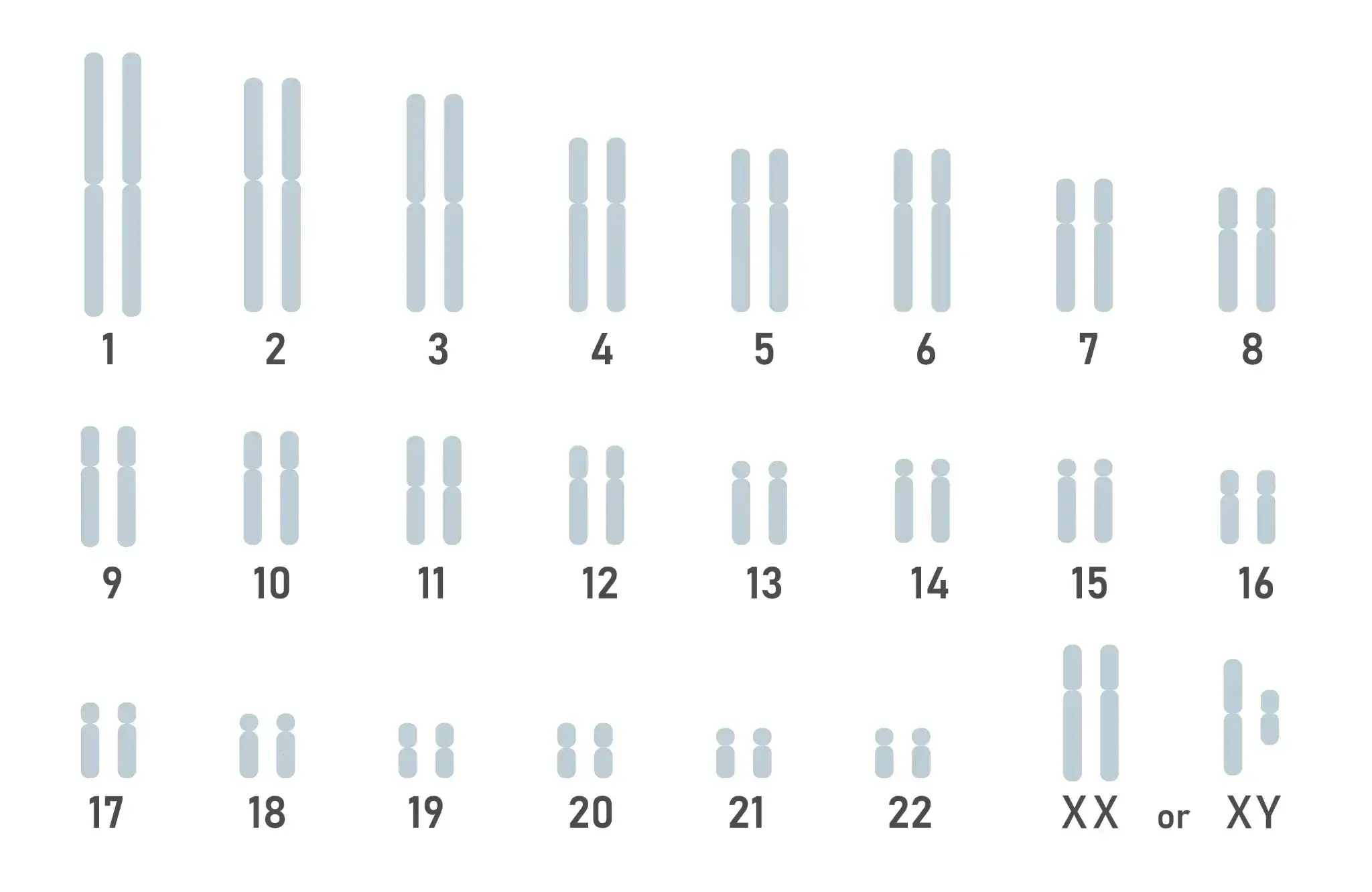
Schematic diagram of DNA map present in cells
- ■
- ■
- ■
- ■
- ■
- ■
- ■
- ■
- ■
Related genes
| Related genes | ABCB1 |
|---|---|
| Related genes | ERCC5 |
Frequently asked questions (FAQ)
Q1. What is colorectal cancer?
Colorectal cancer is a malignant tumor that develops in the mucous membranes of the large intestine (colon) and rectum.It is the most common cancer in Japan, with approximately 150,000 new cases diagnosed each year. Initially, it starts as a polyp, and over time, some become cancerous. The main symptoms include bloody stools, abnormal bowel movements, abdominal pain, and weight loss, but in the early stages, there are few symptoms, so regular checkups are important.
Q2. Are genes related to colorectal cancer?
Yes.A study by Montazeri et al. at the University of Ottawa found that the DNA region rs1128503 is associated with the risk of developing colorectal cancer.There are three genotypes of rs1128503: AA, AG, and GG, and people with the G-type mutation tend to be at higher risk. Furthermore, rs751402 (ERCC5 gene region) has also been reported to be associated with colorectal cancer.
Q3. What are the risk factors for colorectal cancer?
Risk factors for colorectal cancer involve both genetic and environmental factors.The main risk factors are family history (about 2 to 3 times the risk if you have a first-degree relative with cancer), a history of colon polyps, inflammatory bowel disease, a high-fat/low-fiber diet, smoking, excessive alcohol consumption, lack of exercise, obesity, and age over 50.
Q4. What is the distribution of colorectal cancer-related genotype (rs1128503) in Japanese people?
The genotype distribution of rs1128503 in Japanese people isAA type 36.1%, AG type 47.9%, GG type 15.9%It is. Worldwide, 17.8% are type AA, 48.8% are type AG, and 33.3% are type GG, and Japanese people have a characteristic that the proportion of type AA is about twice as high as the world average.
Q5. What kind of tests are available for early detection of colorectal cancer?
Fecal occult blood testing (FOBT) and colonoscopy are effective.For people over 40 years old, a fecal occult blood test is recommended once a year, and if the test is positive, a detailed examination is performed with a colonoscopy. When detected early (Stage I), the 5-year survival rate is over 95%, and regular screening is the key to improving survival rates.
References
- Reference link 1: 2020 Aug., Zahra Montazeri, Gut
- Reference link 2: 2017 Aug., Cuihong Han, Medicine (Baltimore)